Editorial

7%

Pacific Press Publishing Company · OAKLAND, CALIFORNIA · Jul 1, 1897

FromSigns of the Times, Vol. 23, No. 25.

Read the full edition

Editorial

"Thine is the kingdom, and the power, and the glory, forever. Amen." Matt. 6:13.
This is an everlasting truth, for the Lord himself has spoken it; yet to how many who daily utter the words are they little more than a form of speech! As a matter of fact, it is a confession which, if made with the spirit and with the understanding, brings the soul into the closest and most perfect relation to God.
The kingdom belongs to God. How exhaustive is it?—"The Lord hath prepared his throne in the heavens; and his kingdom ruleth over all." Ps. 103:19. "The Lord is in his holy temple; let all the earth keep silence before him." Hab. 2:20. "The earth is the Lord's, and the fulness thereof; the world, and they that dwell therein." Ps. 24:1. "The Most High ruleth in the kingdom of men, and giveth it to whomsoever he will." Dan. 4:17. "For God is the King of all the earth; sing ye praises with understanding. God reigneth over the heathen; God sitteth upon the throne of his holiness." Ps. 47:7, 8. Wherever in the universe created beings can look up and see a canopy of space above them, there is God's kingdom. Read Ps. 139:1-12.
People in general do not recognize God as universal King, but that makes no difference with the fact. A portion of God's dominion is in rebellion against him; but that does not destroy the fact that the kingdom is his by right. Many people worship gods of their own making, but that does not destroy the fact that there is but one God. In the beginning God gave the dominion of this earth to man (Gen. 1:28), but he did not thereby renounce his right to it. God is the King of kings, and it pleased him to rule this portion of his dominion through man, whom he had made in his image. Man was to be simply the agent through whom God would manifest his power on earth. The fact that man has refused to be the instrument of God's will, does not in the least impair God's original and eternal right to the kingdom.
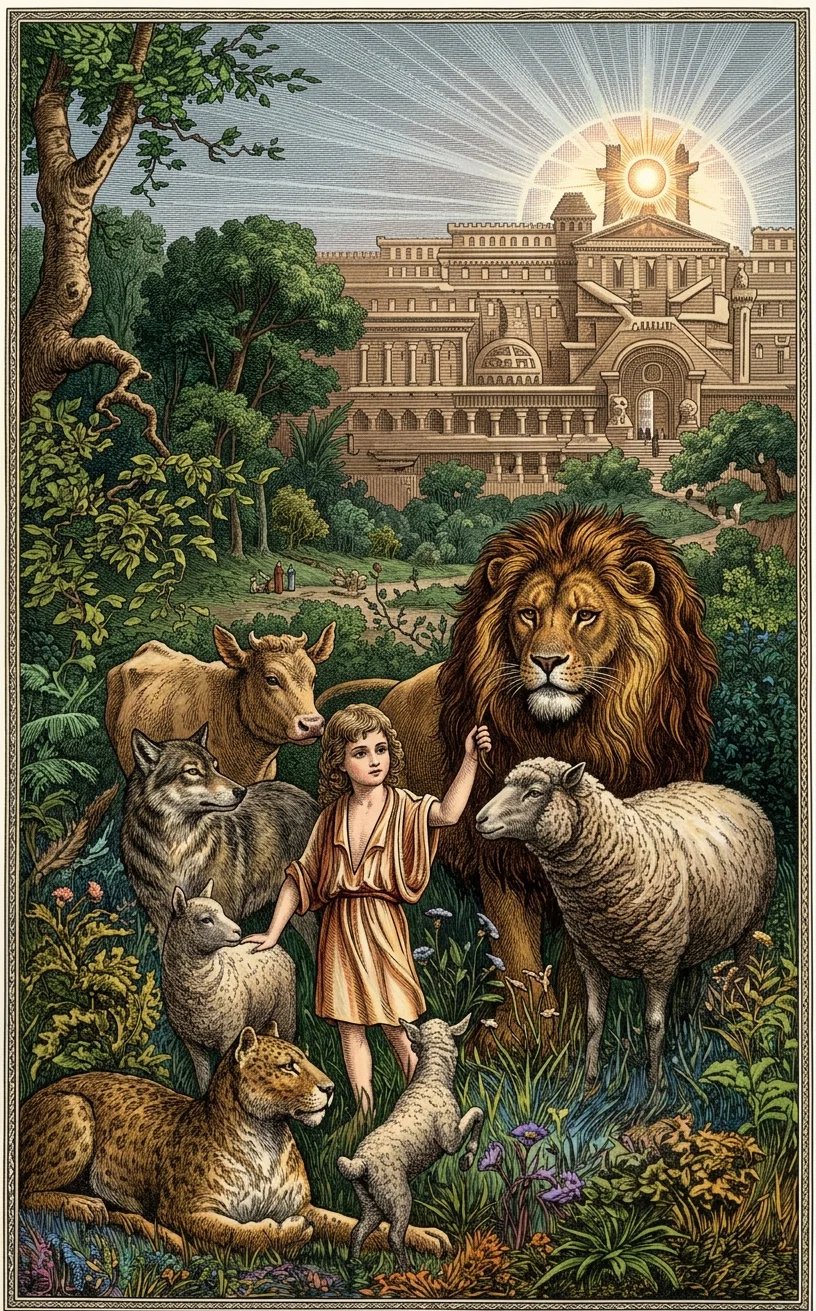
"They shall not hurt nor destroy in all My holy mountain; for the earth shall be full of the knowledge of the Lord, as the waters cover the sea." When all creation owns God's rule, "a little child shall lead them."
But our confession to God comes closer home. When the unbelieving Pharisees demanded that Jesus should tell when the kingdom of God should come, he replied: "The kingdom of God cometh not with observation; neither shall they say, Lo here! or, lo there! for, behold, the kingdom of God is within you." Luke 17:20, 21.
There is a story of a king who visited a school and questioned the pupils. Taking up a paper weight, he asked them to what kingdom it belonged. They replied, "To the mineral kingdom." Then pointing to a plant, he asked the same question, and they said, "To the vegetable kingdom." Then he asked, "To what kingdom do I belong?" The children were afraid to say that he belonged to the animal kingdom, and, as they hesitated, one said, "To God's kingdom." That was a truth, for every created thing in the universe belongs to God's kingdom, and there is but one law for all, namely, God's life.
Some one will say, "But God does not rule in wicked men's hearts." Quite true, because his rule is love, which they reject; but the fact remains that every human heart is God's rightful kingdom. His right is demonstrated by the fact that "he giveth to all life, and breath, and all things;" "for in him we live, and move, and have our being." Acts 17:25, 28. It is with his life alone that we live, for we have none of our own; and since the life belongs to him, he alone has the right to direct it.
That which may be known of God, that is, "his eternal power and Godhead," is manifest in men, even in the heathen, as well as in all the things that God has made. Rom. 1:19, 20. But men, unlike the trees of the field, "hold down the truth in unrighteousness," choosing rather to be their own masters than to allow God to rule. But "the way of man is not in himself; it is not in man that walketh to direct his steps." Jer. 10:23. Man has no more power in himself than the grass of the field has, and therefore when he attempts to rule the kingdom himself, he makes a sad failure.
Who alone has the right to rule?—He to whom the kingdom belongs. So when we say to the Lord, "Thine is the kingdom," we acknowledge that he alone has the right to rule, not only in our hearts, but in all the earth. But if we truly acknowledge the fact, we yield the kingdom fully to his control.
Just here is where many make a fatal mistake. They say, "The kingdom is the Lord's, but people in general will not acknowledge it, therefore we must compel them to submit to him." Such a course as that is virtually a denial of the fact that the kingdom is the Lord's. To say the least, God is as able to use force aswe are, and if he wished people to be forced to submit to him, he could do it. The fact that he does not compel people to serve him, is sufficient evidence that he does not wish men to seek to do so. His law is love, and therefore force is in direct opposition to his kingdom.
All that we are called upon to do, no matter who we may be, is to acknowledge God's right to the kingdom. Whoever acknowledges that the kingdom—that is, all mankind, including himself—belongs to God, will very naturally refrain from attempting to rule any part of it. He to whom the kingdom belongs has the sole right to rule, and if we are sincere in our acknowledgment of God's right, we will not meddle with his affairs. We will leave him to deal with other people as he sees best. By acknowledging his right to rule all the kingdom, we ourselves disclaim the right to rule any portion of it, even to our own lives. The only part of the kingdom, however, that we can yield up to God is ourselves. When we have done this, then we may tell others how good his rule is, and persuade them also to yield to his dominion.
There is strength in the heartfelt confession, "Thine is the kingdom," for God is able to protect his own. The battle is not ours, but his to whom we belong—"the King of glory." "Who is this King of glory? The Lord strong and mighty, the Lord mighty in battle." In his hand are power and might, so that none is able to withstand him. His thoughts toward us are thoughts of peace, and he desires nothing so much as our welfare both here and in eternity. What a blessed thing to know that "the Lord is our Judge, the Lord is our Law-giver, the Lord is our King; he will save us." E. J. W.