The Enormity of the Evils from the Drink Traffic—1
By B. G. Wilkinson
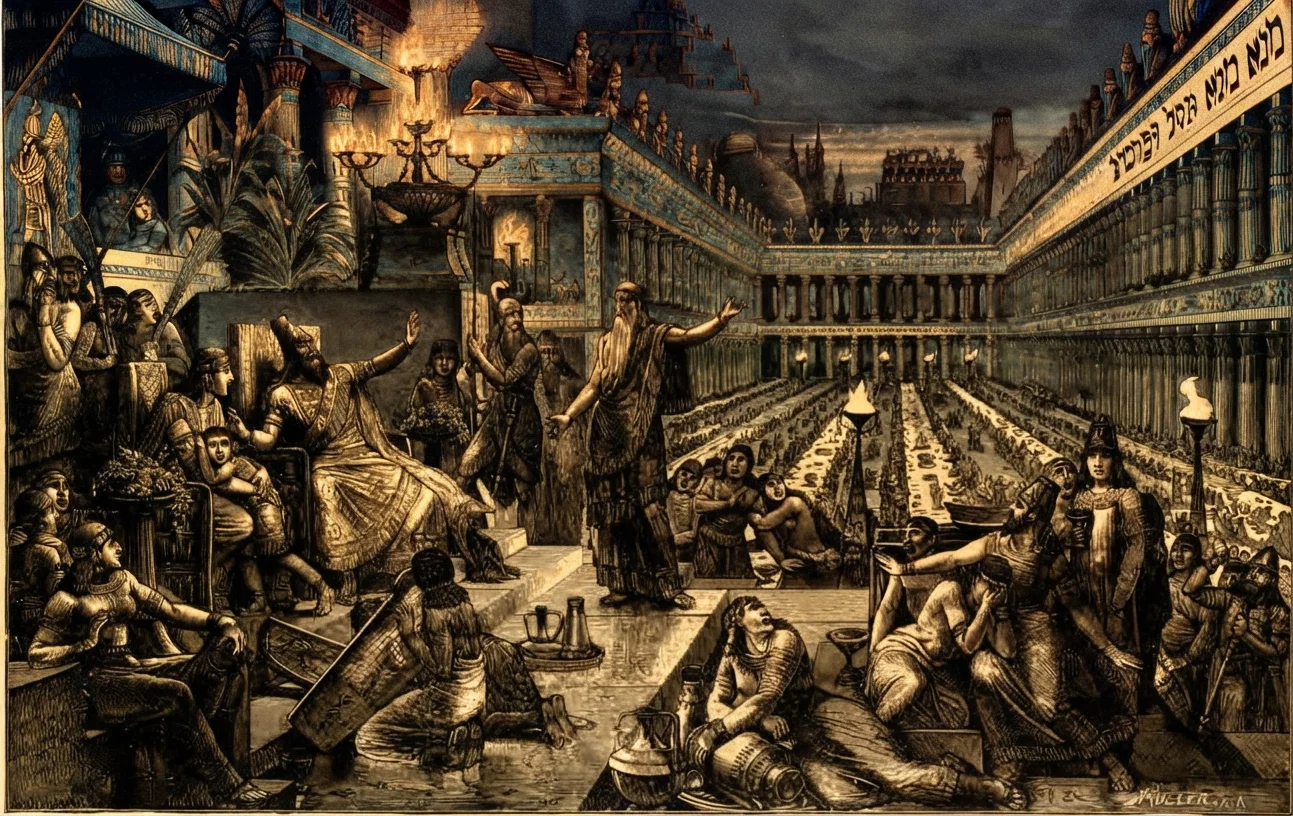
BELSHAZZAR'S FEAST “The empire of Babylon fell on a night of drunken revelry”
EATING caused the fall of Adam, and the beginning of ruin for the antediluvian world; drinking was Noah's worst sin, and the commencement of evils for the world after the Flood. If the tree of the knowledge of good and evil caused the fall of the world prior to the Flood, the knowledge of the vine and of intoxicating liquors has been the bane of the human race ever since. Drunkenness had its origin in the wretched career of Ham, and of the subsequent Babylon and Egypt, the nations which sprang from his descendants. And from that day to this the history of evil in this world has ever been coupled with the history of intoxicating liquors. With the true church of God prohibition has ever been as extensive as the numbers of its members; but the church of the devil has always been against total abstinence and the subjection of the body. In other words, the whole history of evil is coupled more or less with the history of the drink traffic.
The Conscience Benumbed
When the conscience is numb, carnal passions are fully awake. In that measure in which conscience is alive and energetic, in that same measure is there carried on a determined warfare against evil in every form, and against intemperance in particular. Not only can the downfall of the human race be traced more or less to the abandonment of self-control, to the tyranny of fleshly desires, but the crash of empires also is traceable to the same causes. It is said that Alexander the Great died as a result of a drunken debauch; and all are acquainted with the history of the Roman emperors who became fools in their delirious surrender to intoxicating passions. The empire of Babylon fell on a night of drunken revelry; and a few hours before it passed away, the prophet Daniel declared the following words to the monarch on this throne: "And thou, . . . O Belshazzar, hast not humbled thine heart, tho thou knewest all this; but hast lifted up thyself against the Lord of Heaven; and they have brought the vessels of His house before thee, and thou, and thy lords, thy wives, and thy concubines, HAVE DRUNK WINE IN THEM; and thou hast praised the gods of silver, and gold, of brass, iron, wood, and stone, WHICH SEE NOT, NOR HEAR, NOR KNOW."
When men plunge into the debauchery of sin, they hate to recognize the existence of the God that can see and hear and know. They surround themselves by gods of gold, brass, and other lifeless materials. They prefer gods which have neither eyes nor ears nor reason, because their own conscience has been overpowered by intoxicating liquors. "The conscience," one has said, "is like an alarm-clock; if we refuse to hear its first notes of warning, its continued sounds of alarm come at length to make no impression upon us." The baser elements seize control of our existence. Common sense, reason, and conscience are thrown down, and with the loss of dominion over self comes the loss of dominion over life, liberty, and happiness. In such an hour as this ended the empires of Babylonia, Grecia, and Rome. No wonder the cause of temperance is a cause of so great importance. Intoxicating liquor demands something more than possession of the pocketbook; it puts a yoke upon the individual, loads chains upon his property and his family. Yes, it mounts even higher; it exacts subjection of earthly kingdoms.
This Country's Gigantic Struggle
This great country of ours is now having her gigantic struggle with this exacting Moloch. In 1850, we are informed, the inhabitants of the United States consumed on an average 4.8 gallons per capita of intoxicating liquors. Twenty years later they were consuming 7.7 gallons per capita. By 1890 this dangerous consumption had risen to 15.53 gallons per capita of our population; while in 1910, statistics inform us, we had already reached the enormous consumption of 23 gallons per capita. In other words, from 1850 to 1910, for a space of about sixty years, the consumption of drink for the average American citizen had risen from 4.8 to 23 gallons per year.
Rum is able to turn the Declaration of Independence into a mockery. We beat off the English from across the sea, but right here at home we have a more terrible foe in the fiery water. It has watched by the cradle of every growing nation. Again and again has it succeeded in strangling manly kingdoms. Still the Government of the United States has entered into partnership with it. Other merchandise can circulate freely and be disposed of over the country without the Government's special approval. But not so with the little packages of bottled poison. The special agents of the State scour over the mountains and through the caves, seeking for any who might unlicensed be fabricating this dynamite, this destroyer of kingdoms. But when the accepted distiller has put forth the product, the Government hurries it off into warehouses, every barrel and bottle bonded and secure, this precious revenue-producing material. From out the storehouse it is passed on to no ordinary hands. A select nobility, gentlemen in white livery, have been especially commissioned to sell the poison of hell distilled into drops. Their diploma hangs on the wall—or rather diplomas, for they have two,—one a charter from the Federal State, the other the letters patent from the municipal hotel de ville.
The State Getting the Worst of It
And all for money! But the State is getting the worst end of the bargain. She is in the hands of the "mocker." About one third of the male insanity in the country is due to the excessive use of alcohol. Build more asylums. That costs money, but the loss is pitifully small compared with the ruin of these noble souls, the wealth producers of the State. Over one third of epileptic cases can trace their origin to alcohol. In 1908 there were in the State of Massachusetts 86,365 arrests due to intoxication—60 per cent, or three fifths, of all the arrests that year. The union of the Government with the liquor trade is turning out to be for the State a "bear hug." Is it a wonder that national crimes are on the increase? Booker T. Washington says that two thirds of all the lynching done in the land is due to the bad whisky sold to both blacks and whites. And every one knows what kind of effects this modern hellebore has upon the Negro. It turns the otherwise peaceful and happy creature into a dangerous and passionate fiend.
"M. de Laveleye has established," says the French "Revue des Deux Mondes" of August 1, 1900, "that with the money spent by the working men for intoxication, they could in twenty years buy all the manufacturing plants in the country, and deliver themselves from the power of capital. . . . Mr. Coste, in a recent volume, 'The Hope of the People,' shows that if those four million industrial workers who spend more than £20 each year for strong drink, should put that sum in the bank, they could in sixteen years buy up the property of the great industries and become their masters."11Right across the Rhine from France is Germany, where, it is estimated, the money spent each year for drink is four times that spent for war purposes. England pays out annually for alcoholic liquors an amount equal to about $22.00 for every man, woman, and child within its borders. One writer estimates that in the last thirty years alcohol has killed 7,500,000 in Europe, or more than were killed in all the wars of the nineteenth century. It is not in heathen lands alone that men sell their birthright for a mess of pottage; for no man who worships before the altar of Strong Drink, and brings his body as a living sacrifice to the temples of Alcohol, can expect to inherit the kingdom of heaven. He does not even enjoy the richer pleasures of this life; for he who builds the palaces of the brewer and the mansions of the distiller, loves the saloon-keeper's home better than his own home, and loves the saloon-keeper's child better than his own little girl. Poverty enters his cottage, and a dagger is aimed at the prosperity of the nation.
A traveler viewing the ruins of Pompeii, while wondering at the beauties of ancient art mingled with the licentious paintings of old heathenism, can still see in the main streets of the unburied city, the bacchanalian shops whence was freely sold the drink that made them mad.
Determined to Win
Back of the bottle stands the producer and the producer's gold. The brewer and the distiller have determined to sell the people of the country for gold. They have banded themselves together into what they call an association, but what should be called a conspiracy, with one determined object, and that is to ruin every man, woman, and child in this country. They have fastened their eyes on the children with the avowed purpose of selling into slavery your boy and my girl. Hell is moved from beneath, and the proofs are at hand.
The "Christian Herald" tells us that in the city of Los Angeles, California, a club is organized with the avowed purpose of inducing young people to form the habit of drinking alcoholic liquors. The rum advocates continually raise the cry that prohibition does not prohibit, but it was noticed that when the constitution of Oklahoma was framed with a prohibition clause in it, the brewers and distillers worked with all their might, hired lawyers, conducted campaigns, and spent $500,000 in order to have that article changed. If prohibition does not prohibit, why did they not become the firm friends of prohibition? Why the necessity of spending $500,000?
These allies of death must make great profits from their godless traffic, to spend in one State in a few weeks so much wealth. They knew well enough that an effort was being made for man's emancipation, and they deliberately poured out that $500,000 in order to keep up the slavery into which they had sold their fellow men.
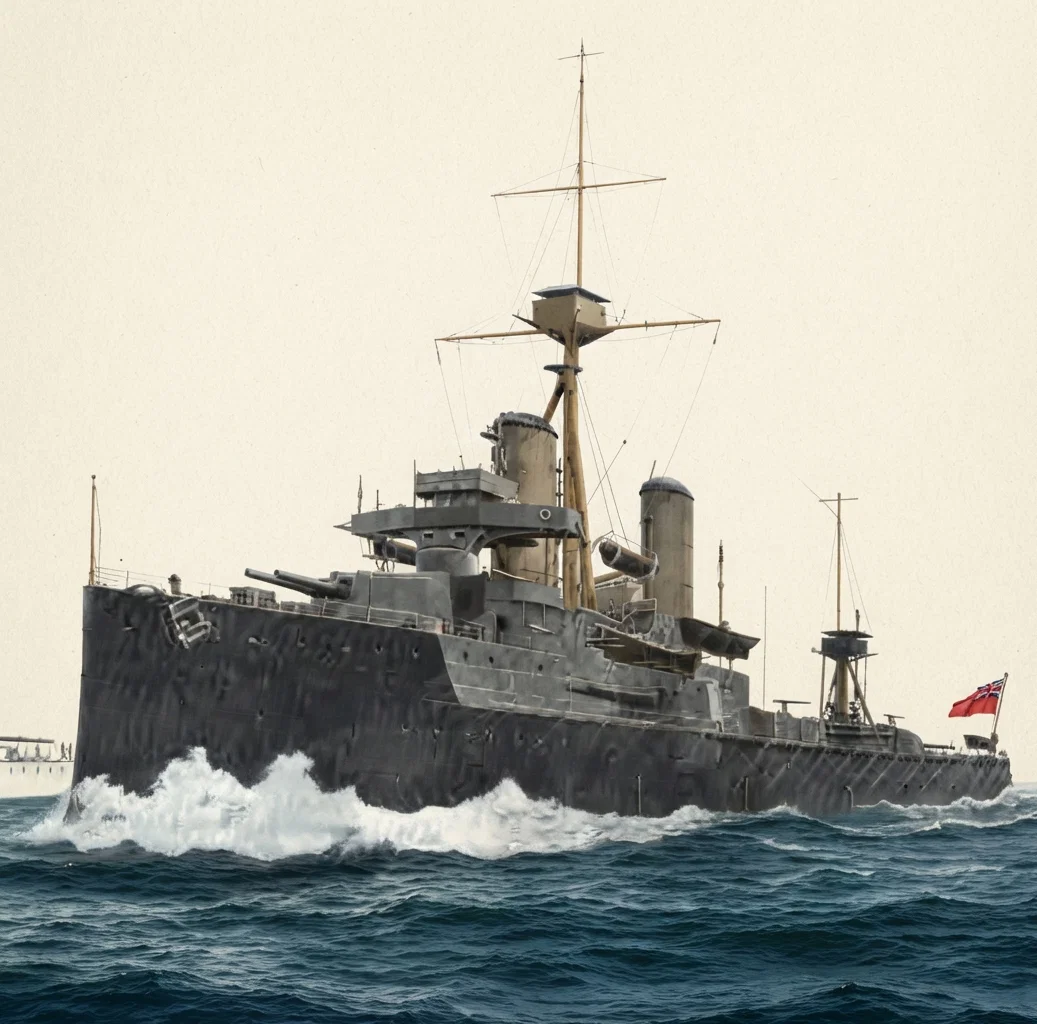
The British battle-ship Dreadnought, built in 1906, and which put all previous war-ships altogether out of date
We will consider in our next article more about this conspiracy, who are consciously and unconsciously its agents, and later we ought to say something as to how this enormous evil may be met. B. G. WILKINSON.
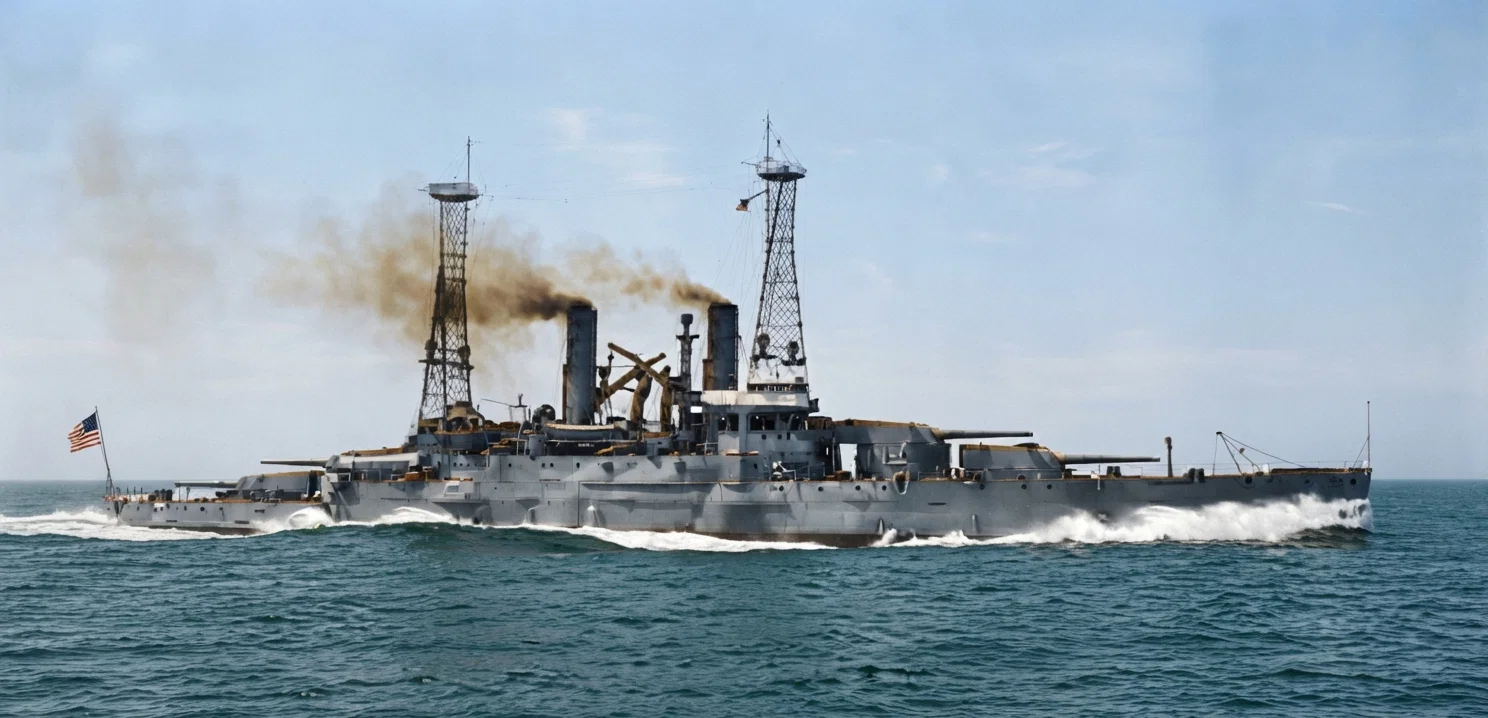
The United States battle-ship Michigan, one of the most powerful ships of the United States Navy, and that puts the Dreadnought of five years ago far in the background. At the pace that is now maintained, what will the next five years do to the Michigan?