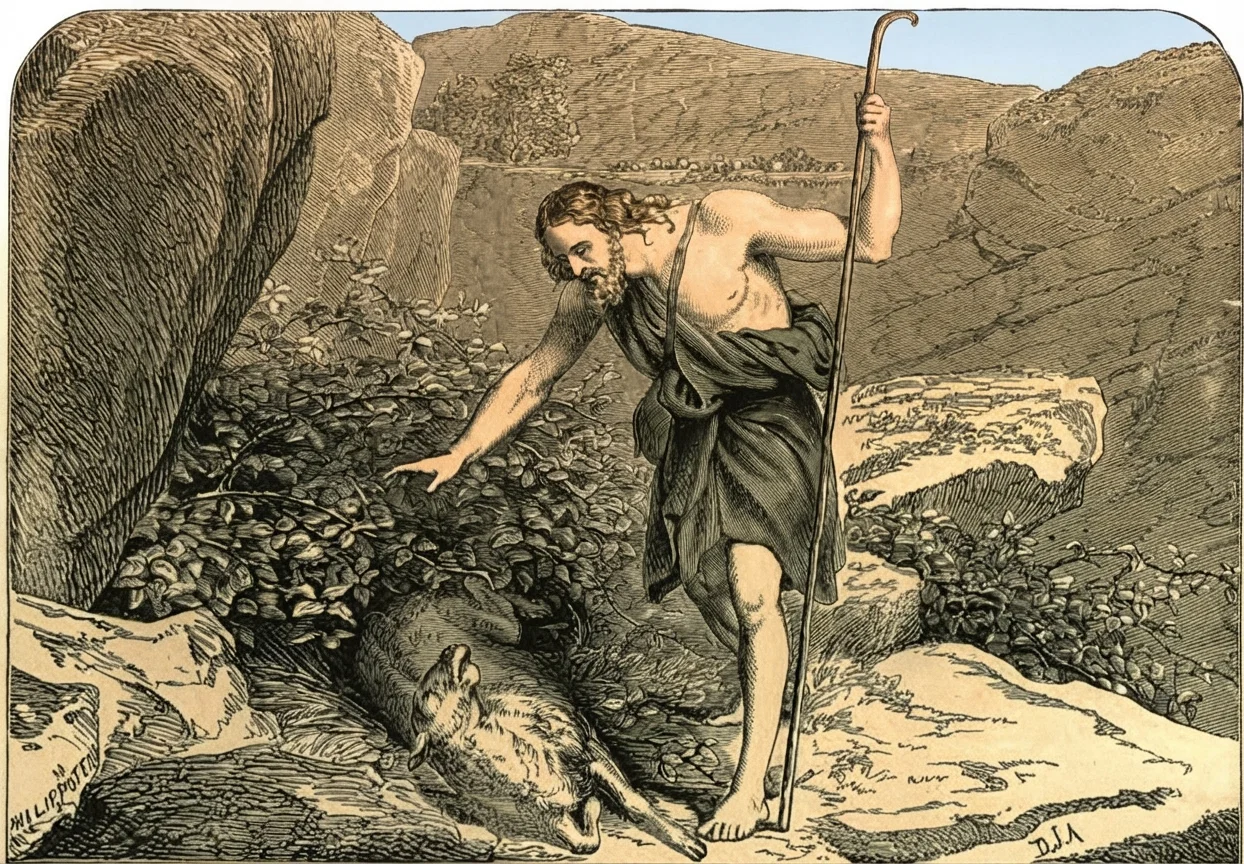
IN the parable of the shepherd seeking for the lost sheep is a representation of the tender patience, perseverance, and great love of God. As we contemplate the unselfish love of God, our hearts well up with gratitude, praise, and thanksgiving. We praise Him for the priceless gift of His only-begotten Son. There is no animal so helpless and bewildered as is the sheep that has strayed away from the fold. If the wanderer is not sought for by the compassionate shepherd, it will never find its way back to the fold. The shepherd must take it in his arms himself, and bear it to the fold. This care on the part of the shepherd, and helplessness on the part of the sheep, represent God's care for the sinner, and the condition of the soul that has wandered away from God. He is as helpless as the poor lost sheep, and unless divine love comes to his rescue, he will never find his way to the Father's house.
There is no possible way in which, of himself, man may recover his purity. The natural powers are perverted. Jesus, the Good Shepherd, says, "I know My sheep, and am known of Mine." The Pharisees were ready to accuse and condemn Jesus, because He did not, like themselves, repulse and condemn the publicans and sinners. The Pharisees put their trust in the law, and yet Jesus declared they did not keep the law. They thought that the law would justify them, and they would not consider the compassion and mercy that Jesus presented in His lessons as necessary to be brought into their practical life. Jesus came to the world to erect the cross, and beneath it all publicans and sinners may find refuge, and the Pharisees also may find peace, but only on the same terms by which those thought to be the greatest sinners may come to Christ.
"For God sent not His Son into the world to condemn the world; but that the world through Him might be saved." Christ never invited the wicked to come to Him to be saved in their sins, but to be saved from their sins. O, what hope does this give the sinner! for there is a way whereby he may return to his Father's house. The bright beams of the Sun of Righteousness shine upon his pathway, making it the royal path of holiness. The scribes and Pharisees can be saved only by entering in at the door of the sheepfold,—through faith in Jesus Christ.
The mercy and compassion of Christ stand out in clear contrast beside the indifference of the Sadducees and the contempt of the Pharisees toward those they looked upon as inferior to themselves. Christ did not ordain the plan of salvation for any one people or nation. He said: "I lay down My life for the sheep. And other sheep I have, which are not of this fold: them also I must bring, and they shall hear My voice; and there shall be one fold, and one Shepherd." Christ is not only the propitiation for our sins, but also for the sins of the whole world. The value of the offering of Jesus Christ can not be estimated; yet, by beholding the sufferings of the Son of God on Calvary, we may obtain some idea of the value at which God estimates the world. The value of the offering was deemed sufficient to save every soul from Adam's time down to the close of earth's history. "With the heart man believeth unto righteousness; and with the mouth confession is made unto salvation." Salvation is proffered to all men. The Jews, the Greeks, the Gentiles, the bond, the free, all tribes and nations, may come to Christ.
But while Heaven rejoices over the restoration of one lost sheep, the scribes and Pharisees looked upon Jesus with contempt, and the result of His expressed compassion and love led them to determine to kill Him. When the Lord works through human instrumentalities, and they are moved with power from above, Satan leads his agents to cry, "Fanaticism," and to warn the servants of God not to go to extremes. Let all be careful how they raise this cry; for, while there is spurious coin, the value of the genuine is unreduced. Because there are many spurious revivals and spurious conversions, it does not follow that all revivals are to be held in suspicion. Shall we have no reason to rejoice on earth, when angels rejoice in heaven? Will not those who claim to be children of God, stand in harmony with the angels of heaven in their rejoicing? Let them not voice the words and reveal the contempt expressed by the Pharisees as they said, "This Man receiveth sinners, and eateth with them." We have abundant reason given by our Lord to make us afraid of sneering at His work in the conversion of souls. The manifestation of God's renewing grace on sinful man, pronounced in heaven as genuine, causing angels to rejoice, has by many through unbelief been termed fanaticism, and the messenger through whom God has worked has been spoken of as one having zeal not according to knowledge.
Let every desponding, distrustful soul take courage, even tho he may have done wickedly. Read the parable of the lost sheep, the lost piece of silver, and the prodigal son, and take courage. You are not to think that perhaps God will pardon your transgressions, and permit you to approach into His presence; but you are to remember that it is God who has made the first advance, that He has come forth to seek you while you were still in rebellion against Him. With the tender heart of the shepherd, He has left the ninety and nine, and gone out into the wilderness to seek His wandering one. His lost sheep is precious to His heart of love, and He will bring back every wanderer to His Father's house who will let Him do so. In the return of the lost sheep to the fold, not only does the Shepherd rejoice, but the angels also rejoice over the restoration of the wanderer, more than over the ninety and nine who think themselves just persons.