LESSONS FROM THE LILY

9%

Pacific Press Publishing Company · Oakland, California · Nov 18, 1897

FromSigns of the Times, Vol. 23, No. 45.

Read the full edition

LESSONS FROM THE LILY.

"CONSIDER the lilies, how they grow."—Jesus.
The power of God doth make thee grow: At His word thou standest forth.
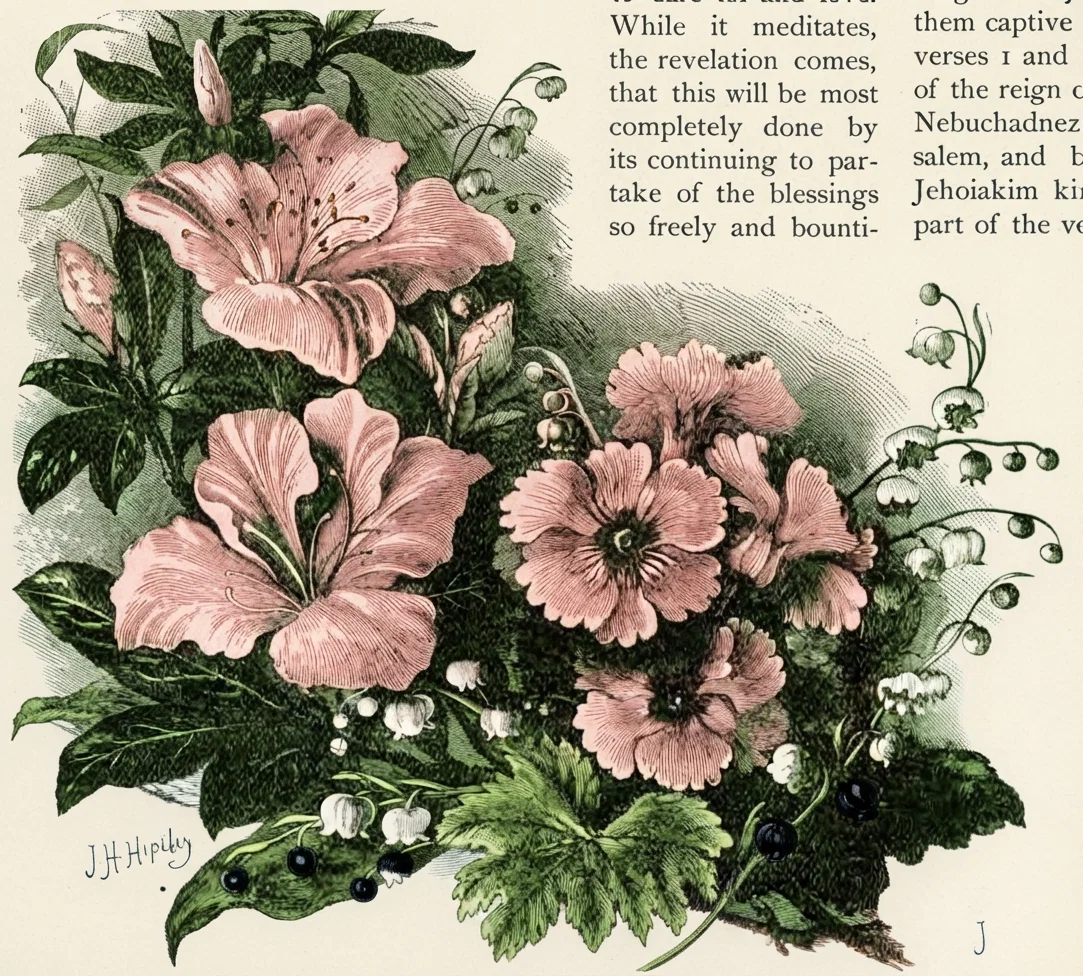
Down in its cold, damp bed the lily bulb lies. No warmth of fire dispels the chilliness, or sunlight penetrates its dark abode. Hidden by earth, neglected, none apparently give it thought. Yet no murmur escapes its waxen lips. It worries not over its present apparently unpromising condition. Confident that it has a place in the great, eternal, purpose of the Creator, and therefore in his thoughts, it patiently awaits his pleasure. It does not grow weary in its vigil, but, the while, enjoys peaceful repose, gathering strength for the hour when, by that still, small voice through which he speaks alike to his animate and inanimate creatures, God shall call it to a higher and a nobler life.
Anon the change approaches. A power is descending from above. It penetrates the earthy covering of the lily-bulb’s quiet home that has shut it away from the outer world, and touches its heart. Gladly it welcomes the first and every impulse of the warm spring sunshine which is flooding the world above. It accepts this as a token of God’s love, and love is begotten in return. It takes in the life-giving power that there is in the sun’s warm rays, and its whole being thrills with that new life from God which is to work in it "to will and to do of his good-pleasure." It now realizes, if it has not before, that the damp, cold bed where it has rested all during the long, dark night of winter, was prepared by a loving Father’s hand, and just suited to its needs. Had it lain on the surface of the earth unprotected, it would have withered and died, and the bright spring sunshine would have only hastened its decay. As it is, the earth, the moisture, and the sunshine now combine to assist it in fulfilling the Master’s bidding. Submission to the will of the Creator and humble acceptation of his blessings, have wrought wonders in its behalf.
As it puts forth its tender shoots and makes an effort to press its way up into the air and sunlight above, it finds its feeble efforts seconded by an unseen power. The big, dry clod just above it, forming an unsurmountable obstacle and blasting its hopes, is pushed aside by an unseen hand, and the pale, fragile shoot for the first time inhales a breath of pure, fresh air, and is bathed with a flood of sunlight. In these elements it finds another wise provision for its new form and conditions of existence. Under their influence the pallid hue is replaced by a beautiful green, its slender form rounded and strengthened. It realizes that all these provisions of the Creator are blessings essential to its growth. It is by receiving and using them that it is fitted for its mission. It sees that without them it could do nothing,—that it is in him that it lives and moves and has its being. To him, therefore, is due all the praise and glory for what it is and all that it hopes to be. It gladly accepts and rejoices in this truth.
It finds itself in a new world of experience. It looks around upon the landscape, and, with a feeling akin to surprise, notes that it is not the only plant in the world. There before it are millions upon millions of other plants, "Beautiful children of the glen and dell," in whom God is working with that same wonderful power as in itself. Some are more curiously wrought and beautiful; others less so. All are contented and happy in their entire submission to their Creator’s will. No feelings of envy or jealousy enter its heart to destroy its peace. Instead, it is filled with inexpressible gratitude and love to him who has made it a partaker with others of the glory that fills the earth, and, literally, a part of that glory. Now its thought is how to most effectually glorify him who has bestowed such loving care and consideration on it, while he has so many others fully provided, that they may assist it in fulfilling the object of its creation. It reasons: "If I refuse to do this, I will dishonor my great Benefactor, who seeks only my good. More than this, I will lose my love for him, and no longer enjoy the association of my companions who take such pleasure in their service of him who created them. I will wither and die, and never see the enrapturing glory that will be revealed when God’s plan is worked out in all its perfection." Unendurable thought. It is banished, and with a heart buoyant with hope and expectancy, the lily continues to receive of the things of its God and shed them forth in blessings upon others.
It grows more beautiful each day, and each day reaps the consolation of knowing that it is causing joy in the hearts of some where it might not otherwise have existed. It tells, in its modest way, of the love and power of the Creator. Finally it blossoms—crowning evidence of a beautiful life of loving submission to him who does all things well; emblem of purity and love; outgrowth of divine grace and power. Having finished its course, the Father calls, and it lays down its life with the same resignation it has ever manifested, committing its future to him who has so faithfully cared for it during life. It rests, but its life still speaketh, urging all who would finish their course with joy, to resign themselves fully to their loving Father’s care.
Perfect submission, Taste of its sweets.
Shall we not only reverently consider the lilies, but all the mighty works of God as seen in nature, and from them learn more of the Father’s love and power, and how to use them to his glory?