ONE of the most earnest and active organizations in this country at the present time set for the suppression and eradication of the liquor traffic, is the Anti-Saloon League of America. The fourteenth national convention of this league was held in the city of Washington, D. C., December 11-14, 1911. The convention was well attended, and was considered the most important and the most successful gathering of the league yet held since its organization in this city sixteen years ago — December 18, 1895.
About three hundred delegates and officers of the league, representing nearly every State and Territory in the Union, together with several other hundreds of interested men and women, were assembled to recount the victories of the past two years, or since the last national convention held in Chicago, and to lay plans for the further suppression of the liquor traffic and the driving out of the saloon from this fair land, and making the map "all white."
Many earnest, able, and well-known temperance speakers and workers addressed the convention. Among those who were present and took part in the proceedings were Bishop Luther B. Wilson, of Philadelphia, the president of the league, and a leading bishop of the Methodist Church; the Rev. Purley A. Baker, of Westerville, Ohio, the general superintendent; the Rev. S. E. Nicholson, general secretary; E. H. Cherrington, editor of the "American Issue," the official organ of the league; the Hon. John G. Woolley, once a Prohibition presidential candidate; the Rev. H. C. Stuntz, of New York; the Rev. E. S. Chapman, of Los Angeles, California; Governor Noel, of Mississippi; Ex-governor Hanley, of Indiana; Senator Luke Lea, of Tennessee; the Hon. Richmond P. Hobson, of Alabama; Judge A. Z. Blair, of Ohio; Joseph Gibson, president of the Ontario branch of the Temperance Alliance of Canada; the Rev. Wilbur F. Berry, of Waterville, Maine; Mr. Filmore Condit, of New York; the Rev. Joseph Clark (Timothy Stanby), of Columbus, Ohio; and the Rev. George R. Stewart, the fiery temperance orator of Tennessee.
The sessions were held alternately in the Calvary Baptist and the First Presbyterian church, in the heart of the city, Bishop Wilson presiding throughout the convention. The music and the song services were conducted by Prof. E. O. Excell, of Chicago, and were interspersed with a number of peculiarly but entertainingly rendered solos by Mr. Bacon, the "Nightingale singer" of Yorkshire, England.
The Opening Address
The opening address of the convention was made by Mr. John G. Woolley, his subject being, "Prohibition with the People Behind It." By means of sound logic, enlivened with witty sallies and striking metaphors, he discharged "a volley of oratorical grape-shot and shrapnel" into the ranks of the liquor interests. He spoke encouragingly of the work and victories of the past, but by no means thought the battle won. Illustrating from history, he compared the temperance forces to General Braddock and his army, and the liquor dealers to the Indians; his moral being, that the temperance workers should not despise their enemy, and as a result be overcome and conquered after being taken by surprise through lack of vigilance, born of self-confidence. Among other things he said:
If there is any human activity in civil or moral engineering entitled to be called fundamental and eternal, it is that of casting up highways for the people.
Our present cheers must not shut out the voices of the future. We shall have hot work from now on. Villainy takes naturally to strategy; cruelty dies hard. The organized liquor trade is base and crooked to the core.
Coöperation is the key-note for the future. The right hand of fellowship among ourselves is the best formation we can use against the enemy. With hearts of oak, we must close our ballots, the white fingers of our Christian citizenship, on the throat of the liquor traffic, and squeeze its accursed gullet till it quits forever.
Is prohibition unscriptural? Who says it is? — The brewery. Who says it is not? — The church. Which should know best? Which has the best character as a witness? The whole area of Scriptural endeavor, from Sinai to Salvation Army, stands for prohibition. . . . We are not dealing with medical prescriptions, or ancient Oriental hospitality, or wine miraculously made, but with twentieth century breweries and distilleries that organize dissipation into trusts to exploit the weak and ignorant and vicious, to the tune of billions annually. The scripture that is in point is, "Wo unto him that giveth his neighbor drink."
Who says, "Prohibition does not prohibit"? — The liquor dealer. Who profits when it fails? — The liquor dealer. Who makes it fail? — The liquor dealer. Why does it fail? — Because the average liquor dealer is confessedly and incorrigibly a criminal, a combination of Fagin and Bill Sikes, in contempt of the popular will and the popular right. Tell me, wherein is a fence for stolen goods worse than an office of big business that knowingly and wilfully supplies liquor to brothels and speak-easies, to the contempt and confusion of law? Tell me, by how much is the sender of obscene literature or lottery tickets through the mails a meaner degenerate than the merchant prince that establishes his agents on the border and ships alcoholic liquor to illicit dealers in prohibition areas?
Prohibition already works well in country places, next best in villages and little towns, worst in cities, but better and better everywhere.
In his closing remarks, Mr. Woolley referred to the Federation of Churches organizing for leadership in this work. This he thought a mistake. Its claim to leadership, he said, is based on "ecclesiastical regularity;" but "the masses will never stand for a religious 'union label,'" he added. "The American Anti-Saloon League is prohibition with the PEOPLE behind it," and this he thought ought to accomplish the desired results.
Conditions in Other Lands
Homer Clyde Stuntz, D.D., of New York, for some years a foreign missionary, gave an interesting and illuminating address on "Foreign Missions and the Liquor Traffic," in which he told of conditions particularly in India, China, and the Philippines. In India, under the present government, he said, the liquor business was practically "farmed out," territories being sold to the highest bidder for a term of three years.
Report of the General Superintendent
The report of Mr. P. A. Baker, the general superintendent, contained much of interest, and was couched in thoughtful and earnest terms. While rejoicing that there was now local prohibition in all but three of the States, — Pennsylvania, New Jersey, and Nevada, — and State-wide prohibition in eight States, he prophesied no easy victories for the future. He said:
The temperance people of the country must learn that the battle before us is not a rose-water conflict. It is war — continued, relentless war. If they (the Christian business men) are anticipating that this is a skirmish to quickly pass away, they do not rightly read the signs of the times. The day of peace on this proposition has passed. The conflict for the overthrow of the liquor traffic will increase with added intensity every hour until this brutal, humanity-destroying traffic is forever eliminated from our civilization.
The battle against the liquor traffic is national and world-wide. Until the recent past the liquor interests were not largely united nor compactly organized. The past twelve months has witnessed a coming together of the hosts of rum, in much of the country, in a way that challenges the thoughtful consideration of every discerning man. Evil is cohesive; easy of organization, because it pays in dollars and cents. Righteousness is always in danger of being divisive, because it requires a standard of usefulness to which few have attained. The liquor people are up to their fighting best in many of the States, while the temperance people have not one in six of their natural fighting force in the field doing real service, and whole regiments are not aware that war has been declared.
To engage in a traffic that is condemned by science, outlawed by the church, ostracized by decent society, excluded from fraternal orders, policed by the State, and lives upon the weakness and wickedness of humanity, is to abandon one's self to the devil and all his works. It is to the saloon that the officers of the law go in search of gamblers, counterfeiters, prostitutes, thieves, housebreakers, highwaymen, incendiaries, and assassins. These are the only places outside of prison walls where this breed is welcome. It is the gangrene of the body politic.
We must print our way into the knowledge and favor of the people before we win this work. Circulars mailed into the homes, large posters hung upon bill-boards, in factories and churches, and the circulation of our league papers, will be of abiding value. The masses are utterly without knowledge.11They will not seek knowledge. It must be literally forced upon them when they are not looking.
How shall we get the money? — Put a piece of literature into the hands of interested men of means, that has real merit in it, and ask them to pay for the printing of ten thousand, fifty thousand, a half million copies, and they will do it. Men of means respond best to definite propositions.
Millions of money are now being poured into the treasuries of certain colleges — some of them of doubtful moral standards — that already have more money than they can spend. Why not some one give a few million dollars to destroy this breeder of strife, this chief of human butchers?
It is becoming increasingly evident that a prohibitive law is much more easily enforced than a regulative law. The only successful part of any regulative enactment against the liquor traffic is its prohibitive feature. We must not accept the half-loaf theory as in any sense a solution of this difficult problem. The only solution of the saloon problem is no saloon.
Finally, we must not overlook the fact that we confront a foe that has ill-gotten wealth without limit and no conscience in the spending of it. Love for country, human character, domestic happiness, personal reputation, have no place in its code of warfare. Bribery is amongst its mildest methods for accomplishing its purpose. It laughs at virtue; it mocks religion; it scoffs at common honesty; it defies every appeal of outraged womanhood, and robs helpless childhood of a fair chance. And when laws are enacted, this treasonable institution tramples upon them with impunity. It refuses to be regulated. It is incapable of reformation. "It would rather die than obey law." There is nothing left but to abolish it from every foot of territory everywhere as speedily as an advancing civilization and a developing conscience will permit.
Mr. Baker stated that the league was now sending out about three tons of anti-saloon literature daily from their new printing house at Westerville, Ohio, but he hoped that soon the amount would be ten tons. Mr. Cherrington said that, including the State editions, the circulation of the "American Issue" was 500,000.
Remarks by Governor Noel
Governor Noel, of Mississippi, told how, when he began the legal profession, he espoused the cause of prohibition, and how, little by little, he, with others, had worked away until the liquor traffic had finally been outlawed in his State. "In this cause," he said, "we want the assistance of county, municipal, and State governments, and no opposition from the Federal Government." As to whether the prohibition law was violated in his State, he said: "All laws are violated. No laws enforce themselves. We still have murder in our State; but we have not ceased to make murder punishable by law. We want the same protection in this matter that is given against hog-cholera, rinderpest, cattle tick, and the Texas cattle fever. It is a world-wide acknowledged evil. We want to see nation-wide prohibition."
The Great Destroyer
In his address on "The Great Destroyer," Tuesday evening, December 12, Congressman Richmond P. Hobson, after indicting the liquor traffic as a greater destroyer annually than all the wars since the battle of Marathon in 490 B.C., spoke of the recent discoveries of science that alcohol is not merely a stimulant, but a poison; and he held that it ought therefore to be dealt with as such, and treated as are other poisons. He spoke of the effect of alcohol upon the blood, and through this on the brain, and through the brain upon the morals, and thus upon offspring and the rising generations. Alcohol, he affirmed, is both destructive and degenerating in its effects, and the result of its continued use is to produce a race of degenerates; which, in its last analysis, means the destruction and downfall of society, the nation, and the world. "It has been
stated," he added, "that already the number of degenerates in such cities as Philadelphia, New York, and Chicago, is in the majority. If true, this means that they have already lost the power of self-government; that they must necessarily be controlled by corrupt men and corrupt motives, — that liberty is already at an end in these cities." He traced the course of empire, showing how the old, corrupt nations of the East had fallen and given place to newer and better people of the West, and pictured America as the last great nation, and the last hope of the world. If this nation falls, he said, the world will fall with it. Here are his words, and his appeal for immediate action:
In this generation our people must take their choice; in the next generation it may be too late. There is no alternative. We are fairly in the death grapple. All the pages of history are crying out to America, "Conquer this great destroyer or perish."
Suppose America should go down before this destroyer, whither will a rural and frugal fragment of America go to start a new empire? History leaves no hope to go back eastward. There is no longer any westward. We have reached the shores of the last ocean. In America the star of empire westward finishes the circle of the world.
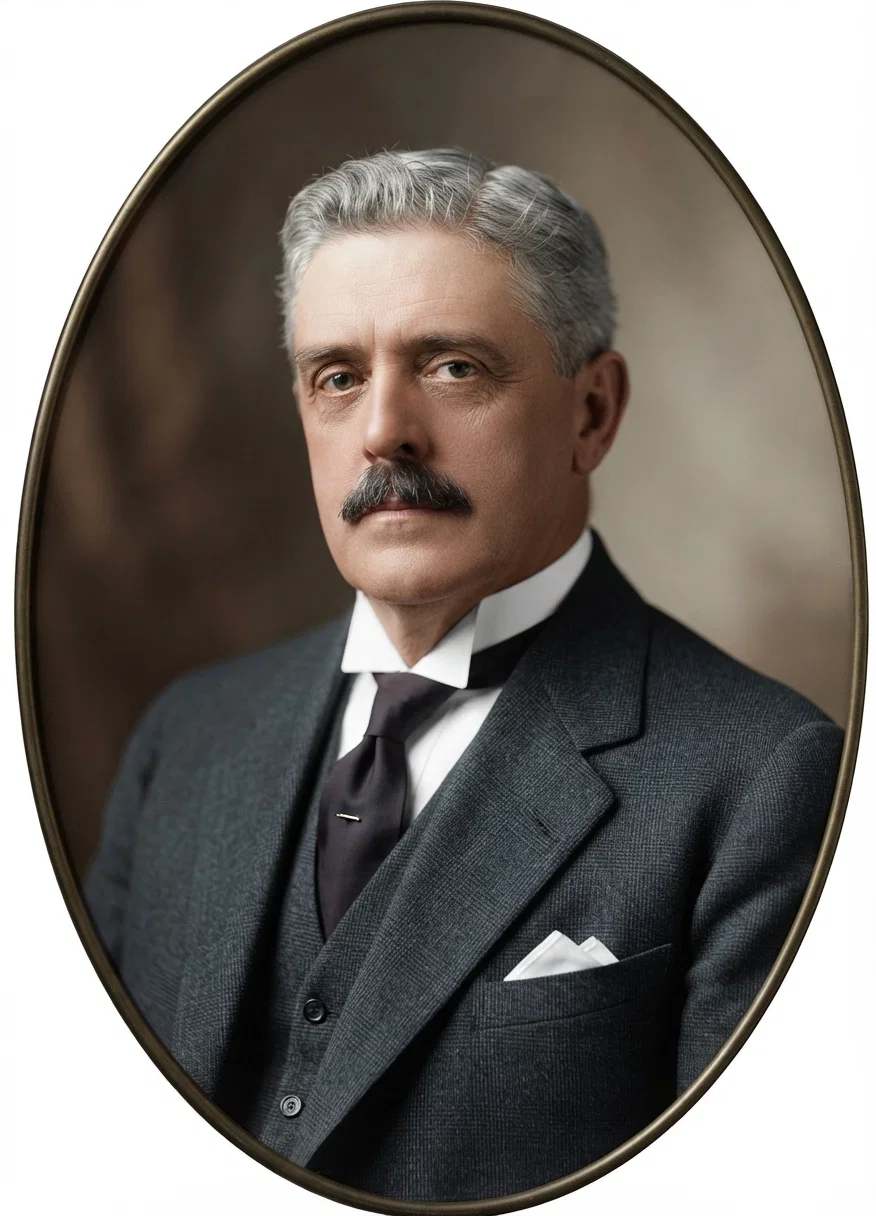
Photo by Gutekunst Bishop L. B. Wilson, President Anti-Saloon League of America
In America we are making the last stand of the great white race, and substantially of the human race. If this destroyer can not be conquered in young America, it can not in any of the old and more degenerate nations. If America fails, the world will be undone, and the human race will be doomed to go down from degeneracy into degeneracy till the Almighty in wrath wipes the accursed thing out.
Notwithstanding the activities of the various temperance societies and reform movements, and the apparently splendid victories won of late in the cause of prohibition, it was impossible for the convention to close its eyes to the ever-present fact that despite all these efforts and victories, and the fact that practically half of the United States to-day is nominally "dry" territory, still intemperance is steadily on the increase here; that in the past seventy years the annual consumption of intoxicating drinks in America has increased from four gallons per capita in 1840 to twenty-five gallons in 1910 — an increase of over five hundred per cent.
Another matter closely related to this, and several times alluded to during the convention, was the fact that the large cities are the great centers and hotbeds of the liquor traffic; that most of the drinking is done in these, and that little difficulty is experienced in controlling matters in the country and in small towns and villages — a comment on the evils of city life.
The Interstate Commerce Law
One of the leading matters emphasized during the convention was the fact that it was practically impossible to make prohibition effective in the States as long as liquor could be shipped into a prohibition State from a non-prohibition State under the protection of the present national interstate commerce law. In connection with the convention, and immediately following the convention proper, an all day's session of a "National Conference on the Interstate Liquor Question" was held to consider this question, and decide upon the best method to pursue looking toward a remedy for this evil. The call for this conference had been signed by over two hundred prominent men of the country, and delegates to it appointed by twenty-seven State governors.
Resolutions Adopted
Near the close of the convention, resolutions were unanimously adopted, expressing gratification over the prohibition victory in Maine; declaring that the liquor traffic must be dealt with as a crime; against the return of the army canteen, and in favor of federal prohibition in the Hawaiian Islands; condemning the system of raising money for the schools in Alaska from liquor taxes; and protesting against interstate traffic in prohibition States.
Bishop Wilson was again elected president of the league; Mr. P. A. Baker, general superintendent; and Mr. S. E. Nicholson, general secretary.
At the closing meeting, over $2,000 in pledges and donations was raised for the work.
Hardly a breath was heard during the entire convention about the Sunday closing of the saloon. The league program practically precludes this, as it is set for the total abolition of the saloon on all days. Nor was anything heard concerning party politics, much of the success of the league being attributed to the fact that it is non-sectarian and non-partisan. It considers that it has a work above and beyond party lines, and worthy the support and best efforts of all parties, all creeds, and all denominations.
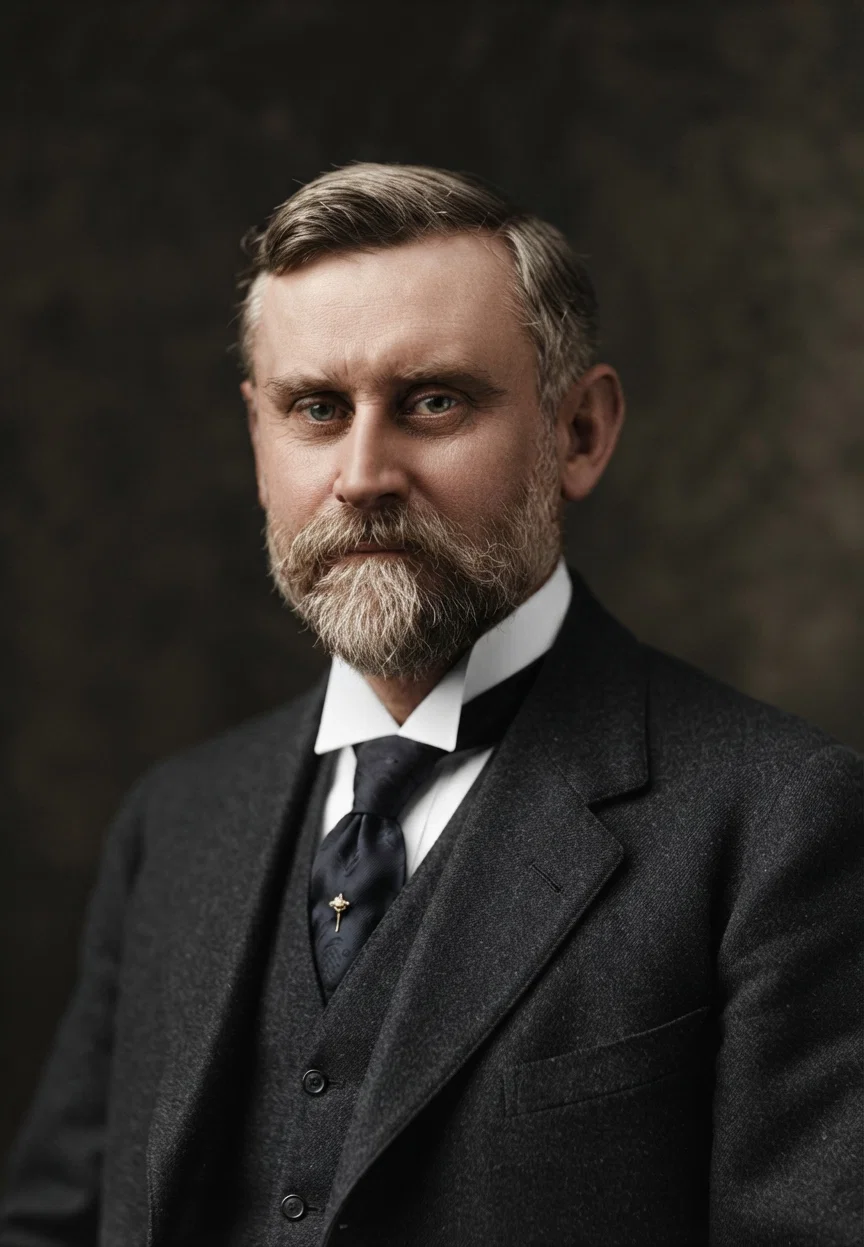
P. A. Baker, General Superintendent Anti-Saloon League of America