The Most High Ruleth

6%

Pacific Press Publishing Company · Oakland, California · Dec 2, 1897

FromSigns of the Times, Vol. 23, No. 47.

Read the full edition

The Most High Ruleth

"THE MOST HIGH RULETH." NO. 6.
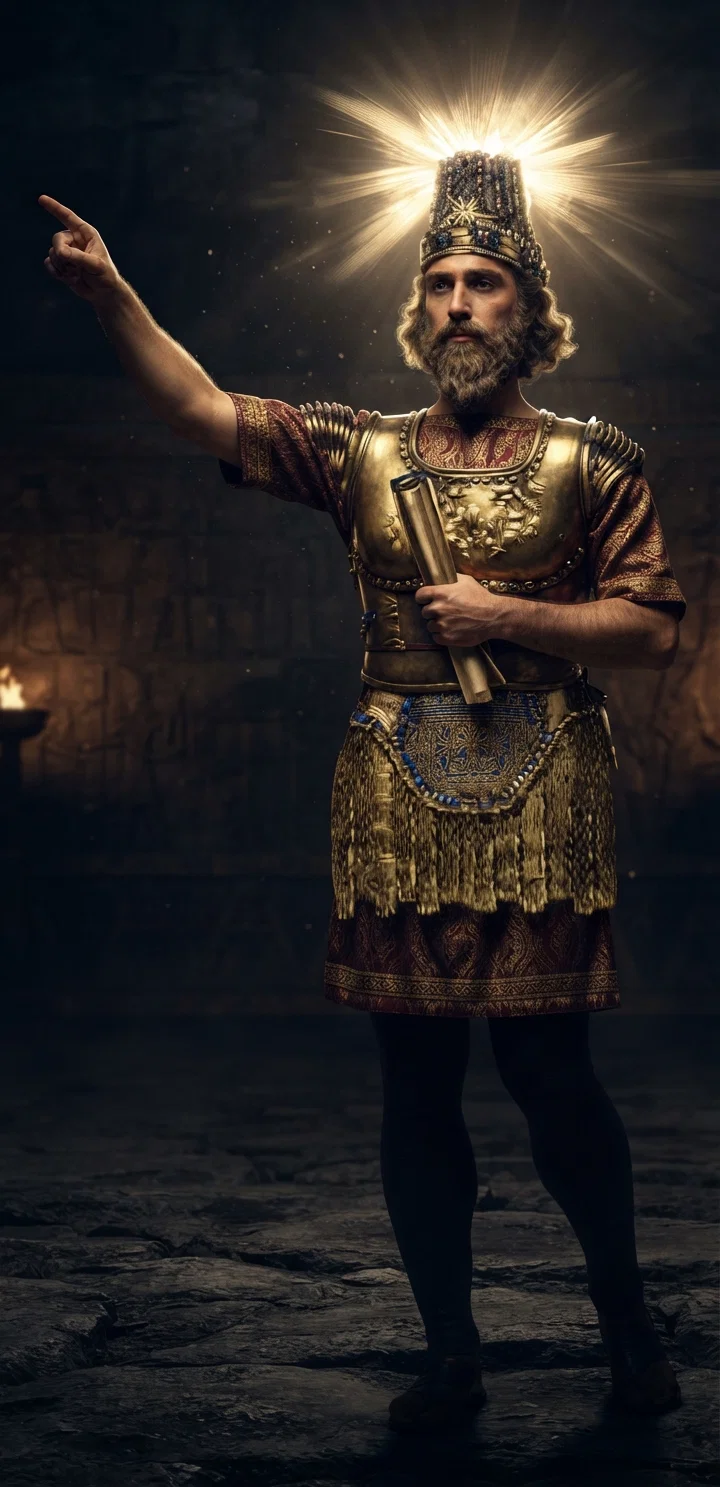
WHEN it is said that "the Most High ruleth in the kingdom of men," we are not to infer that he inspires the prevalent wickedness of sinful rulers, or the evils that exist among the people. God has an "eternal purpose," and the adversary is continually working to thwart that purpose. His influence often corrupts even those whom God in his providence has placed in responsible places, and turns them away from God. If they persist in going that way, they are permitted to go. But God is able to rule and overrule in spite of all these obstacles, and therefore he "removeth kings and setteth up kings" as the exigencies of the case may require. The reason that he bears so long with wicked men is because of his long-suffering mercy. "The Lord is not slack concerning his promise, as some men count slackness; but is long-suffering to usward, not willing that any should perish, but that all should come to repentance." 2 Peter 3:9.
The rise and fall of empire in this world is the process of God's continual overruling to defeat the devices of the enemy of all righteousness. In the economy of his grace, God sees fit to reveal to his people in advance important matters that are to take place. "Surely the Lord God will do nothing, but he revealeth his secret unto his servants the prophets." Amos 3:7. The prophet Daniel was a special instrument in the hand of God through whom he would reveal his future dealings with the kingdom of men, even down to the setting up of his own everlasting kingdom.
"In the second year of the reign of Nebuchadnezzar Nebuchadnezzar dreamed dreams, wherewith his spirit was troubled, and his sleep brake from him." Dan. 2:1.
According to Jewish reckoning it was the fourth year of his reign, as they counted in the two years in which he reigned conjointly with his father. In the first year of that joint reign Nebuchadnezzar attacked Jerusalem, and carried away part of the golden and silver vessels of the temple and a number of prisoners. Among these were Daniel, Hananiah, Mishael, and Azariah. They were sent to school three years, and it was after this that Nebuchadnezzar had the dreams mentioned above; for, as we see further on in the chapter, these four persons were reckoned among the "wise men" of Babylon. The statement that the occurrence referred to was in the second year of Nebuchadnezzar's reign is based on the Chaldean reckoning, which counted from the beginning of his sole reign after the death of his father. It is worthy of note here that Daniel and his companions were still young men.
"Then the king commanded to call the magicians, and the astrologers, and the sorcerers, and the Chaldeans, for to show the king his dreams. So they came and stood before the king. And the king said unto them, I have dreamed a dream, and my spirit was troubled to know the dream." Verses 2, 3.
The Chaldeans asked the king to tell them the dream, promising that they would then show the interpretation. But this was an old game, and at last the king had awakened to the fact that they were impostors. So he put them to the test by requiring that they tell the dream themselves. This was not an unreasonable requirement, as they claimed to be guided in such matters by supernatural wisdom. With such a claim, there was no reason why they could not tell the dream as well as its meaning. He reasoned correctly when he said, "Tell me the dream, and I shall know that ye can show me the interpretation thereof." The king promised them great rewards and honor if they would tell the dream and the interpretation;
but if they could not do so, they were to be cut in pieces and their houses destroyed. And he gave as the reason,—"for ye have prepared lying and corrupt words to speak before me, till the time be changed."
But the Chaldean "wise men" failed to tell the dream, and not only failed, but declared that there was not a man upon the earth that could do so. Then the king could brook them no longer; he became very angry, and the decree went forth that all the wise men of Babylon should be slain; "and they sought Daniel and his fellows to be slain." When Arioch, the king's captain, had made the matter known to Daniel, the young prophet "went in, and desired of the king that he would give him time, and that he would show the king the interpretation." This proposition was so different from that of the Chaldeans that an extension of time was granted. Daniel
immediately went to his companions, and together they sought the God of heaven, the great Teacher and Revealer, under whose providence they had been so graciously favored in former trials.
"Then was the secret revealed unto Daniel in a night vision. Then Daniel blessed the God of heaven. Daniel answered and said, Blessed be the name of God forever and ever; for wisdom and might are his; and he changeth the times and the seasons; he removeth kings, and setteth up kings; he giveth wisdom unto the wise and knowledge to them that know understanding." Verses 19-21.
Daniel then asked Arioch not to destroy the wise men, but to take him before the king, and he would show the king the interpretation of his dream. On arriving in the presence of the king, Daniel gave all the credit to the God of heaven, disclaiming any wisdom of his own. This was far different from the course of those pretended "wise men" who claimed to interpret dreams but could do nothing more than to prepare "lying and corrupt words." AndDaniel, unpretentious as he was, was enabled to tell the king even more than his dream; he went back to the king's thoughts upon his bed, on account of which the dream had been given.
"As for thee, O king, thy thoughts came into thy mind upon thy bed, what should come to pass hereafter; and He that revealeth secrets maketh known to thee what shall come to pass." Verse 29.
After telling the king's thoughts upon his bed, Daniel did not stop to inquire if he had guessed correctly; the secret had been revealed to him (verse 19), and he knew the truth of what he was saying. So he proceeded, without waiting for affirmation, to tell the dream:—
"Thou, O king, sawest, and behold a great image. This great image, whose brightness was excellent, stood before thee; and the form thereof was terrible. This image's head was of fine gold, his breast and his arms of silver, his belly and his thighs of brass, his legs of iron, his feet part of iron and part of clay. Thou sawest till that a stone was cut out without hands, which smote the image upon his feet that were of iron and clay, and brake them to pieces. Then was the iron, the clay, the brass, the silver, and the gold, broken to pieces together, and became like the chaff of the summer threshing-floors; and the wind carried them away, that no place was found for them; and the stone that smote the image became a great mountain, and filled the whole earth." Verses 31-35.
The interpretation of the dream will be considered in another article. W. N. G.