THERE is a great and growing craze in this country for the taking of drugs, especially drugs whose nature and effects are to the taker wholly unknown.
A man or a woman has a qualm. Instead of asking himself or herself, "What have I eaten? What have I drunk? Have I been sitting in a draught?" he or she—he no less than she—casts about for some drug which he or she has heard about or read about, no one knows where. And having found one with a sufficiently terrifying name, odor, or taste, he or she pours it into his or her helpless interior and with a sublime faith and courage awaits the results.
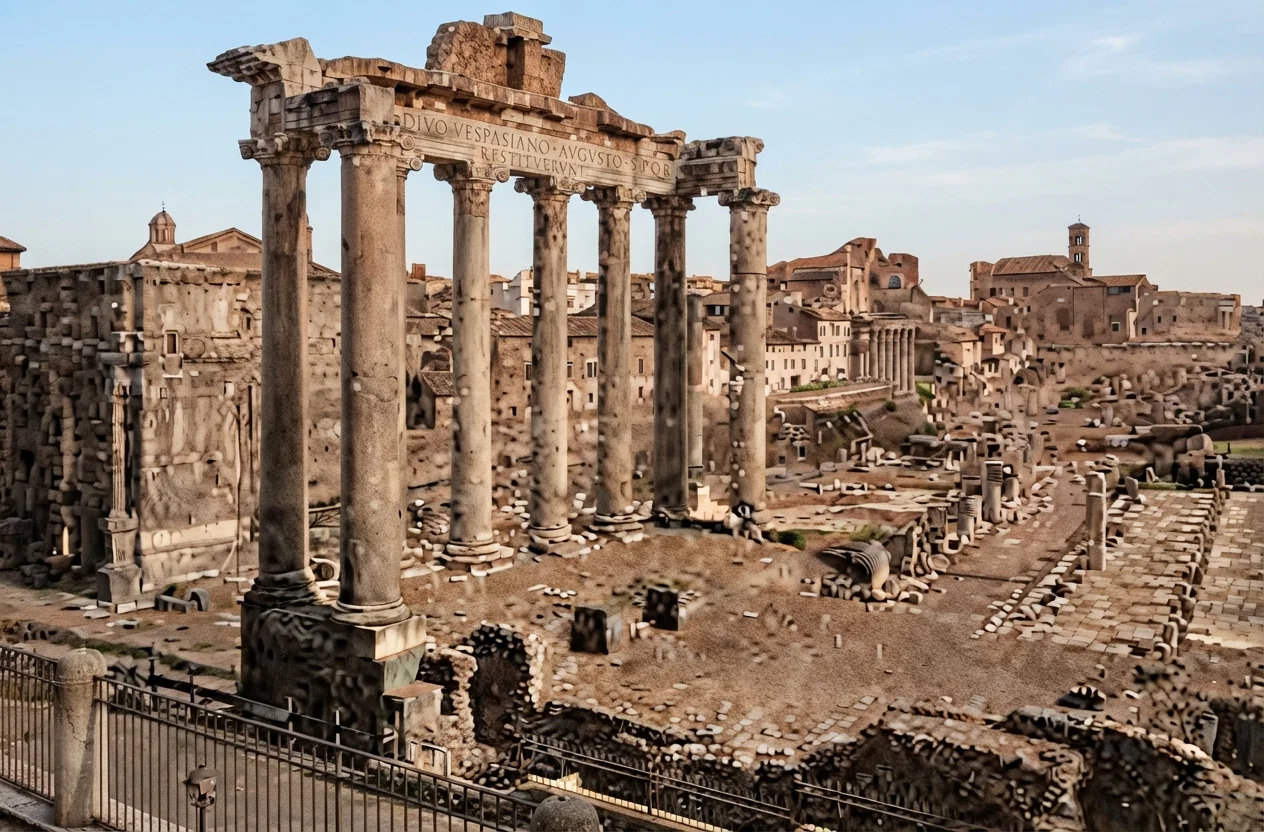
"Ruins of the Home of the Caesars" and "Remains of the Roman Forum." (See article on "Rome," p. 9.)
Usually the drug is harmless and passes ineffectually away, leaving nature free to pursue its task of curing the cause of the qualm. But only too often the drug, worthless for curing the disorder at which it was aimed, strikes and injures some other part of the delicate internal economy.
Of course it would be a waste of words to ask people to take care of their health, to defend their stomachs against their greedy palates, to exercise as much prudence in the care of their bodies as they exercise in the care of their horses, dogs, or birds. But is it equally useless to ask them to let the drug bottles alone after they have made themselves ill by over-eating or the other common imprudences, and to give nature a fair chance to nurse the injured part back to health?—New York World.