Studies in Daniel

3%

Pacific Press Publishing Association · Mountain View, California · Jan 23, 1912

FromSigns of the Times, Vol. 39, No. 4.

Read the full edition

Studies in Daniel

God the Vindicator; Found Wanting

Daniel 5, A.R.V.
It is well for the reader to bear in mind that God, in the book of Daniel, is revealing Himself not only to His children but to the nations. First He comes before us as God the Educator, in a revelation of an all-round education, developing a full-orbed character. Secondly, to the disquieted earth, not knowing what shall come, He discloses Himself as God the Revealer. The next revelation is that of God the Deliverer. Notwithstanding all the power and wrath of men, God is able to deliver His children. Our last lesson was that of God the Ruler, "The Most High ruleth in the kingdom of men, and giveth it to whomsoever He will." He uses a nation until the time comes that the nation can not be used longer for His glory, and He sets it aside and raises up another. In this we have a revelation of God the Judge.

The Answer of the Text

1. What is the opening scene of the 5th chapter?
Belshazzar the king made a great feast to a thousand of his lords, and drank wine before the thousand. Belshazzar, while he tasted the wine, commanded to bring the golden and silver vessels which Nebuchadnezzar his father had taken out of the temple which was in Jerusalem; that the king and his lords, his wives and his concubines, might drink therefrom. Then they brought the golden vessels that were taken out of the temple of the house of God which was at Jerusalem; and the king and his lords, his wives and his concubines, drank from them. They drank wine, and praised the gods of gold, and of silver, of brass, of iron, of wood, and of stone. Verses 1-4. Note 1.
2. What terrifying vision occurred during the feast?
In the same hour came forth the fingers of a man's hand, and wrote over against the candlestick upon the plaster of the wall of the king's palace: and the king saw the part of the hand that wrote. Then the king's countenance was changed in him, and his thoughts troubled him; and the joints of his loins were loosed, and his knees smote one against another. The king cried aloud to bring in the enchanters, the Chaldeans, and the soothsayers. The king spake and said to the wise men of Babylon, Whosoever shall read this writing, and show me the interpretation thereof, shall be clothed with purple, and have a chain of gold about his neck, and shall be the third ruler in the kingdom. Verses 5-7. Note 2.
3. What futile effort was made to learn the meaning?
Then came in all the king's wise men; but they could not read the writing, nor make known to the king the interpretation. Then was King Belshazzar greatly troubled, and his countenance was changed in him, and his lords were perplexed. Verses 8, 9. Note 3.
4. Who gave proper information to the king?
Now the queen by reason of the words of the king and his lords came into the banquet house: the queen spake and said, O king, live forever; let not thy thoughts trouble thee, nor let thy countenance be changed. There is a man in thy kingdom, in whom is the spirit of the holy gods; and in the days of thy father light and understanding and wisdom, like the wisdom of the gods, were found in him; and the king Nebuchadnezzar thy father, the king, I say, thy father, made him master of the magicians, enchanters, Chaldeans, and soothsayers; forasmuch as an excellent spirit, and knowledge, and understanding, interpreting of dreams, and showing of dark sentences, and dissolving of doubts, were found in the same Daniel, whom the king named Belteshazzar. Now let Daniel be called, and he will show the interpretation. Verses 10-12. Note 4.
5. What did the king promise Daniel if he would interpret the dream?
Then was Daniel brought in before the king. The king spake and said unto Daniel, Art thou that Daniel, who art of the children of the captivity of Judah, whom the king my father brought out of Judah? I have heard of thee, that the spirit of the gods is in thee, and that light and understanding and excellent wisdom are found in thee. And now the wise men, the enchanters, have been brought in before me, that they should read this writing, and make known unto me the interpretation thereof; but they could not show the interpretation of the thing. But I have heard of thee, that thou canst give interpretations, and dissolve doubts: now if thou canst read the writing, and make known to me the interpretation thereof, thou shalt be clothed with purple, and have a chain of gold about thy neck, and shalt be the third ruler in the kingdom. Verses 13-16. Note 5.
6. Of what did Daniel remind the king?
Then Daniel answered and said before the king, Let thy gifts be to thyself, and give thy rewards to another; nevertheless I will read the writing unto the king, and make known to him the interpretation. O thou king, the Most High God gave Nebuchadnezzar thy father the kingdom, and greatness, and glory, and majesty: and because of the greatness that He gave him, all the peoples, nations, and languages trembled and feared before him: whom he would he slew, and whom he would he kept alive; and whom he would he raised up, and whom he would he put down. But when his heart was lifted up, and his spirit was hardened so that he dealt proudly, he was deposed from his kingly throne, and they took his glory from him: and he was driven from the sons of men, and his heart was made like the beasts', and his dwelling was with the wild asses; he was fed with grass like oxen, and his body was wet with the dew of heaven; until he knew that the Most High God ruleth in the kingdom of men, and that He setteth up over it whomsoever He will. Verses 17-21. Note 6.
7. What reproof did he give the king?
And thou his son, O Belshazzar, hast not humbled thy heart, tho thou knewest all this, but hast lifted up thyself against the Lord of heaven; and they have brought the vessels of His house before thee, and thou and thy lords, thy wives and thy concubines, have drunk wine from them; and thou hast praised the gods of silver and gold, of brass, iron, wood, and stone, which see not, nor hear, nor know; and the God in whose hand thy breath is, and whose are all thy ways, hast thou not glorified. Then was the part of the hand sent from before Him, and this writing was inscribed. Verses 22-24. Note 7.
8. What was the interpretation of the vision?
And this is the writing that was inscribed: MENE, MENE, TEKEL, UPHARSIN. This is the interpretation of the thing: MENE; God hath numbered thy kingdom, and brought it to an end. TEKEL; thou art weighed in the balances, and art found wanting. PERES; thy kingdom is divided, and given to the Medes and Persians. Verses 25-28. Note 8.
9. How soon was the message fulfilled?
Then commanded Belshazzar, and they clothed Daniel with purple, and put a chain of gold about his neck, and made proclamation concerning him, that he should be the third ruler in the kingdom. In that night Belshazzar the Chaldean king was slain. And Darius the Mede received the kingdom, being about threescore and two years old. Verses 29-31. Note 9.

Note and Comment

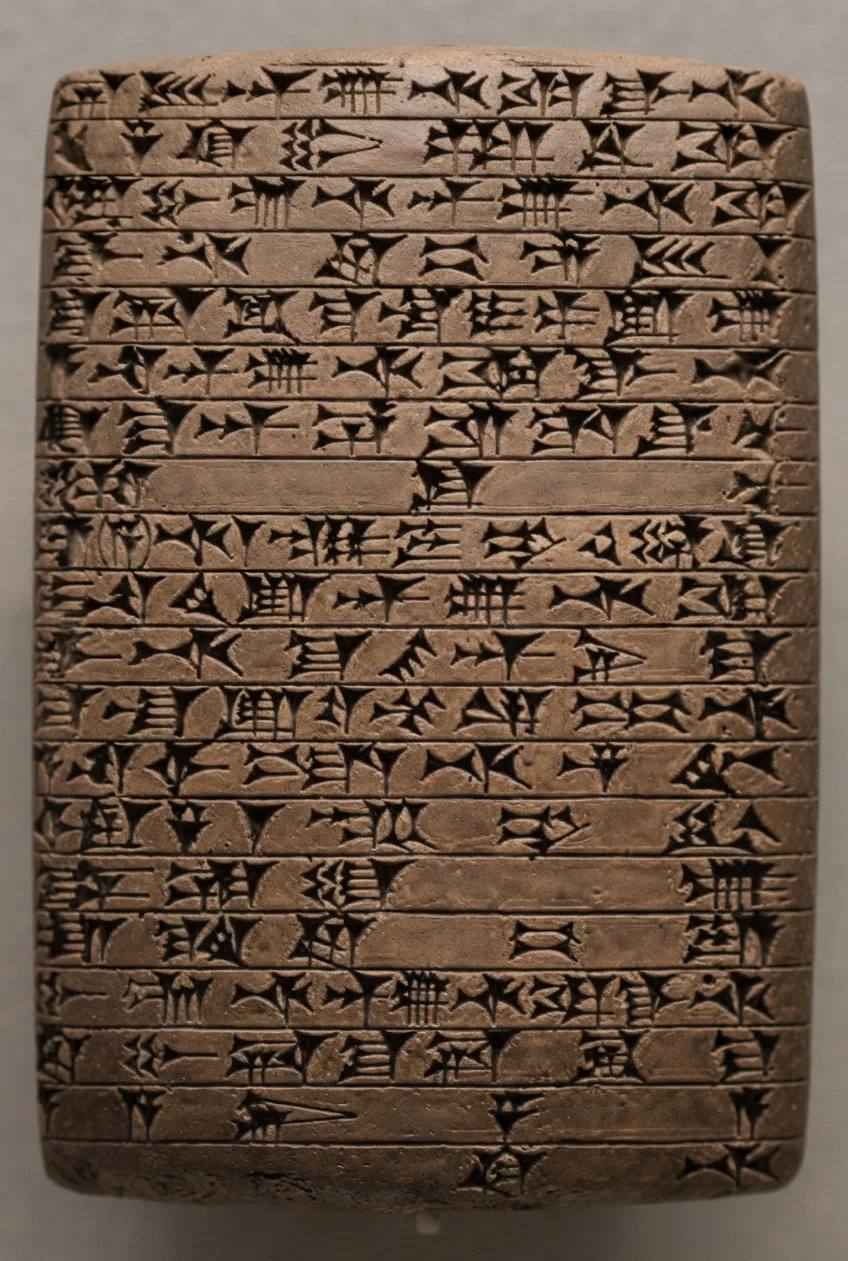
1. BELSHAZZAR THE KING. Who was Belshazzar? For many years this was one of the puzzles of theologians and Biblical critics. Those who saw no inspiration in the Scriptures, simply counted Daniel as mistaken. Ptolemy's canon gives the kings of Babylon, from Nebuchadnezzar to Cyrus, as follows: Nabokolassar, Illoarudanus, Nerikasolassar, Nabonadius, Cyrus. Berosus, the historian, gives the following: Nabuchodonosar, Evil-Merodach, Neriglissor, Laborosoarchod, Nebonned, and Cyrus. Of these the Scripture mentions the following: Nebuchadnezzar, Evil-Merodach, Belshazzar, Darius the Mede, Cyrus. Many scholars attempted to identify Belshazzar with Evil-Merodach. But that position was untenable. Others identified him with Nabonidus, but it has been shown that Nabonidus himself was not a blood relation of Nebuchadnezzar, while the prophecy in Jeremiah seemed to indicate that Nebuchadnezzar's descendant would be the last upon the throne. A wonderful suggestion regarding the truth of the matter was made by M. Quatremere in 1838, in which he went on to show that Nabonidus was not a scion of the family of Nebuchadnezzar; that Belshazzar was, because the prophecy so calls him; that the very fact that Nebuchadnezzar promised to make Daniel the THIRD ruler in the kingdom would indicate that there were two rulers at that time, one of whom was Nabonidus, and the other Belshazzar; that Nabonidus was a usurper, but he had associated with him a young descendant of the royal family called Belshazzar. This shows, as has been remarked, that when a scholar is after the truth and the truth only, God will reveal to him facts which others who are merely critical do not see. The truth came out when Rawlinson discovered in a temple of the moon-god a prayer of Nabonidus, king of Babylon, addressed to the moon-god, beseeching favors for himself and Belshazzar, his son. Nebuchadnezzar was succeeded by Evil-Merodach, he by Neriglissar, he by Laborosoarchod, who reigned but nine months (reigning less than a year, he is not mentioned in Ptolemy's canon), and he by Nabonidus, an officer of the king, but not a member of the royal family, but who married, in all probability, a daughter of Nebuchadnezzar; so that to retain the favor of the people, who were inclined to the ancient royal family, he associated his son, a descendant of Nebuchadnezzar, with him in his kingdom. This makes everything clear, harmonizes the Bible with the history, and demonstrates that Daniel, who was an eye-witness of these things and a prophet of God, spoke the truth. The historians, who had to depend upon the stories of others, gave part of it, but neglected that which Daniel himself saw and experienced. But with the light which the monuments throw upon this history, all is clear. Belshazzar's association with his father was during the last three years of that father's reign. He therefore began his reign in 540 B.C., closing it in 538. Nebuchadnezzar, his grandfather, had shown reverence for the sacred vessels which had been brought from Jerusalem. Belshazzar his grandson (the Scripture uses the term "son" with large latitude, meaning simply a descendant) had lost all reverence, and in his drunken debauchery called for the sacred vessels taken from the temple in Jerusalem. In this revelry they praised the gods of gold, and of silver, and of brass, and of iron, and of wood, and of stone; they exalted these gods above the God that created the heavens and the earth. "The Bible Commentary" gives extracts from one of the songs of victory which they sang, in which they exalt the sun-god above all the others. This, in view of the lessons which God had already taught Babylon, was the highest affront to the Majesty of Heaven.
2. THE SAME HOUR. God is not through with Babylon. In the words of the weeping prophet, "We would have healed Babylon." God is teaching coming generations that the rejection of the lesson which He had taught Nebuchadnezzar resulted in God's rejection of Babylon, and the utter subversion of that kingdom. And therefore there appeared in that banquet scene a living hand, which wrote over against the great chandelier which was lighting up that judgment-hall, so that all could see it, certain words upon the wall. The king could not read them, but the hand of the invisible being that wrote terrified him so that he cried aloud to his servants to bring in the enchanters, and the soothsayers, and the wise men, and the Chaldeans, promising that whoever should read the writing would be clothed with purple, have a chain of gold about his neck, and should be THIRD ruler in the kingdom. He could do no more than this; he himself was second ruler (Nabonidus was the first), and he offered to make the one who would read the writing third. Daniel in his old age seems to have been set aside; he was no longer prime minister of Babylon. He probably was set aside when the usurper came to the throne.
3. COULD NOT READ. They not only did not know the interpretation, but could not read the writing. Some of the ingenious scholars among the Jews anciently declared that the words were so placed that the letters were to be read downward instead of from right to left, as the Hebrew read. Others think that they were written in the cuneiform script; but had this been the case, the Chaldeans would have been able to read them. The words written were in Aramaic, a language, perhaps, which those scholars did not understand, but which Daniel did. And the very fact that they could not read them troubled the king more. His countenance was changed, his lords were perplexed. In their very excess of intemperance, hilarity and blasphemy passed in an instant, and the boasting braggarts were trembling in abject fear before the writing of simply a visible hand penning words which they could not understand.
4. THE QUEEN, Belshazzar's mother, possibly a wife of Nebuchadnezzar, said by Berosus to be Nitocris, more probably a daughter of Nebuchadnezzar, reminds him of a man whom Nebuchadnezzar had learned to respect, who had revealed to Nebuchadnezzar the will of God; one in whom dwelt the spirit of divinity, one whom Nebuchadnezzar had made master over the magicians and enchanters and Chaldeans and soothsayers, because of the spirit that he possessed, the knowledge that he revealed, the understanding in the interpreting of dreams which was manifested, the dissolving of doubts and dark sentences, whom the king had named Belteshazzar; and she pleads with the king that Daniel should be brought, because she is sure that he can show the interpretation.
5. THEN WAS DANIEL BROUGHT IN. The king asks him, first, who he is, and then tells him that he had heard that the spirit of the gods is in him, "and that light and understanding and excellent wisdom are found in thee." He ought to have known it himself. Had he been properly instructed, and wisely directed, he would have known of Daniel in the knowledge of the history of Babylonia. He pleads with Daniel, and repeats his promise of exaltation to the one who will read and interpret.
Extract from a cylinder of Nabonidus, king of Babylon, about B.C. 593, recording a prayer to the moon-god for himself and Bel-shazzar his son. This cylinder is in the British Museum.
6. THEN DANIEL ANSWERED. First he tells the king that he is not after his gifts nor his rewards. He may give them to whomsoever he will. He did not so answer Nebuchadnezzar. That king exalted him. Daniel was then placed in a position where he could represent God and His truth to an empire. Now it would be no advantage to the aged servant of God, skilled in statecraft tho he was, to become the third ruler in the kingdom that had reached its end. Secondly, he reminds Belshazzar of what God had done for his father. The Most High gave Nebuchadnezzar his kingdom, and all the greatness of Nebuchadnezzar came from the hand of God, who cast down and set aside whom He would, and raised up and exalted whom He would. Daniel reminds the weak king of an incident that certainly was known to Belshazzar, that when he was exalted in himself, his heart was made like the beasts', and his dwelling was with the wild asses. God drove him out from among men, until Nebuchadnezzar came to that place that he knew that the Most High ruled in the kingdom of men.
7. HAST NOT HUMBLED. But Belshazzar, knowing all this, had not humbled his heart before God, had not merely gone on in indifference, but had lifted up himself against the Lord of heaven, and committed the awful sacrilege of using the sacred vessels of God's holy temple in the drunken feast with his concubines, and his lords and their wives, and praised the insensate gods of gold and of silver. And therefore, in the face of all this light, God's judgment.
8. AND THIS IS THE WRITING. Divinity gave the vision of the hand, God's angels wrote the letters upon the wall. It required Divinity to interpret it. There were just four words: "MENE, MENE, TEKEL, UPHARSIN," or, as given in the interpretation, another form of it is "PERES." Translated, it would be: Numbered, numbered, weighed, divided. But "numbered," used in the sense of judgment, and repeated, indicated that the days were completed, the numbering was finished. Even so it was with the days of Babylon's existence. "Weighed" would indicate, also, found wanting, weighed in the sense of judgment. The very circumstances revealed the fact that the weighing of Belshazzar had found him wanting. "PERES," a play on the word "Persian," but which means breakings, or divisions. Daniel interprets the four words, "Numbered, numbered, weighed, divided," to mean: "God hath numbered thy kingdom, and brought it to an end. Thou art weighed in the balances, and art found wanting. Thy kingdom is divided, and given to the Medes and Persians."
The lesson, too, can come home to the individual heart. Men's lives may be aimless; God's plan is not. Not one soul arrives at the age of accountability but what God has for that soul some purpose, some work. He will lead that soul through varied circumstances, until he accepts or rejects His message, and repudiates His lesson. He will hold that place for that soul just as long as there is hope; but when the time comes that every opportunity and overture of mercy and goodness is rejected, just as truly as there came to Belshazzar in the Babylonian kingdom, so there will come to that soul, altho he may not hear or see it, "Mene, mene, tekel, upharsin!" Numbered, weighed, breaking. And the day passes forever. So Babylon was no more, only as her customs, her errors, her heresies, her spirit persisted and persists in the empires which followed, and which exist to-day.
9. THEN COMMANDED BELSHAZZAR. He had grown somewhat at ease as he had listened to the human voice; he must keep his promise to the prophet, and Daniel was clothed with purple, a chain of gold was placed upon his neck, and he was proclaimed the third ruler in the kingdom. But how brief his reign! And so he knew that it would be in the Babylonian kingdom, but forever in the kingdom of God. Not so with Belshazzar. In that very night Belshazzar the Chaldean king was slain, and Darius the Mede received the kingdom, at the age of sixty-two.
There has been very much question as to who Darius the Mede was. Some have contended that he was Cyaxares II. The word "Darius" is an appellative, and not a name; so also is "Cyaxares." "Darius" means "coercer," one who is able to compel obedience. Others contend that history knows no Cyaxares II after Astyages, who was immediately preceded by Cyaxares I. Others have held that he was a Median noble, one occupying a high position in the Median government; that Cyrus was acting for Media and Persia in his warfare against Babylon, but as Media was the older empire and at that time equal with Persia, Media was placed first. However this may be, however uncertain scholars may be over the real Darius the Mede, certainly the confirmation of Daniel regarding Belshazzarshould make us willing to believe that he had spoken correctly concerning a ruler — the last Median ruler who was placed over Babylon. He may have been under Cyrus; he may have been in connection with Cyrus. He seems to have been one to whom Cyrus deferred. He was given the first opportunity to reign over the great fallen empire. He was also an aged man; soon he would give way to some younger man. One tradition is that he was the father-in-law of Cyrus, and that Cyrus by marrying his daughter united the two empires. It has been thought worthy of remark, that at the very time when Nebuchadnezzar was sweeping in all of the Oriental countries, the man was born who was to sit upon the ruins of his kingdom. But even so it was. Thus brief is human glory. Nebuchadnezzar, in his ardent patriotism, said that Babylon should stand forever. In the short space covered by himself and his four successors Babylon is swept away. God's first vision to the great king is demonstrated; the head of gold is succeeded by the silver of Media and Persia.