THE SPARE-BUILT MAN

5%

Pacific Press Publishing Company · Oakland, California · Jul 4, 1899

FromSigns of the Times, Vol. 25, No. 27.

Read the full edition

THE SPARE-BUILT MAN.

HE was a spare-built man, thirty-seven or eight, the wreck of a once sturdy manhood. The scant wraps which clung about him were threadbare and ill-fitting. He looked wayworn and weather-beaten. Presumably he was a mechanic—one of the luckless sort, with an odor of stale rum in his breath. Life to him had become intolerable, the penalty for having prostituted it. The poverty of existing for existence' sake lay heavy upon him. His face, though pinched and scarred and wrinkled, was for some reason not ugly. Two large blue eyes, sunken under his forehead, had the restless stare of a man on the verge of suicide.
What had taken such a one to church this Sabbath morning? For there he sat, planted in a rear pew, having slipped in, as once or twice before he had slipped in, and out again, unwelcomed, unnoticed. No, a few had noticed him—his unsightliness. This few had frowned, measured him from head to foot, seeming to say with their stares, What a sight!
All this had not escaped the spare-built man. He was dead only in part. Time, among other things, had preserved to him an exquisite sensibility. He shrank into himself as if to take up less room; winced with the consciousness of having committed some offense—the offense of living. But who was he? What was he doing among that sitting of "saints"?—Well, he had gone there in search of Christ. A street preacher had, years before, told him that he needed Christ. He had treated the matter as a joke at the time. He in need of Christ? What did he need Christ for? He was young, hopeful, strong, full of resource. The world was fair. Life was worth living—a spread of possibility on ahead.
Subsequently things changed for him. Reverses followed, a pulling off of the top. Sickness and a pack of ills overtook him. The days were few which brought him no disaster. His friends advised, felt sorry, said so at any rate, but as for helping him out—well, they had troubles enough of their own, that was all.
Henceforth life meant drift; a squarer look into the face of it. Finally it meant despair, a planning to end it all. Was this life? the most for which one is born? the distress men struggle to prolong? He had burned his candle fiercely for a few years, and now it was going out; worse, there stood the fear, the possibility, that its going out meant a hurrying to worse ills—a fear that would not stifle even in the fumes of rum.
One morning he recalled what the street preacher had said. Sometime he would need Christ. That time had come, supposing that Christ meant help, that He could save one from one's own self, verily he needed Him. One other fragment of that street exhortation came to his mind. It concerned Christ's unbiased love. How it went out in sympathy with ascertainable dimensions to it. How it fed multitudes, healed diseases, relieved distresses. The spare-built man's distress was beyond question. He would go to this man—the befriending Christ, the next meeting day—to that house of His with the tall spire and the deep-toned bell. Judging from the look of things, Christ was an extremely good Friend to the folk who went there, for they all appeared to roll in plenty. This being so, he would have no trouble in getting what he stood in need of. Christ would be there, and without doubt give him a hand. Such was his faith.
The prospects of relief acted like leaven. Tidying his person the best possible, with no toilet article save some hydrant water, he legged it to church.
A love-lit face looked up inquiringly.
This on three occasions, where, to his keen disappointment, a smart preacher and not Christ at all, had measured off some cold talks about Christ—an historical, two-thousand-years-ago Christ. Latter-day church-houses, conventional sermonizing, ritualistic machinery were ciphers to him. He had his own notions about love and adoration. Prayers were sent up, among which some touched upon the spare-built man's case. That is, Christ was requested to bear in mind the poor, to help the disconsolate. The request, however, was hedged in by less religious utterances. "This is not a lying-in hospital," was one. Another, "The church is not a dumping-ground. O Christ, we want able-bodied men and women for the church, not cripples, not invalids."
The spare-built man took it as aimed at him. He shivered and looked painfully self-conscious. The situation eased, however, with the announcement of a hymn, and soon a burst of sacred strains thrilled him with strange delight. The comfortably-seated crowd fanned itself and looked on. The morning was hot, still the spare-built man shivered, ill at ease.
He was not looking for that sort of thing. It was not entertainment he was after. It was Christ, some one who could help him, who could see as he saw, feel as he felt, weigh circumstances as he weighed them; in a word, understand him, weaknesses and all. Talk could not help him. The world was busy throwing away advice. He needed succor, sympathy, support. His shabbiness, his shame, his very presence declared his needs. Was he to be put off with words? Were there no bowels of mercy? Was Christ, after all, a pretty etherealism, unmindful of flesh and blood, of human wretchedness? Now-a-day prodigals must still their penitential hunger with the bread of isms.
The conclusion that they must fastened itself in the mind of the spare-built man. He believed his eyes. And now, for the third time, he was about to steal away empty-handed—back again to his world—the street. Would he never find the mysterious Christ?
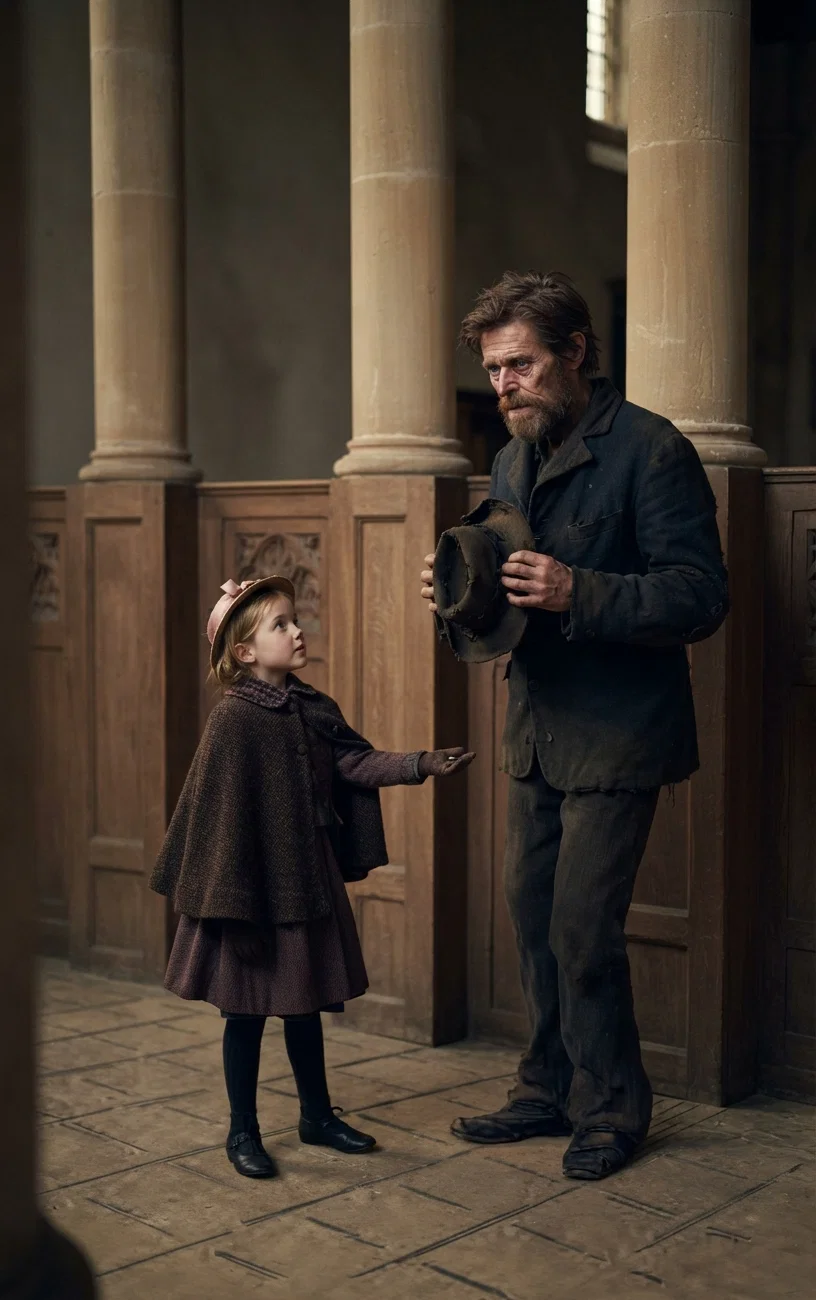
The congregation was on its feet awaiting the benediction. The spare-built man seized his hat and tumbled awkwardly through the open door. The wish to hide himself, to vanish out of sight, possessed him. In the vestibule he breathed easier; stopped and listened to the dying tremors pulsating from the huge organ. Presently a sweet voice, the voice of a child, accosted him. "Who are you looking for?" it asked. A little hand caught hold of the tattered coat. A love-lit face looked up inquiringly into the lean face.
"Christ," answered the man pathetically.
"Christ?" repeated the child, stroking his knuckly hand. "Mama says she does'nt think He is in this church."
The pinched features paled. A look of bewilderment, then despair came into the man's eyes. "Not here?" said he, "then I have been deceived." He stood jammed against the wall, clinging unconsciously to the child. Past him poured a stream of chattering people—prosperous up-towners. Unmindful of it all, he bent over and kissed the up-turned face. The sweetness and purity of the young life enchanted him. He drank it in greedily, forgot that he was a forlorn, misery-surfeited wretch; rose for the moment to the stature of a god. Scores of haughty eyes were glowering at him. Mothers were pulling their children closer to them as they passed. But he was only aware of reveling in the warmth and glory of some hallowed presence. He took it to be the child's.
After a time a hand was laid heavily on his shoulder. "Do you wish anything?" asked a coarse voice; at the same time his attention was directed to a notice which read: "Do not loiter in the entry way." The spare-built man slowly collected himself, read the notice, looked about him in a dazed way, like one who has been dreaming vividly. The child, where was she? He saw only some men preparing to shut the massy oaken doors. "Not here," said a still, small voice. A moment more and he had grasped the situation. Like a roe he turned and bolted for the street. In his confusion he missed his footing and fell twenty or more steps. When they reached him he lay on the pavement in a pool of blood. Seemingly, by the movement of his fingers, he was holding an unseen hand. Putting his ear to the man's face, the sexton heard him say: "Christ! Christ!" with the eager delight of one who has found something infinitely dearer than life.
HENRY F. CUNNINGHAM. Watsonville, Cal.