HE STAGGERED NOT

8%

Pacific Press Publishing Company · Oakland, California · May 17, 1899

FromSigns of the Times, Vol. 25, No. 20.

Read the full edition

"HE STAGGERED NOT."

IT is stated concerning Abraham, in Rom. 4:20, that "he staggered not at the promise of God." Staggering is a very forcible illustration; it refers to the conduct of a man who is intoxicated, and is used several times in the Scriptures. "They are drunken, but not with wine; they stagger, but not with strong drink." Isa. 29:9. "As a drunken man staggereth in his vomit." Isa. 19:14. "The earth shall reel to and fro like a drunkard." Isa. 24:20.
These passages show what it is to stagger. The spectacle of a drunken man staggering and reeling in his filthy, intoxicated condition is so common that one can not fail to understand the signification.
There is a moral or spiritual condition that is similar to the physical condition mentioned—drunk. This figure is employed in Rev. 14:8; 17:2, etc. Spiritual drunkenness comes from imbibing false doctrine, the teachings of men rather than the commandments of God, as will be seen by comparing Isa. 29:9, 13 with Matt. 15:7-9, and by disbelief of God's Word.
But it is recorded of Abraham that he staggered not. This is not to say that he never did stagger. When he asked Sarah to conceal the fact that she was his wife, and when he yielded to the suggestion to take Hagar instead of his lawful wife, and thus enter into polygamy, he certainly staggered. But this time he did not stagger at all. "He staggered not at the promise of God."
Why should any one stagger at a promise anyway? What is there about a promise to make one stagger? Men stagger at a burden, a requirement, a commandment, a duty, but why stagger at a promise?
But, after all, that is just where men do stagger. If they would not stagger at God's promises they would not be likely to at His commandments. God's promises are so great as to fairly stagger us unless we are, like Abraham, "strong in faith."
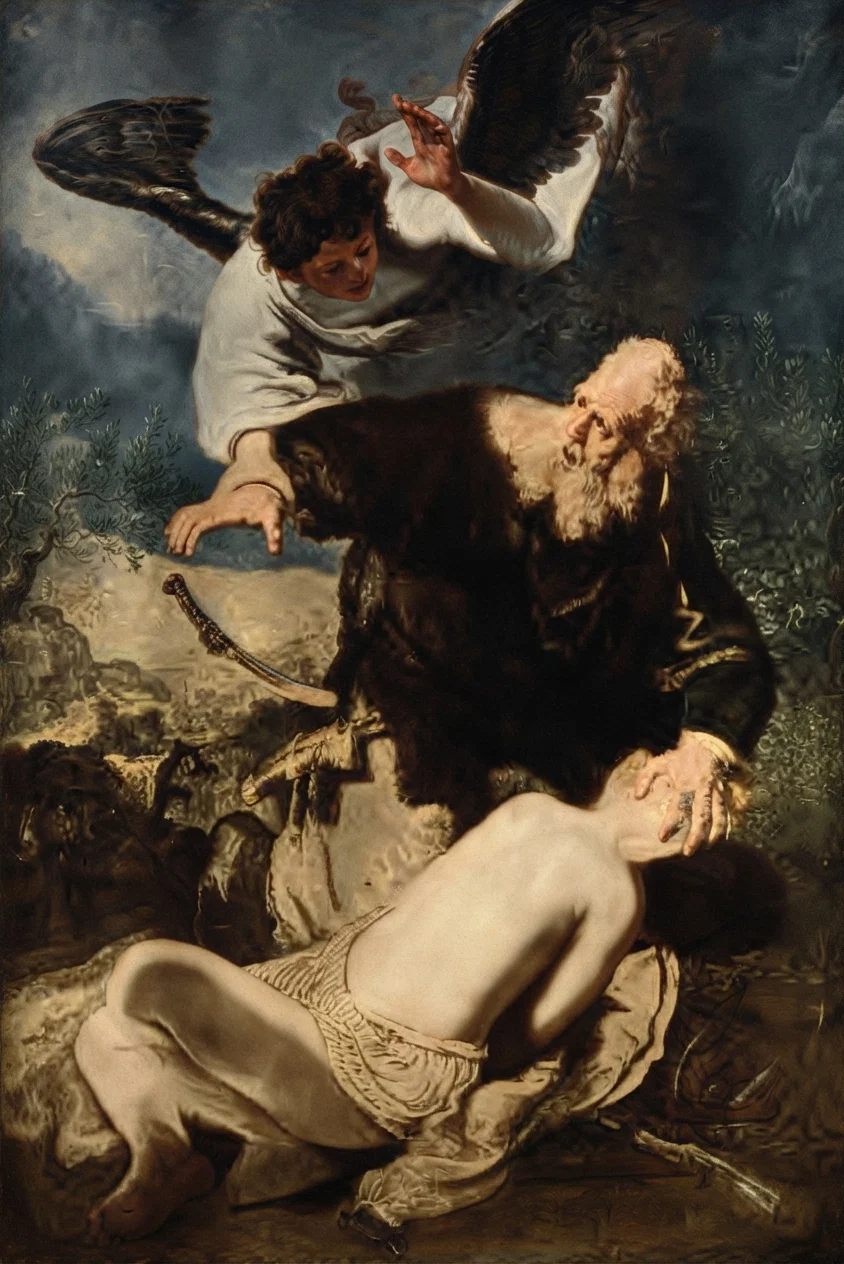
When God called Abraham to go up into the mountain and sacrifice his son, he staggered not at this most severe test that God ever presented to a man. He accounted "that God was able to raise him up, even from the dead; from whence also he received him in a figure." Heb. 11:19. This was all because he believed God when He promised that He would give him a son, even when it seemed to be an absolute impossibility.
“And Abraham stretched forth his hand, and took the knife to slay his son. And the Angel of the Lord called unto him out of heaven, and said, Abraham, Abraham; and he said, Here am I. And He said, Lay not thine hand upon the lad, neither do thou anything unto him; for now I know that thou fearest God, seeing thou hast not withheld thy son, thine only son from Me.” Gen. 22:10-12.
Seeing he had already believed God's promise, he could now obey His commandment. So it is to-day. Why do not more people keep the Sabbath? We may say they stagger at the commandment, such a heavy burden! The trouble really is they stagger at the promise. They say, My business would go to ruin, and I would have no way of making a living. Has God made any promises concerning this matter? —Abundant promises. "Observe to do all the words of this law; . . . because it is your life." Deut. 32:46, 47. See also Ex. 20:6; Ps. 37:3; 1 Tim. 4:8, etc. God has made the most complete promises possible in this matter, but men stagger at these promises, they do not believe them, and consequently they stagger at the requirement of God.
Why do not more people pay the tithe of their income to God?—Perhaps they say the requirement is too great, they need all the money for their families, that they could not do that and make a living. Are they staggering at the duty, the commandment? Well, in the first place, they are staggering at God's promise. What is His promise? Read it in Mal. 3:10. But says unbelief, God has promised too much; He would never do all that for me. So there it is, staggering at the promise of God! It is plainly to be seen, then, why men who know their duty in the matter of tithe-paying do not do it. They doubt God's promises. Those promises are so large, they stagger at them.
When the Lord says, "If we confess our sins, He is faithful and just to forgive us our sins, and to cleanse us from all unrighteousness" (1 John 1:9), why do so many go mourning all the day because of the oppression of the enemy? That promise is so large, theystagger at it. Shall we not from this time, like faithful Abraham, stagger not at the promise of God?
F. D. STARR.