London Letter

2%

Pacific Press Publishing Association · Mountain View, California · Dec 10, 1912

FromSigns of the Times, Vol. 39, No. 48.

Read the full edition

London Letter

(From Our Own Correspondent)
AT the time of writing, it looks very much as if Turkey's hour had come. The "sick man" may, of course, recover a little strength, as he has so often done in the past, but there is no mistaking the gravity of the crisis through which he is at present passing.
The rapid developments of the Balkan campaign have filled Europe with amazement. As the "Star" put it in the early part of the struggle:
"The eye of Europe is blinded by the fierce lines of flame that rend the black sky hour by hour. The mind of Europe can not work quickly enough as the Ottoman Empire crushes and crumbles like a city smitten by an earthquake. The most prescient statesmen had not foreseen the gigantic cataclysm which has been wrought by the thunderbolts of the allies in ten brief, dizzy days."
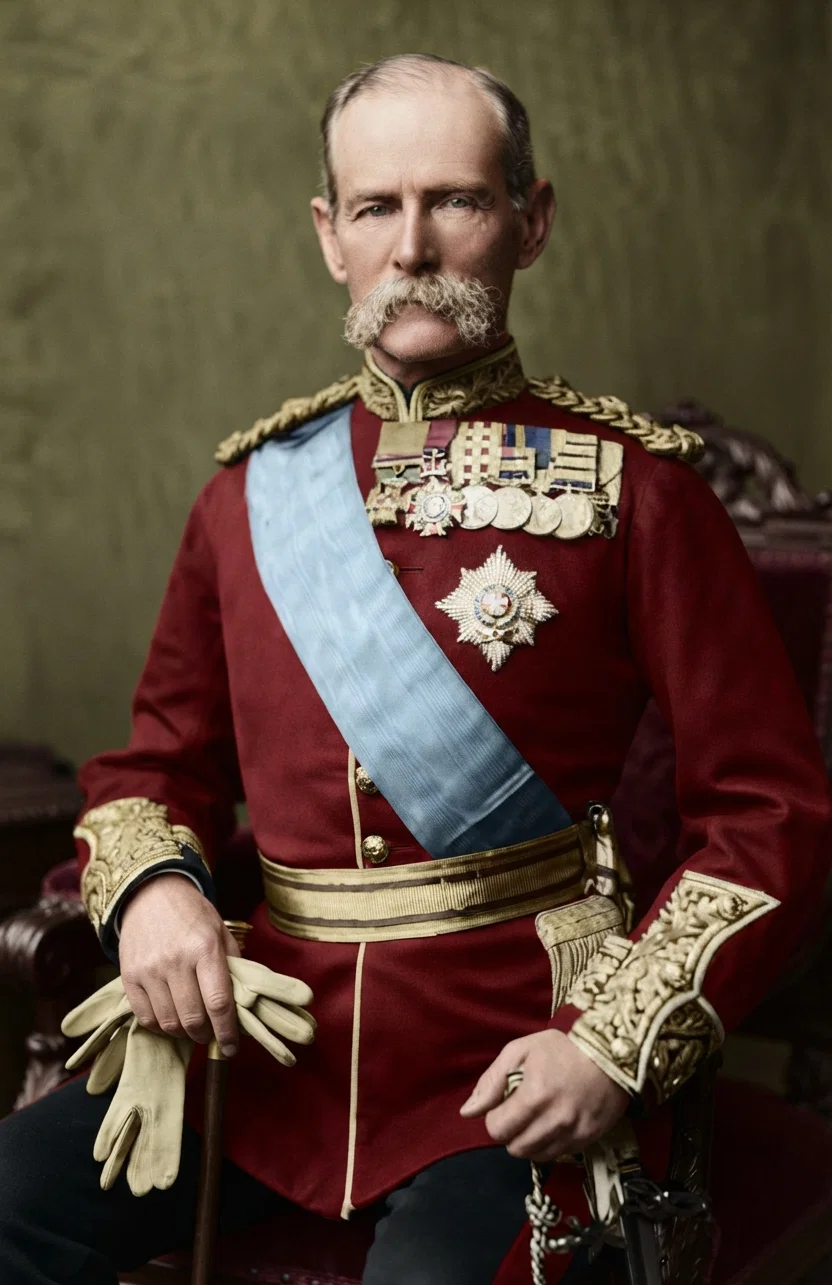
Field-marshal Earl Roberts, V.C., K.G., England's great soldier, who is advocating conscription
The powerlessness of the great powers to hold the Balkan States in check is one of the outstanding features of the situation. They haughtily announced, before the war began, that it was unnecessary to fight, that they themselves would bring pressure to bear upon Turkey to grant reforms. If, in spite of this warning, the Balkan States should be so headstrong as to declare war upon Turkey, the great powers would majestically intervene in due time, after a little blood-letting had reduced the war fever, and would permit no territorial changes whatever; so that nothing would be gained by going to war.
The success of the allies has entirely changed the tone of the great powers. They are now professing a thoro conversion in their ideas, and protesting that, so far as they are concerned, they will do nothing to prevent the victors from reaping the reward of their efforts and sacrifices. With the exception of Austria, they are even willing to declare their own territorial disinterestedness. Austria apparently can not consent to forego the prospect of satisfying her long cherished desire for more seacoast when the impending revision of the map of Europe takes place.
A strong helper for peace
The whole situation is still big with possibilities. For seventy years Europe has looked forward vaguely to the driving of the Turk out of her dominions, but has dreaded the tremendous conflict which it has always foreseen as likely to follow upon that event. The growth of the Balkan States may have settled the question of banishing the Ottoman Empire from European soil, but there still remains the great problem of dividing up the inheritance to the satisfaction of the heirs.

"The Little Nations"

The press here is applying to the Balkan States the term, "the little nations," as contrasted with "the great powers." The title is suggestive of that prophecy in which Joel foretells the enormous preparations for war that will usher in the day of the Lord. After speaking of the world-wide arming and awakening of the Gentiles, he makes use of this expression: "Let the weak say, I am strong." Joel 3:10. The English newspapers are impressed with the contrast between the numerical weakness of the Balkan populations and the astonishing size and strength of their armed forces. The "Observer" writes:
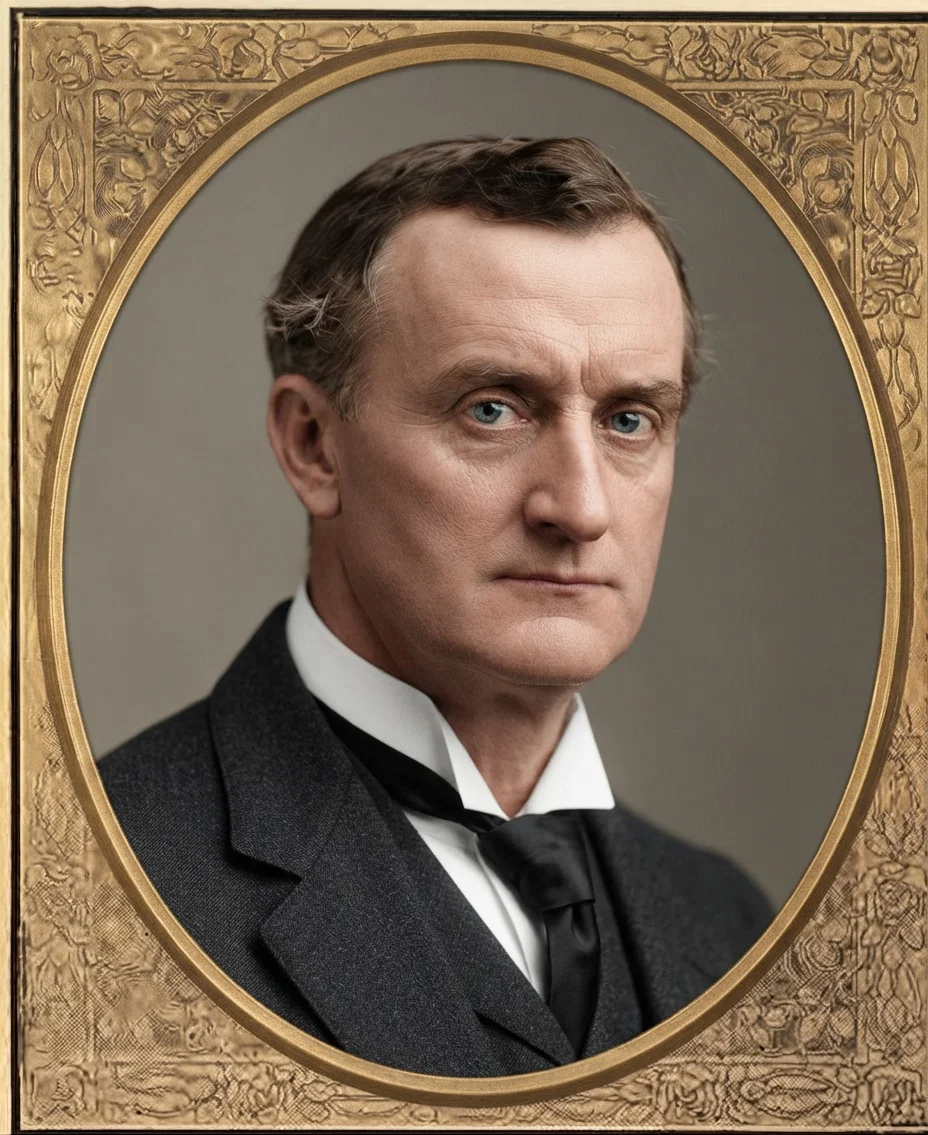
Sir Edward Grey, England's secretary of state for foreign affairs, who is earnestly working to secure and preserve the peace of Europe
"Bulgaria and Servia, with populations less than those of Lancashire and Yorkshire, have alone mobilized a host of over 600,000 men, as many as Napoleon numbered in the grand army assembled for his greatest effort at the height of his power.
Little Greece and miniature Montenegro send forward between them numbers equal to Lord Haldane's expeditionary force."
This has only been accomplished, however, by the sending to the front of every able-bodied man. Concerning Bulgaria, the "Times" correspondent says:
"All the manhood of Bulgaria has gone to the front. The cities and the villages are deserted, and the fields are lying desolate. There are few waiting behind to fill the gaps in the fighting line. It is now or never with Bulgaria, as her commanders probably know full well."
And the same thing is true of the other side. The "Telegraph" writes:
"Throughout the whole of European Turkey and Anatolia the men have been called to the front. Every village, town, and hamlet has sent its tale of men. This war is an insatiable maw which gathers to its cruel feast whole provinces at a time. The normal life of the nation must now be carried on by old men, beardless youths, whose turn is likely to come very soon, and by women."
This is the price which the "little nations" are paying for their preparedness to meet the vast armies of Turkey in the field. And theintensity with which they enter into the struggle must inevitably affect the scale on which the larger nations prepare themselves for war, unless these are willing to fall out of the front rank and cease to dominate affairs. This is the unpleasant prospect that begins to face us. Says the Westminster "Gazette":
"The fact that these little states, with an aggregate population all told not exceeding ten millions, should be able to put into the field these enormous, highly equipped armies, does bring home to us, as nothing else could, the inordinate and horrible scale on which modern warfare is waged. If — comes the involuntary thought — Bulgaria and Servia can do this, what should we see if Austria and Russia or Germany and France were set in motion against each other?"

Conscription Deemed Necessary

The advocates of conscription in this country do not fail to drive home the lesson. They are declaring that the Balkan States put us to shame by the self-denial and energy they exhibit. Lord Roberts, who has for years placed himself at the head of the conscription movement, said a few days ago:
"My ultimate counsel to the nation and message to my countrymen at this solemn hour is, 'Arm and prepare to quit yourselves like men, for the time of your ordeal is at hand.'"
"As a European power, as a continental power, we do not exist — for war. Our army as a belligerent factor in European politics is almost a negligible quantity. The empire is at all times practically defenseless beyond its first line. Such an empire invites war. Its assumed security amid the armaments of Europe, and now of Asia, is insolent and provocative.
"I have commanded your armies in peace and war. I say to you, the young men of this city and of this nation, that your enfranchisement is not complete until you have become soldiers as well as citizens, prepared to attest your manhood on the battlefield as well as at the election booths."

The Suspected German Attitude

In the same speech, Lord Roberts expressed his deep conviction that immediately the favorable moment appeared, Germany would seize the opportunity of declaring war upon England. For this speech he has been sternly rebuked in Parliament by the foreign secretary, Sir E. Grey, as an irresponsible stirrer up of mischief and in feeling between the two nations. But a large number of influential people have told Lord Roberts, in a signed address, that they regard his utterance as a national service, and think the country ought to be grateful to him for it. There is no doubt that Lord Roberts represents a feeling which is rapidly gaining in strength. According to the "Times," England is fast getting ready for conscription:
"Unconsciously and slowly, but surely nevertheless, the democracy of these islands is reaching a new standpoint in matters of defense.
"Tho we have still a long way to go before the value of military training is justly recognized, our present progress is a welcome sign that we are taking to new standards of national moral.
"The belief in universal and compulsory training has indeed grown so rapidly that politicians, in our opinion, overrate the opposition by which a definite measure of that nature would now be faced.
"In Australia and New Zealand, five years have wrought an absolute revolution in popular ideas. In both these dominions, the whole manhood of the country is passing through some weeks of military discipline on the threshold of adult life. Canada has changed more slowly than the rest; but no one doubts that when Mr. Borden's naval proposals are announced to Parliament next month, they will put a new complexion on the part which Canada means to play."

Home Rule in Ireland

The House of Commons is still hard at work on the Irish Home Rule Bill. Opponents of this measure have done their best to stir up the north of Ireland against it, and seem to have succeeded. Tens of thousands there have entered into a solemn league and covenant that they will never submit to the rule of an Irish parliament. Notwithstanding this menace of civil war, the government is going on with the bill, declaring itself willing to insert any reasonable safeguards that may be desired for the prevention of religious inequality, but determined not to be thwarted by unconstitutional agitation. Sir Edward Carson, and other leaders of the Belfast Unionists, have said that they do not expect the Irish parliament to pass any oppressive legislation; they think that religious intolerance will manifest itself in the administration of affairs rather than in the framing of laws. Probably the struggle over the Home Rule Bill would have been much more bitter but for the absorption of parliamentary interest in the tremendous drama that is being enacted in the East. Everything else seems small in comparison.
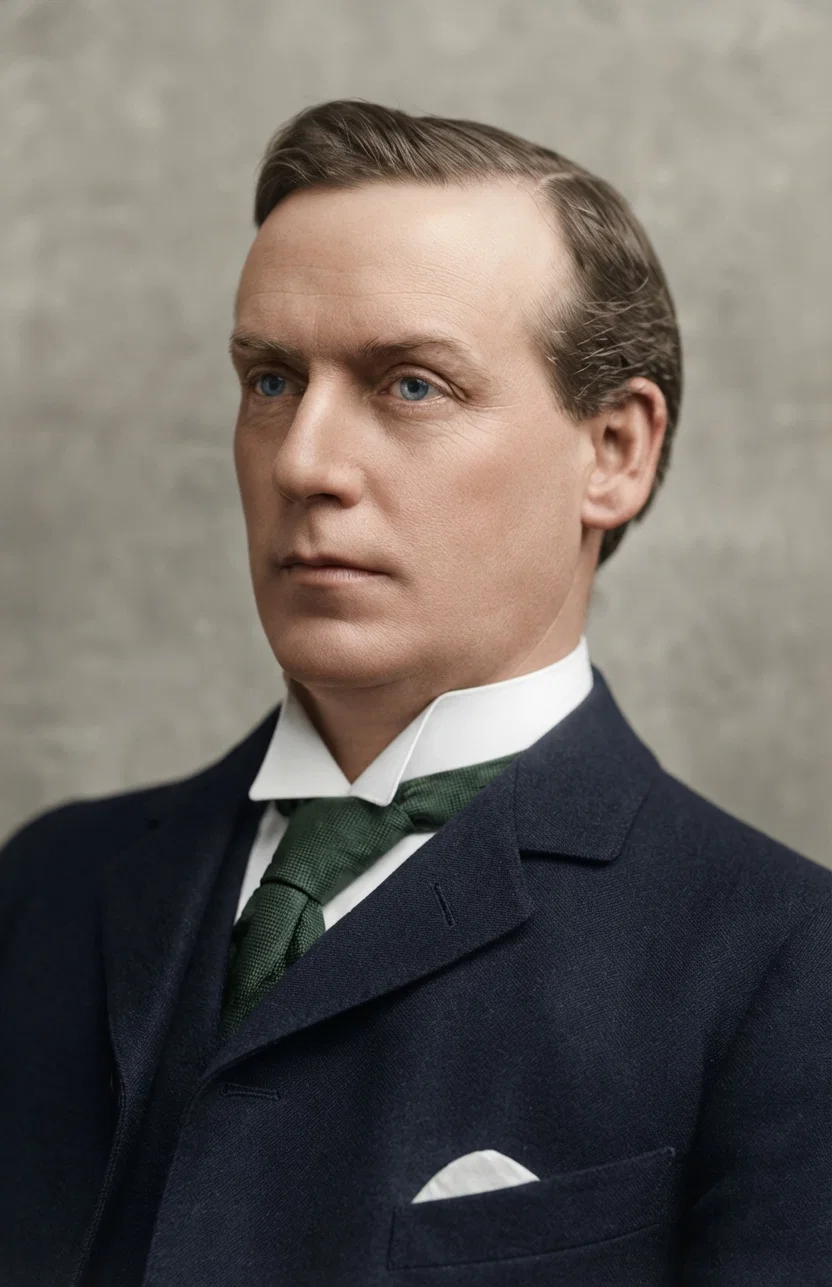
Mr. H. H. Asquith, England's prime minister, who is a strong worker for peace in Europe

Militant Suffragettes

The violent tactics of the militant suffragettes have been renewed. Yesterday a number of windows were broken in a fashionable shopping center of London. A favorite device now largely adopted is to pour corrosive chemicals into the public boxes for the reception of mail, so as to destroy the letters there awaiting collection. Almost every day, a number of letters are injured or destroyed in this way. Until recently, the militant party was led by Mrs. Pankhurst and her daughter — the latter of whom is now staying in Paris to avoid the English police — and Mr. and Mrs. Pethwick Lawrence. The first named ladies are, however, too advanced in their methods to suit Mr. Lawrence and his wife, so there has been a split in the organization. Mrs. Pankhurst declares relentless war on property until the vote is given to women. The two women who were recently sent to prison for five years for attempting to set fire to a theater in Dublin, have been released because their health was seriously undermined owing to their determined abstention from food. Quite apart from the militant suffragettes, there is a large party which is working for votes for women on constitutional lines, and it is quite likely that these would have gained over the House of Commons by now, but for the alienation of
sympathy brought about through the adoption of violent measures by the militant section. The latter are contemptuously regarded as half insane by the more moderate workers in the cause, but they themselves profess to believe that they have to act like mad women in order to compel the country to give them what they want. Their movement is but one of many which to-day are exalting violence and lawlessness as the most effective means to some desired end.

White Slavery

The white slave problem has come prominently before us in England in connection with a bill to prevent the traffic. When the bill was first brought in, it contained a number of provisions that were deemed too drastic by Parliament, and milder clauses were substituted. The churches have, however, taken the matter up, and held meetings of protest everywhere, with the result that the bill has now been strengthened by the reinsertion of the original provisions. Not content with this, the House of Commons has now made flogging one of the punishments for white slave traffickers, even for a first offense if the judge so decides. This is a notable victory for the Puritan party, and will probably encourage the churches to press for more vigorous treatment of other questions, such as Sunday closing of picture theaters, which has now become a live issue.

Toward Church Federation

The Free Church Council has appointed a commission to study the whole subject of church organization in this country, with a view to bringing about a larger measure of unity and cooperation among the Free churches. They hope to prevent the frequent overlapping and building of unnecessary churches in new districts, and to make the Free churches a stronger factor in the life of the nation.
Mr. Lloyd-George has recently made new proposals to the medical profession for their remuneration under the Insurance Act. The rate per capita is now raised from one dollar fifty cents to two dollars ten cents per annum, and there is a general feeling among the profession that altho this does not fully meet their demands, they had better accept the offer. If they do not, Mr. Lloyd-George will organize a state medical service. The doctors may congratulate themselves on a victory which will substantially increase the amount now paid to the medical profession as a whole for their services.
W. T. BARTLETT.
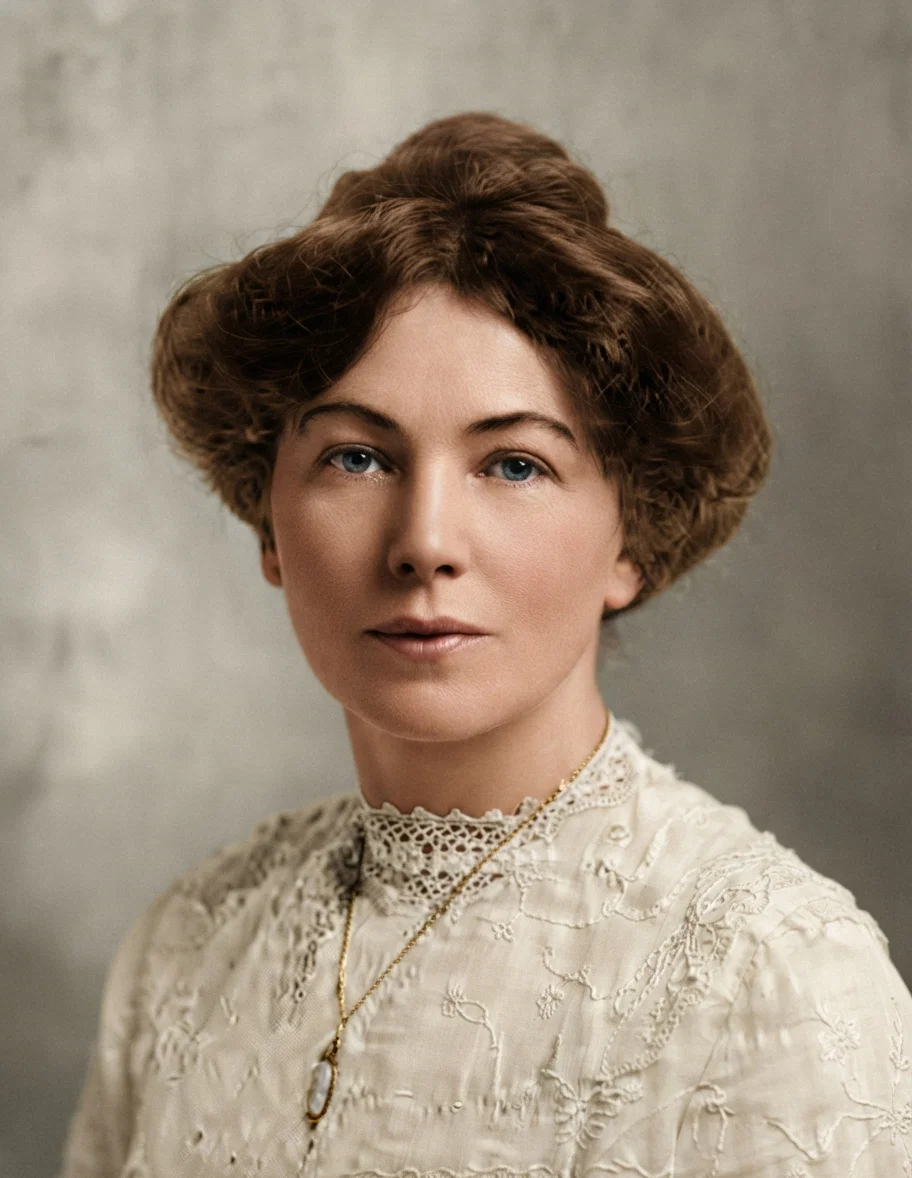
Copyright Lambert Weston & Son. Miss Pankhurst, a militant suffragette