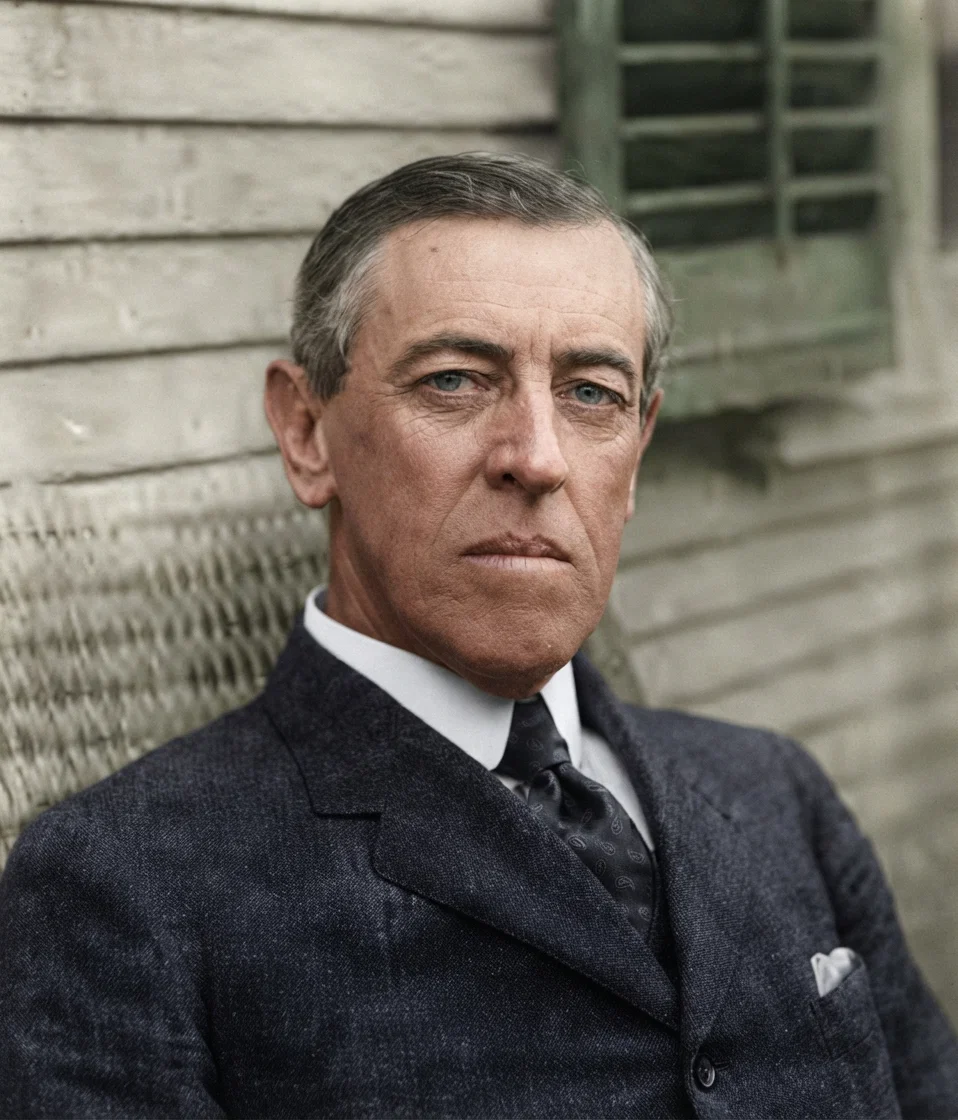
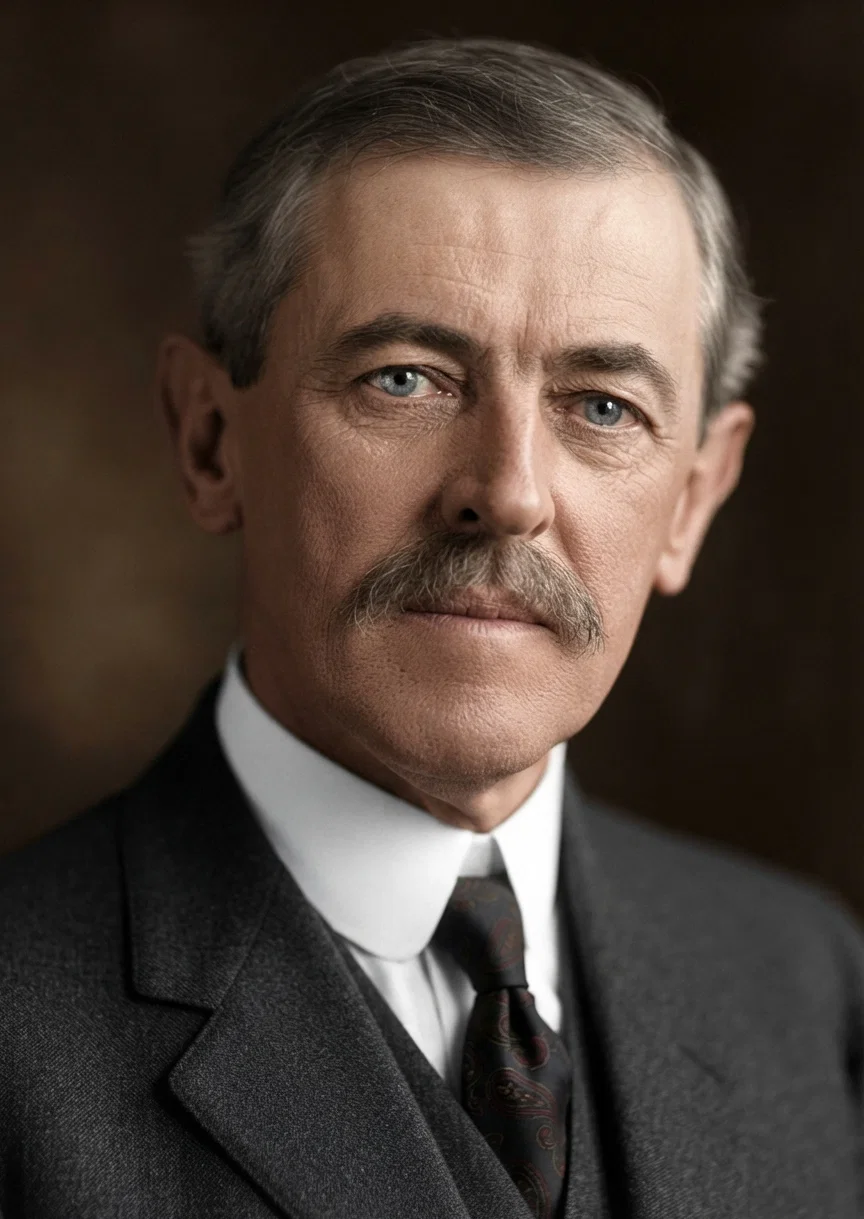
IT seems a fitting time, as Woodrow Wilson is inaugurated into the great office of the chief magistrate of the United States, to present some of the principles that the man holds which our readers ought to know, and which it would seem as tho our Christian readers would pray that he would hold to in all his influence in guiding the great ship of state. These which we present are excerpts from his address on "The Bible and Progress" delivered in the auditorium, Denver, Colorado, on the Tercentenary Celebration of the translation of the Bible into the English language, May 7, 1911. These passages which we quote from this speech are just such as ought to take hold of the very manhood of the nation, and as pointed out, unless they do do that, the nation itself will fall. (Bold face ours.)
From Andrew H. Kellogg Co. Woodrow Wilson, President of These United States
"Up to the time of the translation of the Bible into English, it was a book for long ages withheld from the perusal of the peoples of other languages and of other tongues, and not a little of the history of liberty lies in the circumstance that the moving sentences of this Book were made familiar to the ears and the understanding of those peoples who have led mankind in exhibiting the forms of government and the impulses of reform which have made for freedom and for self-government among mankind.
"For this is a book which reveals men unto themselves, not as creatures in bondage, not as men under human authority, not as those bidden to take counsel and command of any human source. It reveals every man to himself as a distinct moral agent, responsible not to men, not even to those men whom he has put over him in authority, but responsible through his own conscience to his Lord and Maker. Whenever a man sees this vision, he stands up a free man, whatever may be the government under which he lives. . . .
"A man has found himself when he has found his relation to the rest of the universe, and here is the Book in which those relations are set forth. And so when you see a man going along the highways of life with his gaze lifted above the road, lifted to the sloping ways in front of him, then be careful of that man and get out of his way. He knows the kingdom for which he is bound. He has seen the revelation of himself and of his relations to mankind. He has seen the revelations of his relation to God and his Maker, and therefore he has seen his responsibility in the world. This is the revelation of life and of peace. I do not know that peace lies in constant accommodation. I was once asked if I would take part in a great peace conference, and I said, 'Yes, if I may speak in favor of war'—not the war which we seek to avoid, not the senseless and useless and passionate shedding of human blood, but the only war that brings peace, the war with human passions and the war with human wrong—the war which is that untiring and unending process of reform from which no man can refrain and get peace.
"No man can sit down and withhold his hands from the warfare against wrong, and get peace out of his acquiescence. The most solid and satisfying peace is that which comes from this constant spiritual warfare. . . . I will not cry 'Peace' so long as there is sin and wrong in the world. And this great Book does not teach any doctrine of peace so long as there is sin to be combated and overcome in one's own heart and in the great moving force of human society.
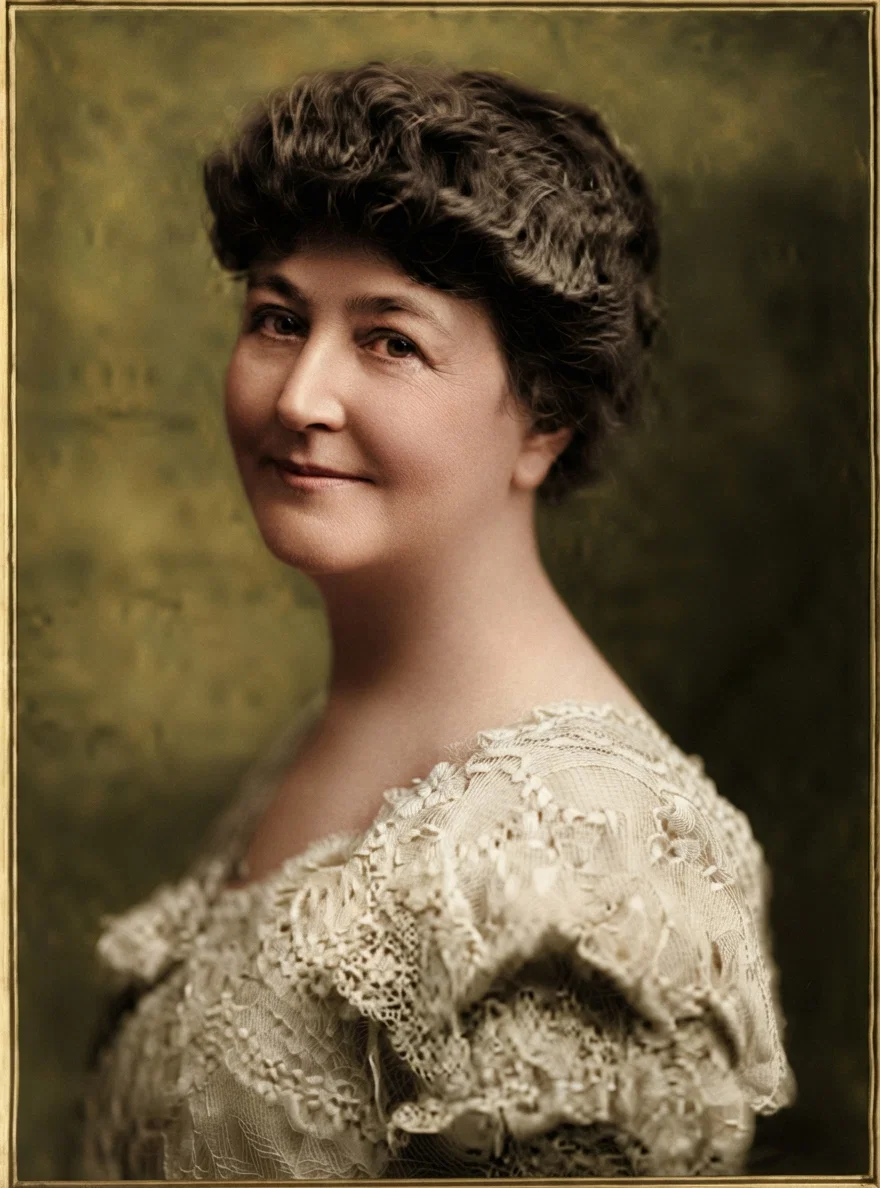
Clinedinst Service, Washington, D. C. Mrs. Woodrow Wilson
"And so it seems to me that we must look upon the Bible as the great charter of the human soul—as the 'Magna Charta' of the human soul. You know the interesting circumstances which gave rise to the Magna Charta. You know the moving scene that was enacted upon the heath of Runnymede. You know how the barons of England, representing the people of England—for they consciously represented the people of England—met upon that historic spot and parleyed with John, the king. They said: 'We will come to terms with you here.' They said: 'There are certain inalienable rights of English-speaking men which you must observe. They are not given by you, they can not be taken away by you. Sign your name here to this parchment upon which these rights are written, and we are your subjects. Refuse to put your name to this document, and we are your sworn enemies. Here are our swords to prove it.'
"The franchises of human liberty made the basis of a bargain with a king! There are kings upon the pages of Scripture, but do you think of any king in Scripture as anything else than a mere man? There was a great king David, of a line blessed because the line from which should spring our Lord and Saviour, a man marked in the history of mankind as the chosen instrument of God to do justice and exalt righteousness in the people.
"But what does this Bible do for David? Does it utter eulogies upon him? Does it conceal his faults and magnify his virtues? Does it set him up as a great statesman would be set up in a modern biography? No, the Book in which his annals are written strips13the mask from David, strips every shred of counterfeit and concealment from him, and shows him as indeed, an instrument of God, but a sinful and selfish man; and the verdict of the Bible is that David, like other men, was one day to stand naked before the judgment-seat of God, and be judged not as a king, but as a man. Isn't this the Book of the people? Is there any man in this Holy Scripture who is exempted from the common standard and judgment? How these pages teem with the masses of mankind! Are these the annals of the great? These are the annals of the people—of the common run of men.
Paul Thompson, New York
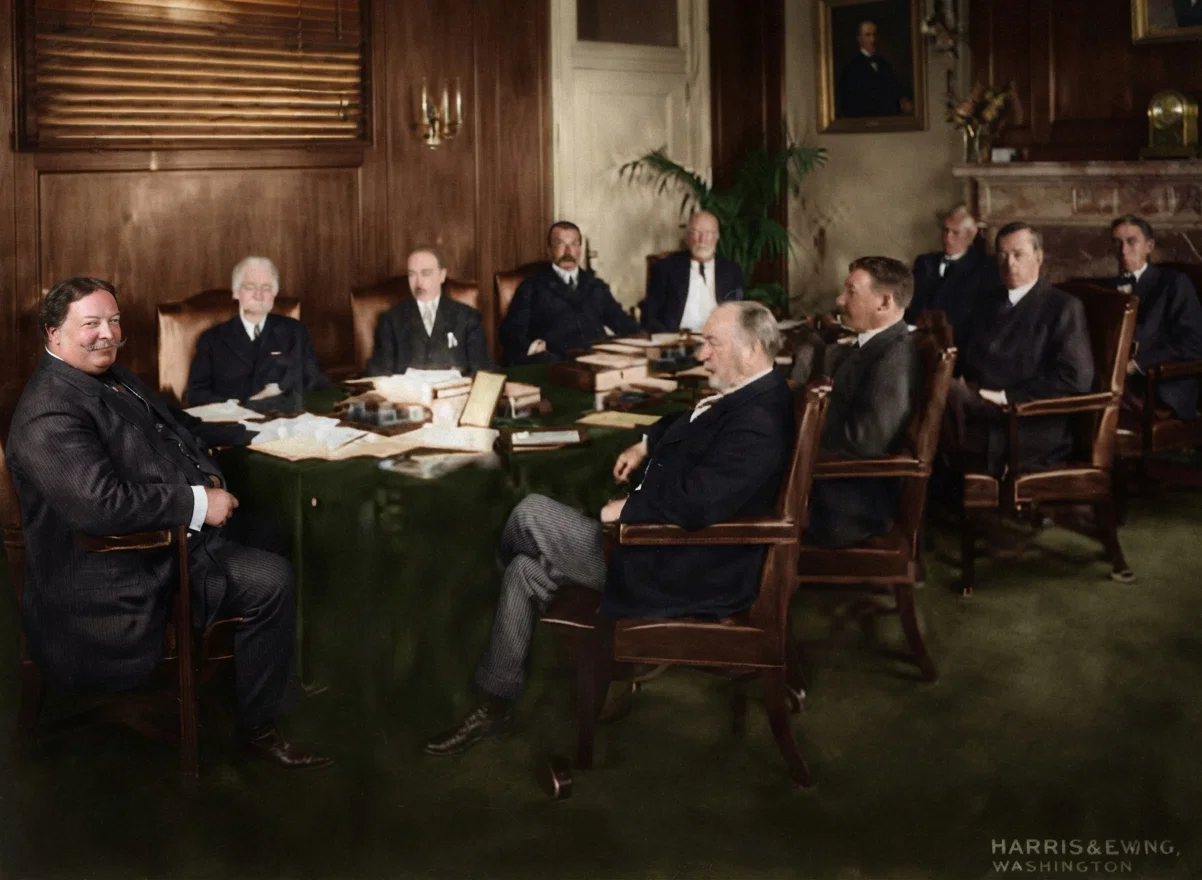
Thomas R. Marshall, Vice-President of These United States
"The New Testament is the history of the life and the testimony of common men who rallied to the fellowship of Jesus Christ, and who by their faith and preaching remade a world that was under the thrall of the Roman army. This is the history of the triumph of the human spirit, in the persons of humble men. And how many sorts of men march across the pages, how infinite is the variety of human circumstance and of human dealings and of human heroism and love! Is this a picture of extraordinary things? This is a picture of the common life of mankind. It is a mirror held up for men's hearts, and it is in this mirror that we marvel to see ourselves portrayed."
"Do you wonder, therefore, that when I was asked what my theme this evening would be I said it would be 'The Bible and Progress'? We do not judge progress by material standards. America is not ahead of the other nations of the world because she is rich. Nothing makes America great except her thoughts, except her ideals, except her acceptance of those standards of judgment which are written large upon these pages of revelation. America has all along claimed the distinction of setting this example to the civilized world,—that men were to think of one another, that governments were to be set up for the service of the people, that men were to be judged by these moral standards which pay no regard to rank or birth or conditions, but which assess every man according to his single and individual value. This is the meaning of this charter of the human soul. This is the standard by which men and nations have more and more come to be judged. And so the form has consisted in nothing more nor less than this—in trying to conform actual conditions, in trying to square actual laws with the right judgments of human conduct and more than liberty.
"That is the reason that the Bible has stood at the back of progress. That is the reason that reform has come not from the top but from the bottom. If you are ever tempted to let a government reform itself, I ask you to look back in the pages of history and find me a government that reformed itself. If you are ever tempted to let a party attempt to reform itself, I ask you to find a party that ever reformed itself.
"A tree is not nourished by its bloom and by its fruit. It is nourished by its roots, which are down deep in the common and hidden soil, and every process of purification and rectification comes from the bottom—not from the top. It comes from the masses of struggling human beings. It comes from the instinctive efforts of millions of human hearts trying to beat their way up into the light and into the hope of the future.
"Parties are reformed and governments are corrected by the impulses coming out of the hearts of those who never exercised authority and never organized parties. Those are the sources of strength, and I pray God that these sources may never cease to be spiritualized by the immortal subjections of these words of inspiration of the Bible."
"Can you imagine a man who did not believe these words, who did not believe in the future life, standing up and doing what has been the heart and center of liberty always—standing up before the king himself and saying, 'Sir, you have sinned and done wrong in the sight of God and I am His messenger of judgment to pronounce upon you the condemnation of Almighty God; you may silence me, you may send me to my reckoning with my Maker, but you can not silence or reverse the judgment'? That is what a man feels whose faith is rooted in the Bible. And the man whose faith is rooted in the Bible knows that reform can not be stayed, that the finger of God that moves upon the face of the nations is against every man that plots the nation's downfall or the people's deceit; that these men are simply groping and staggering in their ignorance to a fearful day of judgment, and that whether one generation witnesses it or not, the glad day of revelation and of freedom will come in which men will sing by the host of the coming of the Lord in His glory, and all of those will be forgotten—those little, scheming, contemptible creatures that forgot the image of God and tried to frame men according to the image of the evil one.
"You may remember that allegorical narrative in the Old Testament of those who searched through one cavern after another, cutting the holes in the walls and going into the secret places where all sorts of noisome things were worshiped. Men do not dare to let the sun shine in upon such things and upon such occupations and worships. And so I say there will be no halt to the great movement of the armies of reform until men forget their God, until they forget this charter of their liberty. Let no man suppose that progress can be divorced from religion, or that there is any other platform for the ministers of reform than the platform written in the utterances of our Lord and Saviour."
Clinedinst Service, Washington, D. C.
Underwood and Underwood, New York
"Ladies and gentlemen, I have a very simple thing to ask of you. I ask of every man and woman in this audience that from this night on they will realize that part of the destiny of America lies in their daily perusal of this great Book of revelation—that if they would see America free and pure they will make their own spirits free and pure by this baptism of the Holy Scripture."