THE Fiji Islands of to-day are a living monument of the mighty saving power which exists in the Gospel of the Lord Jesus Christ. The wonderful triumphs achieved through the spreading of Christianity in these islands furnish a powerful and convincing argument against those who endeavor to refute the fact that Christian missions are a grand success, and that cannibals are capable of receiving Christianity.
Surely there never existed a more vile race of people than the Fijians of half a century ago. Few missionaries ever entered a more unpromising field, or labored under such untoward circumstances as did the early missionaries among these islands; and few, if any, were permitted to see, in so short a time, such a wonderful reformation resulting from their labors.
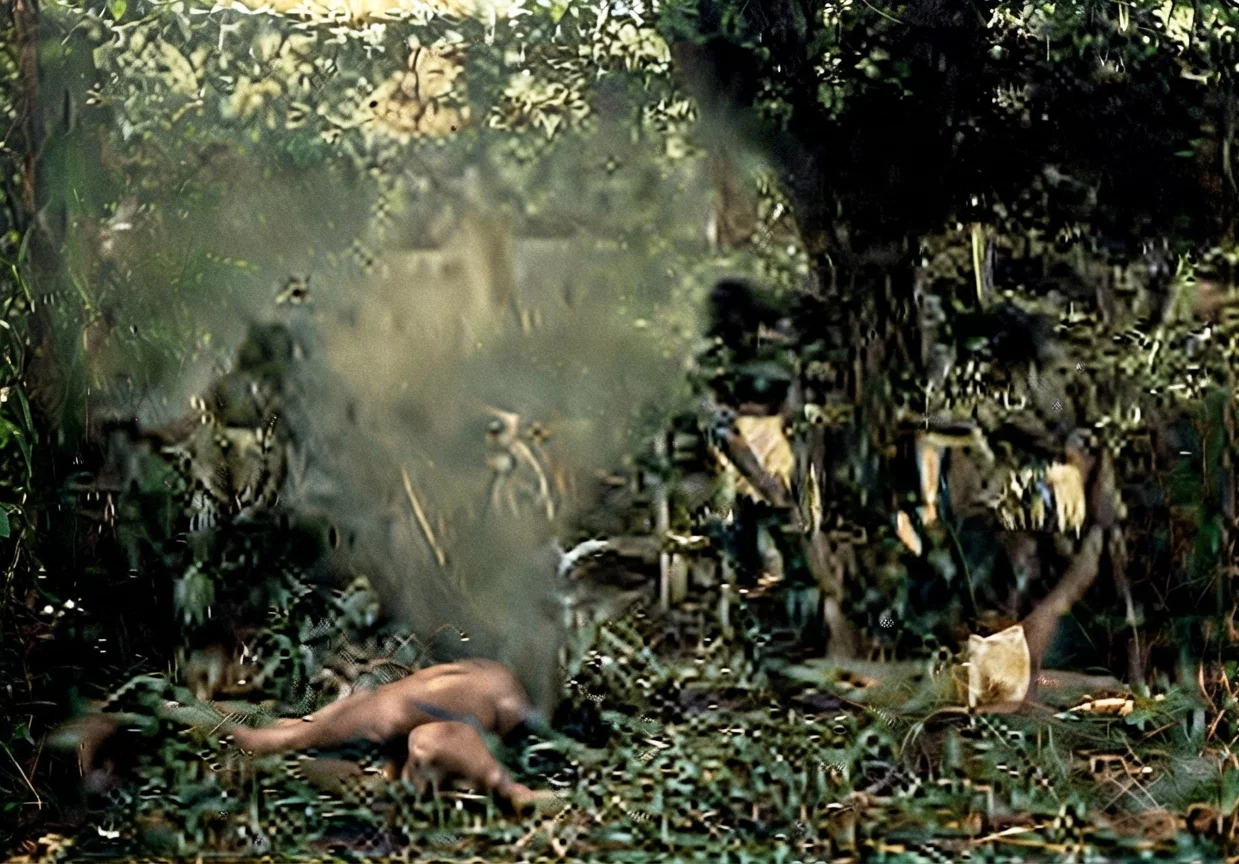
Killing the Victim, Preparatory to Cooking Him.
With reference to the cannibalism formerly practised in these islands, one writer remarks:—
The cannibalism of Fiji was not only the outburst of passion or enmity, but was an institution mixed up with every-day life. The practise did not arise from scarcity of food, for when every other diet abounded, human bodies were looked upon as a delicacy, and preferred by some before all other food. The higher the rank the more this revolting custom was indulged in; and many of the chiefs so gloried in the number of bodies they had eaten, as to keep a register by making a line of stones, one stone being placed for each body eaten. The stones thus placed by two chiefs were counted by a native teacher, and found to number nearly 900.
As many as fifty bodies have been cooked for one feast when visitors were to be entertained. Among these would be found those of men and women of all ages, and even of little children. Nor did the cruelty of these people stop here; for the victims of their revenge were sometimes frightfully tortured, and even cut up alive, before being placed in the ovens.
These ovens were holes five or six feet deep; and when large feasts were made, they sometimes reached a circumference of forty or fifty feet. The oven was first filled with wood, on top of which stones were placed. After the wood was burned, the food, wrapped in large leaves, was laid on the hot stones and covered with grass and leaves, and lastly with a layer of earth. When the steam could be seen coming to the surface, the food was cooked. This method of cooking is used at the present day when feasts are made.
The utter disregard for human life among these islands is illustrated by the following facts: When a chief built a house, deep holes were dug in the foundation for the main posts; and into each of these holes a man was placed and compelled to stand with his arms encircling the post. The holes were then filled with earth and the men buried alive.
Another horrible cruelty was practised at the launching of war canoes. A large number of men were compelled to act as rollers, over whom the canoe was conveyed to the sea, crushing the men frightfully, and killing a great many. All captives taken in war were first presented to the war-god by the priest; then the head of each was dashed against a stone outside of the temple. The bodies were then washed, and carefully dismembered by an appointed carver, and the limbs wrapped in leaves and put in the oven.
Infanticide was commonly practised on feeble children, and when a healthy child became an object of anger or inconvenience, the mother did not hesitate to choke it to death.
Invalids and old persons were left to perish, or else speedily disposed of. The death of a chief or a person of high rank was always followed by the strangling of his wives and his mother, a fate from which the women manifested no desire to escape. The women were placed on a layer of mats in the bottom of the grave and the chief laid on them. One missionary told of a man and his wife who were working together in their garden, when the husband was suddenly seized with a ravenous desire for human flesh. He immediately prepared an oven, and made his wife bring some wood and stones for the fire. When all was ready, he seized his wife, killed and cooked her, and invited some of his friends to help him eat her.
The lot of a woman was a very hard one, and was rendered still more bitter by the cruel, brutal treatment of her husband. Polygamy was practised by all except the very poorest. Jealousy, hatred, and revenge were rife in the hearts of the wives, and found expression in various ways. A missionary's wife once asked a native woman why so many of the women were without noses. She replied: "It comes out of the plurality of wives; jealousy causes hatred, and then the stronger tries to cut or bite off the nose of the one she hates."
A Captured Man Who Is Being Dragged to the Oven.
Even at the present day the women are still regarded as the burden-bearers of the household and the servants of their husbands, who claim it as their inherent right and privilege to administer a whipping if they are not obeyed.
After reading this short account of the once savage cruelty of this people—and but few of the horrors and atrocities are mentioned that were committed daily among them—does it seem a strange thing that there is to be found in their language but one word, and one only, that expresses all that is meant to us by love, friendship, esteem, affection, sympathy, compassion, mercy, and pity? And that word is loloma.
Just what was comprehended in that one word previous to the time when they first heard the message that "God so loved the world, that He gave His only-begotten Son," and that it is required of man to love the Lord his God with all his heart, mind, soul, and strength, and to love his neighbor as himself, can better be imagined than described.
As might well be supposed, there is no equivalent in their language for the word "home." That word, which expresses so much that is dear and sweet to us,—"home, the sacred refuge of our lives"—is to them a meaningless term.
It was in the year 1835 that the first missionaries landed in Fiji. These faithful, devoted servants of the Lord Jesus suffered many hardships, and passed through many afflictions, and not a few laid down their lives for their Master. Within thirty-five years after the seeds of truth were first sown, cannibalism was practically abolished, and churches and schools could be counted by the hundreds.13Among the eighty inhabited islands, one could pass from island to island, and from village to village, certain of being welcomed and hospitably treated. The first sound that greeted the ear at daydawn, and the last at night, was that of songs of praise and prayer arising from every house at the hour of family worship.
It is evident that these islands could never have attained civilization without the aid of Christianity; but as the hearts of the people became changed, a corresponding change was wrought in their lives and customs. Gentleness, humility, contentment, and unselfishness in a marked degree, characterize the natives of the present day. Notwithstanding this, there is to be seen in the last decade a noticeable declension in spirituality among them. The forms of worship are still continued, but the power, zeal, and fervency manifested in their service in former days is wanting. Like the religious world at the present hour, they have a "form of godliness but deny the power thereof."
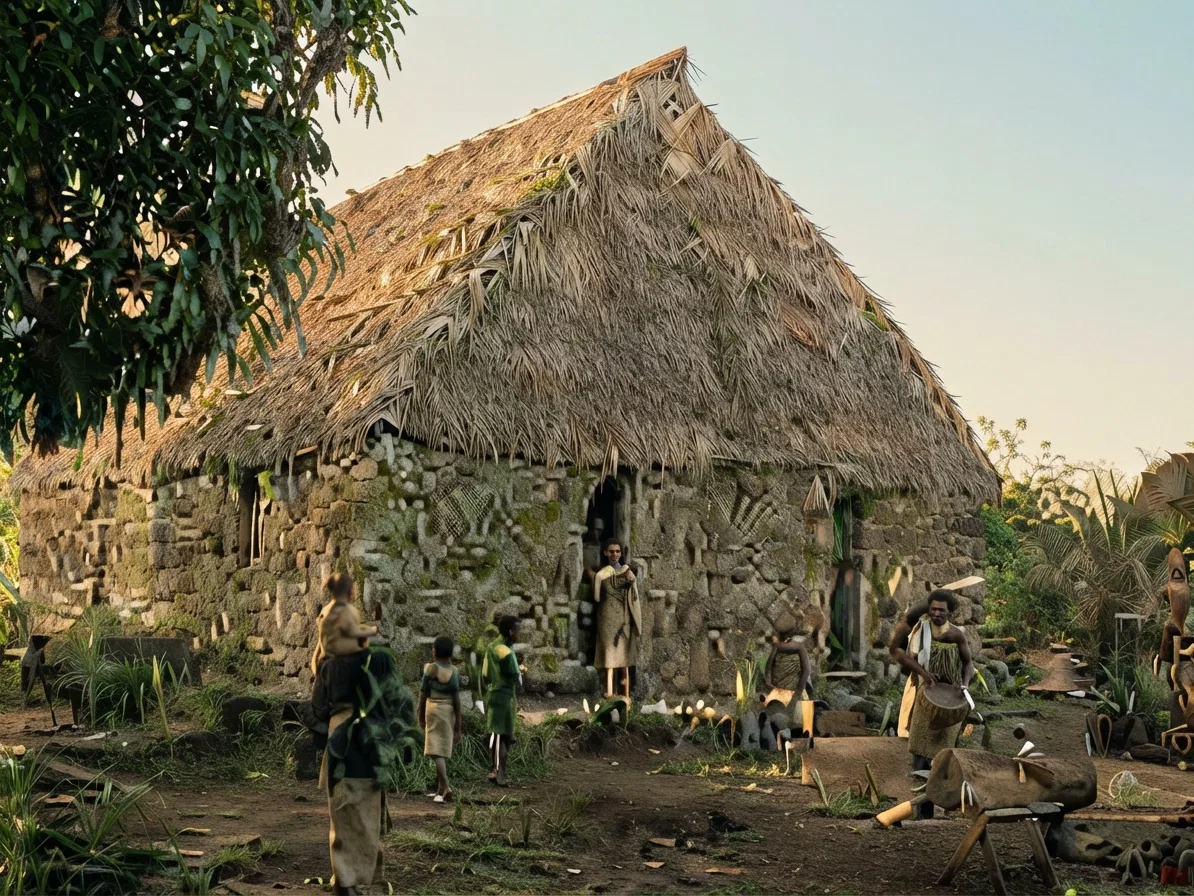
Natives Entering the Fiji Church—Beating of the Native Lali, or Drum, Anciently Used to Call to the Cannibal Feast.
There remains a great work to be done for this people. Both men and women are addicted to tobacco-using and kava drinking, and are entirely ignorant of the laws of health. Various skin diseases, affections of the eye, and loathsome sores are prevalent among them. This is an open field for the medical missionary, and we hope to see erelong a goodly number enter it.
MRS. SUSIE N. FULTON.
Suva, Fiji Islands, Jan. 11, 1900.
Korea.—Rev. H. G. Appenzeller, a Methodist missionary, reports that "Korea has swung back to ante-bellum days, and, unless there are checks not visible now, it looks as tho her last stage is destined to become worse than the first. Politically she is drifting badly, with Japan and Russia trying to board the craft and secure the helm. Just at present education as supplied by Western nations is not sought for. The head master of the English school failed to renew his contract, and has gone into the hotel business. The missionary sticks to his distinctive work, and finds good 'raw heathen' material to work upon, and longs for a mighty baptism of power, a mighty baptism of conviction of sin to come upon his hearers and adherents. There are no end of adherents, probationers, catechumens, and even members, but they do not seem to have any knowledge of that horror of sin one would like to see and ought to see. The sinner here acts very much like the sinner at home."