THE AMERICAN OUTLOOK

3%

Pacific Press Publishing Company · OAKLAND, CAL., KANSAS CITY, NEW YORK · Nov 28, 1900

FromSigns of the Times, Vol. 26, No. 48.

Read the full edition

THE AMERICAN OUTLOOK

By Calvin P. Bollman Associate Editor of the "Sentinel of Liberty."
THE AMERICAN OUTLOOK
THAT this government is a subject of prophecy seems probable from the fact of its prominence in world politics, and even more because here was pre-eminently the first asylum and subsequently the home of aggressive Protestantism.
Here, as nowhere else in all the world, is seen the heaping together of "treasure in the last days," spoken of in James 5:1-9, R.V.; and here as nowhere else are seen indications of the speedy fulfilment of the first verse of this prophecy.

The Prophetic Description.

But it is in Rev. 13:11-18 that this government is specifically described and its course outlined. The chapter opens with a description of Rome, both pagan and papal, but having special reference to the papal phase of that power.
The leopard beast of verse 2 has some of the characteristics of each of the national systems used from time to time by Satan to oppose the work of God in the earth and to oppose His people, but special prominence is given to the papal head. Roman Paganism was soon to give way to Roman Papacy; and when once that system gained supremacy, it would never cease to dominate Christendom. Dynasties might rise and fall, and even the Papacy itself be nominally abolished, but the evil principle would survive, to die only when all sin shall be blotted from the earth.
For 1,260 years, or from A.D. 538 to A.D. 1798, this papal head held sway over what had once been the Roman Empire. In the year 1798 the Papacy received what was designed to be, and what to any other power would have been, "a deadly wound" by the sword. At that time a French army entered the city of Rome, made the pope a prisoner of war, declared the Papacy abolished, and established a republic upon the ruins of that religio-political system.
At this same time the prophet sees "another beast coming up out of the earth." This power does not arise as the result of war; it does not come up in territory already densely peopled; but, as it has been aptly expressed, it comes "forth from vacancy;" it "grows up as a plant;" and these expressions describe as accurately as can be done briefly, the beautiful rise of the United States in new territory.
It was about 1798 that this government first began to attract seriously the attention of the world. The new nation was then only ten years old; for it was in 1788 that the ninth State adopted the Constitution, which by its own terms was to become operative when ratified by that number of States.
Here, then, was a new nation, represented by a new symbol, and in its incipency dominated by a milder spirit than had characterized any preceding power, but later it was to speak with the voice of a dragon.
Horns in prophecy represent power, or the source of strength. Of the Lord the prophet Habakkuk says, "He had horns coming out of His hand; and there was the hiding of His power." The strength of God is His character, or righteousness. Were it possible for God to experience a moral fall, He would in such fall cease to be supreme; for of whom any being is overcome, by "the same is he brought in bondage."

The Strength of This Government.

In its earlier history the strength of this government was in the principles upon which it was established. Republicanism and Protestantism attracted to these shores the flower of European manhood. These principles were the strength of the new nation. They challenged the admiration of the world, while the conviction that a people devoted to such principles could not be conquered and held in vassalage restrained the ambition of such as coveted additional territory for purposes of colonization.
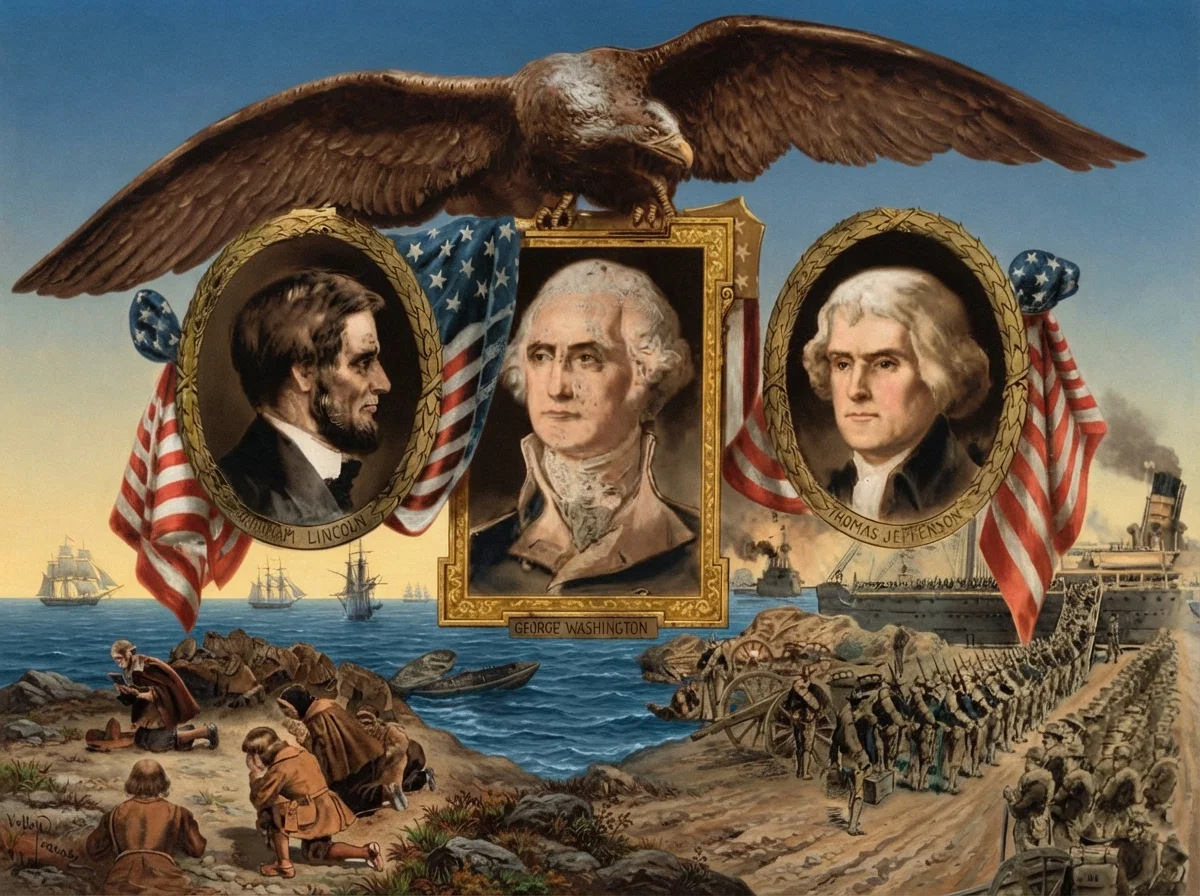
But there is another and a sadder side to the prophetic picture. Of the symbol representing this nation, it is said, "He had two horns like a lamb," but "he spake as a dragon."It was Thomas Jefferson who, with a wise foresight, born of close study of men and of political systems, raised this note of warning:—
The spirit of the times may alter, will alter. Our rulers will become corrupt, our people careless. . . . It can never be too often repeated that the time for fixing every essential right on a legal basis is while our rulers are honest, and ourselves united. From the conclusion of this war we shall be going down-hill. It will not then be necessary to resort every moment to the people for support. They will be forgotten, therefore, and their rights disregarded. They will forget themselves, but in the sole faculty of making money, and will never think of uniting to effect a due respect for their rights. The shackles, therefore, which shall not be knocked off at the conclusion of this war, will remain on us long, will become heavier and heavier, till our rights shall revive or expire in convulsion.
This was but putting in other phrase the prediction of the inspired Word—not that Mr. Jefferson so designed, but he nevertheless expressed the same truth. And those who live to-day see the beginning of the end of the fulfilment of the words of both prophet and statesman.
The leopard beast of Rev. 13:1-10, with its papal head, was characterized by a denial of the very principles which for more than a century of its history were the strength of the government of the United States—namely, Republicanism and Protestantism. The image to the beast will in like manner develop clearly these same principles, and this has already been done to a surprising extent by this government.

A Denial of Principles.

In the Supreme Court dictum of February 29, 1892, declaring this a "Christian nation," and in the World’s Fair legislation requiring the closing of the Exposition on Sunday, in professed obedience to the fourth commandment of the Decalogue, are bound up all the elements of Church and State union. If our courts may decide what is Christian either as pertaining to the nation or to individuals, and if Congress may declare which day is the Sabbath according to the fourth commandment, it is difficult to draw a line which the government may not pass in the decision of religious questions. In Sunday legislation, in the exemption of church property from taxation, and in the relations of the government with the Roman Catholic Church, especially in respect to territory recently acquired from Spain, are bound up vast possibilities. The inexorable logic of events points to only one conclusion. "Manifest destiny" hurries the nation toward the predicted consummation. Indeed, in the decision of the religious questions to which reference has been made, and the denial of self-government in Porto Rico and the Philippine Islands, the dragon voice is already heard. And since "the jurisdiction which government takes, it keeps," we can not close our eyes to the fact that future measures of the government will be still more strongly marked, or even completely controlled, by the influences and principles already referred to.
With purely political questions the writer of this article has nothing to do. Whether or not it is wise statesmanship to acquire territory foreign to our shores, and to annex and govern foreign peoples without their consent, it is not the purpose of this article to discuss. But the fact can not be denied that the three years last past have witnessed a complete revolution in the policy of this nation respecting these questions; and from the positions taken, there can, in the very nature of the case, be no turning back.
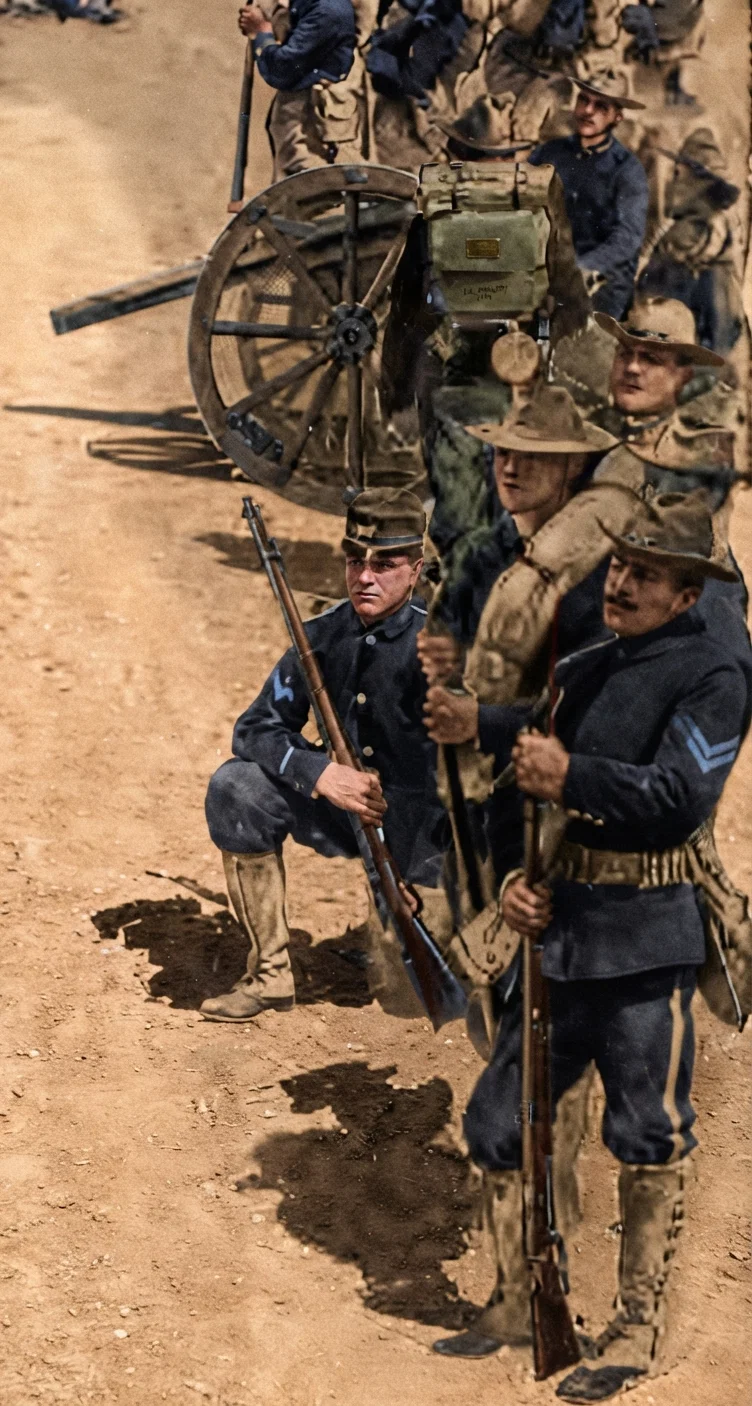
The current of events is to-day running in the channel indicated eighteen centuries ago by the Word of God. As a nation we are following in the trail of Rome, and this article is written for the sole purpose, not of influencing political sentiment, but to invite the attention of the reader to the great truth that the events now taking place in our own land, and in which American soldiers and sailors are participating in other lands, tell in trumpet tones that "the coming of the Lord draweth nigh."

The Marshaling of the Nations.

Nor is it alone in the scriptures cited that this country is referred to. The sixteenth of Revelation tells of a great battle, to which is to be gathered "the kings of the earth and of the whole world." Verse 14. Only three years ago it seemed impossible, from any standpoint other than that of the prophecy, that the United States could ever become involved in any great conflict in the East. In the light of recent events and of the present situation in the Philippines, in China, and in Turkey, it now seems just as impossible for the United States to escape participation in the approaching Titanic struggle for supremacy in the Orient.
Already we see the marshaling of the nations for this last great battle. The five great powers that virtually control the whole earth are now face to face in the East. Steam and electricity have made the earth practically no larger than was a single country a century ago. Thus are brought together nations once widely separated. The dangers of strife incident to close proximity might be overcome by civilization, but greed and ambition are busy stirring up strife, and few are so blind as not to see that the arbitrament of arms must "settle" the differences which selfishness has created; and, according to the sure word of prophecy, the United States of America will be one of the parties to the conflict.
The sands of time are rapidly running out of God’s great hourglass, which is now almost empty of the years allotted to earth’s history. The last generation of men is upon the stage of action. The end of all things is at hand. Prophecy foretells this, events testify to it; and, in view of it all, the Saviour says to all who will hear His voice, "Behold, I come quickly; and My reward is with Me, to give every man according as his work shall be."
CALVIN P. BOLLMAN.