THE HARVEST OF WAR

3%

Pacific Press Publishing Company · Oakland, Cal., Kansas City, and New York · Nov 29, 1899

FromSigns of the Times, Vol. 25, Nos. 48, 49.

Read the full edition

THE HARVEST OF WAR

By Uriah Smith, Author of "Daniel and the Revelation," "Looking unto Jesus," etc.
IT was once said by the eminent Sherman, of the United States Army, that "war is hell." He had seen enough of it, and knew enough of it, to understand whereof he affirmed. The Harvest of War is, therefore, the harvest of hell. A harvest is the result of means put into operation for the attainment of a certain end. What results, then, would hell seek to secure? and what ends is the chief promoter of hell, the prince of darkness, working to attain? Whatever it is, that is the Harvest of War.
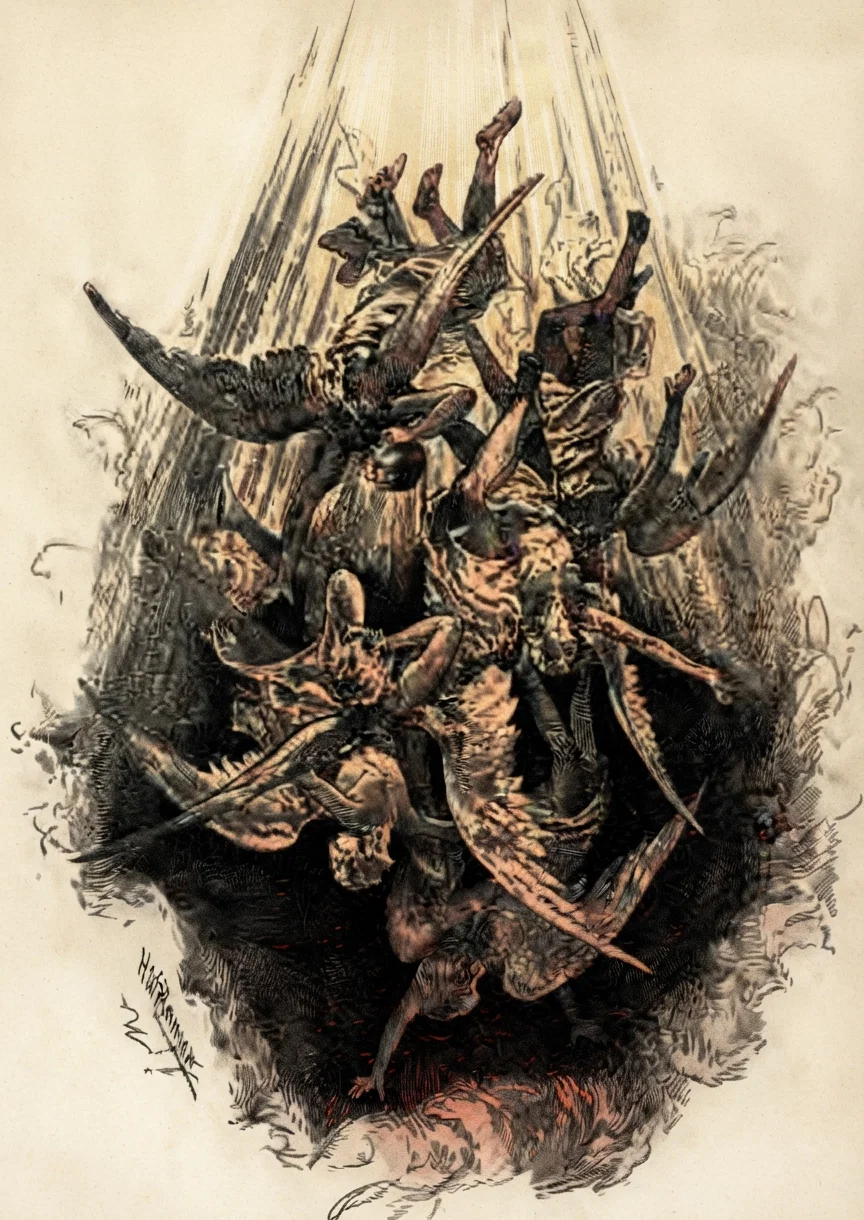
-his angels were cast out with him.
All the evil that has ever come in to mar the once happy universe of God, has come in through war. "There was war in heaven." Such was the beginning. "The devil fought and his angels." Then Michael, the prince of righteousness and life, was obliged to fight against this incipient rebellion, or else abdicate his
own position of power, and abandon the universe to anarchy and ruin. But to thus abandon his work, true to his own nature, he could not do. He must therefore suppress the disturbance, and expel the disturber. Hence, with force and violence, Satan was cast out, and his angels were cast out with him.
The war here referred to was one of necessity and mercy. But it was not God's plan that strife should ever invade His realms. God is not the author of war. "An enemy hath done this." And his fiendish machinations have made it sometimes necessary that war should come, that peace may be preserved. The spirit of evil, being thus checked in his first brazen, presumptuous assault upon the realm of Jehovah, keeps up his vicious work with the same evil impulse and intent, wherever he conceives that there is an opportunity to materialize a movement hostile to the principles of truth and righteousness.
But as evil invaded the handiworks of God through war, so with war will it make its final exit out of a renovated universe. The devil, at the head of his hosts of sin and evil, makes his last rally around the walls of the city of God, when it has come down from heaven to the earth to be the metropolis of that everlasting kingdom of heaven which is to be established here. With their weapons of war, and their delusive plans of conquest, they lay their lines of siege around the camp of the saints (Rev. 20:9); but a power which their blindness would not permit them to see, and their hate would not permit them to recognize, then arises to vindicate His own name and truth; and fire comes down from God out of heaven, and devours the whole rebellious host, root and branch, as the prophet specifies (Mal. 4:1), Satan, the "root," and evil angels and evil men, the "branches." Righteousness triumphs at last, because God is God.
Thus war spans the whole time of the reign of sin, of which it is at once the symbol and outward manifestation. And it is set forth as one of the most pleasing features and greatest blessings of the redeemed state, that forever there shall be "abundance of peace." War is prompted by the most fiendish passions that have ever found a home in the human breast. It furnishes a channel for the exhibition and the cultivation of the most virulent and hateful tempers that have ever had birth from the bottomless pit. Its aim and its work are to ruin and destroy. The most rare and pleasing works of art, and the accumulations of wealth untold, are welcome victims of its wanton power. It is a blind and indiscriminate demon. It sets no more value on human life than upon inanimate things. It gloats over the agonies of human victims.
The Lord threw up a barrier against this evil, designed to take it out of the hands of beings subject to the hates and passions of the human breast, "Thou shalt not kill," is the great principle He incorporated into the constitution of His government, as one of its fundamental pillars. If all men had always obeyed this precept, there could have been no war. Take away the privilege of slaying men, and what would be accomplished by war? It would necessarily cease at once. And it would thus cease if all men were Christians; for Christians can not obey the sixth commandment, or follow the instruction and example of the Prince of Peace, and yet engage in the work of slaughtering their fellow-men in the brutal, deadly savagery of war.
What does the Moloch of war care for human life or feeling?
Consider a moment what a change would come over the condition of the world, and the organization of society, if war could be abolished and removed; what property would be saved; how lives would be preserved; what pestilences and famines would be averted; what reduction there would be in the number of heart-broken widows and helpless orphans; what blighted lives, and wrecked homes, and untold agony and suffering, would be avoided; how much of that which may be called "hell," would be eliminated from the experiences of the children of men; what numbers would be added to the producing forces of the country; how much bone, sinew, and muscle of strong men would be allowed to
devote itself to the production of the necessities of life for loved ones, and to adding to the wealth of the State, instead of being wrested from useful employments, and doomed to waste itself in idleness and vice, when not actively engaged in the destruction of life and property. What more detestable and insane thing can be conceived of than war! How it paralyzes every useful industry, and buries every hope under the deadly burden of taxation, degrading women and children to the lot of hopeless toilers, mechanical machines, and brute beasts! What can society do under such an incubus? It can not grow and expand in the fruits of an enlightened civilization, but must inevitably relapse into brutality, darkness, and despair. Such is the Harvest of War all along the centuries.
It would be utterly impossible to measure the full tide of this evil, which, ever since sin entered into the world, has devastated the fortunes and lives of men. A few available statistics, covering a brief modern period of war, will afford a little glimpse, from which something of an estimate can be made of the whole. The Peace Society of London, England, furnishes a few figures showing the cost of war, for a period of twenty-five years, beginning with the Crimean War of 1853-1856; and the reference is only to wars between so-called civilized and enlightened nations. The figures presented show a total of thirteen billion two hundred and sixty-five million
dollars. This sum, they say, amounts to $10 for every man, woman, and child on the habitable globe, and would build two lines of railway entirely around the earth, at a cost of $260,000 a mile.
Here is another little item on the expense of war, taken from the Times, of Paris, and quoted in the Globe, of London. This was by some means secured out of a private despatch from the British embassy in Rome, to Lord Salisbury, at London. The statement has reference only to the seven great powers of Europe, and covers a period of only six years, namely, from 1882 to 1888. The total for the army and navy amounted to the astounding sum
of £974,000,000 sterling. This would be between four and five billions of dollars. The debt of these nations increased during this time 10.20 per cent.; and the interest on the debts of these powers, 13.30 per cent.
The debt amounted, as far back as 1891, to over fifteen thousand millions of dollars. And while the able-bodied, and strong, and vigorous, are drafted off to fill these armies, and devour the
fruits of the land on which they do not labor, the crippled, the young, the aged, and the infirm, are compelled to support themselves, sustain the government, pay the taxes, provide the pensions, and feed the army of leeches, who toil not, neither do they spin, but yet flaunt their gold lace and epaulets, and spend the people's money in military pomp and vain parade.
And what is the object of all this preparation, and this waste?—Simply, war. And what is war?—Let a heathen chief in South Africa answer this question, as quoted by the aged Mr. Moffat, at the missionary conference in London, in 1898: "What is war?"said the chief to his comrades. "War cultivates no fields, it plants no gardens. War raises no families, and builds no houses. Will you know what war has done? Go to the field where the strife of battle has raged, and ask the enslaved people, What are you doing here in slavery? They will reply, War sent us down here. Go to the widow, and ask, Why do you mourn? and the widow will answer, War devoured my husband; and I am alone. Go to the fatherless, and they will tell you, I had a father, but war ate him up."
So much for the pecuniary loss—treasure not invested to do good, to relieve want, and bless mankind, but squandered to supply weapons and facilities to take life and spread desolation and wo. But what of the more vital question of the lives taken, the murders committed, not only during the time of the wars here referred to, but from the time when Nimrod set up a kingdom by violence, over forty-two centuries ago?—Blood, tears, groans, desolation, and death,—everything that is ghastly, horrible, and hellish,—have marked the highway of war through the centuries. Thirty thousand skeletons of Russian and Turkish soldiers were sent to England in 1881, in the form of bones and bone-dust, to be used as a fertilizer. What does the Moloch of war care for human life or feeling?
Intense study and invention have been at work for years on the science of the most expeditious methods of slaughtering men in war. There are now twenty-nine different mixtures brought out, ranked as "high explosives," for military use. Among those one is called "Americanite." This is only the fifth in point of power; three grades of perunite, rated as 100, 97, and 83, and Rossel's mixture, 89.5, Americanite being rated as 82.0 in strength.
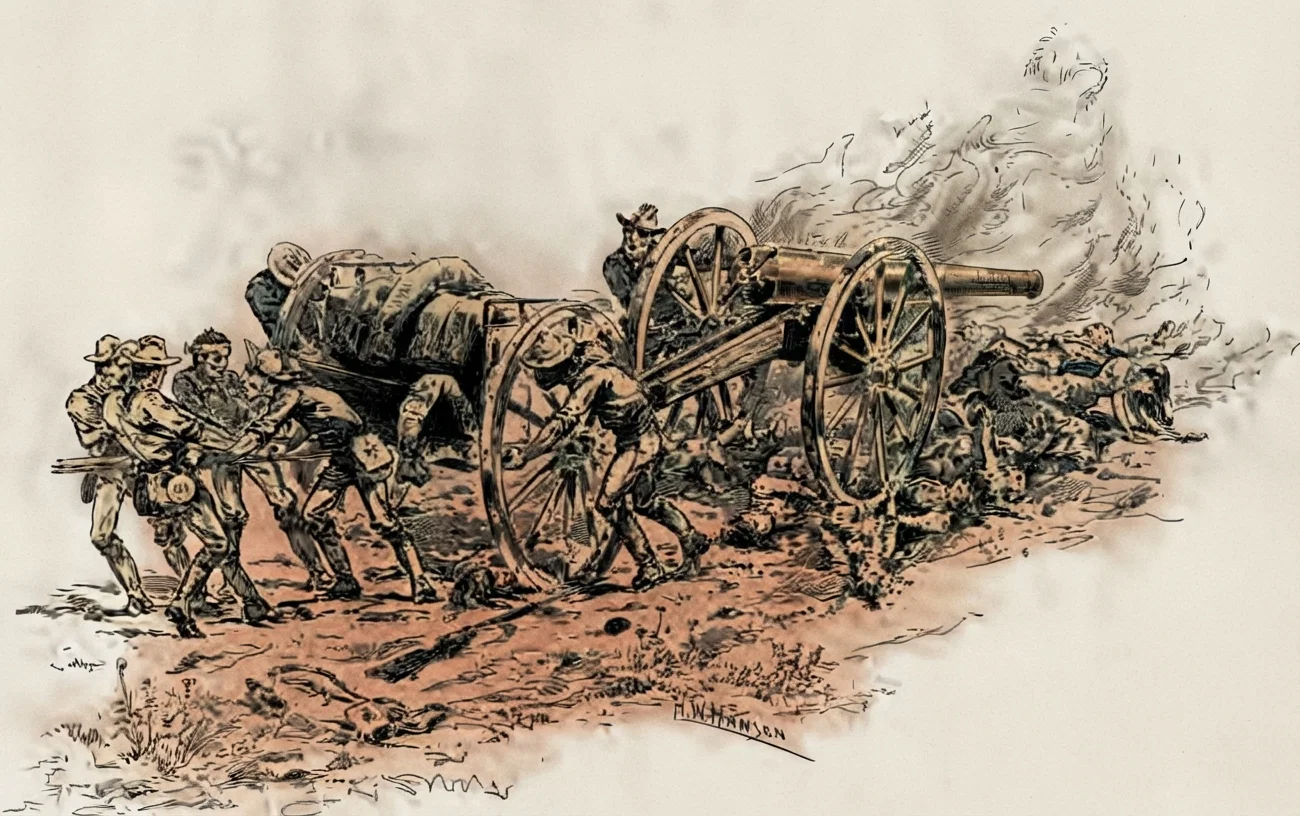
Guns in which to use these high explosives, have also, with the same persistency, been improved, till now guns have been produced in which dynamite shells, the effect of which is likened to an earthquake, can be discharged without danger to their own gunners, with a propulsive force which will carry them for miles. These guns are but a few inches less than fifty feet in length. Ships carry guns throwing shells of thirteen inches, and forts are provided with sixteen-inch breech-loading cannon, weighing 140 tons. Such guns call for 1,060 pounds of powder for a charge, and throw a shell weighing 2,370 pounds. These shells leave the muzzle of the gun with a velocity of 2,000 feet per second, and would pass through 27 1/2 inches of solid steel, two miles away. The seesaw struggle between impenetrable defenses and resistless projectiles, between invulnerable ships and armor-piercing guns, between torpedo-boats and torpedo-boat destroyers, is putting human endurance and capabilities upon a race to the death; and which will hold its ground the longest, and finally win, none can tell.
All this must be done because war so decrees. Meanwhile the poor people, besides sustaining themselves and the dear ones dependent upon them, must raise enough to supply the insatiable demand for money to promote these inventions, and support the experiments of these new and expensive contrivances. For what?—To slaughter human beings in the shortest time and on the most extensive scale; just as though men did not have a difficult task enough, at best, to ward off death, ever pressing upon them in the form of disease, accident, overwork, old age, and calamities by sea and land.
Including the reserve forces of the nations of Europe, there are said to be over twenty-six millions of men who could be called into action at a moment's notice. A glance at the methods adopted by the leading nations of the continent, to keep their armies full, will show what a drain is made upon the productive forces of the different countries, and how broken up and demoralized the plans and purposes, hopes and desires, of the population must be. All young men reaching the age of military service, are registered; and obligatory service commences on the 1st of January of the year when they attain the age of twenty-one. It is then three years in active army service, seven years in active army reserve, two years in the Landwehr, and the rest of the time, till the end of the forty-fifth year, in the Landstrum. (World Almanac, for 1898.) Is it any wonder that young men flee from countries where they are handicapped with such involuntary service the best part of their lives; where they are rudely taken out of useful occupations, and thrust into the horribly corrupting channels of army life, their desires and prospects for manly and useful courses of life broken up, and all their aspirations thwarted and crushed out? In 1896 the number of young men thus registered was 2,339,620.
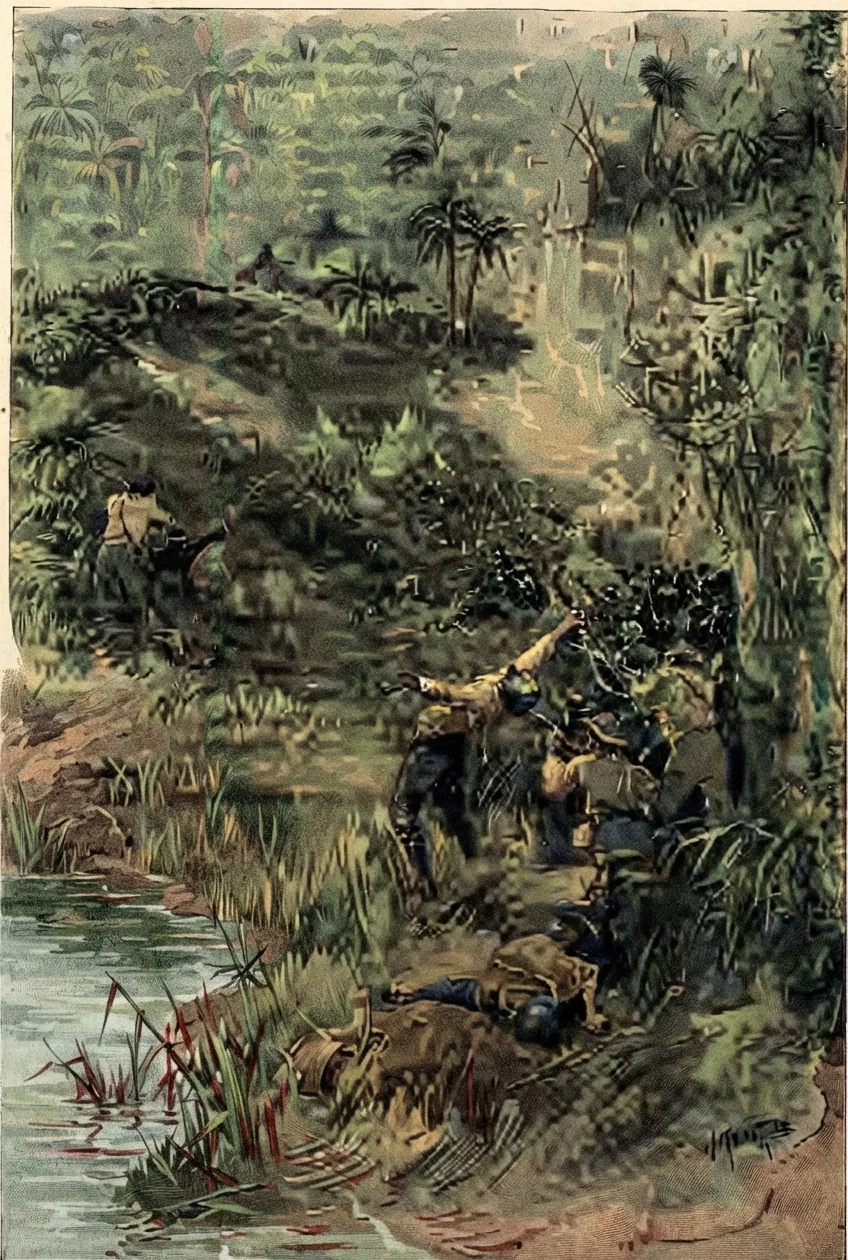
Blood, tears, groans, desolation, and death,—everything that is ghastly, horrible, and hellish,—
Of equal magnitude are the preparations and facilities for war and destruction on all seas and oceans. This raises the demand to an almost inconceivable magnitude for men and means; and each year sees new results achieved which are the marvel and bewilderment of even the experts themselves. Some flatter themselves that the never-before-conceived inventions of these last days will tend to the interests of peace, because they are so deadly, and destruction is so inevitable, that men will not dare to engage in war; but the incidents of the late conflict with Spain, utterly explode such anticipations. Men in whose hearts the insane frenzy of mortal strife is engendered by war are blind to danger and dead to fear. The deadliness of the weapons, and the certainty of destruction, constitute no factor to determine their own course of action.
But has not war nearly finished its harvest in our world? Will not the Peace Congress of the czar arrest it, and finally bring it to a close? Well, that congress has had its session, and the peace propositions have been under discussion; and what has thus far been developed?—It was found that the policies of the nations are so utterly antagonistic that no unity of effective action was possible. And the congress adjourned that the delegates might confer with their respective governments, and meet again in a year. Meanwhile the dismemberment of weaker peoples, and the arbitrary distribution of their territory, goes on apace. The congress has not accomplished, and will not accomplish, anything; but it has emphasized the public abhorrence in which war is held; and it gives the mistaken prophets of peace opportunity to raise the cry of "peace and safety," a cry which the Scriptures declare will be one of the signs of the end, one of the last movements before the swift-coming destruction, which, like the flood upon the antediluvians, and the fiery shower upon Sodom, will take them all away.
Judging from the established ambition of Russia, and the unmistakable indications of its policy, it is the conviction of many that even the czar is not sincere in his professions, but that this peace proposition is but a shrewd stroke of policy, to gain a little safe time to carry out schemes which he has entered upon, but is not just now in a condition to finish. Mark the movements and apparent policy of that power in Eastern Europe, touching the possession of Constantinople, movements in Central Asia, and in China, and Finland, and then judge.
The czar wants more time. Grant it; but let him know that he can not swerve by one hair's breadth the course of the inevitable. A terrible land hunger has seized upon the nations of Christendom; and parceling out the territory of weaker nations among themselves constitutes the present diversion of the stronger powers. They may meet together, and, in strains of pseudo-justice, laud fair dealing and national honor, and pose as the champions of these principles, while at the same time they are, in the most barehanded manner, grasping and appropriating to themselves the lands and possessions of nations not strong enough to resist their robbery. All over the earth this fever rages, the temperature rising far above the danger point. No peace congress, nor any influence other than a Gospel change in the hearts of men, can remedy it. The prophet reveals the true secret when he likens the old Persian Kingdom to a bear, and says that it had three ribs in the mouth of it, and they said unto it, "Arise, devour much flesh." A taste of blood arouses a thirst for more. The acquisition of some territory feeds the ambition for greater conquests. Our own nation is now taking drafts from the same intoxicating stream, and who knows in what delirium it will end?
All nations are surely preparing for the battle of the great day of the Lord, when war shall reap its final harvest, before the kingdoms of this world become the kingdom of our Lord and of His Christ. Rev. 11:15. The prophetic summons to this final conflictis given in Joel 3:9-16: "Proclaim ye this among the Gentiles: Prepare war, wake up the mighty men; let all the men of war draw near; let them come up; beat your plowshares into swords, and your pruning-hooks into spears; let the weak say, I am strong. Assemble yourselves, and come, all ye heathen, and gather yourselves together round about; thither cause thy mighty ones to come down, O Lord. Let the heathen be wakened, and come up to the valley of Jehoshaphat; for there will I sit to judge all the heathen round about. Put ye in the sickle, for the harvest is ripe; come, get you down; for the press is full, the fats overflow; for their wickedness is great. Multitudes, multitudes in the valley of decision; for the day of the Lord is near in the valley of decision [R.V., margin, "sharp judgment, or destruction"]." "The Lord also shall roar out of Zion, and utter His voice from Jerusalem; and the heavens and the earth shall shake."
The way in which this summons will be fulfilled, is told in Rev. 16:13, 14: "And I saw three unclean spirits like frogs come out of the mouth of the dragon, and out of the mouth of the beast, and out of the mouth of the false prophet; for they are the spirits of devils, working miracles, which go forth unto the kings of the earth and of the whole world, to gather them to the battle of the great day of God Almighty." The outcome of this battle is indicated in Rev. 19:17-20: "And I saw an angel standing in the sun, and he cried with a loud voice, saying to all the fowls that fly in the midst of heaven, Come and gather yourselves together unto the supper of the great God; that ye may eat the flesh of kings, and the flesh of captains, and the flesh of mighty men, and the flesh of horses, and of them that sit on them, and the flesh of all men, both free and bond, both small and great. . . . And the beast was taken, and with him the false prophet. . . . These both were cast alive into a lake of fire burning with brimstone." It is thought by some that here also will be fulfilled the bloody scene described in Rev. 14:20: "And the winepress was trodden without the city; and blood came out of the winepress, even unto the horse bridles, by the space of a thousand and six hundred furlongs." It is appropriate that war should end amid the horrors of its own carnage. The saints are now forever beyond its power.
But one more scene of all-purifying fire remains to rid the universe forever of its polluting presence. It is set forth in that sublimest of all earthly descriptions, Rev. 20:11-15: "And I saw a great white throne, and Him that sat on it, from whose face the earth and the heaven fled away; and there was found no place for them. And I saw the dead, small and great, stand before God; and the books were opened; and another book was opened, which is the book of life; and the dead were judged out of those things which were written in the books, according to their works. And the sea gave up the dead which were in it; and death and hell delivered up the dead which were in them; and they were judged every man according to their works. And death and hell were cast into the lake of fire. This is the second death. And whosoever was not found written in the book of life was cast into the lake of fire."
The strife is done. The pale reaper and his ghastly harvest are no more. The weapons of war are broken and burned in the fire. The Prince of Peace has begun His reign, whose dominion extends "from sea to sea, and from the river to the ends of the earth." Uriah Smith.