THE JAPAN CONFERENCE

10%

Pacific Press Publishing Company · Oakland, California · Dec 19, 1900

FromSigns of the Times, Vol. 26, No. 51.

Read the full edition

THE JAPAN CONFERENCE.

THERE has just closed one of the most significant meetings that has ever been held in Japan.
It was a union conference of all the Protestant missions in the islands. There were in attendance four hundred and fifty representatives from all parts of the empire. As we met with them from day to day, and listened to the many excellent papers that were read, and the wise counsel that was given by men of ability and long years of experience in mission work, we could not help feeling glad that the opportunity was afforded us of attending such a meeting. The devotional papers presented a very high standard of Christian living, and deeply deplored the lack of devotion and godly life. Many helpful hints and suggestions were given, for which we were thankful; and we thought what a power for God such a large company of intelligent people might be, if fully consecrated to Him!
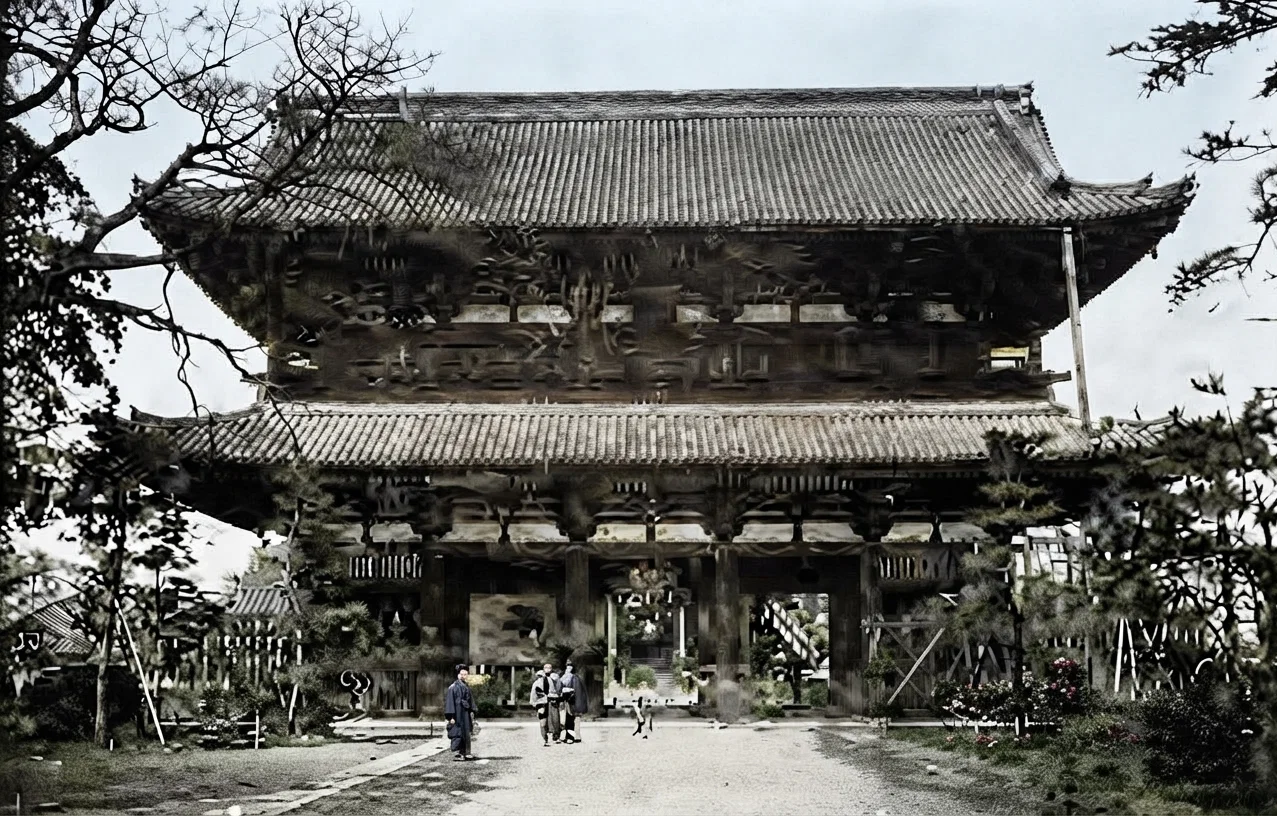
Gate of Buddhist Temple.
Later in the meeting, the subjects of "Sunday promotion" and "Christian(?) unity" were made very prominent, and those acquainted with the third angel's message could not fail to see the fulfilment of Rev. 13:3, "And all the world wondered after the beast."
Tho these churches bear the name of Protestant denominations, yet the proceedings at this conference plainly showed that they no longer protest. Bishop Awdry, of the Church of England, took the stand, and, amid the cheers of the assembly, protested against a resolution which he thought might possibly be taken to infer that the Roman, Greek, and Russian Catholics were not Christians. He spoke of them and their work in the highest terms, and said they constituted the vast majority of the true church of God in Japan.
The mover of the resolution followed the bishop by saying that he had been brought up to regard the Roman Catholic Church as a true church of God, and rather than give any offense he would withdraw the resolution, tho he could not see any possible chance for such an understanding. And he was an honored member of the Presbyterian mission. Similar remarks followed from prominent men of many of the other bodies there represented. One speaker said of course they desired unity with the Catholic Church, and they expected to have it, only they were not quite ready for it yet.
During the discussion that followed the reading of a resolution for a more strict observance of Sunday, one speaker (not an Adventist) objected to the use of the word "Sabbath" in the resolution. He said that it should read "Lord's day." He said further that there was only one denomination (referring to the Seventh-day Adventists, of course) in Japan who pretended to keep the Sabbath; that there was no command in the New Testament for the keeping of the sabbath, or Sunday, but that Sunday observance was established by example rather than precept. There were no cheers for him, but hisses and calls for the question forced him to stop talking. Another party arose, and objected to such a demonstration to suppress the opinions of those who took exception to the resolution. The matter was then smoothed over by saying that it was not because they wished to suppress any one's views, but because the time was late, that such a demonstration was made. That explanation may have satisfied some minds, but to the mind of the writer the explanation was a mere subterfuge.
We expect that in this country, as well as in America, the Sabbath will be rejected, and those who reject will not hesitate to persecute those who will be loyal to God and His law. These things do not frighten us, but they clearly show us that we are right on the very verge of the last great conflict between good and evil. W. D. BURDEN.
Tokyo, Japan.