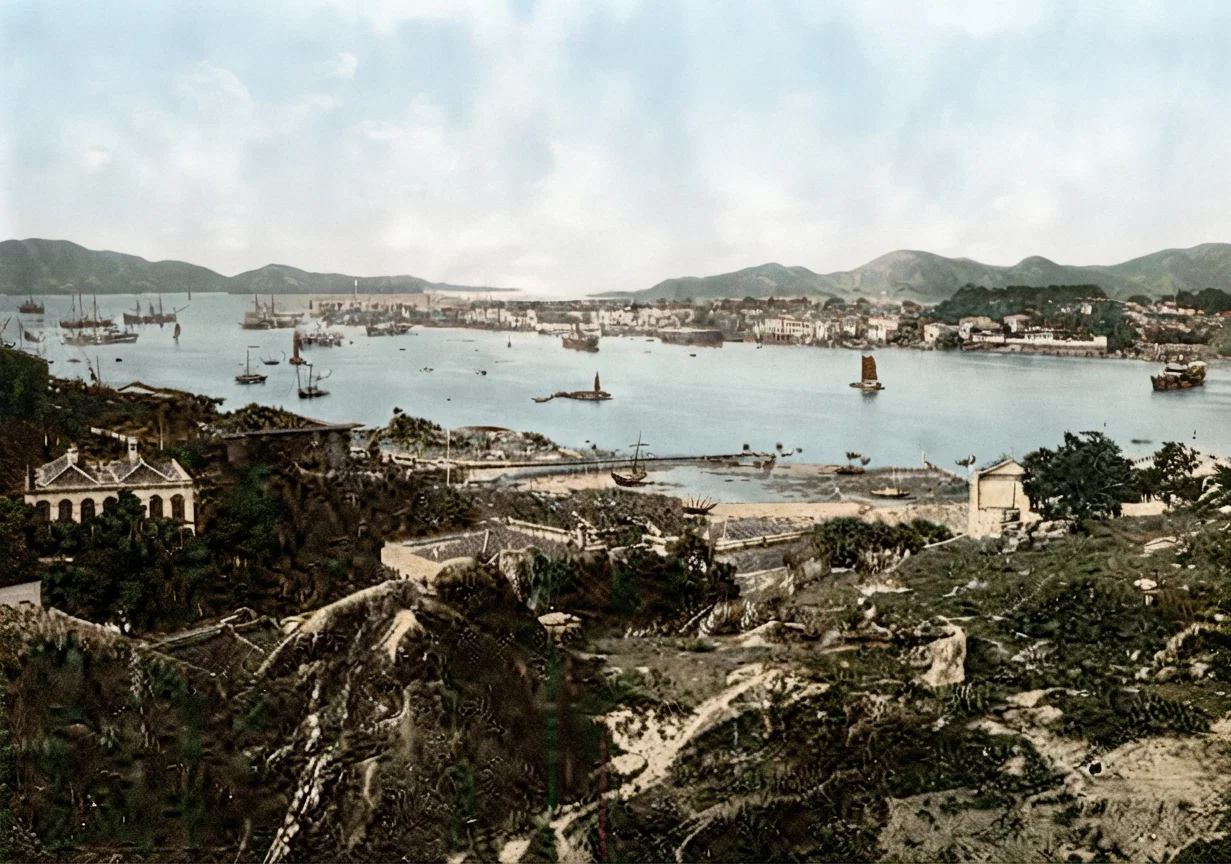
AMOY, CHINA

9%

Pacific Press Publishing Company · Mountain View, California · Feb 1, 1905

FromSigns of the Times, Vol. 31, No. 5.

Read the full edition

AMOY, CHINA.

BY EDWIN HIMES WILBUR.
LAST October Brother J. N. Anderson and I visited Amoy. This is one of the most important seaports between Hongkong and Shanghai, and has a population of about 300,000. It is the commercial outlet of a thickly-populated and fertile country in the province of Fukien, as well as for the large island of Formosa, belonging to Japan. Five or six steamers leave Amoy each week for Hongkong, while others go direct to Shanghai, Manila and Singapore. Now at regular intervals some of the Pacific mail steamers, en route to San Francisco, stop at this port.
Many Chinese from this section have located in Singapore and Penang, so a considerable commerce is carried on with these cities. Rice is the principal article of export. Some fruits are also sent out, the most important of which is the pumalo. This fruit somewhat resembles the pear in shape, tho it is very much larger, usually weighing two or three pounds. It has a rind similar to that of the orange, tho much thicker. On the inside it is arranged in layers, also like the orange. The Amoy pumalo is famous for its juiciness and good flavor. The russet pears of this section also grow very large. They are not soft, when ripe, as our American pears, but when stewed are very palatable. Bananas, oranges, and many other kinds of fruit also grow here.
As in other cities of China, the streets of Amoy are very narrow, some of them not more than four feet wide. The bulk of the business is carried on through thousands of small shops, and the cash (a copper piece worth less than one-twentieth of an American cent) is the common medium of exchange. The buildings are of brick, most of them only one story high. However, fronting on the harbor, there are quite a number of two-story and three-story buildings, occupied as offices and go-downs (storehouses) for shipping firms, and for agents of foreign business enterprises. One of these buildings is occupied by the London Mission as a publishing house, from which a Chinese daily paper and a tri-monthly magazine are issued. On the hill, at one side of the city, is the Anglo-Chinese College, a very neat building constructed by Chinese capital.
Harbor of Amoy, China
Across the harbor, less than one-half mile from Amoy, is the picturesque island of Kulangsu, where the missionaries and most of the other foreign residents live. Here are located the large Chinese schools of the American and English Presbyterians, and the London Mission; also the Talmage Memorial School, for teaching English to Chinese boys. The latter is a fine, large structure, built by a wealthy native, but is under the supervision of the Presbyterian Mission. There is also a commodious church where the Europeans hold their union service. These union meetings in Amoy, as in Canton and some other ports, are attended chiefly by missionaries and their families.
Brother Anderson and I went to Amoy by invitation of a native pastor, who kindly entertained us at his home. This man had first heard of the true Sabbath through Brother Timothy Tay, a young Chinese Seventh-day Adventist preacher from Sumatra. These two brethren came to Canton in August and spent about two weeks studying the Bible with us. At that time he was baptized.
After his return to Amoy he resigned his position as pastor and teacher. His former associates soon learned of his change, and many came to inquire the reasons of his faith. This gave him an opportunity to open the Bible and present the truth to them. The Sabbath question was naturally the most prominent point of inquiry, and this led our brother to write out in Chinese an able defense of God's holy day. This has now been printed in tract form.
While in Amoy and vicinity we met many young men who are eagerly seeking for more light. We ought to establish a strong mission station at once, but where are the laborers? An appeal has been sent to our Mission Board for an ordained minister to be sent out as soon as possible to fill this opening. A man of experience is required for such a place, as the language is quite different from that spoken in other provinces. There is a great interest to hear the truth, and now is the time to work. Truly, the King's business requires haste. See 1 Sam. 21: 8.
British P. O., Canton, China.