given in Eph. 6, the apostle has probably the accoutrements of a Roman soldier before his mind.
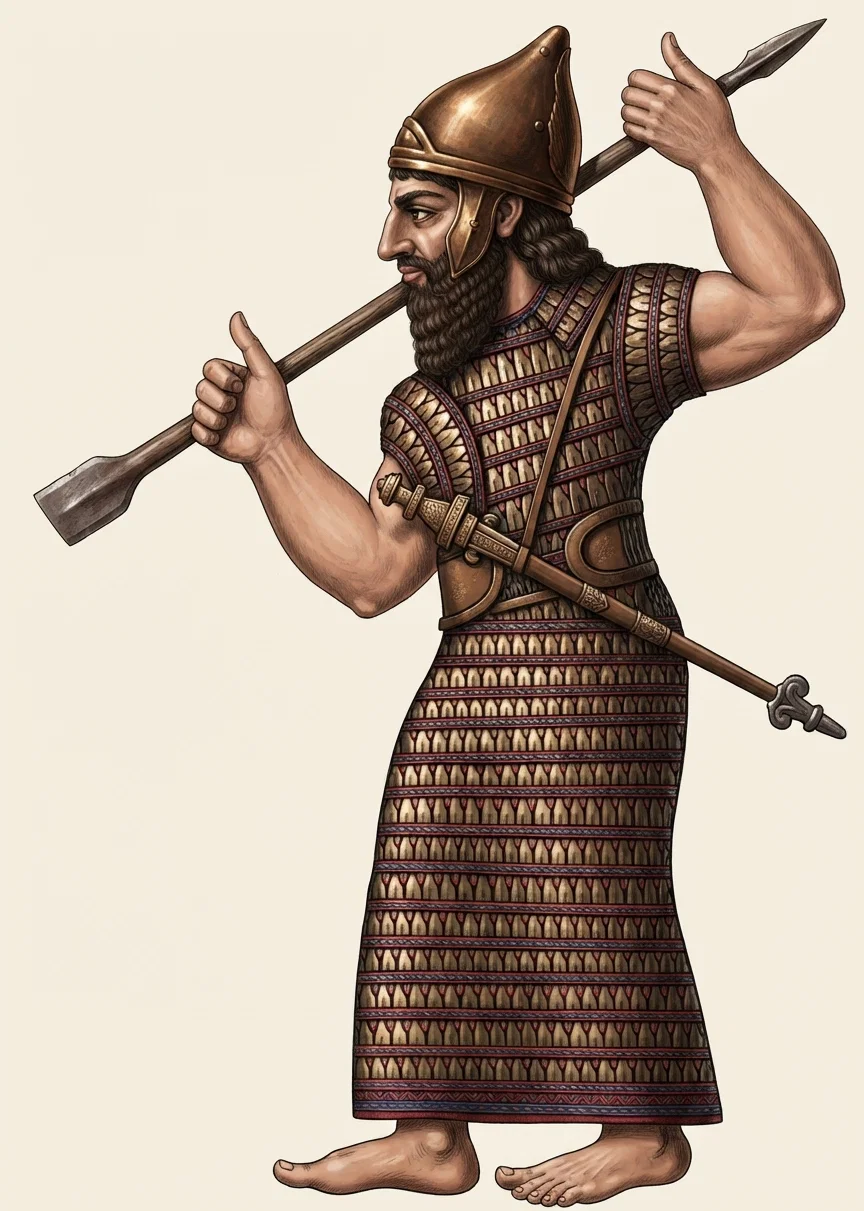
Down to the age of David the army of Israel consisted exclusively of foot-soldiers. These were probably divided into two classes—the heavy-armed, wearing helmet, coat of mail, and greaves, and armed with sword, one or two javelins, and a heavy spear; and the light-armed, wearing helmet and corselet of leather, and armed with sword, bow, and sling. In either case there might be added the heavy marching boots referred to by Isaiah (9. 5), "every boot of the booted warrior."
The metal which was earliest employed in the manufacture of weapons was bronze (n'choscheth), probably an alloy of copper and tin, which the Israelites mined for themselves (Deut. 8. 9). This is the same word which in A.V. is sometimes translated "steel," but elsewhere, and always in R.V., "brass." The use of iron followed later, being introduced in all likelihood from Mesopotamia (cf.Jer. 15. 12). It is uncertain whether the Israelites ever mined or cast iron for themselves.
Armor-bearer (1 Sam. 16. 21). — A servant or squire who frequently accompanied a warrior to the field, in order to carry his heavier weapons, and also to protect him during the battle by means of the huge full-length shield.
Artillery (1 Sam. 20. 40). — A general name for weapons. The word was used to include crossbows, bows, etc., long before the invention of gunpowder.
Assassins (Sicarii, Acts 21. 38, R.V.). — The most desperate section of the Zealots during the last years of their conflict with Rome. They carried daggers for secret use.
Avenger. — Hebrew custom, like that of many other early peoples, authorized and even required the next-of-kin to avenge a murdered person by killing his murderer (2 Sam. 14. 7 ff.). The custom was too deeply rooted to be suddenly abolished, and the Mosaic legislation aimed only at mitigating its effects by providing cities of refuge, in which a homicide might escape, and where he might claim a fair trial (see Num. 35. 9-32; Deut. 19. 1-10).
Baptism. — A symbolic washing or bathing, signifying repentance, the putting away of sin, and the beginning of a new life. It appears first in the New Testament in connection with the ministry of John the Baptist (Mat. 3. 6), and afterwards in connection with the preaching of the apostles, both during (John 4. 2) and after (Acts 2. 38) the lifetime of Jesus.
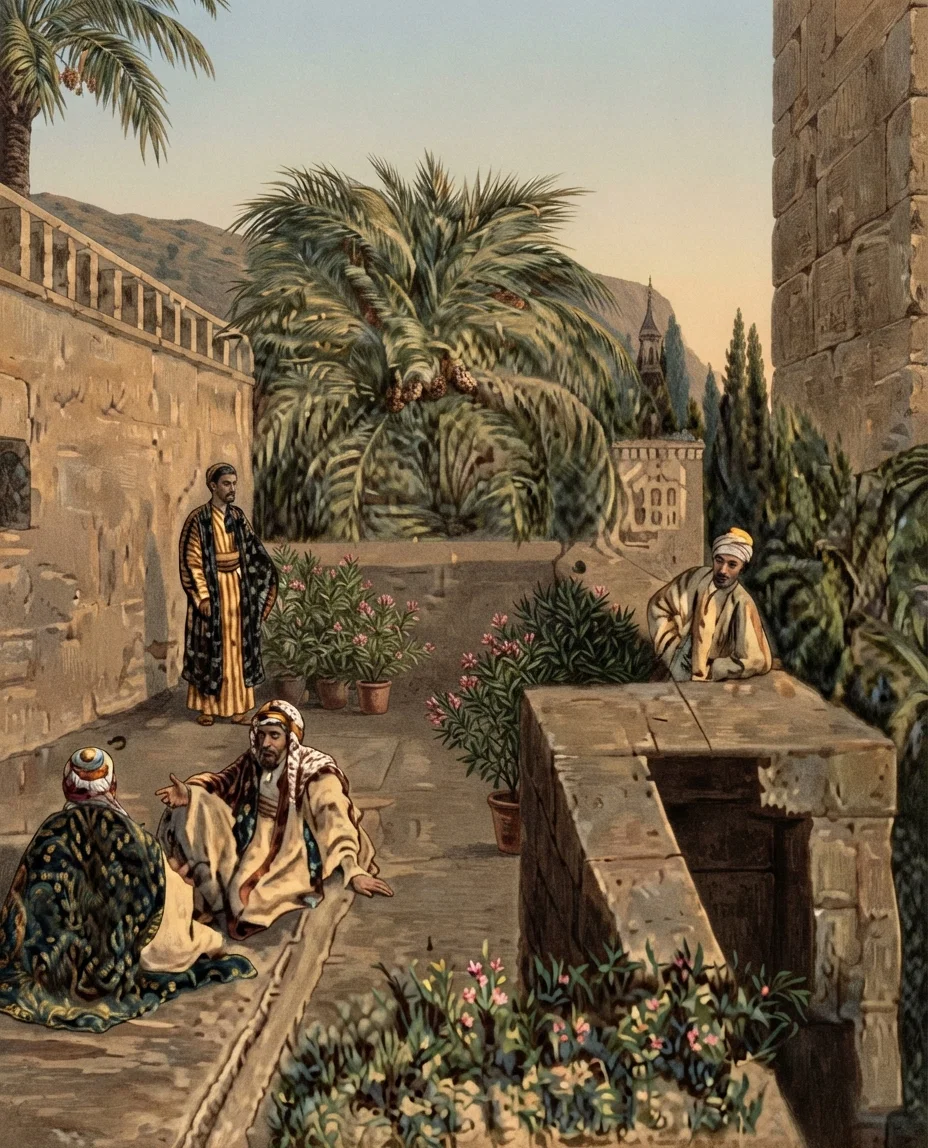
Battlement (Jer. 5. 10, but R.V. "branches"). — A parapet along the top of a wall to protect those fighting on the fortification. In Deut. 22. 8 the word refers to a parapet on the roof of a private house, which, being flat and used as a sleeping-place, required such a protection to prevent accidents.
BATTLEMENT.
Beacon (Isa. 30. 17). — The same word is translated "ship's mast" in Isa. 33. 23, and the picture it is intended to convey is probably that of a solitary pine-tree. The nation which had been like a thick forest had been reduced, as it were, to a single tree alone on a mountain top.
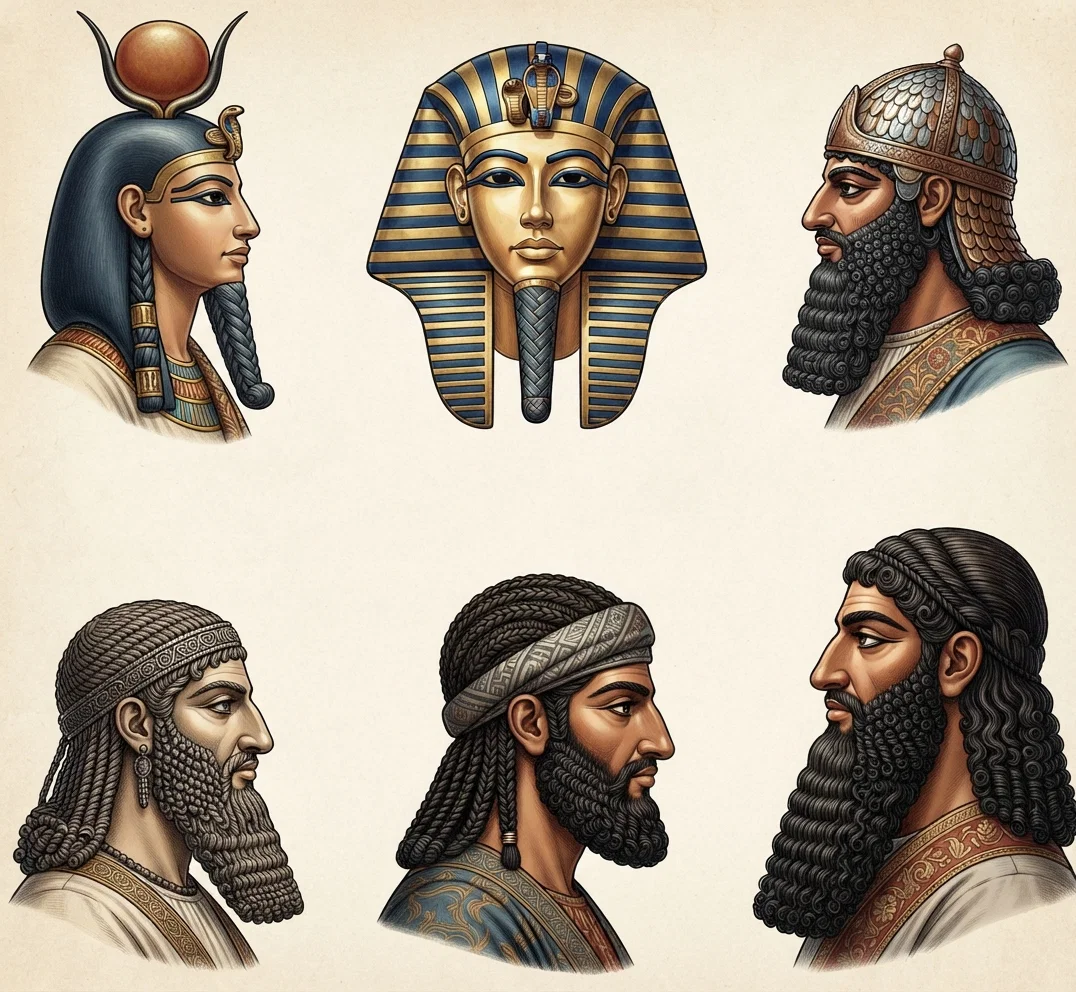
Beard (Lev. 19. 27). See also HAIR. — Beards were worn long and carefully trimmed. To neglect the beard was a sign of mourning (Isa.