General Note.—In the vision of the seven churches we studied the spiritual history of the church of Christ as developed in seven successive eras, or periods, from apostolic days to the end of time. The seven seals naturally suggest a line of prophecy covering the same periods, bringing out additional phases of history. The series of the seven churches gives a view of the church of Christ in the midst of apostasy and through the experiences of the latter days. This series of the seven seals gives a view of the falling away and the history of the apostate church in alliance with the world, through these same periods to the long years of papal supremacy. While the sixth in the series of the seven churches brings us to the Advent movement of 1840-44, and to the generation that is to see the coming of the Lord, the sixth seal in this series now to be studied, by an abrupt change from symbolic to literal prophecy, deals with the signs of the second advent and the scenes of the end. Thus there is a distinct parallel in the idea of the advent in the sixth stage of each series, while in each the seventh touches eternity.
QUESTIONS.
1. What was to be revealed to John in this vision? Rev. 4:1, last part.
2. How were the successive scenes of history to be unfolded to the view? Ch. 5:2.
3. Describe the opening of the first seal. What was seen? What did the rider do? Ch. 6:1, 2. Note 1. What is represented by the scene?
4. Describe the opening of the second seal. What was seen?—The work of the red horse. What is represented by the symbol? Verses 3, 4. Note 2.
5. What was seen as the third seal was opened? What words were heard? What stage of history is covered by the third seal? Verses 5, 6. Note 3.
6. As worldliness and apostasy are specially rising up again in the last falling away, what is our danger? 2 Tim. 3:1-5; Luke 21:34-36.
7. What came with the opening of the fourth seal? What fearful work was done? What special era in history answers to this description? Rev. 6:7, 8. Note 4.
8. What was seen with the opening of the fifth seal? What cry came forth? What did the prophet see accomplished? Verses 9-11. Note 5.
9. Having been brought in the history to the last days, with what events does the sixth seal open? Verses 12, 13. The "great" earthquake at Lisbon occurred in 1755.
10. What does Christ say of these same signs? Matt. 24:29, 30.
1. The rider on the white horse, going forth to conquer, fitly symbolizes the apostolic church going forth in the conquering power of the Gospel in its purity. See Acts 8:4; Col. 1:2, 3. Compare Rev. 2:2, 3, the message to the apostolic church in the prophecy of the seven churches. In the study of the messages to the seven churches we found that, while the principles involved in each message have lessons for all time, the specifications applied particularly to distinct and successive eras. So, while the symbolism of each of these seals teaches lessons applicable in all time, it will be seen that they, too, have a specific application to the same successive eras in history covered by the prophecy of the seven churches.
2. The symbols of the second seal fitly represent the falling away of the great body of the church from primitive purity after apostolic days. "Errors began to arise, worldliness came in. The ecclesiastical power sought the alliance of the secular. Troubles and commotions were the result." See the reference to the apostate professors in this second era of the church, in the message to the loyal ones in Rev. 2:9. Worldliness and compromise and dependence upon fleshly power must ever work the same. Note that the principles involved in each stage of the great controversy are living issues for all time.
3. In the third era of the church, say from Constantine's day, A. D. 321, to the full establishment of the Papacy, A. D. 538, we found in the message to the third, or Pergamos, church, that the believers were in great peril because of Satan's very seat being in their midst. The church of the apostasy had fully joined the world. Black is the fit symbol of this stage. See Matt. 6:23. As worldliness and commercialism came in, the oil and wine of the Spirit's grace leaked out.
4. Compare with the description of the apostate influences, under which the loyal believers suffered in the fourth, or Thyatira, stage of the seven churches. Rev. 2:18-20. The apostate church (A. D. 538 and onward through the long period of its supremacy) is there described as the persecuting Jezebel, and the teachings as the doctrine of Satan. In this fourth seal, the symbolism scarcely needs interpretation, so vividly does it picture the dark days of papal rule. "Hell" or "hades" (R.V.), the grave. See Dan. 7:25.
5. The fifth, or Sardis, period in the series of seven churches covered the church of the Reformation, the Protestant era, approaching the time of the rise of the special Advent movement. Here the fifth seal plainly suggests the blood of the martyrs and of the faithful of past ages crying out to God to end the long reign of apostasy and sin. Compare Gen. 4:10; Heb. 11:4. When great Babylon is dealt with, in her will be found the blood of all that have been slain upon the earth; for the principles of apostasy have been the same in all ages. Rev. 18:24. Compare Matt. 23:34, 35.
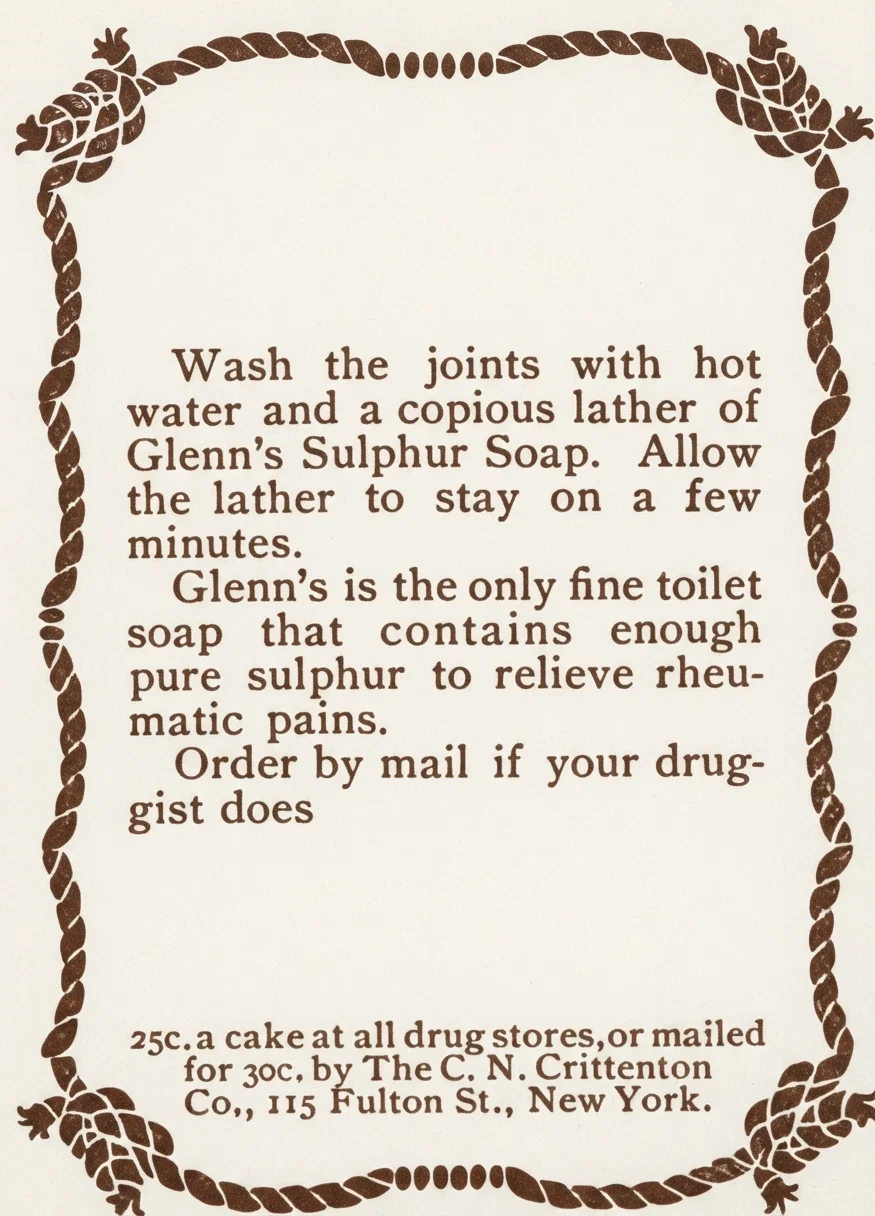
Painful Joints. Wash the joints with hot water and a copious lather of Glenn's Sulphur Soap. Allow the lather to stay on a few minutes. Glenn's is the only fine toilet soap that contains enough pure sulphur to relieve rheumatic pains. Order by mail if your druggist does not have the genuine Glenn's Sulphur Soap. 25c. a cake at all drug stores, or mailed for 30c. by The C. N. Crittenton Co., 115 Fulton St., New York.