WHEN the apostle Paul was about to be "offered," or put to death, for his faith, he had faith to believe that there was laid up for him "a crown of righteousness." But he did not expect it until the Lord should come as a "righteous Judge," and give it to him—at the same time that all those who love His appearing should be rewarded. See 2 Tim. 4:6-8. This crown of righteousness is a "crown of life" (Rev. 2:10; James 1:12), and it is bestowed upon the dead saints when called to life at Christ's coming, and through an equivalent change upon those who are living at that time. This assurance is given as a "comfort" to the children of faith in the hour of death. See 1 Thess. 4:13-18.
These facts of Scripture account for Paul's expression of faith and hope in Phil. 3:8-11. Here he says: "I count all things but loss for the excellency of the knowledge of Christ Jesus my Lord; for whom I have suffered the loss of all things, and do count them but dung, that I may win Christ, and be found in Him, not having mine own righteousness, which is of the law, but that which is through the faith of Christ, the righteousness which is of God by faith; that I may know Him, and the power of His resurrection, and the fellowship of His sufferings, being made conformable unto His death; if by any means I might attain unto the resurrection of the dead."
Therefore a profession of faith in Christ would be of no avail without a resurrection. "If in this life only we have hope in Christ, we are of all men most miserable." 1 Cor. 15:19. Paul held up before the Jewish council the resurrection as the hope of Israel. Compare Acts 23:6 with chapter 28:20.
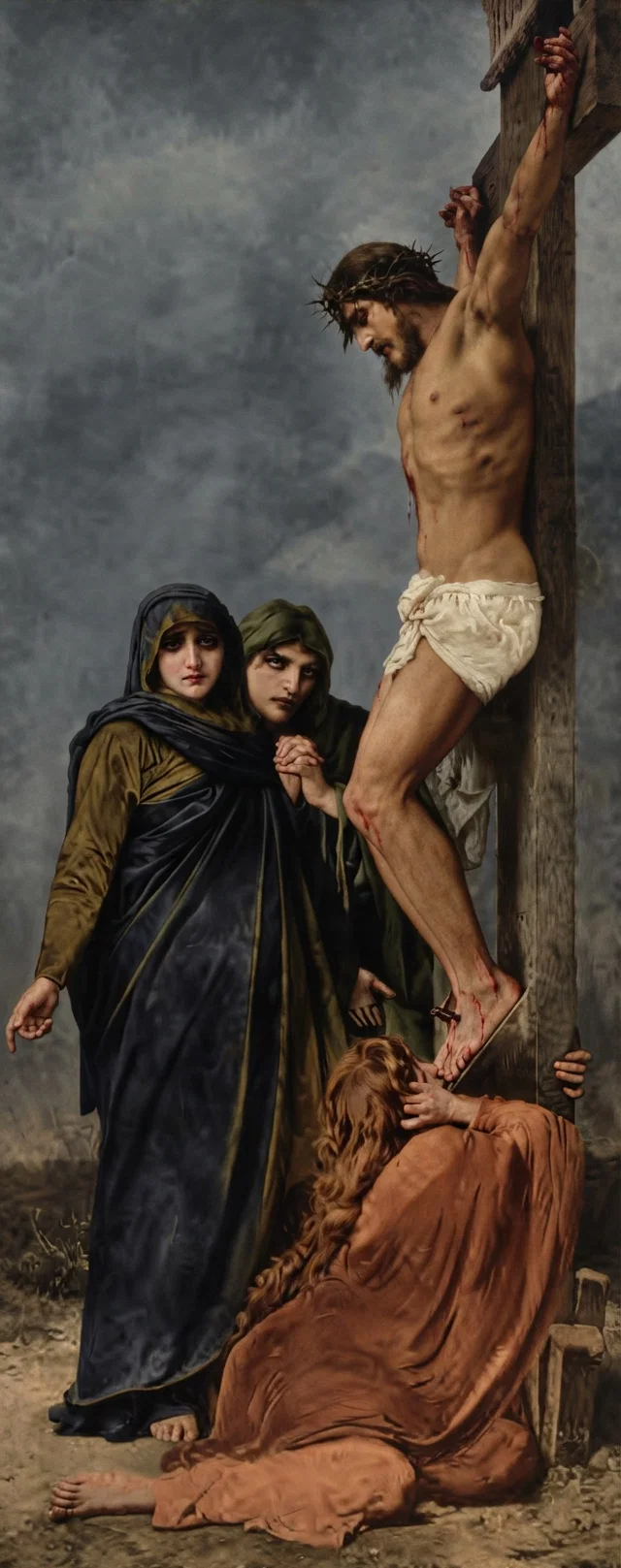
Christ died for our sins according to the Scriptures; and . . . was buried.
But there can not be any hope of a resurrection to a future life without a death. "That which thou sowest is not quickened, except it die." There could not have been any resurrection of Christ, and therefore no hope for us through a resurrection from the dead, if Christ had not died. We were all "dead in trespasses and sins," from which condition there was no relief, excepting through the death and resurrection of Christ. There was no way for Him to save sinners, excepting to bring them up from the dead, and He could not do this unless He Himself died in their behalf, unless He Himself paid the penalty of the law that hung over the race. Sin and its consequences are the works of the devil, and Christ tasted "death for every man" (Heb. 2:9) "that through death He might destroy him that had the power of death, that is, the devil." Verse 14.
In foretelling His own death Jesus said to the people, "Verily, verily, I say unto you, Except a corn of wheat fall into the ground and die, it abideth alone; but if it die, it bringeth forth much fruit." John 12:24. So He went down to the tomb, into "the valley of the shadow of death," to procure children for His kingdom. The children of God are "the children of the resurrection." Luke 20:36. This is the Christian's faith and hope; so, "if there be no resurrection of the dead, then is Christ not risen; and if Christ be not risen, then is our preaching vain, and your faith is also vain." 1 Cor. 15:13, 14.
But Christ is risen, praise the Lord, which fact stands as the climax of the power of God. See Eph. 1:19, 20. And we have the encouragement of His personal testimony that the Father hath given to Him power to give life to whom He will. Not only did He, while on earth, declare Himself to be "the Resurrection and the Life," but He has revealed Himself from heaven, giving us this assurance: "I am He that liveth, and was dead; and, behold, I am alive forevermore, Amen; and have the keys of hell [hades, the grave] and of death." Rev. 1:18. Having the keys of the grave gives Him full power and authority over this prison-house of Satan. Therefore every true Christian may know that there is laid up for him a crown of righteousness—not his own righteousness, but the righteousness of Christ, which means a crown of life. A full faith in this promise will cause him to look for and love the appearing of the Lifegiver in glory. G.