THE FOREIGN FIELD

6%

Pacific Press Publishing Company · Mountain View, California · Jun 7, 1905

FromSigns of the Times, Vol. 31, No. 23.

Read the full edition

THE FOREIGN FIELD.

BY G. W. COPELY.
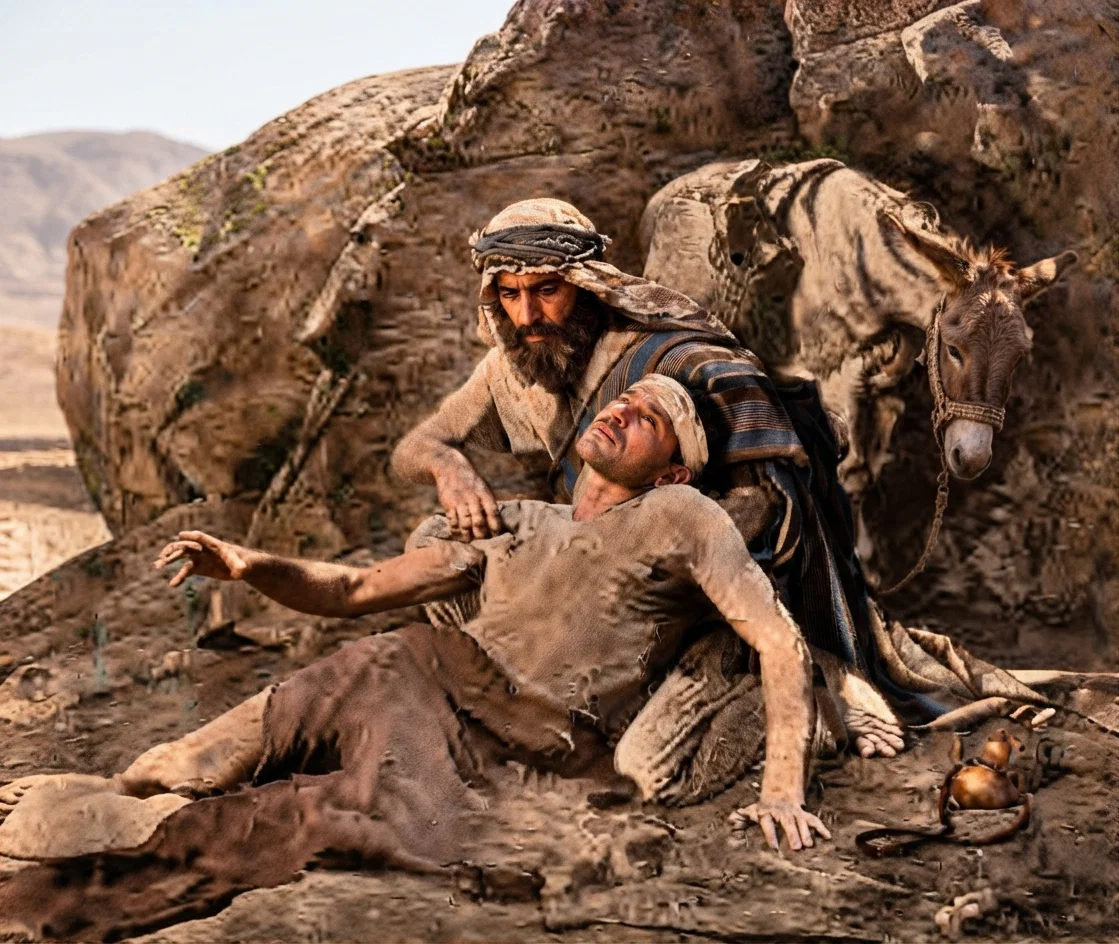
PAUL declared, in Rom. 1:14, that he was "debtor both to the Greeks, and to the barbarians; both to the wise, and to the unwise." This, according to the Saviour's definition of who is my neighbor, takes in all that dwell on the face of the earth. Paul, as did the Saviour, recognized the great brotherhood of the human race. Having ourselves received the present truth, we are obligated, because of its saving virtues, to pass it on to all we meet who have it not. Since salvation is free, is freely given to us, we are in equity bound to give it freely to those who are in the darkness of unbelief.
Paul acknowledged himself to be the chief of sinners. Highly learned as he was, yet, in the one essential thing, he was wholly ignorant. He was, at the time of his conversion, wholly ignorant of the true character of the Lord Jesus Christ. When Saul of Tarsus took letters from the Sanhedrin at Jerusalem to go to Damascus to persecute God's elect, little did he dream that he would become a missionary of Christ before he reached Damascus. How forcibly this proves the proverb that "man proposes, but God disposes." The Saviour declared that "by thy words thou shalt be justified, and by thy words thou shalt be condemned."
When the elect of God come in touch with their neighbors or with strangers, and never say a word to them or give them a tract on present truth, where do they stand? Do they not stand as unprofitable servants? When we who so often sing, "Wholly Thine," use our time and our speech to further our own worldly interests, are we wholly the Lord's?
I have listened to prayers about like this: "Lord, I want to be wholly Thine; I want every thought, affection, and desire consecrated to Thy service; Lord, I want every word and action to tell for Thy precious truth; I want my time and talents to be entirely devoted to Thy cause. This precious time that is given to me for opportunities to lay up treasure in heaven, and the gift of speech that exalts me so far above the beasts of the field, are given me to communicate to others the glad tidings of Thy Gospel. Lord, I want to devote all my ransomed powers to Thy service."
When we hear men pray or testify like this, and then see them go and devote ninety-nine-hundredths of their time, talents, speech, and labors in furthering their own selfish business schemes, mixing in lies, and deceit, and falsehood to carry out their designs, what can we or the world's people think of such Christians?—We can not but conclude that, with all their profession, they do not experimentally know Christ.
The people of the world have keen discernment to size up professing Christians. They set us down as unconscionable hypocrites. They apply to us the test of the Golden Rule much oftener than we think they do. And, candidly, without carrying out the principles of the Golden Rule in our daily walk and conversation, and in our deal, where is our Christianity? Our flippant testimonies and eloquent prayers are but a hollow mockery. Now, brethren, when we sing, "How Shall I Pay the Debt I Owe?" (ten thousand talents) let us remember that God expects every one of His Gospel warriors to unfurl His banner, and fearlessly sound forth His truth to a lost and ruined world.
I have taken for my subject, "The Foreign Field." The field is one, and a qualification as to heart and character is the same for any part of the world, But for the foreign field a special preparation is necessary. The language, habits, and characteristics of the field chosen by the missionary must be studied, in order to labor effectively among the people he goes to enlighten with the Gospel message. We who are at home, and comparatively comfortable, know and realize but little of the hardship, suffering, and privation some of our foreign missionaries are called upon to endure, in carrying the Gospel of Christ into heathen lands.
Every soul that is in darkness or in need is our neighbor.
Then, we must live the straight Gospel of Christ in our intercourse with all mankind, and give freely of our means to support the missionaries already in the field. Let us make up our minds that sacrifice and self-denial are essential to the salvation of the soul. We can not live in pleasure on the earth, worshiping the false god of sin and sensuality, and be saved. Abraham, Isaac, Jacob, Enoch, Elijah, and all the other righteous ones of olden times, confessed that they were pilgrims and strangers on the earth, and were seeking a city not made by man, eternal in the heavens. We must acknowledge, and carry out in our lives here, the vital principle of the Gospel of Christ, that the great business of this life is to do good and not evil to all men. This means that we must live for others in order to obtain eternal life.
It is the fashion in this wicked, selfish world to look out for self, no matter if others are defrauded and wronged in the struggle for wealth, honor, and power. How natural it is for vain, conceited, self-seeking men to grasp these things for themselves! But the Gospel crucifies all these satanic lusts, and checks the pride of lordly, unjust man. This is why it can not be popular in a selfish world.
Brethren, let us look the matter squarely in the face, and so live and obey the Gospel that we will not be found opposing the Gospel to ourselves when we make our last decision.

HIS LIFE A SACRIFICE.

A FARMER in North Carolina once drove with two high-mettled horses into town. Stopping in front of one of the stores, he was about to enter when his horses took fright. He sprang in front of them, and heroically seized the reins. Maddened by strange noises, the horses dashed down the street, the man still clinging to the bridles. On they rushed, until the horses, wild with frenzy, rose on their haunches, and leaping upon the man all came with a crash to the earth.
When people arrived and rescued the bleeding body of the man, and found him in death's last agony, a friend bending tenderly over him, asked, "Why did you sacrifice your life for horses andwagon?" He gasped with almost his last breath, "Go and look in the wagon." They turned, and there, asleep in the straw, lay his little boy. As they laid the mangled form of the hero in his grave, no one said, "The sacrifice is too great."—Ram's Horn.