THE GIFT OF GOD

11%

Pacific Press Publishing Company · Mountain View, California · Jun 14, 1905

FromSigns of the Times, Vol. 31, No. 24.

Read the full edition

THE GIFT OF GOD.

NEVER, in all the history of this world, was there a sane man who could look up at the stars in their eternal courses, and not feel welling up in his soul the intense desire to live forever. So the great question of this sin-bound race has been, "If a man die, shall he live again?"—Yea, verily, by virtue of the Bread of Life, he may. Christ declares of Himself, "I am that Bread of Life. . . . I am the living Bread which came down from heaven; if any man eat of this Bread, he shall live forever." John 6:47-51. And again: "He that believeth in Me, tho he were dead, yet shall he live." John 11:25. And here is His promise through the trumpet of the Old Testament: "Thy dead men shall live, together with My dead body shall they arise. Awake and sing, ye that dwell in dust; for thy dew is as the dew of herbs, and the earth shall cast out the dead." Isa. 26:19.
JESUS CHRIST left earth for the one purpose of bringing the bread of life to the people of this dying world. Ever since the leaves of Eden withered; ever since the shadows of death threw a pall over the erstwhile tenants of Paradise; ever since the covetousness of the carnal heart made merchandise of a brother's need; the children of this world have toiled and striven and wept for bread. Every herb or vegetable the stomach would endure; every fruit that was not a poison; every nut; every grain; every creature that has walked upon, crawled over, or flown above the earth, has been used by some people at some time to sustain life or ease the pangs of hunger. The burden that has bowed the back of the world has been the burden of keeping from the door of its homes the gaunt, gray wolf of hunger. The "necessaries of life" are the first consideration in every household; and so has it always been. Since the fall of man the business of brain has been to see that stomach did not lack; and the moulding of bread has been a perpetual process in nearly every tribe or people or nation in the world.
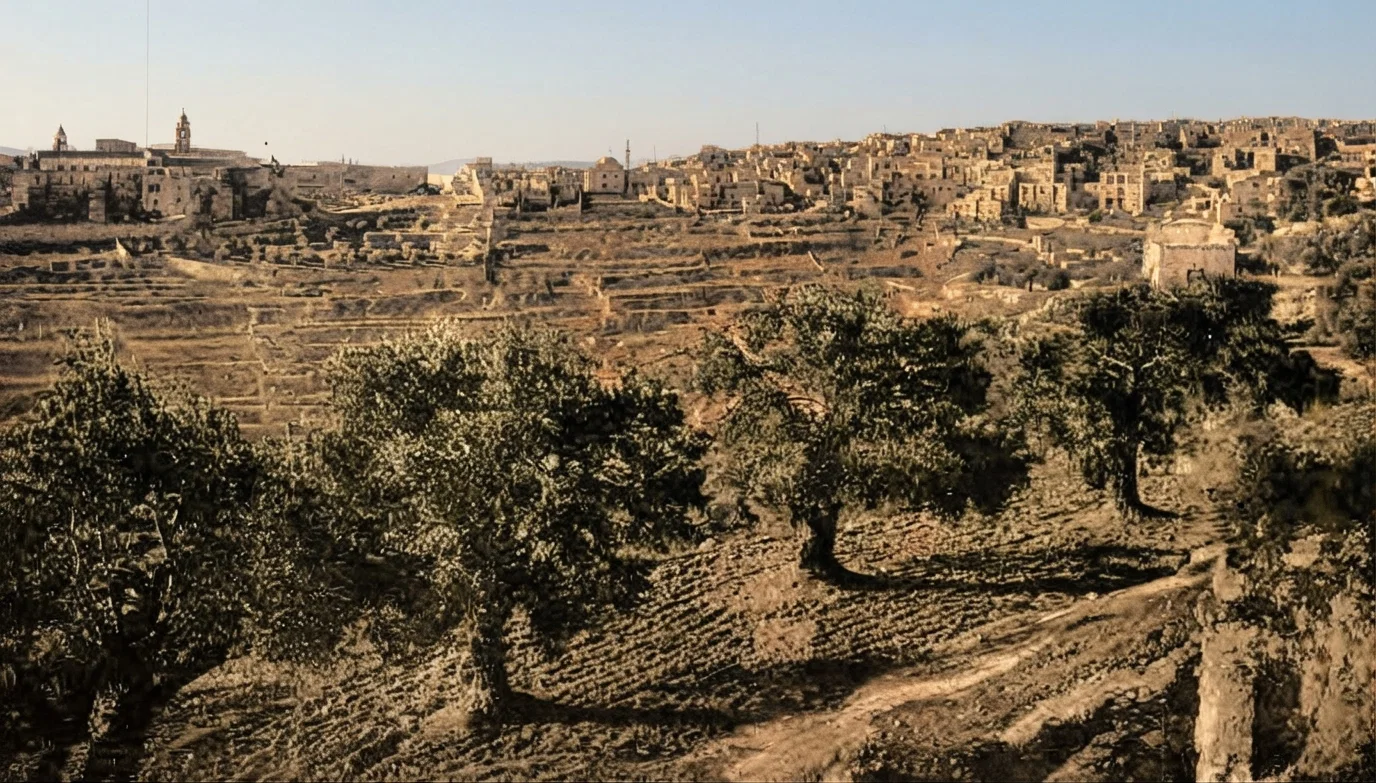
Beth-lehem,—House of Bread,—birthplace of Him who is the Bread of Life.
As SARAH, the wife of Abraham, mixed meal, and baked cakes upon the hearth for their heavenly visitors, so the peasant girls and women of Palestine to-day sit by their hearth-fires, and bake bread for the household. Day in and day out, year in and year out, the women are "grinding at the mill," heating their primitive ovens, and turning their flattened loaves upon the heated stones; or the great mills of civilized nations are turning out their millions of barrels of flour, and modern machinery and modern ovens are building and baking the loaves. This is the unceasing process whose beginning was decreed in Eden, when man was sent out to wage war with the thistle and the thorn for the wherewithal to live.
But this was not to be the bread of life. Men ate of it, and died. Men toiled for it for themselves and for their families, till, bent and beaten in the struggle, they were laid away, and left the same heritage to their children. So mortal man has passed his little day, and fought his losing fight in the long battle for bread—and life.
INTO this whirlpool of stress and struggle and strife there came one day the good news of deliverance—the Bread of Life had come. Moving among men as one of them was One to whom the Father had given "to have life in Himself" sufficient for the needs of all the world. Man had been struggling to force the unwilling earth to yield him sustenance for his temporal life; but even this must come through the power and the merciful forbearance of God. But the life which Jesus Christ has come to give was the life of which sin had robbed the race, and that was life eternal. The bread that man had eaten in the sweat of his face was thebread that he had earned. It could sustain only for a time the life that God had put in man; so that man never could, through his own labors, "eat, and live forever"—never could win eternal life by works that he might do. That must be "the gift of God." And so the record reads: "The wages of sin is death; but the gift of God is eternal life through Jesus Christ our Lord." Rom. 6:23. That "gift" came in Christ, the Son of God, the Son of Man, binding in one the attributes of both, humanity and divinity, and so reconciling man to God. "This is the record, that God hath given to us eternal life, and this life is in His Son. He that hath the Son hath life; and he that hath not the Son of God hath not life." 1 John 5:11, 12.
BLESSED be that Bread of Life that satisfies the hunger of the soul. Mankind has eaten to the full of the "bread of affliction," and struggled from the cradle to the grave for the bread of temporal sustenance; but now, out of the largeness of the abundance of the mercy of God comes the free gift of the bread of eternal life, which, if any man eat, "he shall live forever." We were shackled to sin; Christ has burst the shackles for us, and set us free. We were bound by transgression to the prison-house of the dead; but Christ is risen, and holds the keys of the grave, and will set at liberty every soul that has put his trust in Him. We have eaten of the fruit of our labor that could not give us life; He has given us in its place the life of God, that makes eternity ours, and will permit our feet to tread this earth when sin has been consumed. All this has come—has come to us—through Him who is the Bread of Life.
S.