EVOLUTION AND GEOLOGY

5%

Pacific Press Publishing Company · Mountain View, California · Mar 29, 1905

FromSigns of the Times, Vol. 31, No. 13.

Read the full edition

EVOLUTION AND GEOLOGY

BY GEO. MCCREADY PRICE

XVII. EXTINCT SPECIES. (Continued.)

The completely worthless character of such "evidence" of age as considered last week becomes, if possible, more apparent when we consider that very many of these so-called "extinct" forms are perhaps not really distinct (physiological) species from their living representatives of to-day. For, in spite of all that we have learned about variation, there seems to be little or no allowance ever made for the effects of a certainly greatly changed environment. If the fossil forms are not precisely like the modern in every respect they are always classed as separate species, in utter disregard of the striking anatomical differences between the huge Pleistocene mammals and their dwarfish descendant of to-day, which for a hundred years or so were positively said to be distinct from one another, but are now acknowledged to be identical.

A Strong Assertion Disproved.

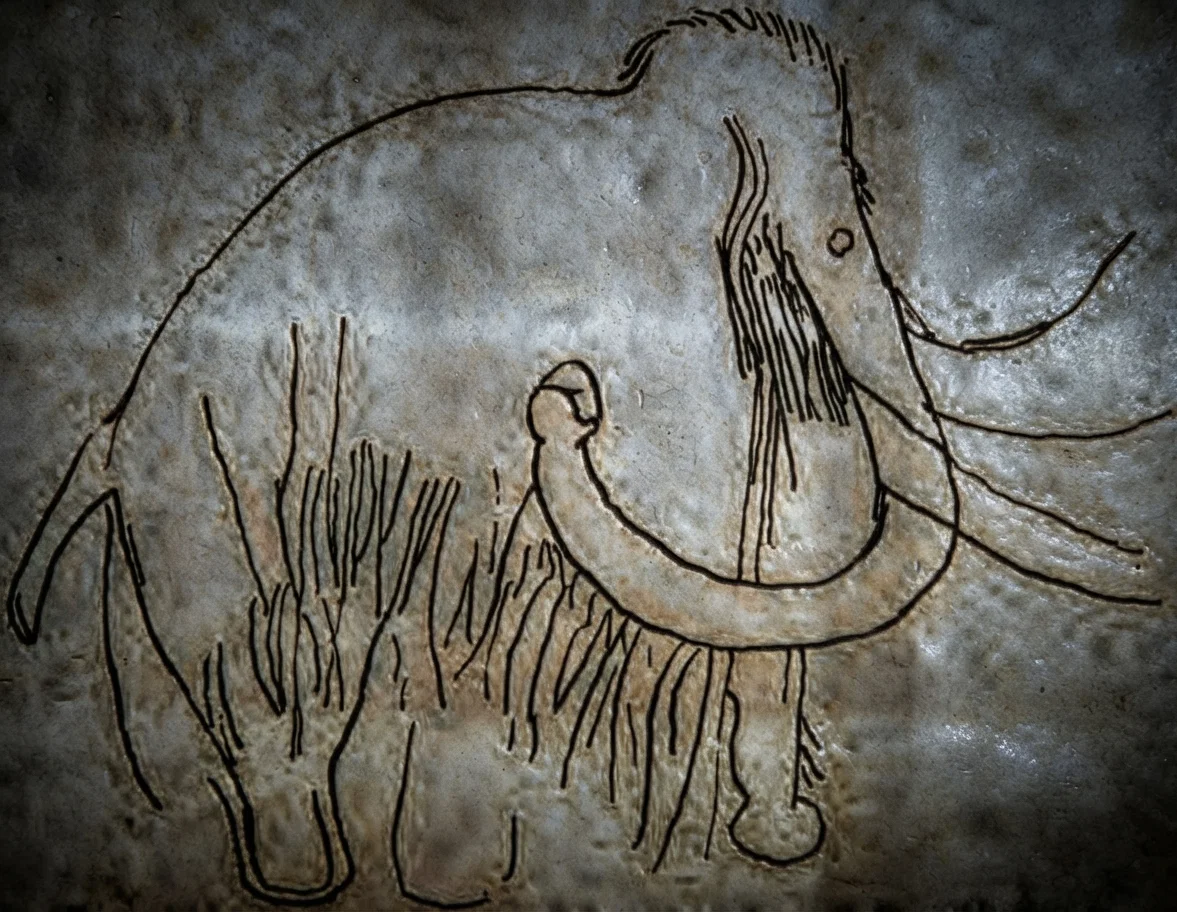
Of course no one denies that the strata teem with forms extinct for thousands of years, forms which we moderns have never seen alive. Other forms do not appear familiar to our modern eyes, because larger or of somewhat different form; but to say that they are actually distinct species from their modern representatives or that no human being has ever seen them alive, are statements utterly incapable of proof. Up to about the year 1860 it was stoutly maintained that man had never seen any of these fossil forms alive. But no one now maintains this view, for human remains have now been found along with undisturbed fossils of the Pleistocene, or even middle Tertiaries, while the drawings and paintings on the cave walls of southern France represent reindeer, mammoths, etc., side by side, and are so wonderfully accurate that no one can doubt that they were copied from life. Hence, the only question now (from a scientific standpoint) is, with how much of that ancient fossil world were these equally fossil men acquainted? If man lived in "Miocene times," when even according to the geological arrangement a luxuriant vegetation spread over all the Arctic regions, what possible evidence is there to show that his companions, the rhinoceros, hippopotamus, mammoth, etc., were not also living then and browsing off just such plants, when the arctic frosts caught them in the grip of death and preserved their "mummies" untainted for our astonishment and scientific information? Things which are equal to the same thing are equal to each other; why should not plants and animals, contemporary with the same creature (man), be acknowledged to be contemporary with one another? If man was positively contemporary with the Miocene vegetation (I am still arguing from the popular scientific standpoint), and the Pleistocene mammals are now acknowledged on all sides to have been contemporary with man, what is there to forbid the idea that the Pleistocene mammals and the Miocene flora were contemporary with one another?

A Possibility That Means Much.

For nearly half a century geologists have never had the courage to face this problem fairly and squarely, with all preconceived prejudices about their Uniformity fetish cast aside. Is it possible that all the Tertiaries and the Pleistocene may be really a unit after all? But the trouble would then be that, with this much conceded, the whole "phylogenic series" would tumble with it, and become only the taxonomic, or classification, series of that ancient world with which those fossil men were acquainted. To appropriate the words of another, I know of nothing against this view save "the almost pathetic devotion of a large school of thinkers to the religion founded by Hutton, whose high priest was Lyell, and which in essence was based on ‘a priori’ arguments like those which dominated medieval scholasticism and made it so barren."—Sir Henry Howorth, "The Glacial Nightmare and the Flood," pp. 20, 21.
Elephas Primigenous—the mammoth, drawn by primitive man on a cave wall, showing man to have been contemporary with the mammoth.

One Scientific Theory Abandoned.

Baron Cuvier’s work in the line of comparative osteology has never been surpassed, perhaps never equaled since, and he is generally admitted to have been the greatest naturalist and comparative anatomist of that, or perhaps of any, time (Professor Le Conte, "Evolution and Religious Thought," pp. 33, 34); and yet he maintained most positively that all, or practically all, those which we now call the Pleistocene mammals were distinct species from the modern ones; and it is only of recent years and with extreme reluctance that many of them have been admitted to be identical with the ones now living. This only came about after man was proved beyond controversy to have been contemporary with them. Hence, is there anything absurd or unfair in suggesting that a fresh discovery of human remains in rocks now classed as Mesozoic or Palaeozoic might lead to a subsequent identification with modern forms of many more species now classed as extinct?
I do not mean by this that they would probably carry the human period back into "Mesozoic" or "Palaeozoic time." O, not at all. The principle of inertia or least resistance would make it much easier to work just the other way. For, according to the very accommodating methods of this "science" the presence of human remains in any set of beds would be considered proof positive that such deposits could not possibly belong to the more "ancient" systems, but must be "Pleistocene," or at the most "late Tertiary." It would be so much easier to find a small percentage of living molluscs in some strata handy by, than to admit that these fossil men were contemporary with the whole fossil world—as the Bible really teaches.

Fossils of Living Species.

But let us proceed. I have already instanced cases where well known species have been for almost a century regarded as extinct which modern research has decided are identical with the modern living species. Such are the cave-lion (Felis spelæa), cave-hyena (Hyena spelæa), and hippopotamus (Hippopotamus Major). The great cave-bear can now be added to the list. The brown bear of the Old World and the grizzly of the Rockies have long been regarded as not specifically distinct from one another, and the most recent explorers of the Belgian caves have concluded that the various fossil varieties are probably "specifically inseparable from U. arctos," or the modern brown bear.—Nature, Nov. 7, 1901, p. 13.
It is well to remember in this connection the reluctance with which such specific distinctions are always surrendered, and that in spite of all that we have learned about the surprising possibilities of variation, little or no allowance for the potent influences of a changed environment seems ever to be made when the fossil forms are being considered. They are not all physiological species that can be separated as morphological species, and the skeleton, often only a fragment of it, is all that we have to depend upon in the case of the fossils. If the numerous varieties of the domestic dog were all extinct and known to us only as fossils, we would doubtless not only have a dozen new specific names invented immediately, but such extreme types as Pug and Greyhound, St. Bernard and Scotch Terrier, might even be erected into distinct genera; and, of course, they would all have to be arranged in single file to show their geological succession in time.

More Species than the Facts Warrant.

In view of these things it would appear from the quotation given below, that with more complete knowledge and a broader view of specific distinctions, the numerous species of fossil elephants, such as E. columbi, americanus, antiquus, etc., may be greatly reduced in number, or that the mammoth (E. primigenous) may be found to be inseparable from some of these and the ancestor of the presentAsiatic elephant (E. indicus). The bones of the skeleton of the mammoth are very like those of the modern species, but the skull differs slightly in being narrower in certain regions, while the tusks were greatly larger and their bony supports proportionately stronger. Besides we know that the mammoth had a good suit of clothing of both hair and wool, while the modern species is nearly naked. But all these changes would be just what we should expect with a greatly changed environment, and are of little weight in disproving genetic relationship, however important they may be from the standpoint of the taxonomist. Indeed it is the dentition that affords the usual guide, and according to the following statement of the highest English authorities the genetic identity of the two seems almost certain:
It is chiefly by the characters of the molar teeth that the various extinct modifications of the elephant type are distinguished. Those of the mammoth differ from the corresponding organs of the allied species in the great breadth of the crown as compared with the length, the narrowness and close approximation of the ridges, the thinness of the enamel and its straightness, parallelism, and absence of 'crimping,' as seen on the worn surface, or in a horizontal section of the tooth.
Besides these variations in the number of ridges or plates of which each tooth is composed, the thickness of the enamel varies so much as to have given rise to a distinction between a 'thick-plated' and a 'thin-plated variety'—the latter being the most prevalent among the specimens from the Arctic regions, and most distinctively characteristic of the species. From the specimens with the thick enamel plates the transition to the other species or varieties mentioned above, including E. indicus is almost imperceptible.—Flower and Lydekker, 'Mammals etc.' pp. 428-29.
The 'other species or varieties' to which our authors allude as having been already mentioned by them are 'E. columbi of America and E. armeniacus of the Old World,' and they say that the modern Asiatic elephant (E. indicus) is very like them, 'if, indeed, it can be specifically distinguished from them.'—Id. p. 428. Hence there is not a shadow of a doubt in my mind that the modern elephant of India, the king of our present land animals, is the lineal, the degenerate, descendant of the mammoth, the monarch of that older and more ideal world. The extreme reluctance with which anything like a confession of this fact leaks out in our modern literature can be readily understood when we try the hopeless task of splicing the environment of the modern with that of the ancient form on any basis of uniformity.
The Biblical Deluge is the only thing to solve the riddle.
(Continued next week.)