JESUS THE MESSIAH, was the Son of God; He was also the Son of Man. He brought to men the life and righteousness and purity of God; but He brought it to us as a Brother-man, touched with all the feelings of infirmities, responsive to all pure, sweet thoughts, sympathies, aspirations, and longings of our race. This is manifest in His first miracle, recorded in John 2:1-11.
FOR thirty years Jesus had been under the anxious and fond care of His mother. All the sayings of men and angels, and the events of His birth, had been cherished by her, and she had waited all these years, tempted, no doubt, to question His mission, yet expecting His manifestation as the Messiah. A period of two months He had been separated from her. Now He comes, worn, doubtless, from His long fast, but with His glorious victory over evil stamped upon character and countenance. He is invited to a wedding feast, probably in the family of some relative, as indicated by His mother's relations and superintendence at the feast.
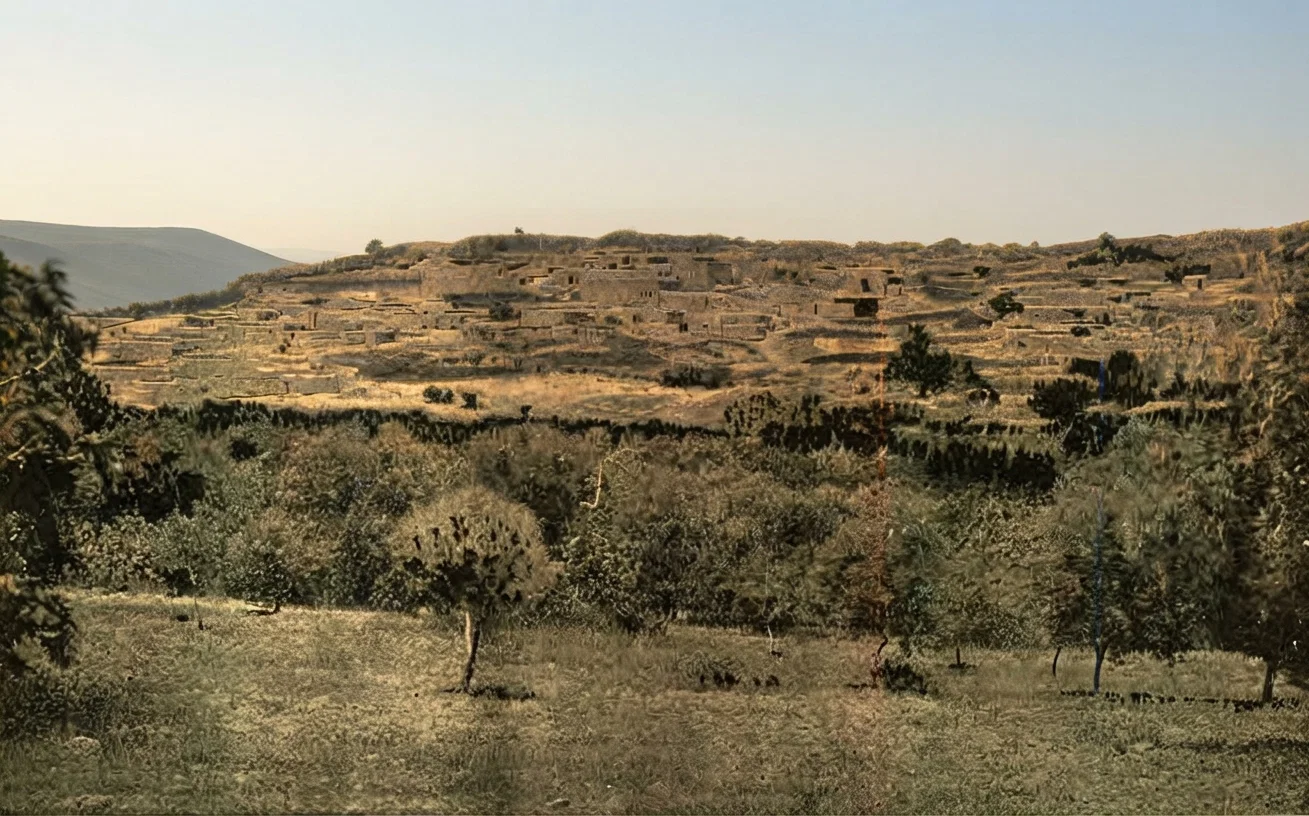
Cana as It Is To-day—a Heap of Ruins and Desolation.
MARRIAGE, to the Jew, was a joyous occasion, but not a senseless one. The festivities lasted from three days to two weeks. At the beginning the bride, dressed in richest apparel, and heavily veiled, was escorted by friends, who sang her praises in the way, to the home of the bridegroom, where the ceremony took place. Before reaching there, they were met by the friends of the bridegroom, and escorted to the house. After the ceremony, more or less prolonged, in which the bride, in modesty, remained veiled, and the bridegroom pledged his means, and his honor, to his bride, came the festivities, but not debaucheries
INTO such a gathering as this came Jesus and His disciples. The feast was in progress. The wine had given out, which, if known, would have been a reflection on the bridegroom. The mother of Jesus came to Him; and He said, "Woman, what have I to do with thee? Mine hour is not yet come;" or, as others render, "O, woman, what hast thou to do with Me?" It seems almost disrespectful, but we may be sure it was not, from the character of Jesus, and from the way the mother received it. When twelve years of age, He had said to her, "Wist ye not I must be about My Father's business?" He goes further now, and tells His mother that He is no longer under human control; His time was in God's hands. His mother is satisfied, and instructs the servants, "Whatsoever He saith unto you, do it." And there she left it, seemingly assured that all would be well.
AT the entrance of the house were six large waterpots of stone, from which water was drawn for the numerous washings at the feast. The capacity of the six is estimated to have been about twenty-six gallons. Jesus said, "Fill the waterpots with water." The servants, in their zeal, filled them to the brim. "Draw out now, and bear unto the ruler of the feast," was the next command, and they drew, and bore the sweetest wine mortals ever tasted. It was "as the new wine . . . found in the cluster," in which is a "blessing" (Isa. 65:8); and we may be sure that it did not intoxicate nor degrade.
THIS was the first of the miracles of our Lord. It was not wrought in darkness or solitude, or before a select few. Practically before that company,—
"The conscious water saw its God, and blushed." All the servants knew it, the mother knew it, the disciples knew it, and we must believe that the whole company soon knew the wonderful miracle of giving to mortal needs, wine instead of water.4
JESUS demonstrated in this that He possessed creative power. This was not the regular process of nature, of changing the elements of water, sun, and earth, through the vine and the grape. That is God working through nature, life subject to the living law of earth and sun and vine, and to some extent controlled by man, the higher creature. But this miracle is the direct interposition of the power of God, which rises above all natural law, and ignores earth and sun and vine, and changes the common water into uncommonly good wine. "And His disciples believed on Him." But our philosophizing and "new thought" teachers might have sat down by their side and tried to convince them, from that day to this, that Jesus was working constant miracles through the vine and the grape, and they would not believe. But they saw the manifest power of God work above all natural law, and they knew that One who could exercise creative energy was among them. And by this act Jesus showed that He was able to take the poor, weak heart of man, as characterless as that water was to the wedding feasters, and change it to the desirable wine, in which is blessing.
THERE is still another lesson: Among the holy things which have come down to us from a sinless Eden is the institution of marriage, ordained in the beginning. When the father of the race stood forth in all the beauty of his sinless perfection, it was his Creator who said, "It is not good that the man should be alone; I will make him a help meet for him,"—one fitted to be his companion in holy service for God and the race. Therefore from the man God took flesh and bone, and made woman. Not from man's head did the Creator take this portion, lest it should be said that woman was the head, and she should tyrannize over the man; not from the feet, lest it be said that man should lord it over her; but from near the heart of man, God took the substance of which the woman was made, indicative of heart companionship. It is the wise man who tells us that "a prudent wife is from the Lord," and that "she will do her husband good and not evil." Inspiration again tells us that "marriage is honorable in all." It is the great Divine-human Book which tells us of the simple, yet romantic marriages of Isaac and Rebekah, of Boaz and Ruth. The same Word of Inspiration, ever exalting marriage, uses it as symbolic of the union between Christ and the individual soul, Christ and His church, and Christ and His everlasting kingdom. When He takes to Himself that bride, the children shall all come home, and Bride and Bridegroom will rejoice together.
EVEN as of old, around the marriage institution clusters all that is glorious and beautiful, pure and peaceful, in state and church and home and heart. All the dear home ties and blessings, father and mother, brother and sister, son and daughter, husband and wife, all come to us through the sacredness (often violated) and the blessings (often abused) of the blessed marriage bond. And this tender and holy tie was sanctioned and cheered by the presence of the Lord Himself, manifesting His miraculous power that nothing might mar the solemn-joyous occasion. The Record declares that He here manifested forth His glory.
"Heaven and earth are witnesses
That Thy glory goodness is."
He would have all men know in all ages that His goodness, His life, His blessing, were in the marriage institution as truly as any other in life. Let all of the pure and the good honor and uphold that blessed bond, which our Lord honored by His presence and power.