THE BIBLE CENTENARY

5%

Pacific Press Publishing Company · Oakland, California · Apr 13, 1904

FromSigns of the Times, Vol. 30, No. 15.

Read the full edition

THE BIBLE CENTENARY

Official Celebration of the Hundredth Anniversary of the Bible Society in Albert Hall, London.

BY M. ELLSWORTH OLSEN.
Not least significant among the numerous tokens that we are living in the last days is the great work of publishing and distributing the Word of God which has been carried on by the British and Foreign Bible Society during the century just past. The society celebrated its hundredth birthday last Monday, the 7th of March, in the Albert Memorial Hall, in the presence of an audience numbering some ten thousand people.
A choir of 1,500 trained voices rendered several pieces of sacred music, while the vast audience, admitted severally by tickets, filed in, and were seated. The chair was then taken by the Marquis of Northampton, the society's president, supported on the right hand by the Archbishop of Canterbury, and on the left by Dr. Watson, better known by his literary pseudonym, Ian Maclaren. Among others present on the platform were the Bishop of St. Albans, the Dean of Peterborough, Lord Kinnaird, Sir John Kennaway, Colonel Shortland, the Chaplain-General, and other well-known leaders in the religious world.
After the singing of a hymn, in which the entire congregation joined, Rev. R. Lovatt, of the Religious Tract Society, read the parable of the sower, as given in Mark's gospel, and the Bishop of St. Albans offered prayer.
The chairman, in his opening address, expressed the conviction that the work of the society would be finished in the present century, and every person in the world would have the Holy Scriptures in a tongue he could understand. When the society began its work in 1804, the Bible "was current in about forty different languages, understood by two-tenths of mankind. In 1904 it can be read, more or less completely, in 430 languages and dialects, which include all the chief vernaculars, and are understood by seven-tenths of mankind." No less than 370 of these translations made during these one hundred years, have been the work of the Bible Society, which was well described to be not old in the sense of worn-out, but full of youthful vigor, altho full of years. Doors were opening before it on every side, said the speaker, and many countries formerly closed against the Gospel, were now eagerly awaiting the Word of God in their own tongue.
The Marquis of Northampton.
The Archbishop of Canterbury referred to the favorable attitude of the press, which was in marked contrast to that assumed a hundred years ago. It meant much to the nation that, as a result of the society's work, the easiest book to procure—the most accessible of all books to everybody, either at home or in the colonies—should be the Written Record of the Word of God. The translation of the Scriptures into 370 languages and dialects during the past century had meant much more than was realized. In not a few cases there was no written language to hand, and one had to be built up. How many present could name even fifty different tongues? For himself, the speaker admitted that a great many names in the list gave him not the slightest idea of the geographical location of the country where the language was spoken.
Following the archbishop's address, the audience joined in singing the Te Deum, after which Sir George Smith, of Truro, said that "the fourteen millions of pounds ($70,000,000) spent by the society during the hundred years of its existence was the best investment of money that this country had any knowledge of." He dwelt on the internal evidence of the Bible as to its inspiration, quoting the saying of the Chinese mandarin: "This I know, that whoever made that Book, made me." "History tells us," he continued, "that the periods of religious revival throughout the world have synchronized in successive ages with the greater study of the Word of God. From the finding of the forgotten roll in the house of God to the finding of the Latin Bible by Martin Luther, and to the gathering of that little 'Holy Club' around the New Testament in the cloisters of Oxford, over the whole span of those years the discovery or rediscovery of the Word of God has signalized a spiritual awakening in the church. The nations which lead the van of human progress to-day are the nations of the open Bible. The peoples who have learned the union of liberty and order, the peoples of free parliaments and stable institutions, are those whose characters have been formed by, and nourished upon, the Word of God."
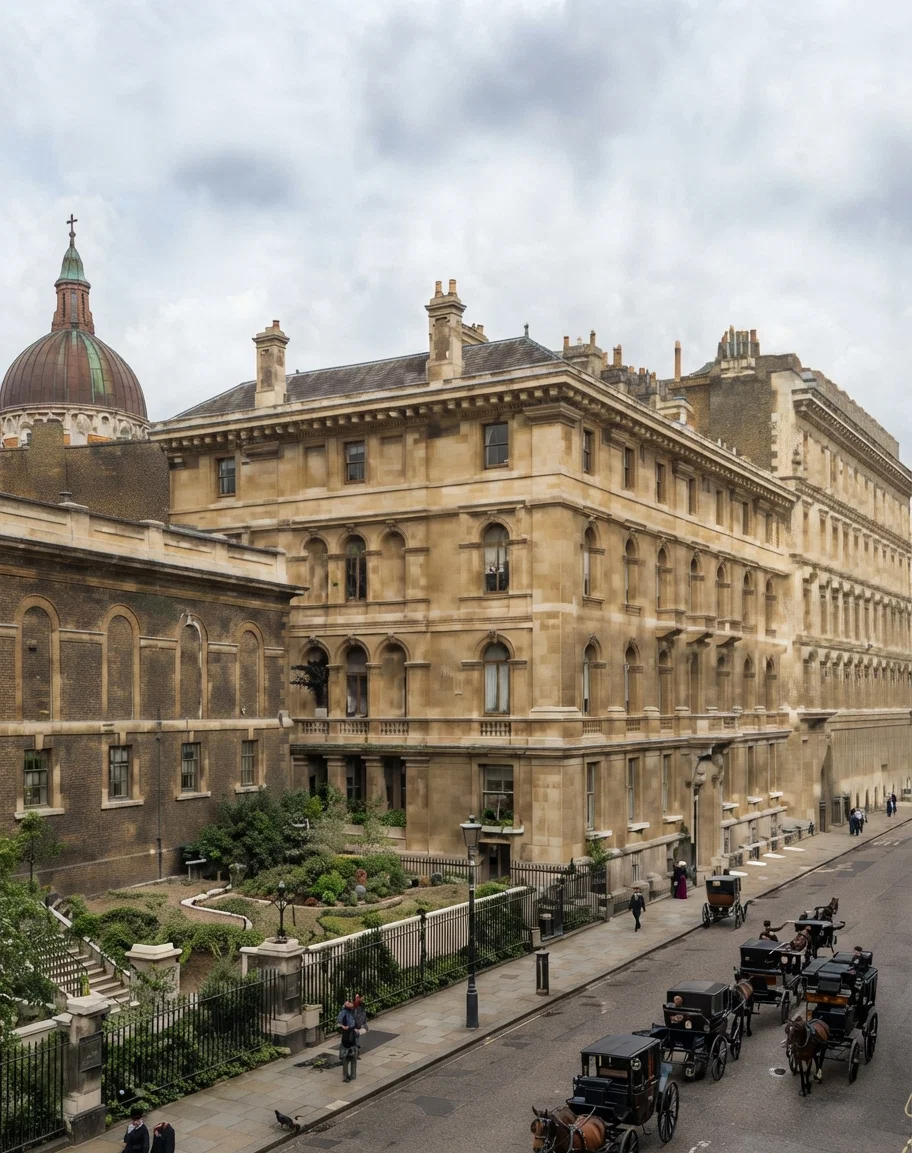
British and Foreign Bible Society's Headquarters in London.
Sir Lewis Dibdin, the Dean of the Arches, said the Bible stands for so much in England. It is the foundation of our laws. When one gets behind judicial decisions, and codes, and acts of parliament, one comes at the bottom to the moral law, of which the Ten Commandments were the first written summary. Equally the Bible is the parent, almost the source, of the best English literature. It is the Book of our childhood days, the best comforter in time of trial. When we are called upon to part with one we love, and turn away from the open grave, is it not the Bible that gives us strength and comfort? Is not the Bible, indeed, bound up with every great crisis in our lives?
It is also bound up in the great crises of the English nation. A hundred years ago was a time of stress in England. It was the eve of the great Napoleonic war. This country was in very imminent, it was thought deadly, peril. There was much want and suffering. It was the beginning of that nineteenth century, which is already beginning to look so far behind us. The great British Empire was in that century to beat off its enemies, expand over many parts of the world, and fill them with her sons and daughters. English trade and commerce were to make a great advance; scientific inventions were to revolutionize the daily life of the English people. All this was coming in 1804, when the Bible Society took its start, and the men who were its founders probably little realized the magnitude of the work they were initiating.
"There is a large class," the speaker continued, "who tell us plainly that the Bible is out of date, and belief in it is a superstition. Is it, then, a mere coincidence that we hear so much at the same time of the decay of morals and of a growing limpness of character. It is worth while to ask, Is the Bible as much studied as it used to be? We have grown used to the privilege of reading the Bible; it has become a common thing, and is not properly appreciated. In the early days the people flocked to the churches to hear the Bible read. We need to cultivate love for the Word of God.
"Whatever people may say, especially idle people, whose useless lives the Bible condemns, it is a fact that can not be denied that the men who made England centuries ago, and the men who in our own time have served her best—the men of grit and power—have been those to whom the Bible was not an exploded myth, but the guide of their lives and the record of a divine revelation."
At the close of the dean's stirring address the audience arose and sang the beautiful and touching hymn, "Tell Me the Old, Old Story." It was heart-thrilling to look out over that vast multitude of men and women, and see their earnest faces, and hear the sweet melody of their united voices. How good it seemed to witness this outward loyalty to the Word of God! One could not help breathing the heartfelt prayer that all the singers might indeed be true and loyal to all God's requirements—that, when, at some time in the near future let us say, they have brought to their knowledge the Gospel in its pristine purity and simplicity, free from man-made traditions, they will joyfully accept it, and join in the company of those who keep the commandments of God and the faith of Jesus.
Dr. Watson gave the closing address, an eloquent tribute to the power and influence of the Holy Scriptures, but one which also showed the speaker's strong bearings toward the "higher criticism." It is significant that his was the only address which showed any sympathy with this well-known movement which has spread so rapidly during the lastdecade. The disciples of the "higher criticism" are not the men who are devoting their lives to give the Bible to the world.
The day following this official celebration in Albert Hall a meeting was held in Queen’s Hall, at which many different missionary societies testified through their representatives to the value of the help they had received from the Bible Society. A message of congratulation was also read from President Roosevelt.
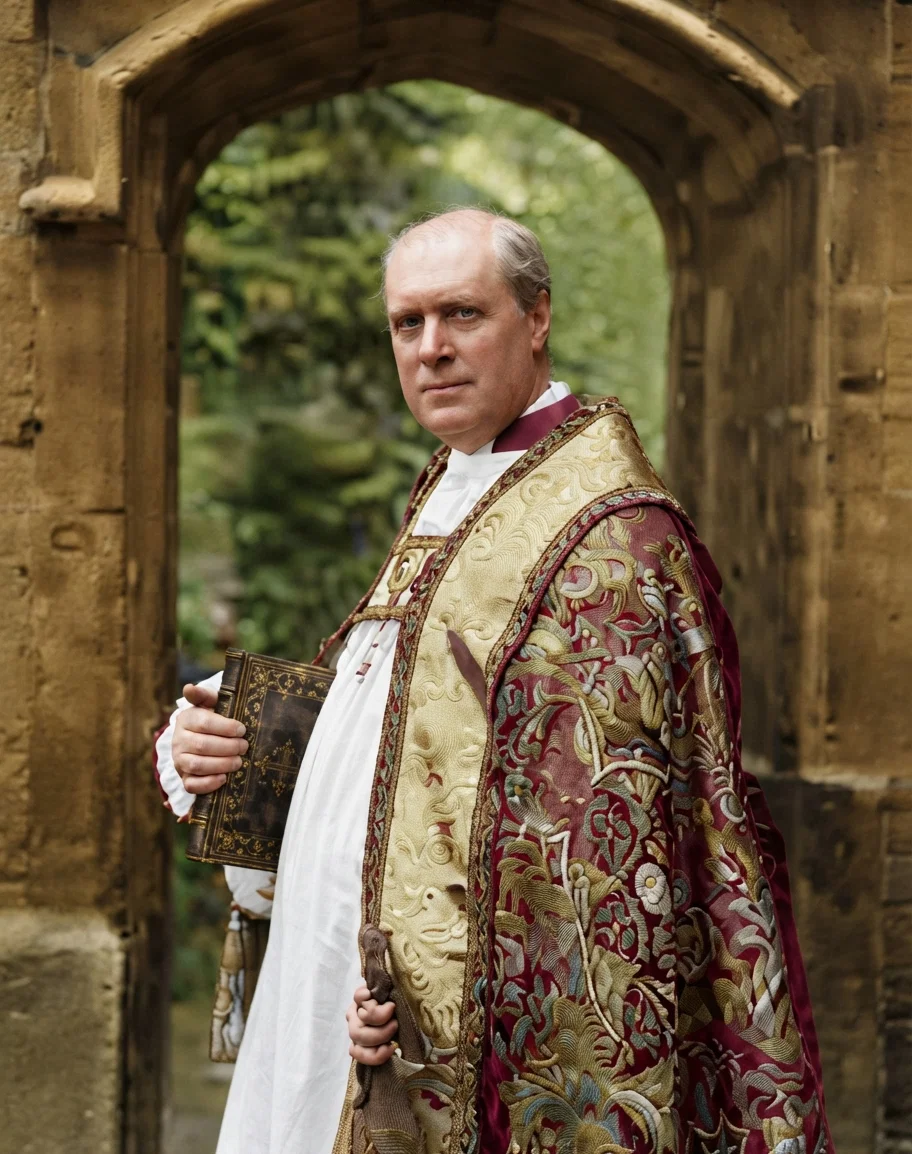
Dr. Randall Davidson, Archbishop of Canterbury, Titular Head of the Church of England.
On the preceding Sunday sermons were preached throughout the kingdom and in other parts of the world, in commemoration of the centennial, the Archbishop of Canterbury conducting the service in St. Paul’s, which was attended by the queen and the Prince and Princess of Wales, the king being prevented from attending by a slight indisposition.
London, March 11, 1904.