"Till the war-drum throbbed no longer, and the battle-flags were furled
In the Parliament of Man, the Federation of the World."
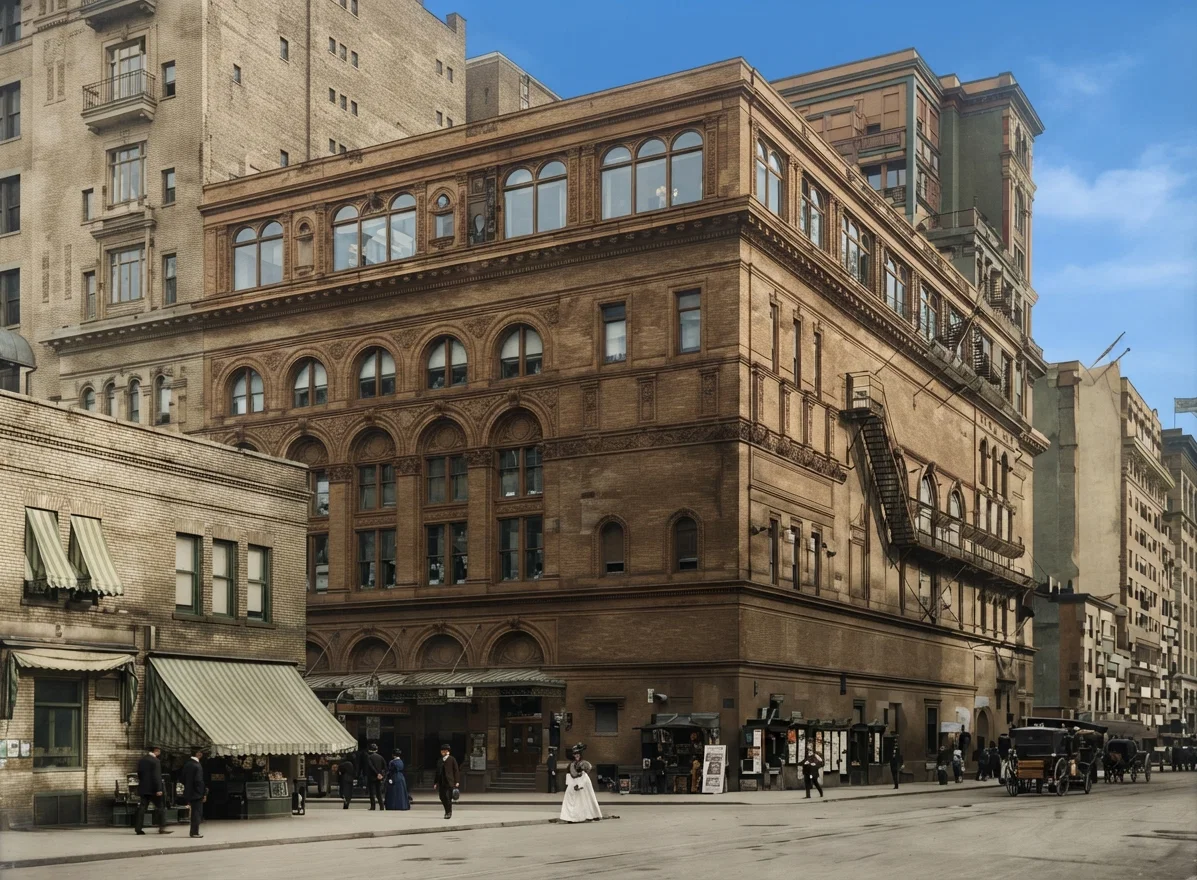
IN a measure, Tennyson must have foreseen the struggle of mankind, bound to come, for universal peace and the ultimate goal of the total extinction of war and all its consequent horrors, when he wrote "Locksley Hall;" but he hardly could have comprehended, rightly realized the extent and scope of the modern movement for peace among nations. The movement now stirring the world for the ABOLITION OF WAR never was so widespread or so vigorous. The first Peace Society in the world was founded in New York by David Low Dodge and his associates, in August, 1815. Almost a generation passed before the inauguration of A PEACE CONGRESS, which took place in London in 1843, since which time there have been conferences and congresses almost innumerable, important and unimportant, practical and impractical propositions considered, until all these seem to have met the very antithesis of the idea in the great NATIONAL PEACE CONGRESS HELD AT CARNEGIE HALL IN NEW YORK CITY, APRIL 14-17, 1907.
It is true, the peace movement took on a new impetus and strength at the first congress at The Hague, and all the lesser conferences since that time have undoubtedly furthered the cause and the movement; yet in some ways the Congress of Peace in New York City is even more significant than the conference to be held at The Hague in June, and, certainly, vastly more important than the first Peace Conference at The Hague in 1899.
The New York Conference, having delegates from many countries—interparliamentary in character and unrestricted in its discussions—will more clearly reflect international sentiment than the more conventional Peace Parliament at The Hague. In fact, many of the world's leaders in the peace movement who were present at the Interparliamentary Union in London in July, 1906, are here in this FIRST NATIONAL PEACE CONFERENCE OF THE AMERICAN CONTINENT; and to the most casual observer it is plain that there is a determination to make the United States Government take the leading part and play the foremost role in the international game to deliver the nations from the Moloch of war; the horrors of its work, the burden of its debts! It is quite certain that never did a more representative body of men come together in this informal way and for the purpose.
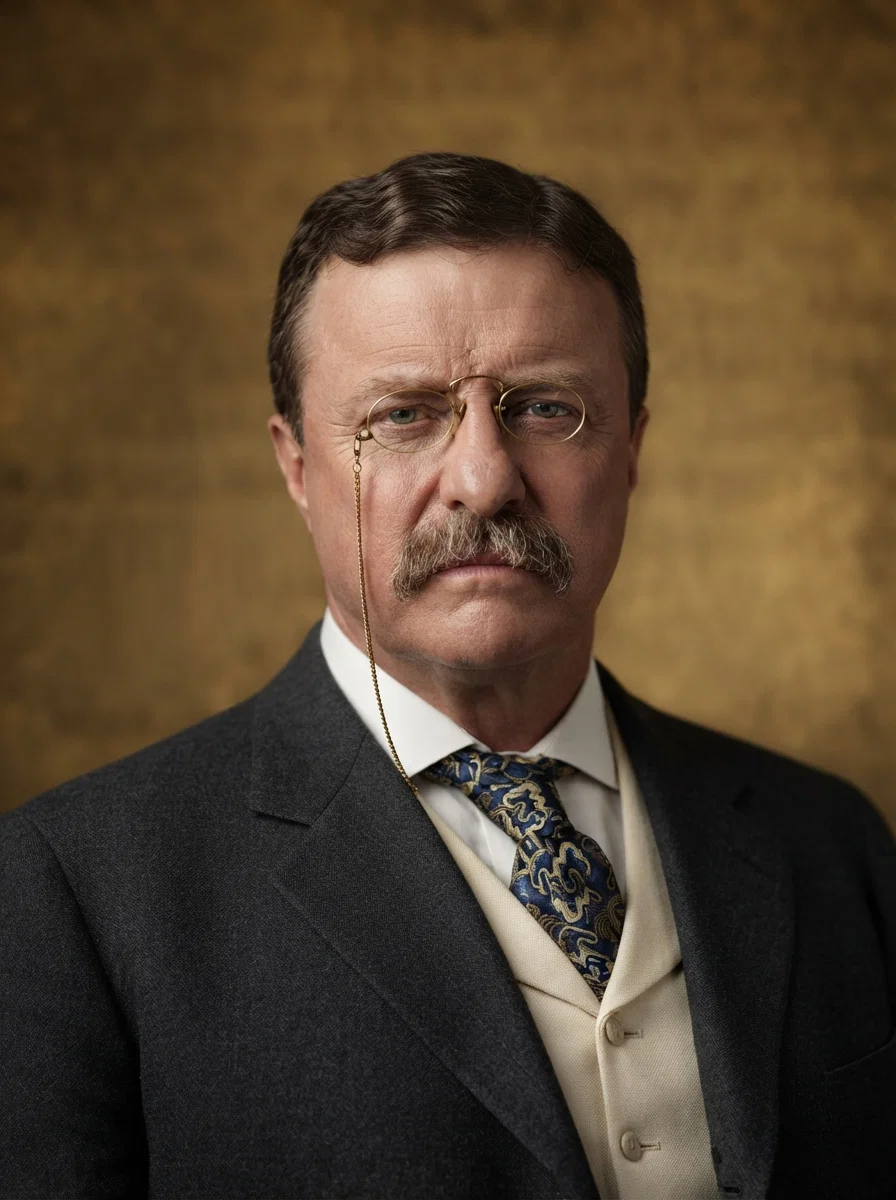
President Roosevelt.
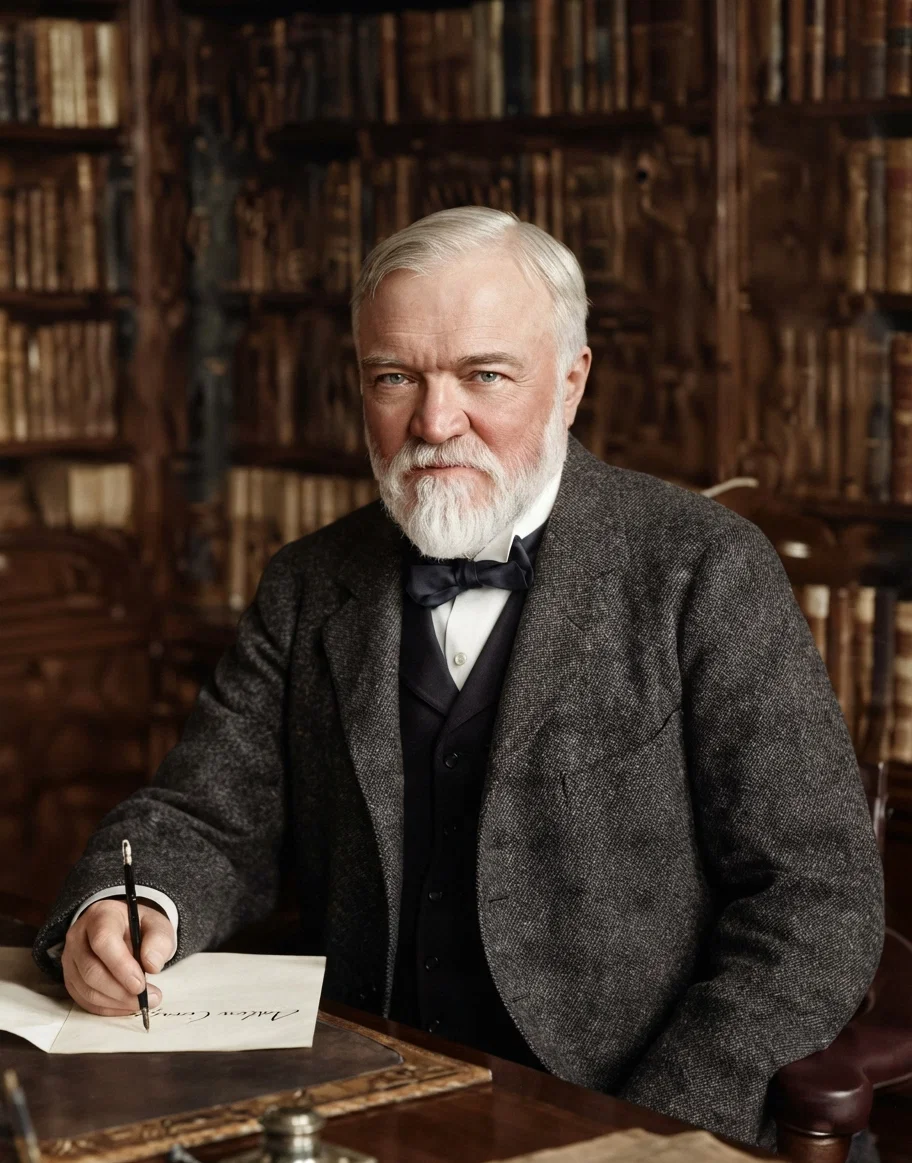
From Stereograph, Copyright 1907, Underwood & Underwood, N. Y. Andrew Carnegie, president of the Peace Congress and the chief promoter.
One needs only to review a portion of the names of the conferees and delegates to realize, in some sense, the influence, and therefore consequent importance, of the gathering. There were present
Secretary of State Elihu Root, Secretary of Commerce and Labor Straus, Andrew Carnegie, Edward Everett Hale, President Eliot of Harvard, President Butler of Columbia, President Thomas of Bryn Mawr, President Wooley of Holyoke, President Schurman of Cornell, President Wilson of Princeton, President James of Illinois, Dr. Schaeffer, Superintendent of Public Instruction of Pennsylvania, Hon. Richard Bartholdt, Hon. George Gray, Hon. William J. Bryan, Hon. Samuel W. McCall, Hon. Seth Low, Hon. John Barrett, Mr. Samuel Gompers, Baron d'Estournelles de Constant, Ambassador James Bryce, Earl Grey, Governor-General of Canada, Mr. W. T. Stead, Baron Descamps, Sir Robert Ball of Cambridge University, Dr. John Rhys, Pro Vice-Chancellor of the University of Oxford, M. Paul Dumar, Chairman of the French Chamber of Deputies, Mr. J. M. Van Der Poorten-Sewartz ("Maarten Maartens"), Sir Edgar Elgar, Lord Cranston, Rev. Lyman Abbott, Señor Diego Mendoza, Hon. Charles E. Hughes, Governor of New York, Prof. Hugo Munsterberg.
Besides all these there are the scores of the leading peace workers and presidents of peace societies of this country, and other prominent men and women. These delegates give to this Congress a representative character, such as we have not seen before, and such as we may not see again; for with the setting up of an authoritative judicial tribunal at The Hague, basing its rights and privileges upon a CONSTITUTION OF THE NATIONS—which seems to be the main desire upon the part of this conference—would practically do away with the necessity of any further conferences of this kind. For the permanent tribunal of arbitration and international conciliation WOULD BECOME A FIXED AND PROPER CONFERENCE OF ITSELF!
Mr. Andrew Carnegie, steel manufacturer, author, and multi-millionaire, has been the chief promoter of this national gathering of peace advocates. He is, perhaps, the most untiring and indefatigable laborer in its interest on two continents, and as President of the National Arbitration and Peace Society it devolved upon him to act as chairman of the great Congress—rightly speaking not of one nation but of many nations. For Jew and Gentile, Catholic and Protestant, Oriental and Occidental, black and white, religious and irreligious, citizens of every class and almost every clime freely mingled in the common cause for which they had linked themselves together.
The Conference formally opened Sunday evening, April 14, with an elaborate musical program by a choral union of hundreds of voices, and several public addresses. Thousands gained an entrance to the great building and thousands were turned away, unable to obtain even standing room. Everywhere flags and bunting spoke in their mute way—and strangely enough—of both WAR and PEACE. The program of music and singing took on decidedly a RELIGIOUS character in the very start, and it was very evident that RELIGION was to play an IMPORTANT and, perhaps, a DIRECTING part in the effort to secure international agreement and peace and good-will among the nations. It was significant that the three speakers of the evening were Rabbi Emil G. Hirsch (Jewish), Chicago, who opened the addresses of the meeting, Mgr. Lavelle, of St. Patrick Cathedral (Catholic), who represented Archbishop Farley, who was unavoidably detained, and Bishop Henry C. Potter, D.D. (Protestant). Mgr. Lavelle read Archbishop Farley's address, a positive plea for the papal chair as the supreme arbiter of the world's affairs, from which the writer quotes:
"We ought to welcome all organized religious efforts in the interest of a general peace, for all such effort is essentially Christian and supremely humane and uplifting.
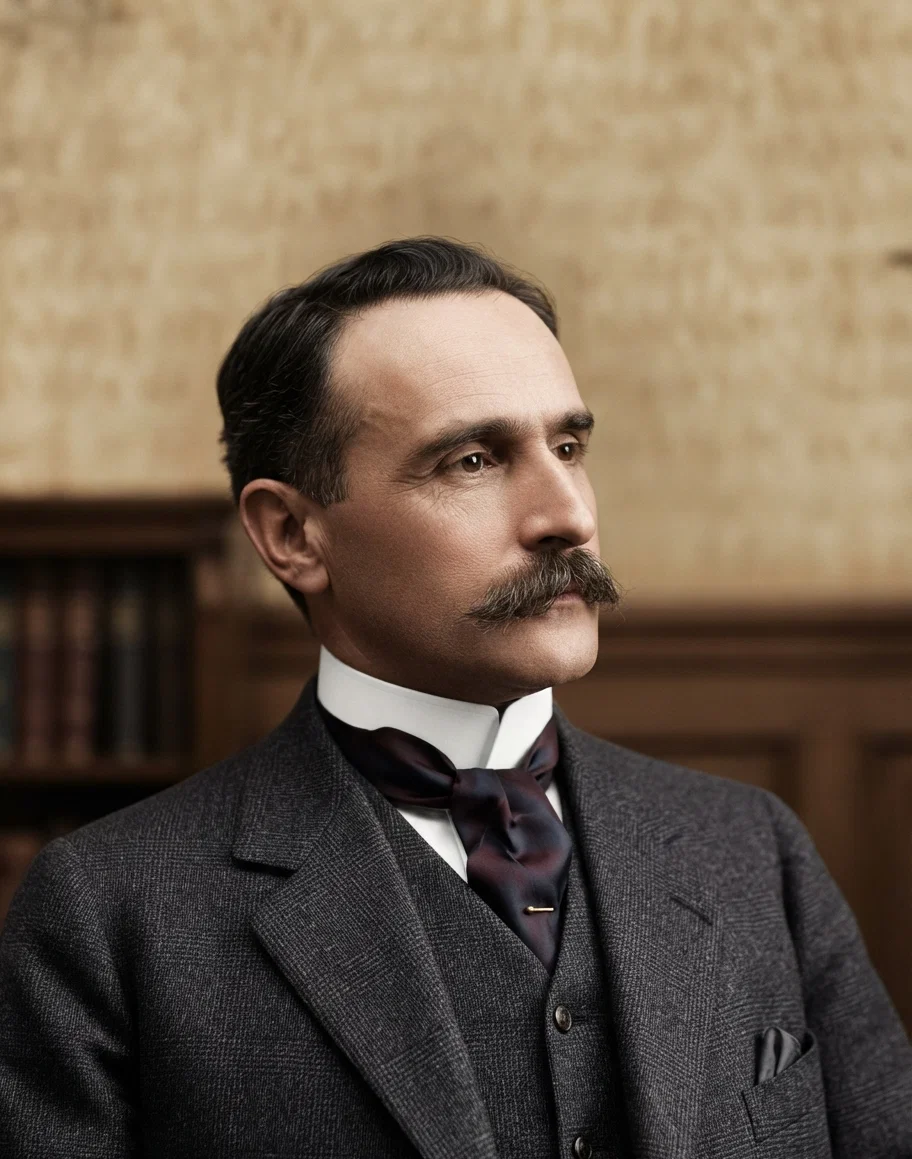
Baron d'Estournelles de Constant, member French Senate, head of French section of International Peace Conference.
"The real evil of our modern industrial and commercial conditions is the selfishness they tend to engender. Why should we ignore the most powerful solvent of selfishness that has ever been discovered, the religious sentiment?
"I believe with all my soul that until we recognize openly the moral power and authority of religion—not of the vague individual sentiment, but of organized religion—our efforts for a11universal peace will accomplish but an imperfect result.
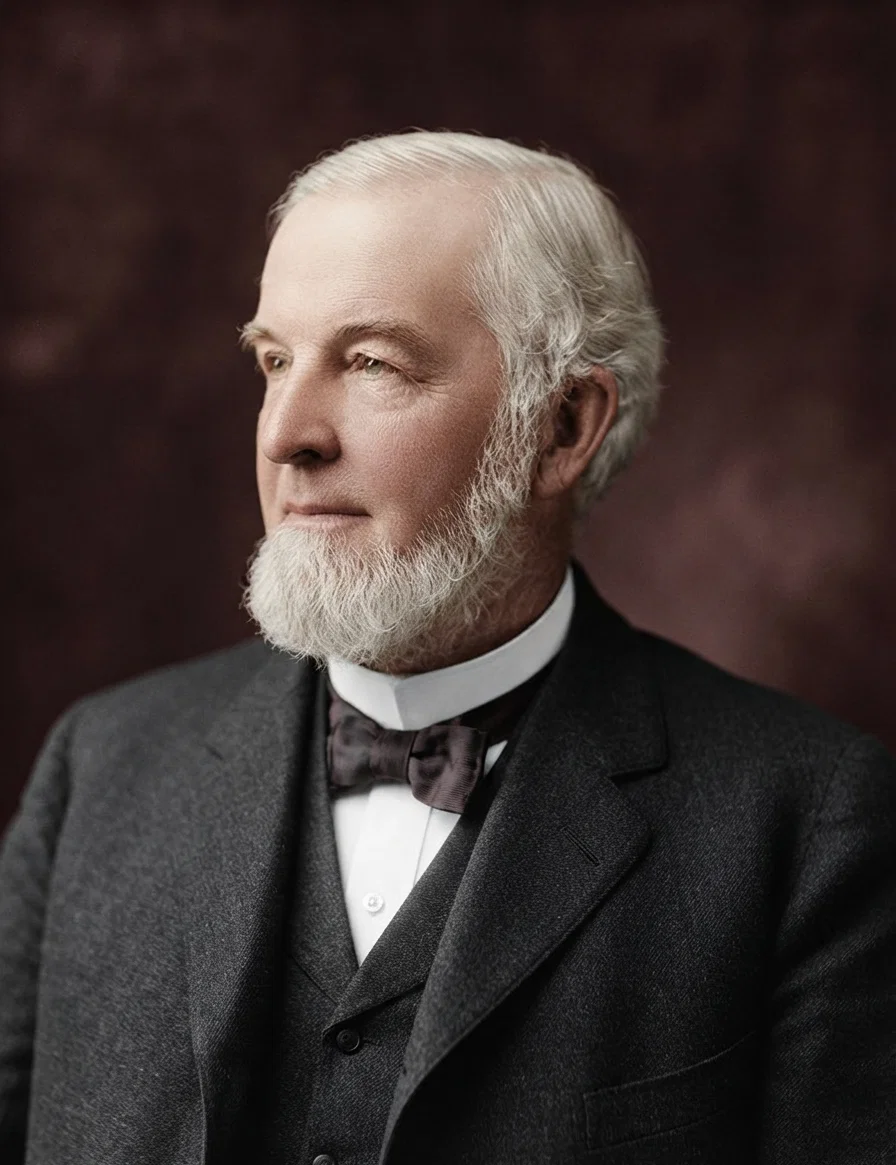
Albert K. Smiley, one of the original and first public advocates for the peace movement.
"I shall not, therefore, entirely surprise any one if in connection with the profound influence of religion in all that tends to create and preserve a state of peace I call attention to the continuous existence of a famous tribunal of peace—the Holy See at Rome.
"Its services in the past are so well known that all impartial historians, even such as do not recognize its spiritual authority, agree that for centuries it was a successful court of final resort for countless conflicts. The only practical international law for centuries was the Gospel of Christ as preached by its legatees to emperors and kings.
"Thru centuries of selfish feudalism when all Europe was splintered into countless little states, the Holy See was the only external force they bowed to and habitually invoked as unselfish, independent, courageous, beloved by the poor and weak, and feared by the rapacious and powerful.
"The Holy See is still the working head of the great Catholic body, over 256,000,000 of souls; and its moral authority was never greater. All these countless millions would surely welcome the recognition of the Holy See as a factor in international arbitration.
"It stands forth universally venerated as a divine representative committed to the works and the interests of peace by the nature and history of its office, at the head of a great working system of international religious administration which permits it to reach rapidly and efficiently the minds and the hearts of whole peoples and races.
"I am not prepared to say just how the Holy See might again take its place as a factor in the work of universal peace, or how the Christian world shall resurrect a tribunal that was once its pride and honor.
"It is certainly significant enough that when the Czar Nicholas first proposed an International Tribunal of Peace, he invited the Holy See to take part in the proceedings and that the Queen of Holland wrote personally to Leo XIII, requesting his cooperation.
"I think I can safely say that if the Holy See were no longer excluded from this noble and eminently religious enterprise, the thirteen or more millions of American Catholics would at once take a livelier interest in the movement for the abolition of war. It would appear to them as more than a Utopian scheme, as something practicable, and in a large measure attainable."
Rabbi Hirsch, according to a statement by Mr. Carnegie, sounded the key-note of the conference, when he declared that the "plow" must take the place of the sword. Rabbi Hirsch said:
"Our hope is founded in the advent of the plow. By very costly and circuitous route the sword has been turned into a plowshare even as it is now. The vision of the prophet speaks of industrial conditions combining economic independence with social cooperation. The freedom of every individual thru and in cooperation, will indeed lend to the establishing of God's throne among men, and above the nations. A dream this?—No, a fore-vision. Vision is a forerunner, always, of achievement. Let nations dream of peace, and peace will be sure of consummation. The hands that guide the plow carry credentials of nobility and strength less doubtful than do the fingers that pull the trigger. Not of inane impossibilities have they raved who foretold the coming of the day when nations shall no longer learn the art of war. Seated each one under his own vine and fig-tree in independence and freedom, none will covet the other's possessions, but all will bow to the decision of the Highest Judge whose throne is pillared on justice and whose scepter is tipped with righteousness. "Our generation will conquer not in the sign of the sword, but of the plow."
Bishop Potter, in his remarks, took occasion to sharply criticize a sermon of Rev. Dr. Morgan Dix, delivered on the very day of the opening of the Congress. It was an interesting incident. In the afternoon Dr. Dix had preached a sermon to the members of the Loyal Legion in which he said:
"The art of war is an ancient, honorable, necessary art. Appreciating the motives of peace societies, and giving them credit for the good which they have done, we warn them, however, not to be over sanguine, or to become excited in the expectations of immediate or even early success. The day is not in sight when their ideas can find universal, or anything near to universal, acceptance. Not one of us will live to see the entrance into the thousand years of peace. We fear that if international war should cease, that happy occurrence would not bring war to an end; it would still have to be waged, not by nation against nation, but within each nation, between forces protective of law and order, and other forces destructive to the peace and quiet of the State. Dismiss the police, disband the national guard, and secure non-interference by the general government, and what would happen?"
Already Mr. Stead, one of the world's chief exponents of the cause of INTERNATIONAL PEACE, has declared that the genuine solution of the great world-problem would result in the setting up "of the kingdom of God upon earth." As to this, more anon: yet it is not strange that those engaged should consider the subject of "a temporal millennium," a natural corollary to the world-wide peace movement and the event of its success. Rev. Dr. Parkhurst, in his discourse upon the Peace Congress in New York, said:
"The millennium has not come. There is no great hurry about its coming, or it would have arrived before now. But its steps are distinctly forward steps, and there were never such convincing symptoms of its approach as in this year of 1907, when forty-five nations are preparing to convene in a GRAND ECUMENICAL COUNCIL to fix, if possible, upon a policy of international relation and action that shall incorporate a little, at least, of the principle celebrated by the angels of the coming of our Lord."
(Courtesy New York Journal.) Carnegie Hall, where the great Parliament is held.
So, then, it appears that peace conferences are national, are international, are political, are religious; and necessarily presage a great matter, A GREATER MATTER, absolutely paramount, and which should receive the close attention of every citizen, politically or religiously bent, or both! Mr. Stead has said that "at present there is no question but that we are facing a crisis—A GREAT CRISIS IN HISTORY—and is the church of Christ in America recognizing that fact, and has it a mind to speak to the people in this emergency;" and in view of these statements and the vast movements of the century taken altogether, the student of prophecy has the right—aye, it is his duty—to ask the question, WHAT DO THESE THINGS MEAN? and to seek a reasonable and satisfactory reply.
Pertinent questions that arise are:
WHAT WILL BE THE OUTCOME OF A UNIVERSAL PEACE MOVEMENT?
Can disarmament be secured?
What part will the United States Government take in the movement?
Can peace be secured in this way?
Is there not danger of WORLD-RELIGION and WORLD EMPIRE resulting?
Will wars be abolished?
Thousands and millions are considering these great questions, and hoping for a solution that "THE CRISIS" may be passed in safety.
In the next letter your correspondent will report the real work of the Congress; its aims, discussions, purposes, and influence—a congress that is, in truth, the FIRST PARLIAMENT OF MAN IN THE NEW WORLD—a Parliament, the influence of which is bound to shape the affairs of the Congress at The Hague, and, perhaps, of the whole world.
JOHN S. WIGHTMAN.
New York, April 16, 1907.
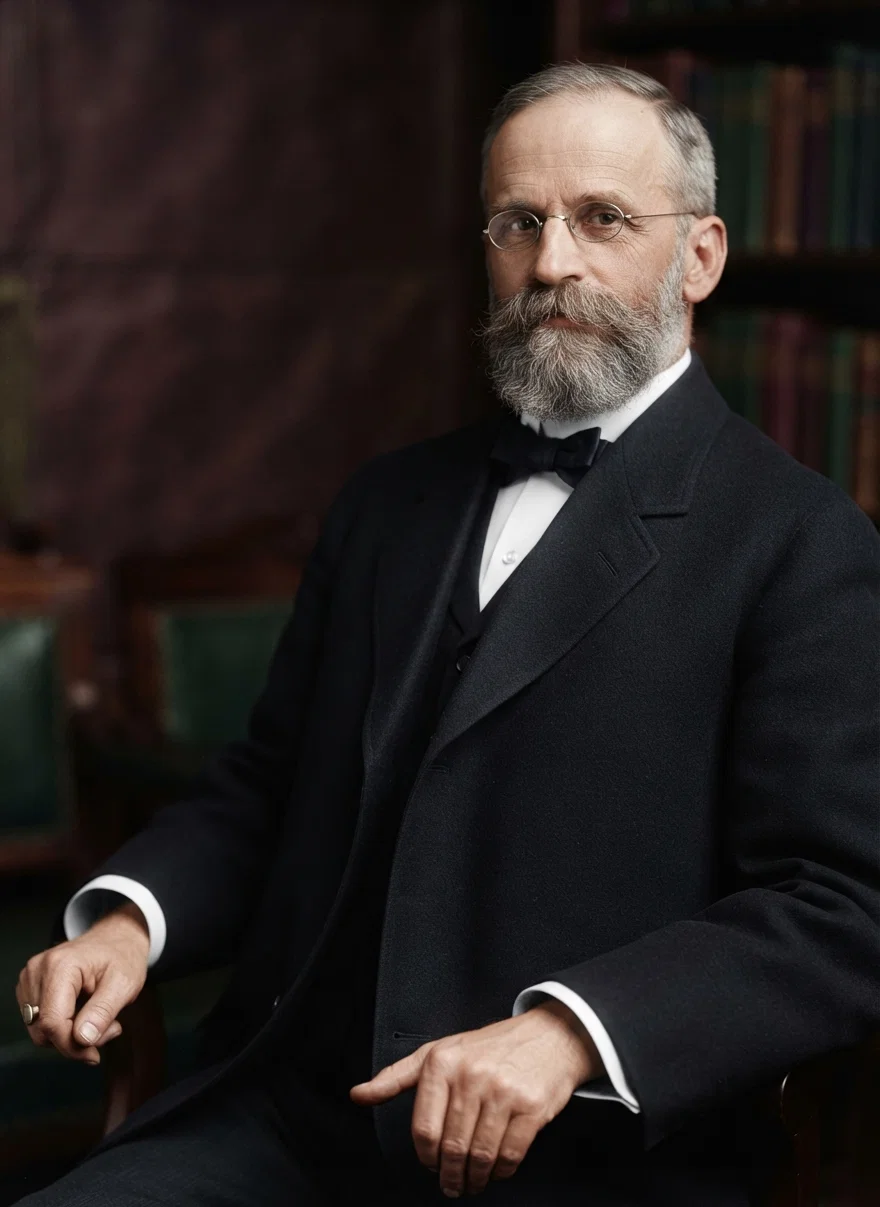
Prof. Samuel T. Dutton, Chairman of the Executive Committee of the National Peace Congress.