THE WAR IN THE ORIENT

14%

Pacific Press Publishing Company · Oakland, California · Feb 24, 1904

FromSigns of the Times, Vol. 30, No. 8.

Read the full edition

THE WAR IN THE ORIENT.

GRIM-VISAGED war is stalking at large in the Orient. Without a formal declaration of war, but after waiting forty-eight hours from the time of severing diplomatic relations, the Japanese fleet attacked the Russian fleet and fortress at Port Arthur. The attack began at night, and as the Russian ships steamed out to accept the challenge, the Japanese torpedo-boats slipped in between the Russian ships and the shore, and delivered their deadly missiles. Exact details of the engagement are lacking, as the censorship by both powers engaged is exceptionally strict. Absolutely no information is obtainable from Japanese official sources; but the result of this engagement, and at least two others which followed it at Port Arthur and Chemulpo, Korea, is that twelve Russian ships have been sunk or disabled and eight have been captured. The whereabouts of Russia’s Vladivostock squadron is not known, tho it is reported that three vessels of this squadron were sunk by Japanese torpedoes, in Tsugaro Straits. A number of Russian and Japanese warships that have passed through the Suez Canal are now on their way to the East, and these are expected either to encounter each other or be met by other vessels of one or both of the belligerents. In either case there is certain to be more fighting. A Russian torpedo-boat has been sunk by contact with one of their own floating torpedoes, resulting in the loss of four officers and ninety-one men. It is also reported that three Russian torpedo-boats were sunk by guns of their own fortress, having been mistaken for Japanese boats. One report states that 1,800 Japanese soldiers were lost by the sinking of a transport; but few of the reports are possible of confirmation.
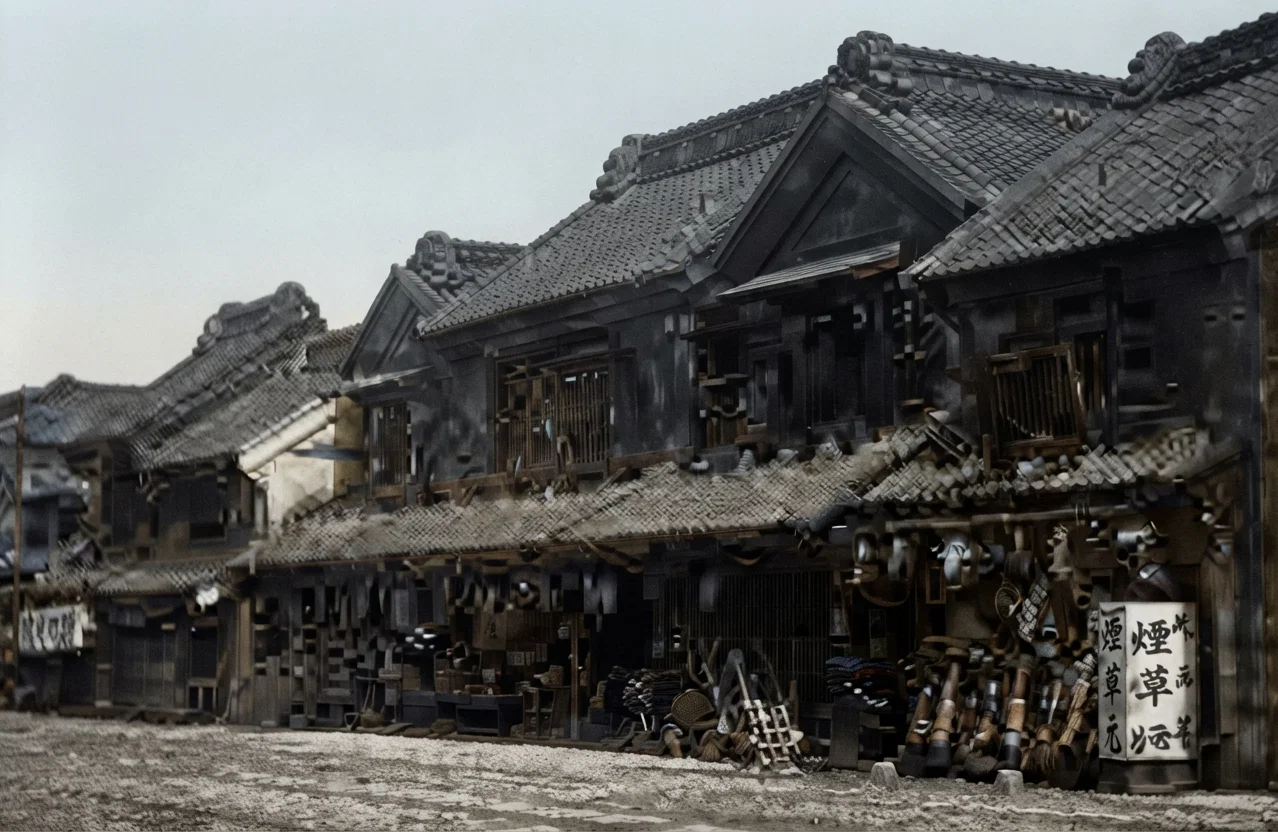
Street Scene in Tokio, Japan.
Japan, through her masterful stroke at Port Arthur, has gained for herself actual command of the sea. Russia’s ships that have not been captured or sunk are now so scattered that it will be practically impossible for her to concentrate a fleet of any size to oppose the ships of the Japanese. This is considered a most important factor in the outcome, as the elimination of the Russian fleet will release about 150,000 of Japan’s home guards, who can now be added to the Japanese army of invasion.
Japan is landing troops on both sides of Korea, and these are marching toward the Yalu River, which forms the western boundary of Korea. The Russians have already established some of their forces on the banks of this river, and are hurrying others to that vicinity. They have also taken up a position near the mouth of the Yalu River, in Chinese territory, outside of Manchuria. It is along the Yalu River that the first great land battle of the present war is expected to occur. Japanese forces have attempted to land at two places near Port Arthur, but have been repulsed in both cases, losing about 450 men altogether. It is reported that they have cut the railroad back of Port Arthur, thus isolating this port, and have blown up the railroad in Manchuria for a distance of seventy miles.
The attitude of the other nations is about as follows: All the principal nations of the world, including China, have now declared their neutrality. France, however, has openly notified the world that she is still Russia’s ally, and will see that Russia’s interests are protected in the East in case of her defeat. Germany sympathizes with Russia, simply because she prefers to see the white race rule in the Orient. England sympathizes with Japan, but refrains from openly rejoicing at Russia’s initial defeat. The sympathy of the American people seems generally to be with the Japanese. There is considerable talk of war between England and France as a result of the present hostilities, in which case the course of Germany would be uncertain. In view of the war in the East, Turkey and Bulgaria show signs of an intention to go to war. If they should do so, a general war would be probable. The world’s peace prospect is far from reassuring.
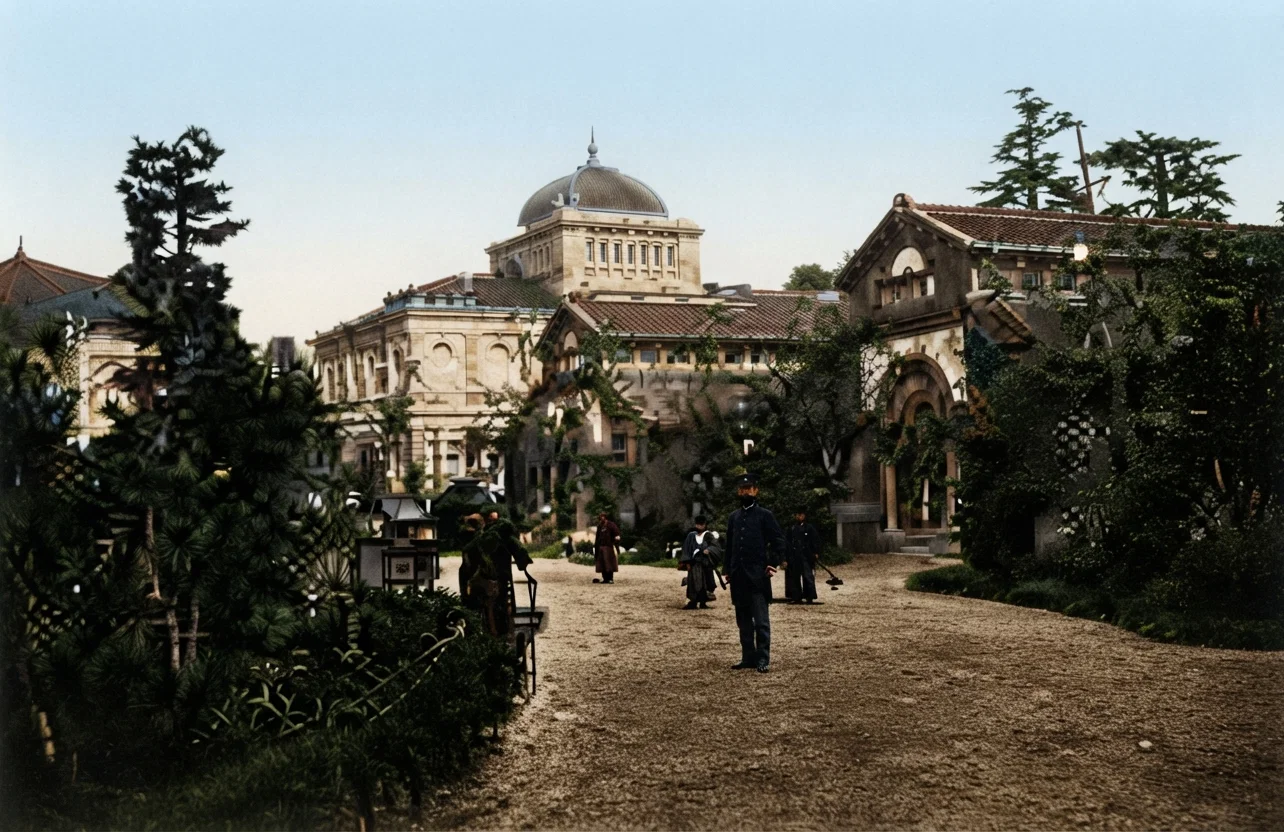
Museum in Uyeno Park, Tokio, Japan.