France

3%

Pacific Press Publishing Company · Mountain View, California · May 29, 1907

FromSigns of the Times, Vol. 33, No. 22.

Read the full edition

France

and the

Papacy

(From Our Own Correspondent)

Arch of Triumph, Paris.
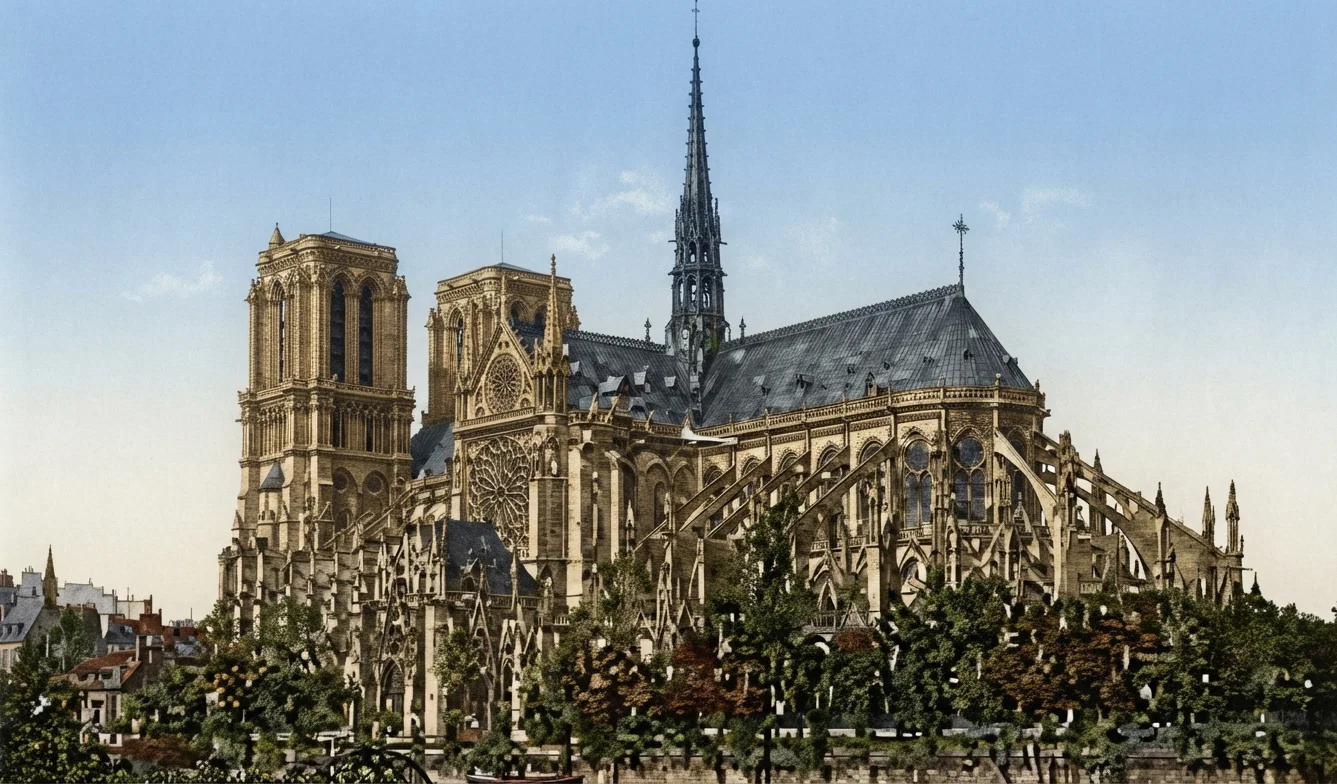
Cathedral of Notre Dame (Our Mother), Paris.

A Historical Sketch.

Part First.

THE conflict between France and the Papacy is not an ordinary one; it is a family quarrel. We do not witness two enemies, but two spouses who have ceased to love each other, or rather who have never done so. As in every quarrel, it is difficult for unbiased spectators to decide between the parties, the complaints on either side seem so plausible, and it looks so probable that there are wrongs on both sides.
In this case of divorce, the difficulty is greater from the fact that the union to which it is proposed to put an end was a union against nature; the union of two beings which do not speak the same language and who belong to different species; one living for heaven and eternity, the other one belonging to this earth and the present time; the one representing the Spirit, faith, forgiveness, humility, the other one representing matter, force, the sword, and human glory.
Let us look back on this long and lamentable union of more than twelve centuries.

Pepin and Stephen II.

The occasion of the marriage between France and the Papacy was rather inglorious. Pepin, son of Charles Martel, while Duke of France, desirous of usurping the King Childeric III's place, asked Pope Stephen II to sanction his criminal intention. The pope bade him Godspeed, and Pepin gave him twenty-two cities taken from Astaulph, King of the Lombards, thus making a beginning of the temporal power of the pope.
It was no mean friendship which was thus being entered into between France and the Papacy. Stephen II wrote this to his partners: "According to the promise which has been made unto us by the Lord God, our Redeemer, I do take you, people of the Franks, from among all nations, for my special people." And at St. Denis, when the pope crowned Pepin, he proclaimed that his race was by the divine Providence elected as a protector of the Apostolic See until the end of the world.
From this time on we see the Papacy coming gradually to the idea of a universal dominion over kings and princes as well as over the churches. "There are two swords," said the popes, "the spiritual sword and the temporal sword; both belong to the church: the one is held by it thru the pope's hand; the other one is held for it by the hand of kings, so long as the pope desires or suffers it."

A Thousand Years' Quarrel Between the Church and France.
A new era opened in the history of the
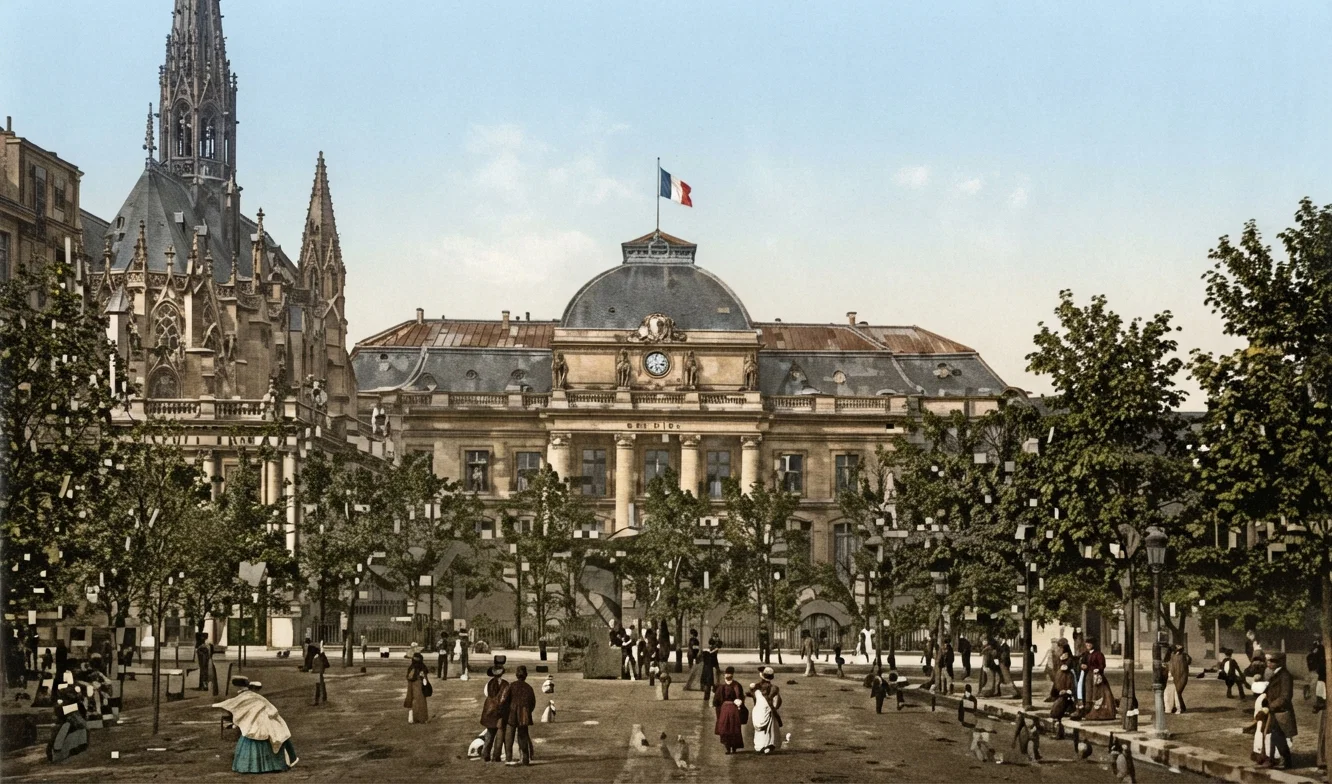
Hall of Justice and Church of St. Chapelle, Paris.
relations between the Papacy and the kings. What we now see is a continual struggle between two disparate powers, each of which is bound to encroach upon the realm of the other; the popes pretending to dominate upon temporal affairs, and the kings seeking to meddle with matters of religion. Each one knows how fiercely raged between the German emperors and Gregory VII the famous quarrel of investitures, made sadly dramatic by the trip of Henry IV to Canossa.
It is necessary here to remark that one of the leading elements of discord was the question of the income attached to lands owned by the church, or, in other words, money matters. The donations of the first Christian emperors and monastic life had made the church immensely rich. Hence the covetousness of kings who endeavored to profit by, or limit, the wealth of the bishops. The councils had decided that the revenues from church lands were to be entrusted to bishops and abbots. They were to divide these in four parts: one for themselves, the second for the poor, the third for the clergy of the diocese, and the fourth for repairs and needed buildings. It would have been strange if this privilege had not placed many bishops into luxury and covetousness. This result is abundantly confirmed by history. On the other hand, the kings claimed the right,—denied by the popes,—of nominations to bishoprics and to make money by selling sees and benefices. As a consequence, the highest positions among the clergy were occupied by grasping and unscrupulous men.
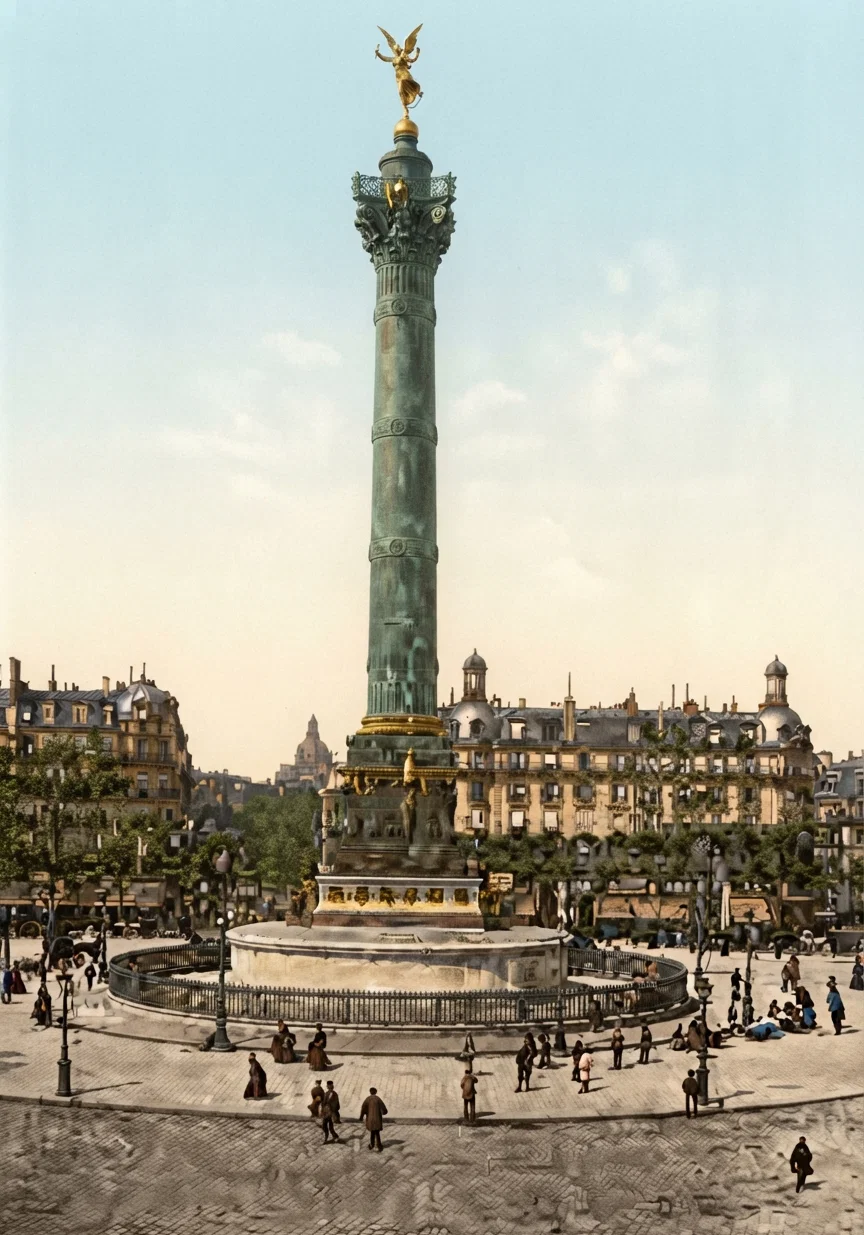
Column of July, 1830, Representing the overthrow of the Bastille.
In France, the quarrel raged between Philip I and Gregory VII; between Philip August and Innocent II; between Philip the Handsome on the one hand, and Innocent III and Boniface VIII on the other; between Charles VII and popes Martin V and Eugene IV; between Louis XIV and Innocent XI; between Napoleon and Pius VII; between the third Republic and Pius X.

The Question of Persecution.

A question which might reasonably have brought discord between the two allies, was the question of persecution. From the sixth century, the church possessed a judicial jurisdiction which included the judgment of crimes against religion, such as blasphemy, sorcery, heresy. Death was the final penalty of obstinate dissenters. But, claiming that Ecclesia abhorret a sanguine (the church recoils from blood), those sentenced to death or torture were given over to the secular arm. As a rule, the princes obeyed without scruple of hesitation the beckoning of the church.
In the thirteenth century, Innocent III had published a crusade against the Albigenses, readers of the Bible, and the princes of northern France had gone down south on a plundering and devastating tour. A similar situation offered itself in the sixteenth century when Protestantism appeared. While robbing the clergy without mercy, Francis I burned or hanged the Huguenots. In 1539 he published a general edict against the Lutherans. He was imitated by his successors, one of whom, Charles IX, authorized the horrible massacre of the Saint Bartholomew which was celebrated in Rome by glad Te Deums.

The Edict of Nantes and Its Revocation.

The progress of the Reformation, however, soon obliged the French Government to take a step toward toleration. April 13, 1598, Henry IV proclaimed the Edict of Nantes which allowed the Reformed people to exercise their worship where it already existed. But the first glimmer of freedom of conscience died out when Henry fell under the assassin's knife. Louis XIV was as humbly obedient to the church on the question of persecution as he was arrogantly independent and hostile on ecclesiastical and even theological grounds. We see him publishing drastic edicts against the Protestants, driving 200,000 of them out of his estates in 1685 by the revocation of the Edict of Nantes on the base claim that there were no more Protestants in France. It was not until 1787 that a toleration edict, inspired by Lafayette on his return from America, gave them the rights of citizenship.

The Revolution and the First Separation.
At the end of the eighteenth century, we meet with a fierce and bloody rupture between the Church and State. France was reaping the mistakes of several reigns, mistakes of which the two consorts were both responsible: luxuryof the court, great wars of ambition, persecution of non-Catholics. The poverty of the people was appalling. One of the first questions which came up before the convention was the confiscation of the church property which was marked at two billion francs, and a large share of which was represented by lands. The annual income from these lands was about seventy to eighty millions. The yearly revenue which came to each bishop from that source ranged from 7,000 to 600,000 francs. The 2nd of November, the National Assembly passed the following decree: "The church properties are placed at the disposal of the nation, on promise of providing in a proper manner for the support of ministers and for the care of the poor."
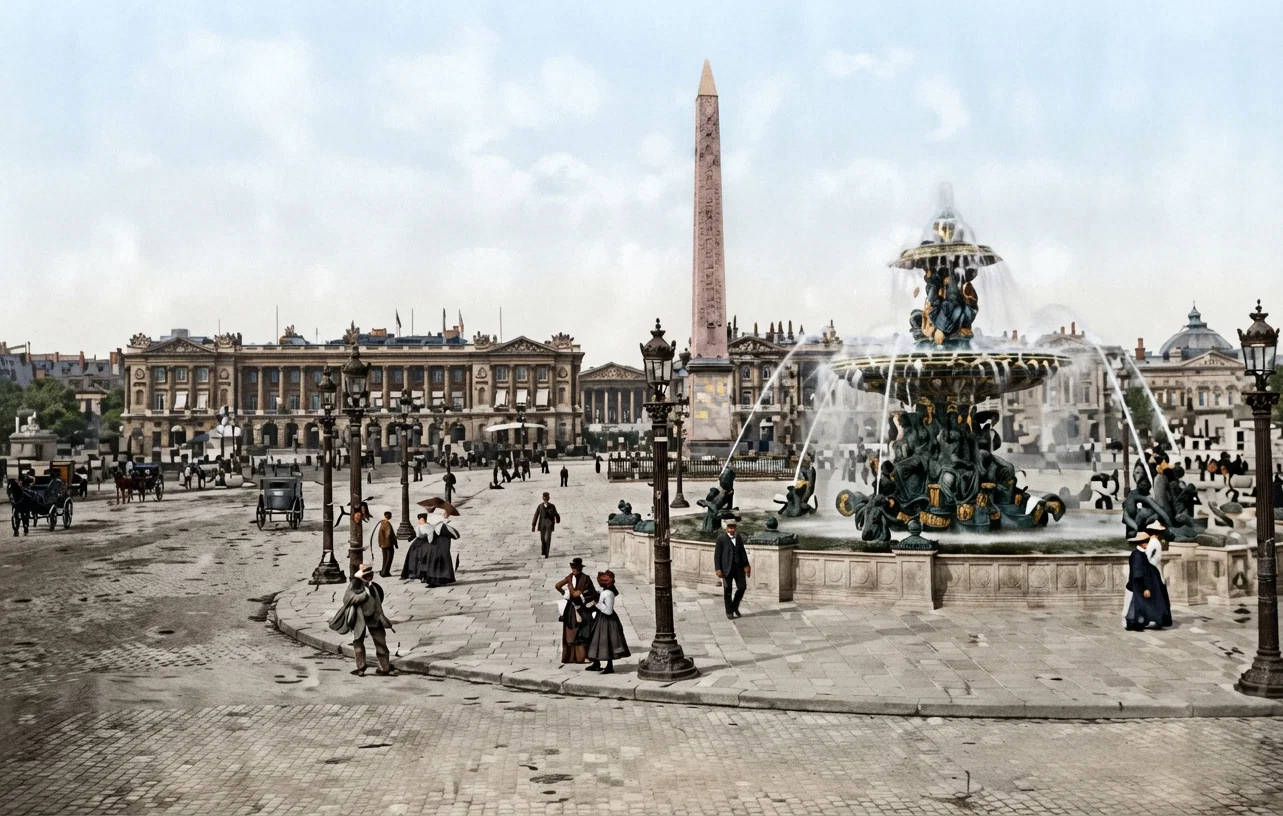
La Place de la Concorde (the Place of Assembly), Paris.
The Revolution soon became decidedly hostile to the church and to Christianity itself. Religious orders were abolished and the clergy was placed under a civil constitution which cut them off from the Papacy. The priests who refused to submit to it were banished, imprisoned, and put to death. In its turn, the church was outlawed, hated, and persecuted. At last, tired of its own excesses, France returned to the civil constitution of the clergy. Both sections of the Catholic clergy—those accepting and those rejecting the civil constitution—vied with each other in seeking to revive religion among the people. The churches were overflowing with worshipers, and a great religious revival took place.

Napoleon and the Concordat.

Then appeared Napoleon, seeking to turn everything to his own benefit and to the accomplishment of his dreams of universal dominion. In these dreams, the Catholic religion entered as an excellent moral police, as an instrument of domination. He immediately opened negotiations with Rome. Napoleon wanted the church in harmony with the pope, but submissive to, and controlled by, the government. The pope wanted it independent of State control and the only religion of the State. The Concordat was signed and broken time and again, each signer seeking to cheat his partner. Bonaparte got angry; he imprisoned 500 priests, and took the pope into France, but without avail. The struggle terminated only at the fall of Napoleon and his empire.
"The greatest mistake of my reign," said Napoleon one day, "was when I made the Concordat. I seek in vain to set proper limits between civil and religious authorities. The more I look into it, the more I see clouds, darkness, and difficulties." Napoleon failed to find out the true limits between the two spheres, for the good reason that he was unwilling to leave the church alone and to its own business.

From 1815 to 1905.

Thanks to a new Concordat concluded in 1817, a period of temporal success now opened before the church. Under Louis XVIII, Louis Philip, Napoleon III, and under the presidency of M. Thiers, Catholicism was enabled to reach an ascendancy which it had not known for a long time. Religious orders were reorganized and they multiplied rapidly. Mortmain became formidable. The clergy obtained the oversight of high and primary schools. It gained a foothold in the army, in the prisons, in public charities.
During this period, the church appropriations from State money rapidly grew as follows: In 1815, they were 11,000,000 francs; in 1819, 25,000,000; in 1830, they grew to 30,000,000; in 1848, to 40,000,000; in 1860, to 50,000,000; and from 1872 to 1882, to 53,000,000, to which were added 30,000,000 by the townships. In 1902, the fortune of the monastic orders was estimated at one billion francs.
But the tide of opposition was rising, and has kept growing with threatening strides ever since the disasters of 1870. Without interruption, the cabinets presided over by Gambetta, Jules Ferry, Paul Bert, Goblet, Waldeck-Rousseau, and Combes, steadily carried the country, step by step, toward the separation of State and Church. During a lapse of twenty-five years, a succession of laws was passed which aimed at, and accomplished, the following: The elimination of the clergy from the high-schools; members of unauthorized orders forbidden to teach; primary instruction made compulsory and gratuitous; certain teaching orders expelled, principally Jesuits; and finally, in 1904, all monastic orders forbidden to teach.
The expulsion of the religious orders in 1903 and 1904 created a great agitation in the Catholic centers. Many incidents showed that a crisis was at hand. It was brought about suddenly by M. Loubet's visit to the King of Italy and the protest of the pope against it. France recalled its ambassador, and the majority of the Chamber adopted an order of the day calling for the separation of the State from the churches. A bill to that effect was presented by the government in March 1905, and the 9th of December of the same year it received the signature of the president.