THE supreme crisis of the world was not at the Cross. It was not where Roman soldiers mocked and hating priests ridiculed and blasphemed, and the excruciating pains of the Crucifixion were endured by a sensitive human soul to the utmost. It was not where even the Father's face was hidden and the awful darkness of sin wrung from the lips of the dying Victim, "My God, My God, why hast Thou forsaken Me?" No, it was not here where the crisis of the world—nay, more, the crisis of the universe—was met.
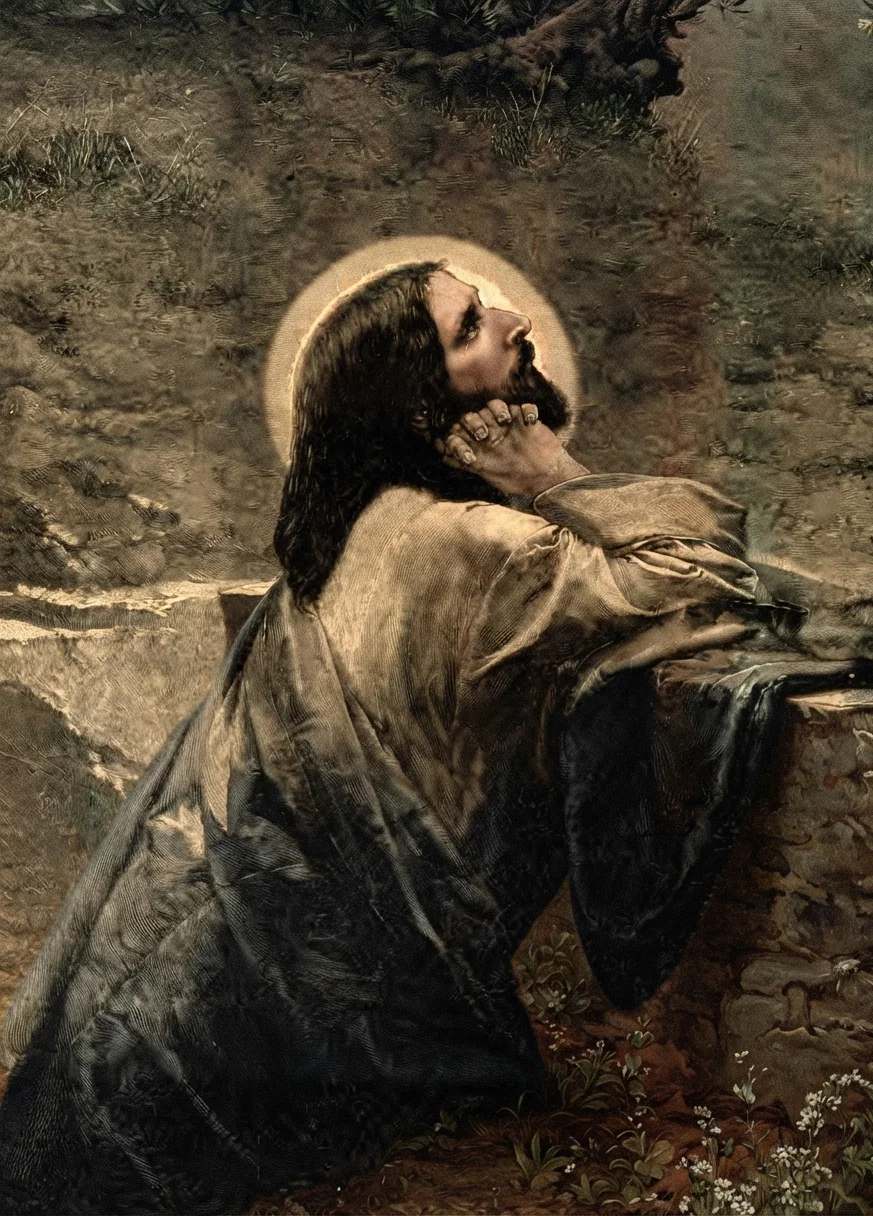
THE crisis was met in the low, still garden, where like sentinels stood the ancient olive trees with down-bending boughs, swaying before the gentle spring breeze; where the mild paschal moon shed its soft radiance o'er the scene, filtered through the branches, and flecked the still earth "with leafy light and shadow," here it was that the critical hour, the crisis of the universe, came. It came not to the Man of Nazareth amid jubilant crowds or acclaiming multitudes, but all alone, with the most stalwart of His followers sleeping, knowing naught of the struggle through which was passing their beloved Master.
THERE had been other crises. When He "gave Himself," "a Lamb slain from the foundation of the world," a crisis was passed. When He took upon Himself "the form of a servant," and became an Angel among the angels, a crisis was passed. When He was "made in the likeness of man," a crisis was passed. When He met the mighty temptations of the adversary at the beginning of His ministry, and conquered by faith in the Word of God, a crisis was passed. And there doubtless were other times. But the supreme crisis was met in the Garden of Gethsemane, when alone with God, Jesus Christ yielded Himself again, with renewed consecration, facing all the suffering, to become the supreme and everlasting Sacrifice for humanity. The crucifixion and the resurrection were but the demonstration in life of the submission of Gethsemane.
In Gethsemane.
THEN there came before the Christ of God the awful specter of sin, in all its ugliness and its fearful consequences, separation from God, eternal death. It came to Him weakened in humanity, feeble, worn, weary, old, humanly speaking, before His time, with the awful burden of a sinful world upon Him. Must He bear it still? Should He endure it to the end? Must its crushing load press Him to death, separate from Him His Father's face, and His soul pass out into darkness? Therefore His words to His disciples who went with Him into the garden, "My soul is exceeding sorrowful, even unto death."
WHILE the climax was reached in the garden, Jesus saw the coming crisis for Himself and His people, and began the awful struggle hours before. Listen to His words: "The hour is come, that the Son of Man should be glorified. Verily, verily, I say unto you, Except a grain of wheat fall into the earth and die, it abideth by itself alone; but if it die, it beareth much fruit. He that loveth His life loseth it; and He that hateth his life in this world shall keep it unto life eternal. If any man serve Me, let him follow Me; and where I am, there shall also My servant be; if any man serve Me, him will the Father honor. Now is my soul troubled; and what shall I say? Father, save Me from this hour? But for this cause came I unto this hour. Father, glorify Thy name. There came therefore a voice out of heaven, saying, I have both glorified it, and will glorify it again." John 12:23-28.
DO WE get the import of the words? The Son of God, the Lifegiver, must die. Death is sin full ripe. James 1:15. He who in all His righteous soul hated sin, must bear it for the sake of others to its ultimate. He who had ministered only life, must bear the load of death. He must lie down in death's darkness as the sinner must lie down. His human soul shrank from the awful nadir of the primal purpose. "What shall I say?" He asks. Shall I say, "Father save Me from this hour?" or shall I hold My life to Myself? Shall I go back on the sacrifice purposed from the beginning? No, a thousand times, no; for this very cause I came to this hour, to die that others might live. If He had refused to die, the race would have been forever lost. The Spirit of God gave the thought to Elihu of old: "Who hath laid upon Him the whole world? If He set His heart upon Himself ["if He cause His heart to return unto Himself," margin]; if He gather4unto Himself His Spirit and His breath; all flesh shall perish together, and man shall turn again unto dust." Job 34:13-15. He had taken all upon Him. He could not go back. Infinite Love could not be selfish. Therefore He would not pray, "Father, save Me from this hour," but "Father, glorify Thy name."
BUT the burden heavier rolls. He must meet the struggle, not surrounded with loyal disciples, not with souls seeking His teaching and presence; but alone must He meet the trial, with His nearest human helpers indifferent to His struggle. He evidently hoped for their aid, comfort, and encouragement. He takes them all to the Garden of Gethsemane; but for the struggle He selects Peter and James and John, and says to them, "My soul is exceeding sorrowful, even unto death; abide ye here, and watch with Me." But in His soul-struggle with the flesh and the powers of darkness, they fall asleep, even ardent Peter failing to watch "for one hour."
THE crisis of the universe is expressed in the agonized prayer of Jesus: "And He went forward a little, and fell on His face, and prayed, saying, My Father, if it be possible, let this cup pass away from Me; nevertheless, not as I will, but as Thou wilt." Matt. 26:39. Then He returns to His disciples, finds them sleeping, greatly reproves the ardent Peter for his sleeping, excuses the weakness of His disciples, and then returns to pray. "My Father, if this can not pass away, except I drink it, Thy will be done." Again, He returns and finds His disciples sleeping. He finds no human help, no human comfort, and He staggers back to the fearfully-agonized struggle, so fearful in its strain that He was sweating great drops of blood, and once more prays: "Abba, Father, all things are possible unto Thee; remove this cup from Me; howbeit not what I will, but what Thou wilt."
In this last agonizing prayer the struggle is over, the victory is won in submission, absolute submission to the will of God. Note the confidence on which the submission is based. First, confidence in God's love, expressed in "Abba, Father," "My Father," "My own Father." Only the true child can say it. Rom. 8:14; Gal. 4:5. It is not the term indicating mere fatherhood; it is the term showing the life relation between the child and his parent. "Thou lovest Me; therefore I can leave my case with Thy love."
Secondly, confidence in God's power and wisdom. "All things are possible unto Thee." He has all power, all knowledge, all wisdom, else to Him all things are not possible. Jesus could therefore leave His case in the hands of His loving, omnipotent, omniscient Father.
But, thirdly, the human petition still abides in the final prayer, "Remove this cup from Me." This ordeal His human nature shrunk from. This desire His human heart longed for. God did not rebuke it; and He could not rebuke it, because there was another petition in the heart of Jesus paramount—"Howbeit not what I will, but what Thou wilt." "Shall I say, Father, save Me from this hour? [No, but] Father, glorify Thy name." And it was to the glory of God's name that He should so love fallen humanity as to give His only-begotten Son to die that man might be saved. That was His will, and to that Jesus yielded; more than this, for that He prayed, and forth to the cross He went unwaveringly, and died, forgiving His enemies and committing to His Father His Spirit. But from that death came the salvation of the world and His eternal exaltation.
THE prayer of Christ Jesus must be our prayer. Before Pentecost lies Calvary. Before Calvary lies Gethsemane.
THE will must be yielded to God, the struggle must be alone with Him. Whatever the desire, whatever the ambition, whatever the idol, whatever the heart wish, all, all, all, must be laid upon God's altar. We may pray, if we wish, that God may give us that desire, but paramount to this must be, "Nevertheless not my will, but Thine, be done." Settling that with God, and settling it forever, and all other things, the mock trial and the cross may follow; they will not move us. We are in harmony with the will which moves the universe, and all is well. Wrestle it out with God, let self be crucified, and just beyond lies the glorious resurrection to a new life, and beyond, the ascension to the right hand of God. All other ways end in defeat. The way of Gethsemane is the blood-stained path of victory.