BABYLON'S career as a world-empire ceased with the joint rule of Nabonidus and Belshazzar. The prophetic symbols of succeeding powers are as follows:
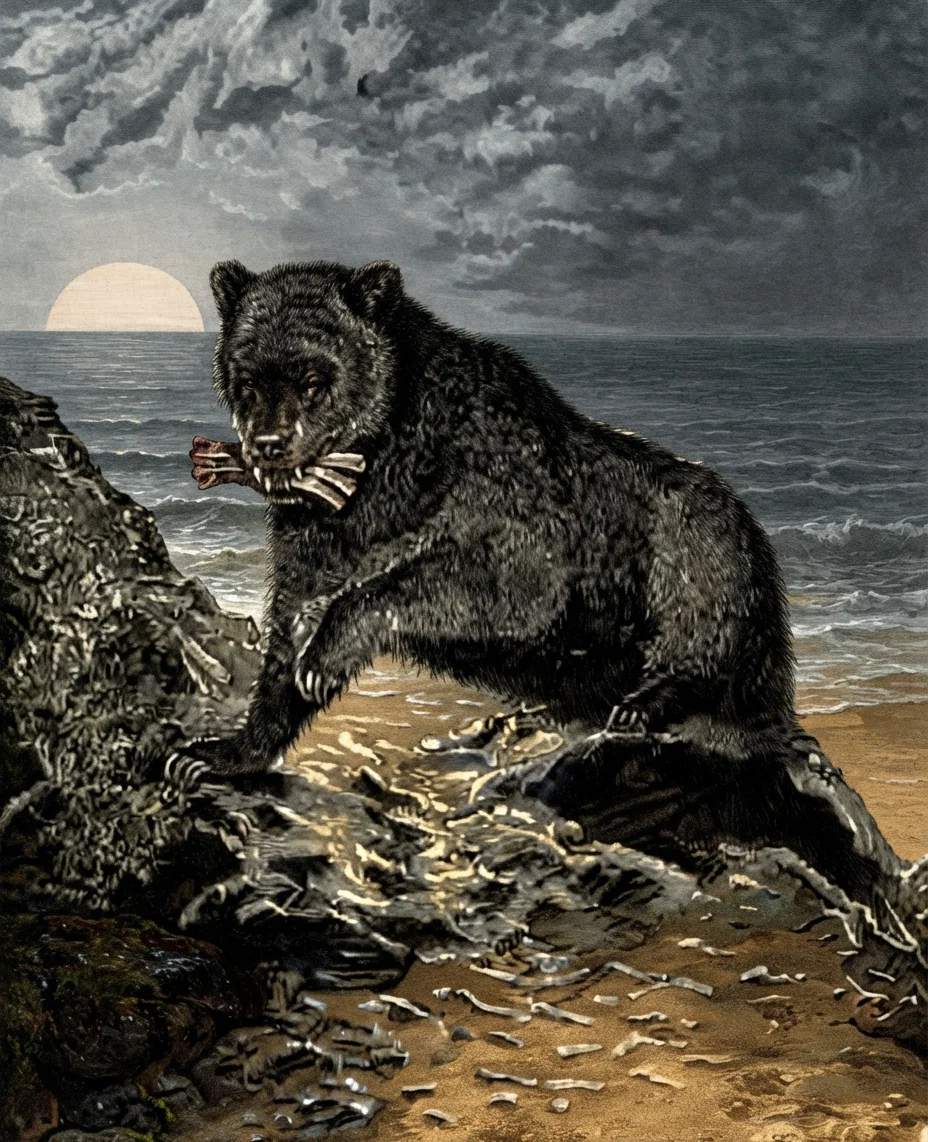
"And behold another beast, a second, like to a bear, and it raised up itself on one side, and it had three ribs in the mouth of it between the teeth of it: and they said thus unto it, Arise, devour much flesh."
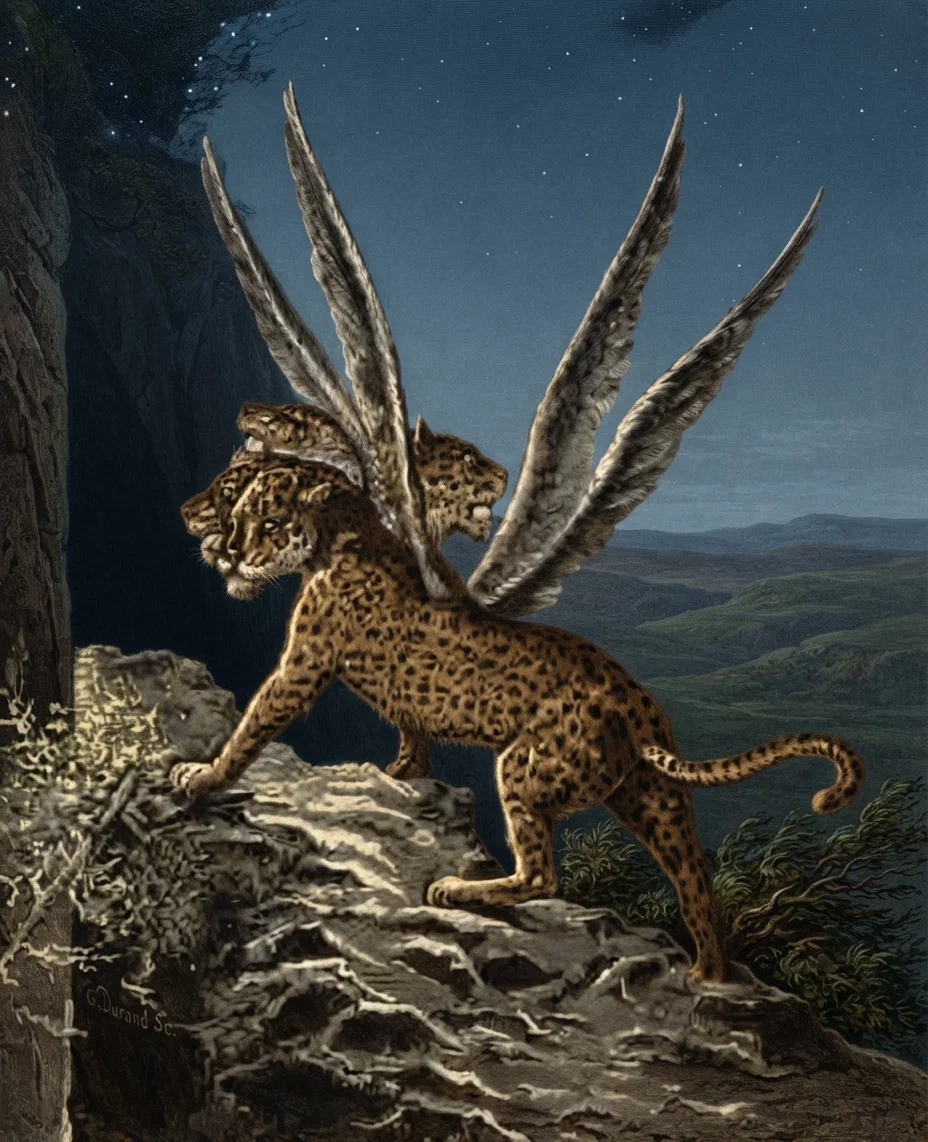
"After this I beheld, and lo another, like a leopard, which had upon the back of it four wings of a fowl; the beast had also four heads; and dominion was given to it."
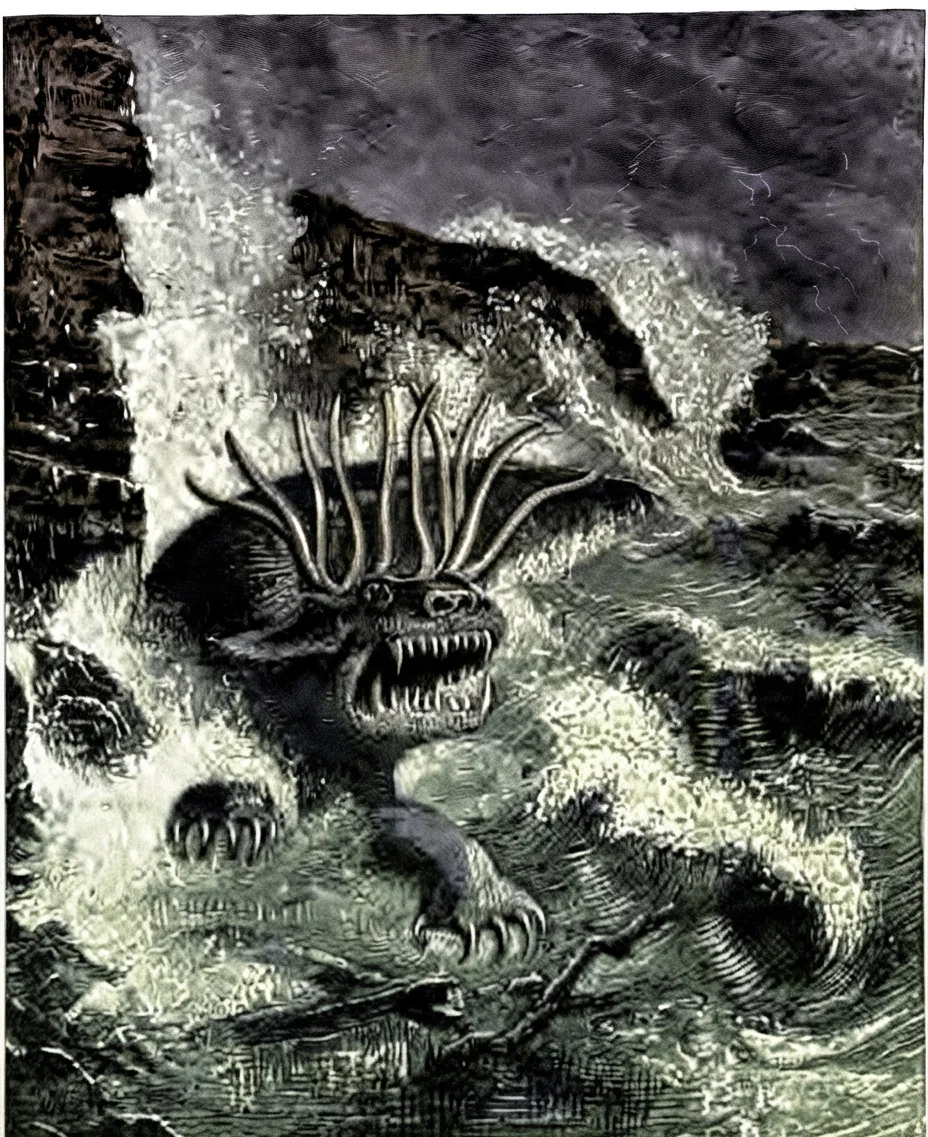
"After this I saw in the night visions, and behold a fourth beast, dreadful and terrible, and strong exceedingly; and it had great iron teeth: it devoured and brake in pieces, and stamped the residue with the feet of it: and it was diverse from all the beasts that were before it; and it had ten horns." Dan. 7: 5-7.
And Behold Another Beast, a Second, like to a Bear.
"Lo Another, like a Leopard."
A Fourth Beast, Dreadful and Terrible.
Darius the Mede succeeded to the throne of Babylon B.C. 538, to be followed by Cyrus, the great Persian. A century and a half before his coming to power, Isaiah, by the inbreathing of God, predicted the fall of Babylon and the deliverance of God's people thru him. In that deliverance he was the type of the greater Deliverer, from a greater captivity, even that of sin. Here is a part of the record:
"Thus saith Jehovah, thy Redeemer, . . . I am Jehovah, that maketh all things; that stretcheth forth the heavens alone; that spreadeth abroad the earth; . . . that saith of Cyrus, He is My shepherd, and shall perform all My pleasure, even saying of Jerusalem, She shall be built; and to the temple, Thy foundation shall be laid. Thus saith Jehovah to His anointed, to Cyrus, whose right hand I have holden, to subdue nations before him, and I will loose the loins of kings; to open the doors before him, and the gates shall not be shut. I will go before thee, and make the rugged places plain; I will break in pieces the doors of brass, and cut in sunder the bars of iron; and I will give thee the treasures of darkness, and hidden riches of secret places, that thou mayest know that I am the Lord, which call thee by thy name, even the God of Israel. For Jacob my servant's sake, and Israel My chosen, I have called thee by thy name; I have surnamed thee, thou hast not known Me." Isa. 44: 24 to 45: 4.
Immediately on his coming to the throne Cyrus issued his decree for the release of the Judean captives, and the rebuilding of Jerusalem. Ezra 1: 1-3. Here expired the seventy years' captivity foretold by Jeremiah. Jer. 25: 11, 12. This was God's object-lesson of the glorious Gospel.
Under Cyrus were united the two kingdoms of the Medes and Persians, extending "from India even unto Ethiopia, over an hundred and seven and twenty provinces." Esther 1: 1. Cyrus was killed in a battle with the Touranians, B.C. 529, and was succeeded by a most unworthy son, Cambyses, known in Ezra 4: 6 as Ahasuerus.
The great Persian empire held sway till the battle of Arbela. In the year 335 B.C., Darius Codomanus, or Darius III, came to the throne. In his second year a new figure appears in Persia. Alexander the Great had crossed the narrow strip of water which separates Europe from Asia, with but 30,000 foot and 5,000 horse for the purpose of conquering a world empire. He met the Persian forces at the river Granicus, and defeated more than five times the number of his army. The next conquest, the year following, came at Issus, where Alexander defeated a Persian army of 600,000. The next year Darius mobilized an army of 1,000,000 men, but was utterly defeated at the battle of Arbela, B.C. 331, the end of the Persian empire. Medo-Persia is well represented by the slow, tenacious, but not less cruel, bear. Raising itself up on one side indicates the manner of its coming up, one part, the Median, coming to power first. The three ribs in the bear's mouth, represented as saying to the bear, "Arise, devour much flesh," are thought to refer to the provinces of Babylonia, Lydia, and Egypt, which Medo-Persia greatly oppressed, the evil acts of which incited it to more cruelty.
Grecia.
Grecia is symbolized by the swift leopard with its soaring wings, indicative of rapidity of conquest and soaring pride. The four heads symbolize the four divisions into which Grecia was divided soon after the death of Alexander. After a few brief years of strife, and plot and counterplot (B.C. 301), the great Grecian empire is found divided as follows: In the north, Thrace, Bithynia, and some smaller provinces of Asia Minor; in the east, Syria, and the country to the Indus; in the south, Egypt, Libya, Arabia, and Palestine; in the west, Macedon and Greece; ruled respectively by Lysimachus, Seleucus, Ptolemy, and Cassander.
Rome.
The fourth beast, "dreadful and terrible," finds no symbol in nature, not even with unnatural additions, adequately to represent the empire it symbolizes. From Revelation 13 it seems to be a combination of the lion, the bear, and the leopard, with the addition of the ten horns. It was more cruel than all the beasts before it. What it did not break in pieces and devour, it trampled underneath its feet. The symbol can apply to but one power; namely, Rome. Every specification fits Rome, and no other. Note the following:
1. It was a power to succeed Grecia. This was true of Rome.
2. It was more oppressive and cruel, especially toward the saints of God, than all that were before it. This is preeminently true of Rome thruout its career, pagan and "Christian."
3. It had ten horns symbolizing ten kingdoms. Verse 24. Rome was divided into ten kingdoms by the incursions of the northern barbarians between, the years A.D. 351 and 476, as follows: Allemanni, Franks, Burgundians, Vandals, Suevi, Visigoths, Saxons, Ostrogoths, Lombards, and Heruli. There were not less than ten; there were no more.
4. This nondescript, terrible beast was to be "the fourth kingdom upon earth," a positive proof that Assyria and Egypt are not counted among its predecessors. It is (1)10
Studies in the Book of Daniel.
(Continued from Page 9.)
Babylon; (2) Medo-Persia; (3) Grecia; (4) Rome.
5. This kingdom lasts in one form or another to the end, when it is destroyed in the fierce wrath of the day of God, to be succeeded by God's everlasting kingdom. Truly it is a part of the Gospel of the kingdom to know that these cruel kingdoms will not stand forever, but are to give place to the righteous kingdom of peace.
[The next article will be a consideration of "The Little Horn."]