KO-NIEN

5%

Pacific Press Publishing Company · Mountain View, California · May 9, 1906

FromSigns of the Times, Vol. 32, No. 19.

Read the full edition

"KO-NIEN."

Chinese New-year.

THE first Chinese New-year, little Joseph and I spent alone, as a snowstorm prevented us from attending the conference and enjoying its blessings with the rest of the brethren.
For about a month before New-year, we did not hear anything else but "Ko-Nien." Everybody was very busy getting ready, some did not sleep at all, night after night. Everybody—poor and rich—wanted nice clothes, good things to eat, and the yearly house-cleaning had to take place then; hence it was the busiest time during the whole year.
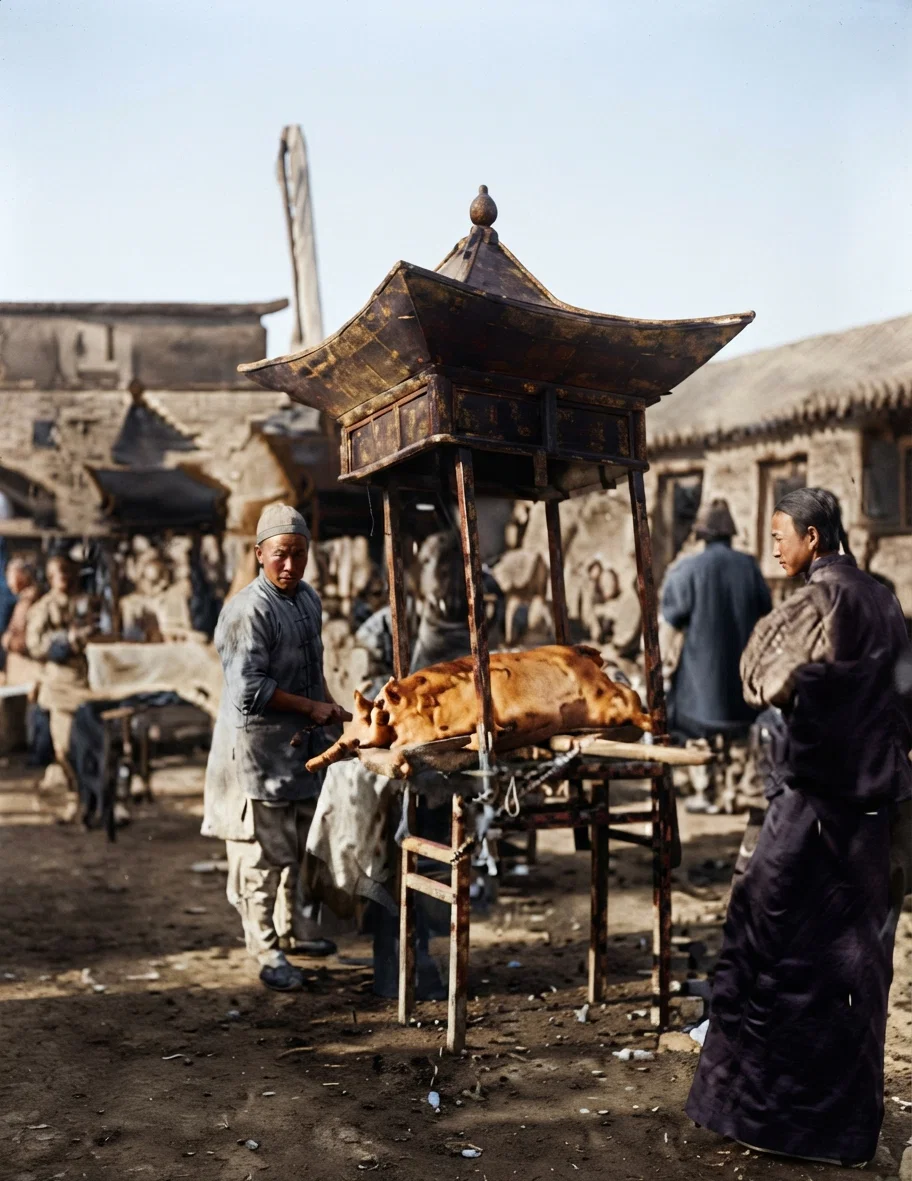
A Roast Pig.
A Roast Pig.
After New-year's eve, no one did buy or sell for about a week. For three days the Chinese did not do anything but visit one another and enjoy the fruit of their previous months' toil. As I listened to the shooting of firecrackers New-year's eve, all night long, and several days after, I was reminded of the Fourth of July in the United States. When my neighbors and friends talked to me about their Ko-Nien, I said: "You better be careful, not eat too much and get sick; if you do, you will have to come to us for medicine."
And, sure enough, I told the truth. I had the privilege of giving both medicine and treatments, as one case went so far that medicine was not sufficient. It was no wonder they got sick. First, they worked too hard to get ready, and were all tired out; so the digestion was slow and weak. Secondly, as they went from house to house wishing their friends a "happy New-year," they had to eat or drink something at every place. I was surprised to see that a good dose of plain medicine generally relieved them as quickly as the meat dumplings made them sick. Their systems are surely different from ours.
We all know that more people are sick from over-eating than from not eating enough; but I was especially assured of this during the Chinese New-year, as more people asked me for medicine then than when they have little to eat. Many of them half starve at other times in the year. Is not overeating one reason why they have so much internal sickness in America and other countries? A Swedish proverb says: "Too much and too little spoil it all." I think this fits in pretty well here. May God help us, who believe the end is near, to be willing to divide with those who are almost without food and raiment. The Scriptures say that one of the great hindrances for good is eating and drinking, and the cares of this life.
New-year's morning, our neighbors came, all dressed nicely, before we had our breakfast, to wish us a "happy New-year." After they had made their polite salutations (I watched them closely and imitated them as well as I could) and were seated, I hastened to wind up the music album. While they listened to the music, I put on the water kettle and slipped on my good clothes. Then I served them the good, pure water with foreign sugar, no cream, as the Chinese think that it is not edible. As they never drink water without a few tea leaves in it, they did not enjoy the water, but were very pleased to look at our foreign cups and spoons, and knew I did my best in entertaining them.
While they looked at the stereoptican views, I played the organ and sang "Jesus, Lover of My Soul," etc. When they went out they thanked me very much, and were just as pleased and happy as we were in taking in the British Museum. I did not count them, but I know that not less than fifty people came, wishing us a happy New-year, about half a dozen at a time. I had hardly time to eat my meals, as I was helping Sister Pilquist with the meetings every afternoon during the New-year season. But when I saw how nicely they behaved, I just made up my mind to receive and entertain all that came, and in that way remove the hard feeling that some of the Chinese have against the foreigners.
I heard the other day that one reason of this hard feeling is the false reports printed in their papers that many thousand Chinese have been killed lately in America. I believe our missionary work is not only to preach to the people that Jesus loves them, but at every opportunity let them see and feel that Jesus loves them through us. My heart is filled with thanksgiving, and my eyes with tears, when I, in a small measure, comprehend my dear Saviour's love to us all. He is indeed (as we sing in Luther's old hymn book) a Friend, the best One, no one like Him in this world. I learned it when I was confirmed, and still enjoy it. I am glad that I can truly say I love the Chinese.
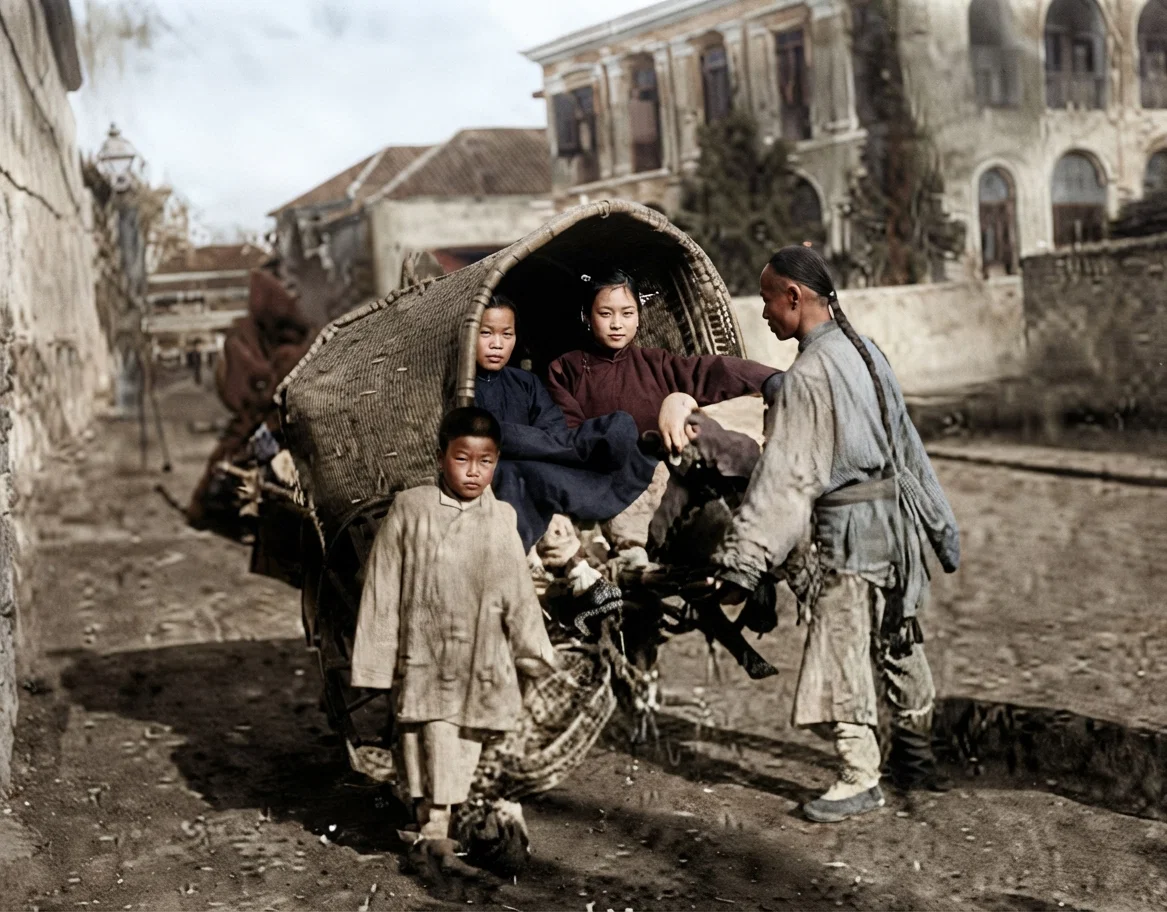
A Chinese Wheelbarrow.
A sister said to me as we were ready to leave for China, "Do you love them? I feel as if I could never be able to live among them." I answered, "Surely; I love those people and have a burden for them, else I would not go there." I praise God that this burden and love have increased since I came to China, and I can say the same for my dear companion.
My dearly beloved in the faith, may we not forget what Jesus willingly has done, is doing and will do, for all who love Him. The devil sometimes wants me to look at the sacrifices, which indeed are small in comparison with the sacrifice of Jesus; then I sing this song in Swedish: "Jesus left His heaven so glorious, His crown so beautiful," etc. What we miss most is a walk in the beautiful nature as a refreshment and change after studying the language. But we thank God that we have only a few steps to the city wall, where we can breathe the pure, high air.
The Chinese New-year celebration lastseighteen days. I told you how the men-folks came the first day; afterward the women and children came in gay clothing and with smiling faces. Yes, everybody was pleasant and happy at New-year. I received them the same way. The Chinese are very inquisitive, and like to examine everything that comes their way. To hinder them from being unpolite, I opened the door to the bedroom and showed them our spring beds, which seemed very wonderful to them. They looked the room over from ceiling to floor. Then I asked, "Would you like to see the room where we eat, and the little kitchen where we cook our food?" How quickly they staggered along on their little feet. It was a real amusement to watch them enjoy and hear them talk to one another about these wonderful foreign things. One reason why I showed them the house and how we live was that it was an education to them. Another reason was, I wanted to give the poor women and children a pleasant change in their everyday monotonous life.
The worst of all hindrances is that they can not read. Dear sisters, how should we be able to endure all the trials and temptations that come to us if we could not read the Bible, the blessed Bible, or other good books, of which we have so many, or if we could not write or receive a spiritual, interesting letter or a paper that tells about the signs of Christ's second coming and other elevating truths. This is just one point of all the good things we enjoy by the grace of God. If I should begin to tell you of the negative side of the women's lives in China, I am sure our hearts would be filled with genuine thanksgiving to our heavenly Father, not formality thanks.
When my teacher went home for his dinner, I went outside, in order to inhale the pure air and enjoy the blessed sunshine. I sat down to write on this article with my mittens and fur on. I had not been writing very long before a poor woman, whose face I recognized, stood before me, with her little grandchild by her side. She wept bitterly as she told me how her husband, sixty years of age, had been pounding her. I saw many marks of his abuse. I asked her to sit down by my side, and comforted her the best I could, cheering her with the blessed fact that Jesus loves her, and will soon come again to take us to l'ien t'ang (heavenly mansion).
Dear friends, when we get to those beautiful mansions that Jesus is preparing for us, we shall for the first time understand what it means to be really satisfied, because everything Jesus does is perfect and grand. But when we labor and toil to reach satisfaction in this world, we generally have the same experience as the Chinese do after celebrating their New-year. "Vanity of vanities; all is vanity." "That which is wanting can not be numbered."
But, brothers and sisters, here is a place where want will never be heard.
"When we shall see His glory face to face, Hear His glad welcome, feel His fond embrace, And feast on the fulness of His heav'nly grace, We shall be satisfied then."
May we all strive to meet in this place of perfect satisfaction, where we never shall part. But I understand that to strive to get there means to get others with us. I am glad to know that in Sinim's land are souls who shall go with us to that place, because God has said so in His Word. Isa. 49:12. Therefore I am glad we are here, and by the grace of God we shall bring some of these sheaves into the heavenly garner. HULDA J. WESTRUP. Lo Shan Hsien, Honan, via Hankow, China.