NEVER before in the history of Christendom were more souls in doubt and perplexity than now. The prophet truly described the situation when he declared as a part of his vision of the last days, "Multitudes, multitudes in the valley of decision! for the day of Jehovah is near in the valley of decision." Joel 3:14. WHAT IS THE REAL SITUATION?
Not in Numbers.
Shall we depend upon numerical statistics? If so, there is evidence of mighty progress, for the membership INCREASE to Christendom during the last century was more than the entire aggregate at the close of eighteen centuries.
This means the rapid spread of the Gospel thruout the world. Praise God for that. But may it not also mean, in the language of Dr. Burrell of New York, that "the church has possibly been cultivating hospitality at the expense of some other and more heroic graces"? The Scriptures clearly intimate that strength is not in numbers, and speak of times when the more the Lord's people increase the more they sin against Him. Hosea 4:7; 10:1-3. Numbers are therefore no evidence of spirituality.
Three Divisions in Christendom.
The so-called Christian world is divided into three general classes, the Roman Catholic, the Greek, or Orthodox Church, and the Protestant.
The first of these, the Roman Catholic, is strong, vigorous, aggressive, waging stronger propaganda among all outside peoples, and wielding an ever-growing political influence.
The Greek Church is practically dead, droning11her ancient forms, bowing before her icons, with but little to separate her from her ancient Roman sister.
The Protestant church, notwithstanding congresses and federations and great display, is hopelessly divided into numerous sects, many of which have no reason for existence save the maintenance of their name and organization. And there is no prospect of life-union. Worse than all, the basic principles of Protestantism—the Bible as the word of God and that word as a guide—are repudiated by large numbers in Protestant communions, so that many indeed are living on compromises.
What a Noted Preacher and Author Says.
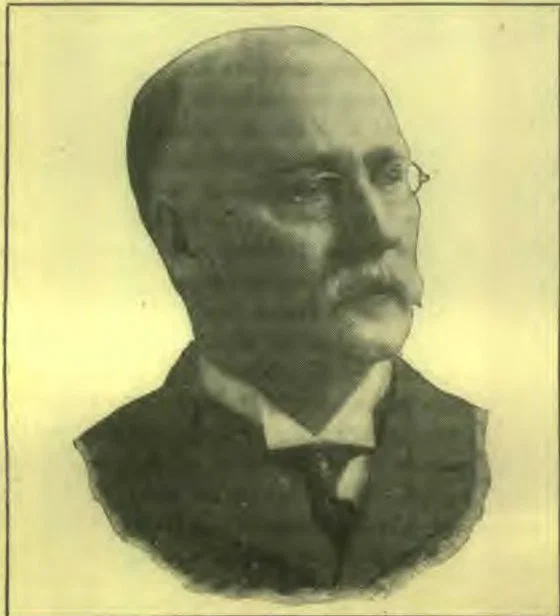
The Condition of a large section of the Protestant church is well set forth by the Presbyterian preacher and author, David James Burrell, D.D., LL.D., of New York, in the "Homiletic Review" of July, under the heading, "The Tendency of Current Theological Thought." Dr. Burrell says:
"'The examination for church-membership is, as a rule, far less searching in these times than that to which candidates for Free Masonry are subjected. The 'fencing of the tables' is quite out of fashion; and there is practically no such thing as church discipline.
"'And men are received into the ministry in the same loose way. No matter what they believe, gather them in! The process known as 'The Examination of Candidates for the Ministry' in ecclesiastical courts is usually a diaphanous farce. A theologue who is prepared to say that he is more than half inclined to believe that two and two make four or that a straight line is the shortest distance between two points is morally certain to get in. And once in, nothing but death or adultery (and this only when the public detect him in flagrant delicto) can put him out. Heresy-hunting is as preposterous as hunting the dodo. In many quarters church symbols are a dead letter; and ordination vows are trifles light as air.
"'What is the result? The Trojan horse is lodged within the gates. There are no notable and avowed infidels in the outside world to-day. The last of the old guard were Bradlaugh and Ingersoll. Brave men, they! On the heights above Elah they took their stand, brandishing spears like weavers' beams and shouting, 'We defy the armies of the living God.' TO-DAY THE ONLY INFIDELITY WORTH RECKONING IS THAT WHICH MASQUERADES IN THE LIVERY OF HEAVEN. Out of the belly of the Trojan horse come men in canonicals, regardless of oaths, laughing at creeds, explaining away the supernatural, flouting the ordinances of Zion, and demanding the right to be let alone while they unbolt the gates.'"
Three Classes in Protestantism.
This is the true situation set before us by an honored minister of Christ. He divides the church into three classes, the liberals, the conservatives, and a "middle-of-the-road" class. Of the first he says:
"'First, as to the 'liberals' of our time. Whither are they drifting? When a fragment of a heavenly body leaves its orbit the possibility of its return is infinitesimal; it wanders lawlessly evermore in boundless space. Truth is a circle; error is a tangent; wherefore, as Paul says, it increases unto more unrighteousness, it waxes worse and worse. This is one of the planetary laws.
"'The course of liberal thought is in evidence. It seems but yesterday when the boldest of free-thinking clergymen in evangelical pulpits could scarcely summon courage to deny the entire truth of any portion whatsoever of the Scriptures; to-day there are many who flout in toto the three miracles on which Christianity rests, to-wit, the Incarnation, the Atonement, and the Resurrection of Christ. There is nothing strange in the denial; the strange thing is that the deniers are ministers of Christ, under oath to preach and maintain the very doctrines which they deny. This is not 'liberalism;' it is infidelity. It is not merely infidelity; it is mendacity. It is not mere mendacity; it is a FLAGRANT VIOLATION OF COMMON HONESTY, and would be instantly branded as such in any of the common walks of life.
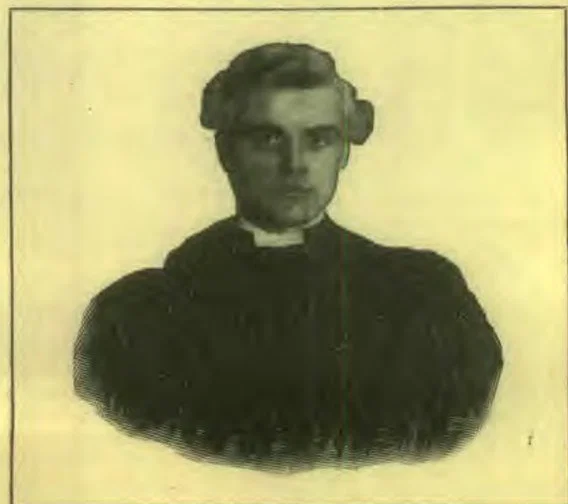
"'The pastor of the City Temple in London recently said: 'We believe that Jesus is and was divine; but so are we. His mission was to make us realize our divinity and our oneness with God. . . . The virgin-birth story has a beautiful meaning in it. It showed the action of the divine spirit on humanity; but to say that Jesus was born without a human father is untrue. . . . Sin is simply selfishness—an offense against the God within. We reject wholly the common interpretation of the Atonement, that another is beaten for our fault. . . . Every sin involves suffering, suffering which can not be remitted by any work of another.'
"'The man who uttered those words is the successor of Dr. Joseph Parker, who, not long before his death, said to the congregation of the City Temple: 'We have had our opportunities of meeting God here, of reading the holy word, and besieging, as an army might besiege a fortress, the altar, known by its crimson hue; and yet some day a man may arise who will deny the Lord that bought him, who will preach a Gospel without a Saviour, a salvation without a Cross; then write "Ichabod" upon the portals of this place, and let it be forgotten as a thing of shame, a memorial of unpardonable treason against the throne of God.'
"'It is clear that the 'liberals' have been moving rapidly. Their watchword is 'The New Theology;' but it would take an expert microscopist to detect the difference between this New Theology and the old infidelity. To-day Thomas Paine would find himself at home beside the occupant of the pulpit of the City Temple, London. His denials of Christian doctrine were scarcely so extensive as those which are advanced in some of our theological seminaries. But in the interest of common morals it12should be added that Thomas Paine, were he to return, would have the advantage over many of our preachers and theological professors in one particular; namely, he would frankly acknowledge himself an infidel. And all of us, whether admitting the truth of Scripture or not, will probably agree that 'an honest man's the noblest work of God.'"
Referring again to the ministry in particular, Dr. Burrell says:
"'It is matter of common fame among ministers that some are accustomed to make statements sub rosa which they never make and probably never would make in the presence of those who furnish the loaves and fishes. Is it possible to imagine a blacker form of turpitude than this? Welcome the day when the drawing of the lines shall force all such from cover! For there is really no neutral ground in the territory of truth and righteousness.'"
He refers to the conservatives as those who are dwelling on "the rudimental facts" of the Gospel and less and less upon the non-essentials. But aiming to do this very thing is what has brought many into the "liberal" fold. When men assume to judge in God's revelation what is and what is not essential, they place themselves upon the ground of the "higher critic," and will sooner or later be forced by the inevitable logic of the situation to reject the word. Dr. Albert Barnes well said that there is no command of God so small that we may ignore it, and he who does this is unworthy of God's kingdom.
Referring to the efforts at union, Dr. Burrell remarks:
"'The one great obstacle to such unity is unbelief within the church, unbelief in the pulpit, unbelief forcing its uncongenial presence into the fellowship of believers: for 'what concord hath Christ with Belial? or what part hath he that believeth with an infidel?' "
The Third Class.
The middle-of-the-road class are a very numerous class. They generally do not have knowledge enough of God's truth to enable them to decide among the rival standards floating, flaring, or hanging limp from the flagstaffs in the religious field.
Whatever may be said to the contrary, every one who observes knows that the great drift in Protestant churches is toward "liberalism," infidelity. There once was decided and country-wide protest at the utterances of the noted liberals; now they are tolerated by nearly all, regarded favorably by many, and acquiesced in silently or espoused and defended openly by others. The church is honey-combed with infidelity till many see no steady, abiding, religious home save in the Roman Catholic Church. For instance, the Rev. Newman Smyth, D.D., pastor First Congregational Church of New Haven, Conn., author of several works on Christianity, and a member of Yale corporation, in his Christmas sermon, Sunday morning, December 22, declared, as reported in the San Francisco "Call" of December 23, "that THE AGE OF PROTESTANTISM WAS PAST and that it was NO LONGER NEEDED. He said the churches were split up and were becoming more so every day. THEY NO LONGER HAD POWER OVER THE PEOPLE or the state. He said that the time for a new Catholicism was at hand, and that the sooner people realized it the better."
The same day Rev. Artemas J. Haynes, pastor of the United Congregational Church of the same city, declared "that neither he nor his church would take any part in the coming $6,000 a week revival by J. Wilbur Chapman. These two sermons, and Rev. Thomas McKay's trial, have shaken New Haven, the stronghold of Congregationalism in New England, to its depths."
But Congregationalism or Protestantism ought not to be shaken at all by such utterances as these, nor would either be shaken if they had not lost faith in God's word, the only true foundation of Protestantism. Roman Catholicism STANDS FOR SOMETHING; and that is praiseworthy. Professedly she believes God's word, and holds to its integrity; but she makes it void by exalting human tradition above it. Tradition in her creed interprets the word rather than the word shedding light on tradition. But many in Protestantism have utterly repudiated the word, and are left drifting derelicts, each trusting in himself alone, or in some one else who is equally adrift upon an uncharted sea. Better is Roman Catholicism with a positive SOMETHING, than such a jelly-fish religion as the higher critics, the New Thought, and the New Theology offer us.
But, reader, there is still a Biblical religion, a Christian religion, a Protestant religion,
Which anchors in God's promises;
Which believes and obeys God's precepts;
Which holds that Jesus Christ, the Way, the Truth, and the Life, is our only hope;
Which is broad-based on the great, eternal, unchangeable government of God with its immutable law, and on the great facts of redemption,—the Incarnation, the Atonement, the Resurrection of Jesus Christ;
Which protests against the human assumption of endeavoring to crystallize God's warm, living truth in a cold, rigid, dead, human creed, or attempts to enforce that creed by civil law;
Which bears the marks of God's own designation, "the commandments of God and the faith of Jesus." Rev. 14:12.