SAYS one writer: "The apples of sin are all poisoned at the core. And every unlawful pleasure we pursue is transformed at last into a hound that turns and rends us." There is a great truth in the words. The Scriptures express the same thought: "The wages of sin is death." "Sin, when it is finished, bringeth forth death." In every sin is a seed of death. It matters not how beautiful it may appear, how sweet to the taste, fragrant to the smell, or melodious to the ear, in every pleasure of sin lies hidden the germ of death.
But all this man will not believe by the evidence of his senses, because his senses are in harmony with the fleshly lusts, and are educated to pander to their demands. Man of himself, the natural man, can not, therefore, discern sin. He judges only by conscience and experience; but as conscience has been educated by the desires of the flesh and hardened by continually resisting its own admonitions, it becomes a very uncertain and erratic guide. And so with experience. No living man has experienced in himself all of the results of sin; for its ultimate result is death. He may have reaped some of its results, he may have seen them in others, but he is often persuaded that the same sin will not again result the same in himself, because it has not in others, and so the sin deceives and his experience becomes as uncertain as his conscience. This brings us to the all-important thought.
THE only way of knowing sin is by faith. But faith is not built on experience, nor on conscience, but on the word of God. "Faith cometh by hearing, and hearing by the word of God." That word is ever the same. The Spirit which inspired that word and enlightens our heart thru that word is ever the same. Sin, therefore, however changeable we may be, is ever the same. Says one apostle, "Sin is the transgression of the law." Says another, "Nay, I had not known sin but by the law; for I had not known lust except the law had said, Thou shalt not covet." It matters not, therefore, whether we may feel a certain thing to be sin or not, if the word of God calls it sin, it is sin, and if we have faith, we will accept it as such; and if in simple faith we acknowledge it as sin because God says so, and turn from it, the Spirit of God will give us a tender conscience and spiritual sense to see and feel the sin. John 16: 7-11; 2 Cor. 2:15, 16. But the Spirit brings feeling to the heart thru the word. John 6:63; Heb. 4:12.
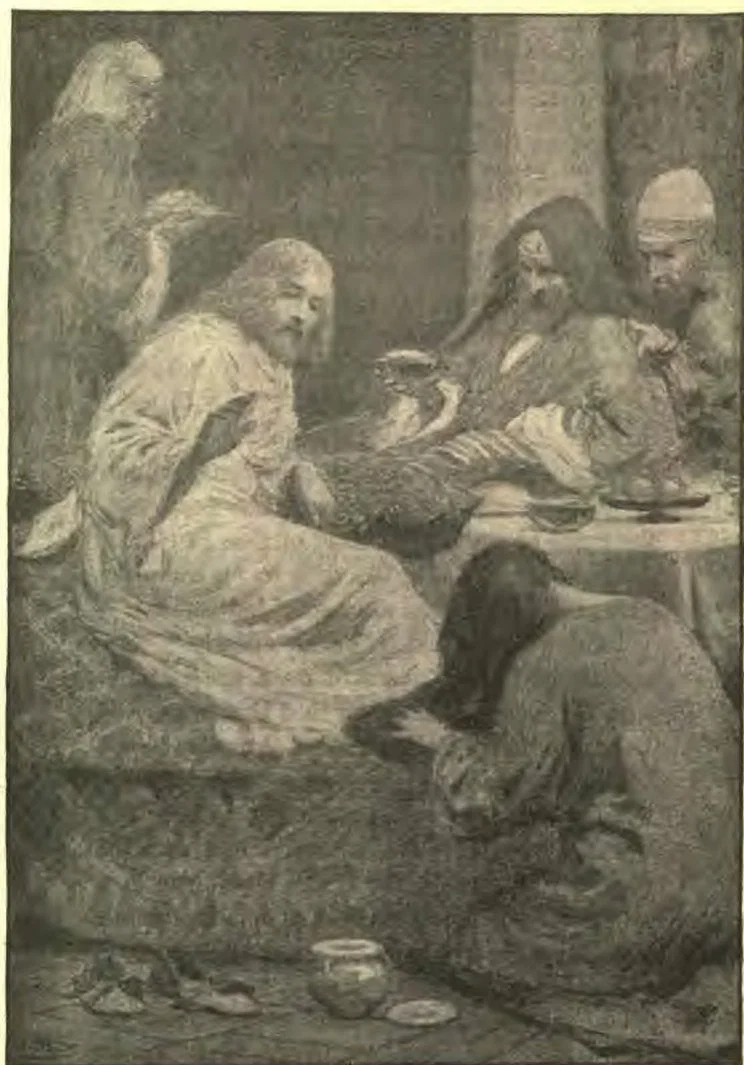
"And one of the Pharisees desired Him that He would eat with him. And He went into the Pharisee's house, and sat down to meet. And, behold, a woman in the city, which was a sinner, when she knew that Jesus sat at meet in the Pharisee's house, brought an alabaster box of ointment, and stood at His feet behind Him weeping, and began to wash His feet with tears, and did wipe them with the hairs of her head, and kissed His feet, and anointed them with the ointment. . . . And He said unto her, Thy sins are forgiven. . . . Thy faith hath saved thee; go in peace."
THE word of God, therefore, becomes an absolute necessity to salvation. In every sin is the seed of death. Walking in sin is walking in the way of death. But as we must know sin in order to turn from it, and as we can only know it by God's law revealed in His word, we must have a knowledge of that word, and simple faith in what it says. The word will then reveal to us not sin alone, but a Saviour from sin. It reveals to us the sin in order that it may reveal to us a Saviour. It shows us that we are desperately sick in order that we may be healed by the great Physician. It points out the exceeding sinfulness of sin, of sinful pleasure, that we may be led to choose those joys, those pleasures, which are unalloyed with base metal, and which never pall upon the heart. Reader, will you not look upon sin in all its deceptive forms the way God looks upon it? You may do this in the light of His word. Will you not also choose that Saviour from sin and sinning, who was manifested to take away our sins, that you may walk in the way of eternal joys? Is there a better time to choose than now? Why choose sin? Why not choose Christ?
JESUS is now the Friend of sinners; and therefore, sinner, whoever you are, however great your sins, He is your Friend. He cleansed men from that vilest of all physical diseases, the leprosy, by a word, to show to all that He has power and will to cleanse from the viler disease of sin. From the vile leper every one shrank with loathing, save Jesus of Nazareth. He loved the leper, but He hated the leprosy, and when the mind of the leper had faith to lay hold of the mind of Jesus, the leprosy was cleansed and the man was saved. The poor woman, despised by her kind, feeling to give the lowest of service if only so she might expiate her iniquity, is told in the life-giving words of the Master, "Thy faith hath saved thee; go in peace." And so Jesus hates the sin, but He loves the sinner; and when the sinner will renounce the sin, and by faith lay hold of Christ, the Healer, that same word which cleansed the leper will cleanse the sinner. The power which banished the leprosy will banish the sin. When He comes the second time, He will destroy all sin and all that is identified with sin. Those who forsake the sin now will welcome Christ at His coming as the dearest Friend4ever known, because He has delivered them from the worst enemy. Those who do not now renounce the sin will then be identified with it, and will be involved in its destruction. Jesus Christ wants to save you from that now. Will you let Him?