Our Great High Priest

2%

Our Great High Priest

1. Cf what was the ancient sanctuary with its holy places and priests (described last week) a type?
"Now of the things which we have spoken this is the sum: We have such an HIGH PRIEST, who is set on the right hand of the throne of the Majesty in the heavens; a MINISTER OF THE SANCTUARY, AND OF THE TRUE TABERNACLE, which the Lord PITCHED, and not man." Heb. 8:1, 2.
2. After what was the earthly sanctuary made?
"See, saith He, that thou make all things according to the PATTERN SHOWED TO THEE IN THE MOUNT." Heb. 8:5; Ex. 25:40.
3. What was this pattern which was showed to Moses in the mount?
"For Christ is not entered into the HOLY PLACES MADE WITH HANDS, which are the FIGURES of the TRUE; but INTO HEAVEN ITSELF, now to appear in the presence of God for us." Heb. 9:24.
NOTE.—There were two holy places in the earthly sanctuary. These are expressly declared to be the "patterns of things in the heavens" the "holy places" of earth, "the figures [plural] of the true." Heb. 9:24. The same thought is expressed in the original of verse 8 and 12, and of 10:19, where they should read "holy places." The holy places of the earthly sanctuary are typical of the HOLY PLACES of the heavenly sanctuary.
4. What furniture was found in the earthly sanctuary?
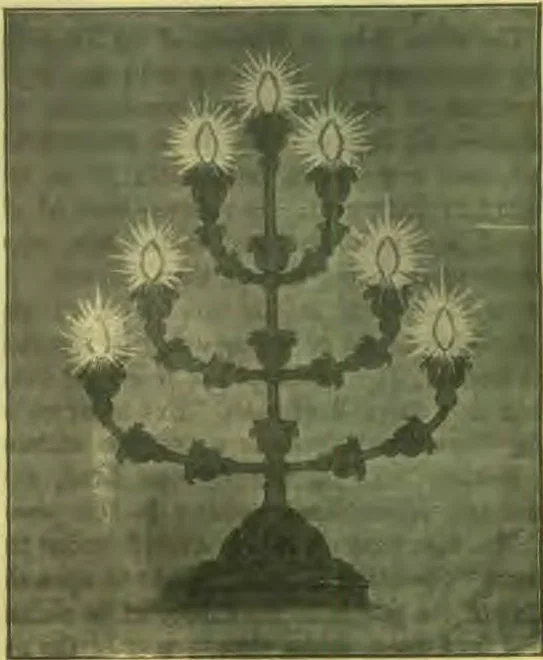
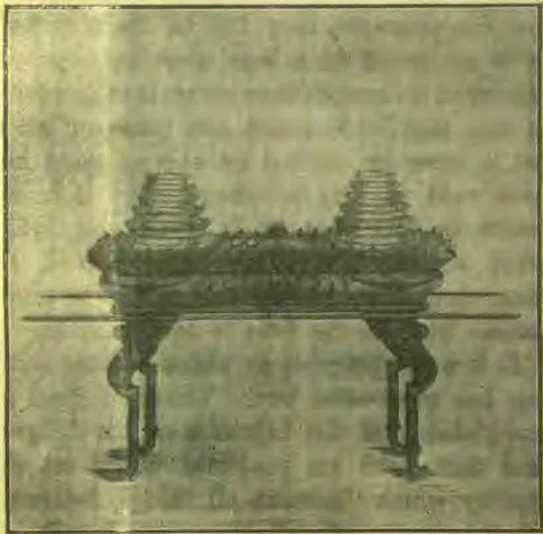
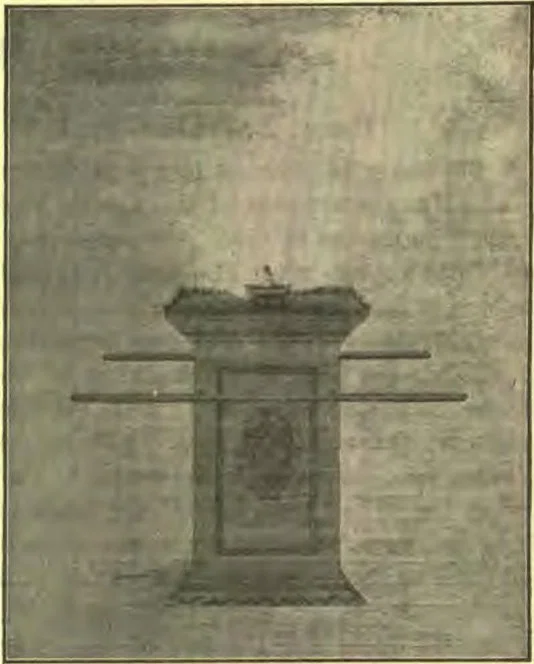
The candlestick, the table of showbread, the altar of incense; and in the most holy place, the ark of the covenant, testament, or testimony.
NOTE.—See last week's Bible study and the scriptures referred to, also Heb. 9:1-5.
5. Which of these did John see in heaven?
"A door was opened in heaven; . . . and there were SEVEN LAMPS OF FIRE burning before the throne, which are the seven spirits of God." Rev. 4:1-5.
"And another angel came and stood at THE ALTAR, having a golden censer; and there was given unto him much incense, that he should offer it with the prayers of all saints upon the golden altar which was before the throne." Rev. 8:3.
6. At a later time in earth's history, after the opening of a door in the heavenly temple, what did John see?
"And the temple of God was opened in heaven, and there was seen in His temple THE ARK OF HIS TESTAMENT." Rev. 11:19.
7. To what then did the earthly priests serve in the earthly sanctuary?
"Who serve unto the EXAMPLE AND SHADOW OF HEAVENLY THINGS." Heb. 8:5.
8. Why were they many priests?
"They were not suffered to continue by reason of DEATH." Heb. 7:23.
9. How does Christ's priesthood differ?
"But this Man, because He CONTINUETH EVER, hath an UNCHANGEABLE PRIESTHOOD." Verse 24.
10. How often did they officiate in their round of service?
"Once every year." Heb. 9:7.
NOTE.—"The priests went always [continually, daily] into the first tabernacle," or holy place (Heb. 9:6), relates to their regular, daily service, of one lamb in the morning and one in the evening, with such other offerings as individuals and special times might call for. The regular daily offerings and Sabbath offerings are described in Num. 28:3-10. These were offered daily throughout the year in the holy place.
11. How often did the priest minister in the most holy place?
"Into the second [apartment, the most holy] went the high priest alone ONCE EVERY YEAR." Heb. 9:7.
12. What was the character of this yearly service?
To cleanse the sanctuary "because of the uncleanness of the children of Israel, and because of their transgressions in all their sins." Lev. 16:16.
13. Why was this necessary? and how was it carried out?
See the following note.
NOTE.—Every individual offering (described in the first seven chapters of Leviticus) offered in faith by the sinner, together with the daily offering, transferred in figure thru the blood of the sacrifice or the person of the priest the sins of the penitent to the sanctuary. When the priest sprinkled the blood upon the altar before the ark, he there left, so to speak, in figure, the forgiven sins of the people of God. This work went on for the year. On the last day of that year, the tenth day of the seventh month, the high priest, after offering for himself, took two goats, over which he cast lots, one for Jehovah, one for the scape-goat, or better, the proper Hebrew noun Azazel, "the strong one who revolted," or Satan. See Lev. 16:8, margin. The Lord's goat was slain, its blood taken into the most holy place and sprinkled upon the mercy-seat, all the sins of Israel were confessed, taken by the priest, brought out, and laid upon the head of the goat "for Azazel," confessing "over him ALL THE INIQUITIES OF THE CHILDREN OF ISRAEL and all their transgressions in all their sins." Then this scape-goat was sent away by a fit man into the wilderness, and tradition tells us was there destroyed with all the sins. Israel then stood free from sin. Every soul who in faith availed himself of these provisions of the Lord for putting away of sin stood free before God; but every person who did not afflict his soul was "cut off from among his people." Lev. 23:29. That day, therefore, the tenth day of the seventh month, became a day of judgment to that people, the completion of a round of service, typical of Christ's entire priesthood.
14. When and where did Christ enter upon His work?
"For the law [the ceremonial law of priesthood] maketh men high priests which have infirmity; but the WORD OF THE OATH, WHICH WAS SINCE THE LAW, maketh the Son, who is consecrated forevermore." Heb. 7:28.
"Which He wrought in Christ, WHEN HE RAISED HIM FROM THE DEAD, AND SET HIM AT HIS OWN RIGHT HAND in the heavenly places." Eph. 1:20.
15. What is He here?
"HEAD over all things TO THE CHURCH." Eph. 1:22.
16. What and where did Christ first minister?
"Neither by the blood of goats and calves, but by His own blood He entered in once ["for all," A.R.V.] into the holy place [literally, holy places], having obtained eternal redemption for us." Heb. 9:12.
NOTE.—All of Christ's ministry was ever with the ultimate view of putting away sin. When He began His ministry in the heavenly places, that sanctuary and priesthood were consecrated for the good of His creatures to that work, even as was the first sanctuary, the "figure of the true." This dedication included both places. Ex. 40:9-15; Dan. 9:24; Heb. 1:9. As the priest in the earthly sanctuary ministered ever in view of the day of atonement, the yearly judgment, so Christ has ministered in the holy place above in view of the work of judgment in the end of His ministry. He began in the sanctuary above where are the seven lamps and altar of incense (Rev. 4:5; 8:3), in the end of His ministry He will enter the most holy place before the ark for his last act of service in the judgment (Rev. 11:19).
17. What will be done in His closing work and why?
"It was therefore necessary that the patterns of things in the heavens [the earthly sanctuary] should be purified with these; but the HEAVENLY THINGS THEMSELVES with better sacrifices than these." Heb. 9:23.
NOTE.—This purification, or cleansing, is not from physical defilement, but from the remembrance of sin. During the centuries since Jesus entered upon His priesthood the sins of those who have professed His name have been recorded on high. In the end of His ministry, the time of the judgment, all cases will come before the throne for examination and judgment.
18. What will then take place for those who have been faithful?
"Repent ye therefore, and be converted, THAT YOUR SINS MAY BE BLOTTED OUT, when the times of refreshing shall come from the presence of the Lord; and HE SHALL SEND JESUS CHRIST." Acts 3:19, 20.
NOTE.—The blotting out of sin, the purification of the heavenly sanctuary, will occur during the time of the outpouring of the Spirit, just before Jesus shall come.
19. What will take place concerning those who have been unfaithful?
Their names will evidently be blotted out of the book of life, and their sins retained, inasmuch as the Lord declares of the overcomer, "I will NOT blot out his name out of the book of life." Rev. 3:5.
20. What sad statement will be made in heaven when Christ's work is finished for all who will receive Him?
"He that is unjust, let him be unjust still; and he which is filthy, let him be filthy still; and he that is righteous, let him be righteous still; and he that is holy, let him be holy still." Rev. 22:11.
21. What is the next great event?
"And, behold, I [Jesus] come quickly; and My reward is with Me, to give every man according as his work shall be." Verse 12.
[See also books advertised in other columns on this subject. The next reading will be on the TIME OF THE CLOSING WORK OF CHRIST AND THE JUDGMENT.]
The seven-branched candlestick, a symbol of the fulness of the Spirit of God. Rev. 4:5; Isa. 11:2.
The table of showbread, or bread of the Presence, typical of the word of God, thru Christ, upon which the believers feed. Jer. 15:16; John 6:33, 63.
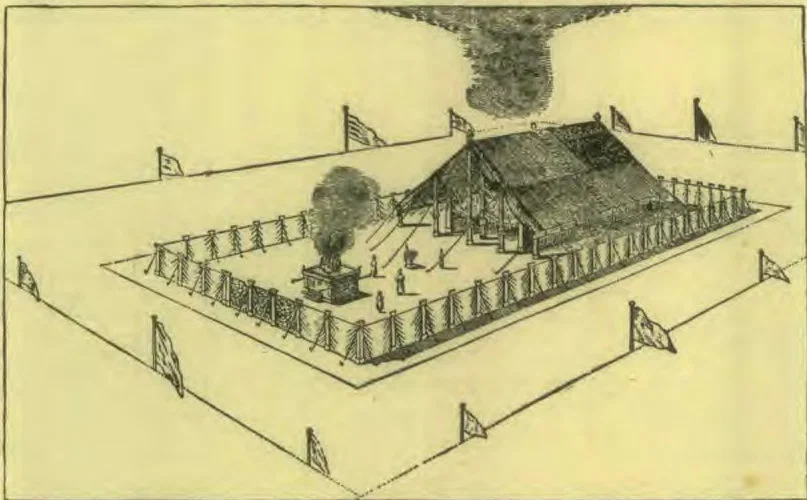
Diagram of the sanctuary and its tent, the court, and the standards of the tribes, whose tents were pitched around the tabernacle. The four larger, central standards represent those of Judah, Rochon, Ephraim and Dan. See Numbers 2. In front of the tabernacle note the altar of burnt-offering where the sacrifices were slain, and the lever where the priests washed.
Altar of incense, the incense representing God's effectual grace, making acceptable the prayers of imperfect mortals. Rev. 8: 3.