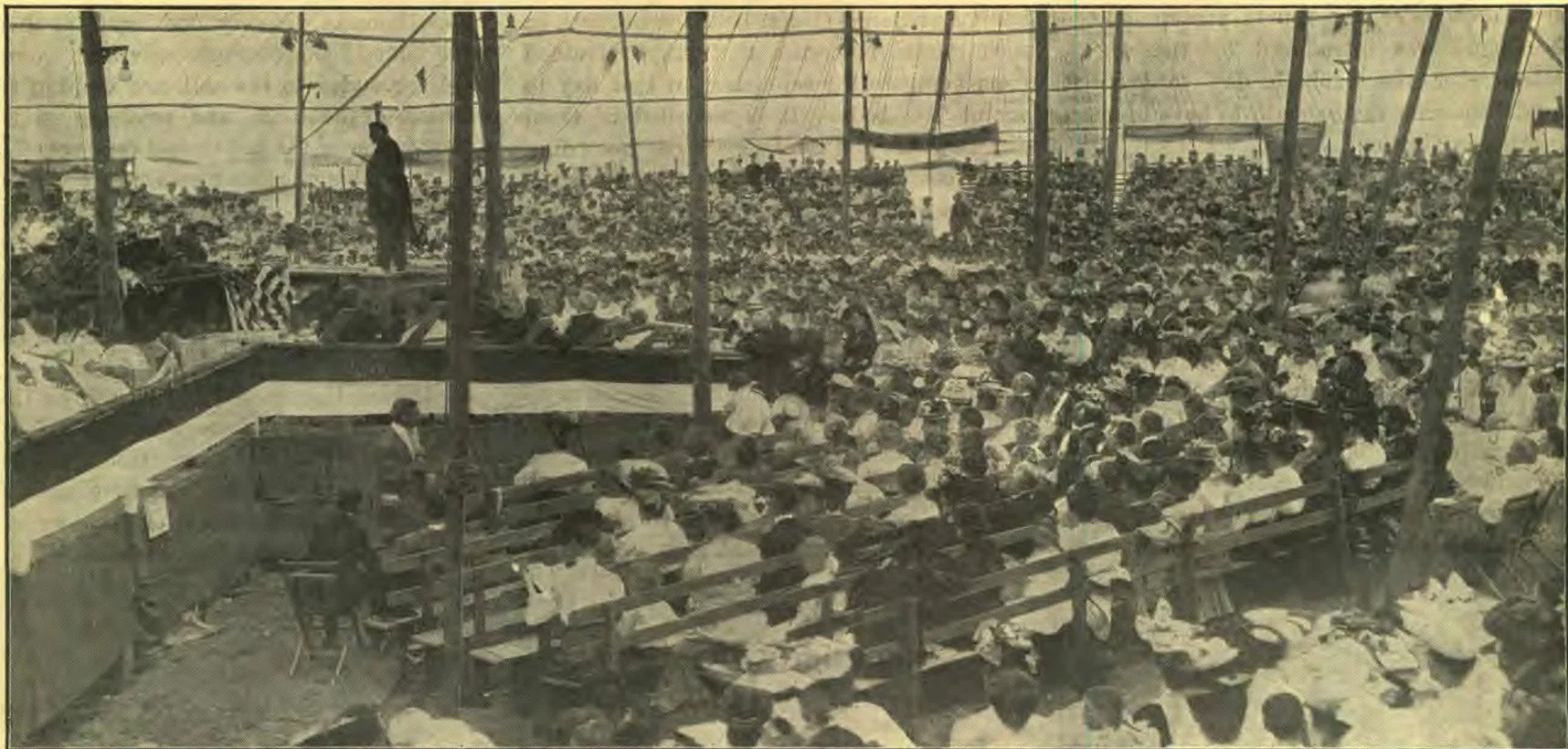
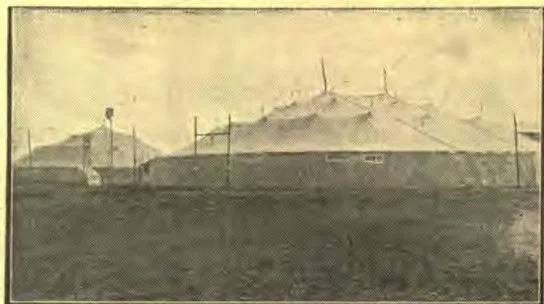
THE Twenty-third International Convention of the United Society of Christian Endeavor was held at Seattle, Wash., July 10-15. It was, indeed, a great gathering; and far more important in the scope of its plans and measures adopted for far greater undertakings than any other convention of the United Society in its history. As stated by Dr. Francis E. Clark, the founder and president of the society ever since its humble beginning in the lecture-room of the Williston Church, Portland, Me., in the very first meeting of the convention: "Christian Endeavor stands for good citizenship, and I believe this will be noted as preeminently the good citizenship convention." And so it will be; for the question—and its discussion—of good citizenship was beyond and above all other questions—social, economic, political, and religious—dealt with by the convention. Good citizenship was the paramount theme. Closely ranged to that, and receiving, perhaps, fully as much attention, came federation—federation of the societies, of the churches, of the nations. The divisions and subdivisions of the various themes and subjects handled by the conference—for such it was—may all be very properly grouped under these subject-leaders: Training, Citizenship, Federation. With the whole world their field, delegates from practically every country on the earth joined together in the formal opening and inauguration of the twenty-third convention, which was held in a mammoth canvas auditorium seating ten thousand persons. The green and white official colors of the society, and the flags of many nations, were lavishly displayed about the tents, and ten thousand colored electric lamps lent brilliancy to the scene. Church and State was well represented. Hon. Albert E. Mead, governor of the State of Washington, delivered the address of welcome upon the part of the civic government; while City Engineer R. H. Thomson represented the municipal government of Seattle in welcoming the convention and its delegates. Dr. M. A. Matthews, of the First Presbyterian Church, and representing the hundred and two churches of the city of Seattle, welcomed the convention upon behalf of these churches. I quote a portion of his remarks:
"Our two great crimes are the open saloon and Sabbath desecration. . . . Our Sabbath desecration is making of this an immoral and criminal nation, and unless we stop, repent, and properly observe God's day, we will have to suffer an awful national judgment. As the waves of civic righteousness have rolled from the Atlantic to the Pacific, and from the Pacific back to the Atlantic, let this convention speak as never before upon the question of good citizenship. We ask this convention to urge every Endeavor Society in the world to spend at least one-third of its time teaching the principles of civic righteousness and the virtues of good citizenship. We ask you to demand international peace, which comes as the result of victorious righteousness."
Following the address of Mr. Matthews, a message of greeting from President Theodore Roosevelt was read, as follows:
"The White House, June 2, 1907.
"Washington.
"My dear Mr. Shaw: I thank you for your letter. Thru you I wish to extend to the International Christian Endeavor my heartiest good wishes for the admirable work they are doing. Let me in particular express my earnest hope that you will emphasize as one of the features of your convention the need that the Endeavorers should take a first rank in good citizenship. I am glad you are to endeavor to bring this subject so prominently before this meeting.
"It will be an honor to accept honorary membership in your Christian Endeavor Patriots League, for I am sure that with the general purposes and efforts of that league I shall have the heartiest sympathy, tho of course I could not commit myself in advance to agree with all of their views without knowing them.
"I wish you God-speed in your work, because the Christian Endeavorers are working for the things that are vital to the soul, and I believe that they can do much that is of the greatest value to the cause of good citizenship; for in the last analysis the fundamental requisite of good citizenship, from the standpoint of the country, is that a man should have the very qualities which make him of real value in the home, in the church, in all the higher relationships of life.
"Faithfully yours,
"THEODORE ROOSEVELT.
"Mr. William Shaw, General Secretary, United Society of Christian Endeavor.
"Tremont Temple, Boston, Mass."
The message was received with tremendous applause.
Following the President's message, President Clark gave his annual address. I quote a paragraph or two:
"The Hague Conference is in session, and more conferences will be held, I believe, until at last men beat their spears into pruning-hooks and nations7learn war no more. Thousands of Christian Endeavor conferences have been held, each one a training school in denominational comity, and they will continue to be held until sects, tho still loyal to their own tenets, together wage war for the conquest of the world to Christ. Christian Endeavor is The Hague of the denominational world, and every convention is a conference of The Hague, where Christians of many denominations can look one another in the face, grasp one another by the hand, and swear allegiance to the common Lord and Master of us all.
"Already the signs of the blessed unity which the world never knew before appear on the horizon. In Canada, in Australia, in the United States, in Great Britain, the first steps are taken toward a federation of the churches, while each may hold in peace and love its own views of doctrine and polity, for the thousands of Christian Endeavor training classes in brotherhood have not been held in vain."
The address of Secretary William Shaw, giving statistics, indicates the remarkable and rapid growth of Christian Endeavor, the greater part of which has been accomplished in the latter half of the quarter century of its existence.
It showed 69,000 societies in the world; 3,456,900 members in all; gifts for missions and other benevolences aggregate $4,378,920 for two years. In twenty-six years it has held thirty-seven million young people's meetings, and 70,000 union meetings and conventions, and in the same length of time has expended the vast sum—measured in the comparative scale of financial missionary effort—of $15,000,000. Its societies extend to sixty evangelical denominations, and its literature is printed in eighty different languages. To-day, its membership is growing with a rapidity that is absolutely unequaled. Who can fail to see that it is a real force whose influence and impulse and future activity can hardly be measured.
F. Edgar Barth, chairman of the general committee for 1907, said:
"We welcome you because of the mighty impetus you have given the movement for international peace, hastening the day of universal brotherhood among mankind."
Following the initial meeting, there came, day by day, a multitude of meetings. It would be impossible to give anything more than a brief review of the sayings and the doings of the convention. Two great meetings were simultaneously in progress: the one series in the canvas auditorium; the other series in the First Presbyterian Church. Besides this there were scores of meetings, business and committee, for praise and song service, in scores of the city churches. Like a great crusade of the early centuries, the convention made itself felt in every walk and phase of both the civic and religious life. "All for Christ and country and world," was the motto of the convention, and it was the morning Times that referred to the movement as "a potent force in the crusade in behalf of Christianity."
About 7,000 delegates and some 6,000 friends came to the convention, far-removed as it was from the thickly populated Atlantic seaboard. From Alaska and Russia, the British Isles and Hawaii, Japan, Canada, and Mexico, and even the far-away Transvaal, came the friends and supporters of Christian Endeavor.
The evils of gambling, of card-playing, of horse-racing, intemperance, divorce, social impurity, degradation and vice, prohibition of the liquor traffic, and many kindred subjects—all these received attention and consideration both in public and committee meetings; but of all this I need not write.
Suffice it to say, that it was only a repetition of that which has been said upon the subject by the Christian church and its organized forces for half a century past, and the questions seem no nearer satisfactory conclusion than in the days of that ancient king who made the death penalty the punishment for drunkenness. The three subjects of consideration—Federation, Citizenship, Patriotism,—themes securing, in fact, the right of way in precedence over all others in the conference, and most likely to exert a powerful influence upon the body politic, these must receive the greater recognition from your correspondent as they did upon the part of the conventionists. First, Federation: from a united society to a world federation of Christian Endeavor in the fullest sense is the step taken at the Seattle Convention.
Said Rev. L. S. Hall at the "Reaching-out Services:"
"I am not a prophet, but I believe in prophecy. I believe that some day the world shall witness the union and cooperation of all Christian denominations to the fulfilment of our Lord's great prayer 'that they all may be one.' When this great triumph of Christianity shall have become history, I believe no small part of the credit will be due to the interdenominational democracy of the Christian Endeavor movement."
Mr. Van Ogen Vogt said:
"It is not fair for certain societies in a city to say, 'We want a new federation in which we will be included.' They should be willing to come into the Christian Endeavor Society and become a part of it in work and activity. The Christian Endeavor is a federation itself. I look for the day when the Christian Endeavor shall be a power that will teach us to move against the great evils of the world and conquer them."
Rev. W. I. Chamberlain, missionary of the Reformed Church of America in Ceylon, said:
"We may work together for one purpose, and go on and on in the grand Christian enterprise until Orient and Occident can clasp hands, and all denominational chasms will be bridged."
Rev. Benj. B. Tyler, Denver, Colo., said:
"That old bachelor on the banks of the tawny Tiber at Rome tells us that the Catholic Church is united and that Protestantism is sundered by all sorts of schisms, and that its unity under one flag and one emblem is impossible. Let me tell you that we have already found the flag, which is the flag of Christ, and the emblem is His blood. The church will soon be united, and the work of making that possible is the task that belongs to the Christian Endeavor."
(Continued on Page 11.)8
## The Christian Endeavor Convention.
(Continued from Page 7.)
"Christian Endeavor a Federation," was the keynote of all the addresses at the great meeting in Tent Williston on Friday morning. The topics, Christian Endeavor and Church Union at Home; Christian Endeavor and Church Union in Mission Fields; Unity in Spirit and Service; Christian Endeavor a World Organization; Advantage of Interdenominational Society, will serve to give the reader some idea of the scope, and the object toward which Christian Endeavor directs its energies and its effort. Briefly, Christian Endeavor Society is to be a vast world organization—interdenominational, international, inter-racial—a federation of the religious world that bids fair to out-distance all others, at least in reaching the masses, and, perhaps, in molding the thought, and consequently, the affairs of the nations. The truth must be recognized that these are times of great possibilities. So much for the federation part of the Christian Endeavor movement.
Following is the text of the cablegram sent to General Horace Porter, the representative of the United States at the peace conference at The Hague:
"North American Christian Endeavorers in convention assembled assure you of sympathy and urge acceptance of the interparliamentary plan."
President Clark, amid tumultuous applause, said:
"Three million American Endeavorers behind them will strengthen the hands of the delegates and advance the cause of peace. It is only a matter of a few years when war will be no more, and one of the most potent factors in bringing about this much desired object will prove to be the Christian Endeavor movement."
The coming of Vice-President of the United States, Charles Warren Fairbanks, was the one great event—social event at least—of the convention. The Portland Oregonian, in its issue of July 9, and prior to the convention, had said that the coming of the Vice-President might "turn the Endeavor Convention into a political camp," and launch a Fairbanks boom for the presidency! And such actually proved to be the case, to which statement all of the public prints will attest. Mr. Fairbanks came to Seattle on Thursday. It is to his credit—and for which he is to be honored—that Mr. Fairbanks, in unqualified terms, positively refused to consider political questions at all, and would hazard no opinion as to political aspects. Let me quote a caption of an article that appeared in the morning Times of the 13th instant:
"Roosevelt's Successor Named. Christian Endeavor Methodist Meeting Becomes a Political Gathering and Selects Indianian as Nation's Chief. Wild Enthusiasm Surprises Delegates."
A Canadian minister thus informally nominated Mr. Fairbanks for the presidency in a religious meeting, and when the demonstration subsided, Rev. E. L. Dill, of Oakland, Cal., said:
"Our brother from across the border may be accused of injecting politics into this Christian Endeavor meeting, but if to indorse a man for the presidency who believes in the purity of the home, the overthrow of vice, the destruction of the saloon, and the purification of American citizenship, is to be called politics, then I am perfectly willing to have this meeting go on record as supporting Charles Warren Fairbanks for the presidency."
This speech was greeted with tumultuous applause. Mr. Fairbanks' address to the convention proper was "Our Country." In still another meeting, the mention of the name of Mr. William Jennings Bryan as a possible future president was met by handclapping and applause, and all this without one word of public protest. But there still follow the Patriotic League and Good Citizenship; and of these I will write next week, and show that Christian Endeavor proposes to use the ballot-box of the political for the purpose of the conquest of the civic government in the interest of Christian citizenship.
JOHN S. WIGHTMAN.
Seattle, Wash., July 16, 1907.
Convention in Session.
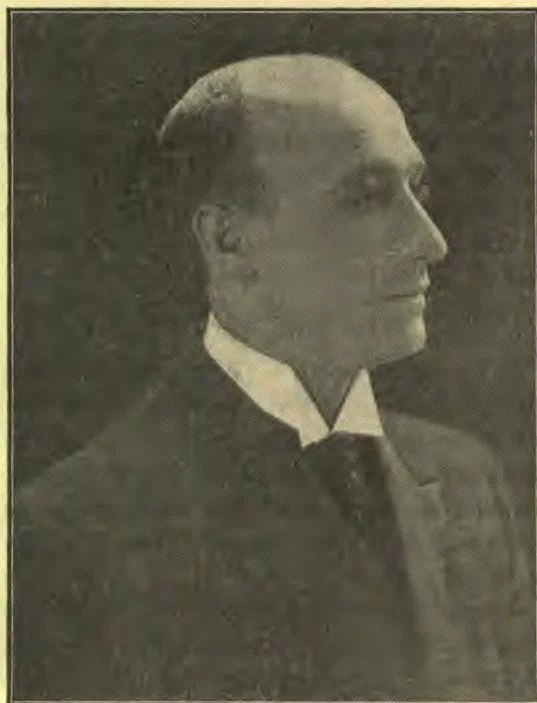
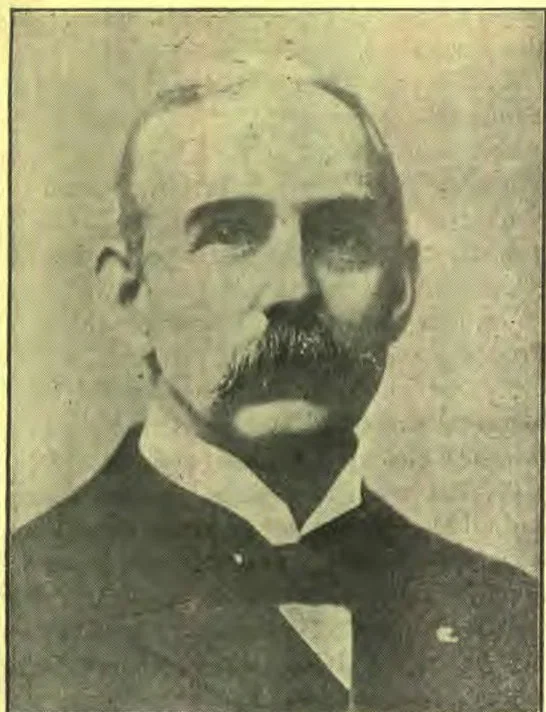
Rev. Charles Stefaie, of New York City, who startled the convention with the statement: “The church must capture the labor movement, or the labor movement will capture the church!”
Francis E. Clark, D.D., L.L.D., President World's Christian Endeavor Union.
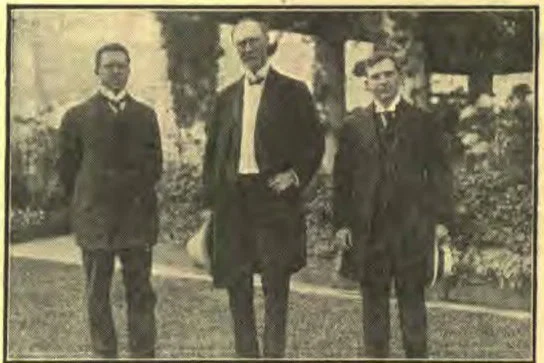
Christian Endeavor Meeting Tents, and Dr. Frank Horsfall, President Reception Com., Charles Warren Fairbanks, Vice-Pres. of the U. S., and F. Edgar Barth.
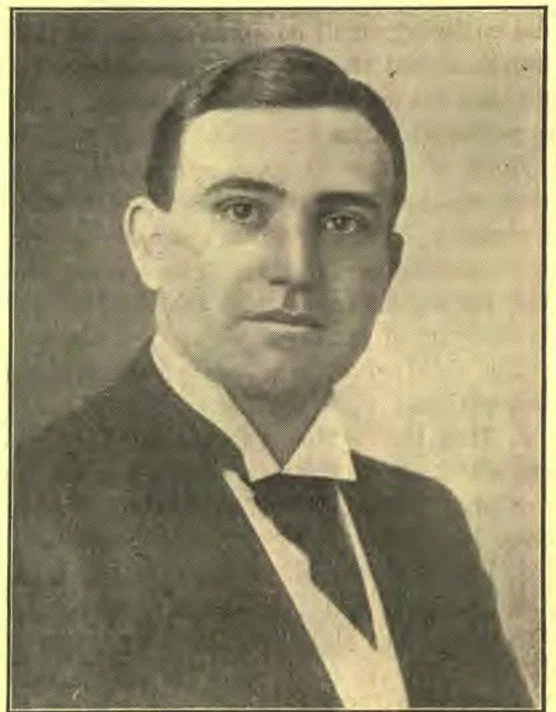
F. Edgar Barth, Chairman General Committee for 1907.
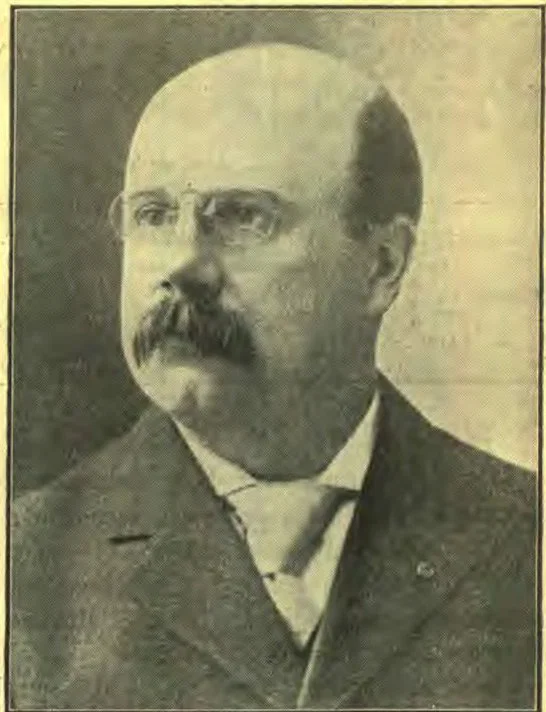
William Shaw, General Secretary United Society of Christian Endeavor.