THERE is at the present time unrest among the people of India. Mutterings of dissatisfaction with the government have grown into louder denunciations of the English, and in several places open riots have occurred, the rioters assaulting English officials and doing damage to property. During the last few months there have been riots in different places. At Rawalpindi, in the north of India, a Hindu mob burned buildings and destroyed property. At Allahabad, a local magistrate and other Europeans were assaulted. At Delhi, hatred toward the English Government was shown by defacing the statue of her late Majesty, Queen Victoria, and the crown of its head was broken off. In Bengal and in Madras disturbances have also occurred and the military has been called out.
The movement of unrest is wide-spread, and there is a feeling on the part of some that India is bordering on a revolution. The English Government, both at home and in India, is not a little concerned. The Secretary of India in the Home Government said in Parliament that disorders had assumed a very grave aspect and had created a feeling of uneasiness in all parts of India.
As to the causes of the present unrest, there seems to be no general agreement. The bureaucracy of the government, the partition of Bengal, the victory of Japanese arms, the awakening of the mental faculties of the people due to the extended facilities for education during recent years, are each assigned as reasons. The Prince of Wales in his Guild Hall speech pleaded lack of sympathy in the administration. In the words of Mr. Morley, he said: "The danger in India is the creation of a government of bureaucratism, competent, industrious, and faithful, but likely to become mechanical, lifeless, and soulless."
Undoubtedly Japan's success has awakened the whole East to new hopes and desires. The news of each Japanese victory in the late war went thru India like an electric shock. Never before has the East met and defeated the West. And the Indian says: "Why should India not be independent? If the Japanese with their own weapons have gained an honorable place among the nations, why can not Indians do the same?"
Perhaps the cause which lies back of all other causes is education. Schools and colleges provided by the government and various mission societies have produced a large class of educated Indians who want a voice in the administration. Their education has not had the practical turn. They have not been taught to be successful farmers and tradesmen, but to wield the pen at some clerical profession. Hence the desire for office. Their place in the government has been hitherto subordinate. The administration of India, outside of the native states, rests almost wholly with the English Parliament, the Secretary of State for India, the Viceroy, and his advisors, who are mostly Englishmen. Educated Indians now demand a voice in governing the country and with how much they will be satisfied is a question.
The Agitators.
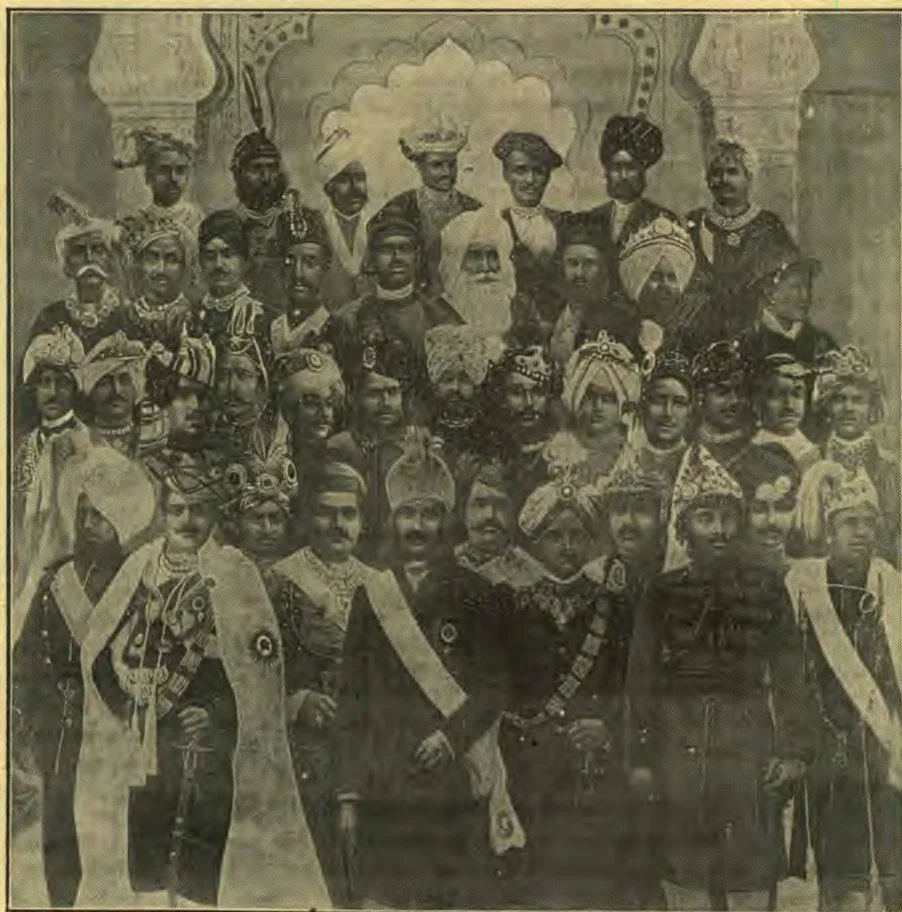
The Ruling Princess of India. Those Governing Native States Have Some Power, Others Little or None.
Agitators are springing up in many places, and with voice and pen are taking strong positions. Articles of an inflammatory character have been written by men of influence against the government. At first the officials winked at these dissemblers, but now editors of seditious papers are being tried, and in some instances their papers suppressed.
What the outcome will be is hard to say. The cry of Asia for the Asiatics is not a cry of peace. Should the winds of strife be let loose and the millions of India provide themselves with arms and ammunition, it would not take long to drive the few white faces of this country into the sea.
The native Hindu becomes a wild animal in time of war. That fact was shown in the Sepoy Mutiny of 1857, just fifty years ago. Then the uprising was among native soldiers, or Sepoys, who began at Meerut, slaying their officers, and made their way to Delhi, which became the headquarters of the uprising. Their first success led the Sepoys to think that they could throw off British rule. At Cawnpore there was a terrible massacre. The history of that time reads like a hideous dream. In speaking of the outrages at Cawnpore and Lucknow in the days of the Mutiny, a writer in a current magazine makes the following statement: "At Cawnpore they succeeded by treachery in isolating the women and children. These they imprisoned in one building and sent in butchers with axes to cut them to pieces. Not one human being escaped; but the floors, ankle deep in blood, and the fragments of flesh told the awful story to the brave rescuers who arrived too late to prevent the massacre. At Lucknow, the women and a few soldiers and a number of faithful natives barricaded themselves, and, after a long struggle with hunger and plague, were saved by Colin Campbell and his brave Scotchmen. Delhi held out to the last, but thru the bravery of Nicholson and his little force, it, too, was taken."
May God now spare India from another like experience. His work is not yet finished. But few of India's millions have heard the Gospel, and scarcely any know of the second coming of Christ and the grand truths connected with it. The angels which stand upon the four corners of the earth must still hold in check the elements of destruction until the glad tidings of salvation are sounded in the farthest corners of India's heathenism.
British rule in India is, no doubt, serving the wise purpose of God in protecting His servants and furthering their efforts while advancing the knowledge of Christ in the strongholds of India's darkness and superstition. Thru her, peace has been maintained for more than half a century. Thru her, railways plying to all parts of the country have been built, a postal and telegraph system effected, and schools and colleges, turning out yearly thousands of youth, have been established. All these are for the advancement of knowledge, and are mighty agents in the furtherance of present truth.
As in centuries past, God sets up kings and removes kings to suit His own purpose. The Babylonian nation was granted power to take the Jews captive because of their disobedience, and Nebuchadnezzar, whom God called His servant, was sent to lead them into captivity. When the seventy years expired the time came for their return, and Babylon was overthrown and another nation was granted power to perform His will. "Cyrus," says Isaiah, "is My shepherd, and shall perform all My pleasure; even saying to Jerusalem, Thou shalt be built; and to the temple, Thy foundation shall be laid."
So England is God's servant in India, and we may be safe in saying that no other nation could have done what she has done. Like sentries on commission, she holds at bay the elements of death while the sentinels of truth flash forth the light and complete the purpose of God in giving India the Gospel of Christ.
There is a time coming when the Orient will arise with the cry of war, and we are now hearing but faint mutterings of the coming storm. India is awakening from the sleep of centuries, she is coming in touch with the warlike spirit of the West which will terminate in the great struggle of the ages. The present hour of peace is but the call of God to His servants to finish the work. "The night cometh when no man can work."