SCIENCE is accustomed to control-experiments, in which all the accompanying conditions can be carefully arranged beforehand with the two or more subjects which are to be tested, so that differences in results, if any, can be more accurately compared, and the exact cause of these differences definitely determined.
But in many departments of scientific study, we cannot control beforehand the work of nature; we can only select, as best we may, various pieces of work ready-made by nature, of course without any regard to our curiosity as to the causes of things.
In history, for instance, we have to take things as we find them. Human beings are not like rabbits or guinea pigs, that we can place under control-conditions, experimentally testing out our theories as to what influences produce the best men and women, or the best kinds of government.
Economic or Biblical — Which?
No one historical example can be sufficiently free from complications to determine satisfactorily just what causes have produced the effects observed. But the trail of time is long, with many a turn; and typical examples may be found in such abundance as to leave no room for doubt regarding the causes that have largely contributed, for instance, to the making or unmaking of peoples and nations.
It is the fashion nowadays to attribute the condition of a community or a nation chiefly to economic causes. But all down the pathway of the ages, it has really been the cherished moral and religious ideals, or the lack of them, that made individuals or peoples what they were. The Bible and its religion have actually done more to ennoble and uplift individuals and nations than all other causes put together.
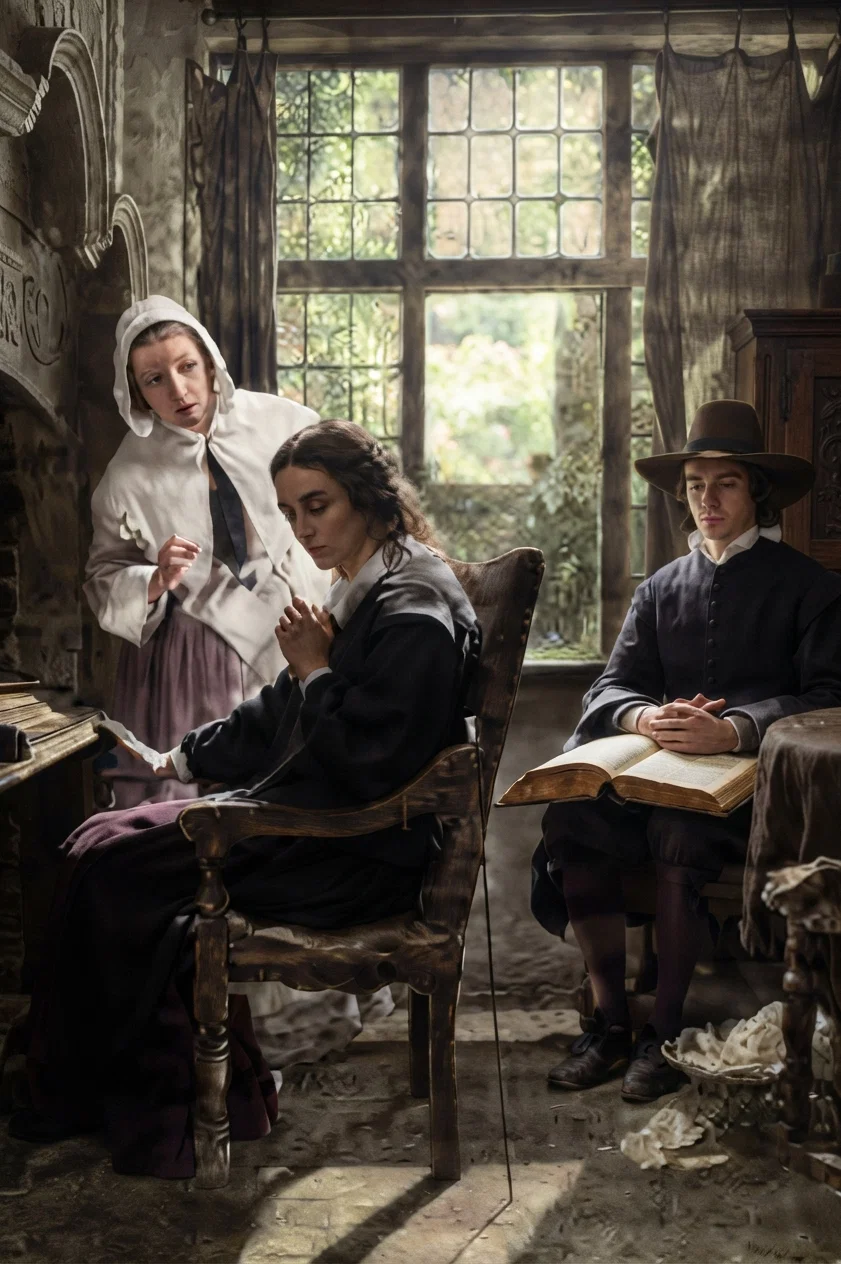
Permit the writer to go back, in his memory, almost to the extreme eastern limit of the continent. He sees a small community of comfortable farmers. There are well built schools, and churches that are filled every week. There are no saloons, few flagrantly immoral persons, and no helpless and hopeless poor. The younger generation are growing up with a foundation and sturdy morals, some staying on the old farm, some going out to fill places of responsibility in the government, or in such universities as McGill, Harvard, or Princeton, or to enter private professional life, like ministering angels attending to the needs of mankind.
A Life's Crowning Halo
A typical home in this countryside shows us a venerable though very vigorous looking old man, whose descendants or relatives comprise most of his neighbors. In the forest primeval, he had selected a location, and with his own hands had cleared the broad acres for his home. He defrauded no one, he oppressed no one; but his various lines of industry gave work to many a young person starting out in life, his home was always open to the weary traveler, and his advice was sought in all matters relating to the public good. He did his duty in the community, and lived at peace with God and man.
The wife and mother was fitted to adorn any home in the land. Somewhat younger than her husband, she was yet past middle life, with a sweet, sympathetic intellectuality that comes only as the crowning halo of a saintly life spent in self-sacrifice and self-discipline for the good of others. A frail, delicate creature, she had been a semi-invalid for years; but a servant or two looked after the house, while she sedulously devoted herself to her two boys.
This loving and intellectual Christian home could be found duplicated in almost every land.
Her knowledge of the Bible was profound, for it was not merely at morning and evening family worship that the sacred volume was read. She knew by heart chapter after chapter, almost whole books; and the children sometimes in a playful way sought to puzzle her by trying to read or repeat a text that she could not at least approximately locate.
Familiar with the Best
But it was not the Bible alone with which she was familiar. The poems of Addison, Watts, Cowper, Wesley, Milton, Young, and Pollok were household favorites; and the children had literally been brought up on such literature and the Bible, for this was the way in which she herself had been trained as a child, and her parents before her.
To the musical rhythm of her poetical treasures she had rocked her boys to sleep when they were small; and when they grew older, she had recited such poems for them as she went about her work, or when they tired of play, had read to them from the prose
of Bunyan, or Wesley, or Moody. What wonder, then, that these children grew up with a familiarity with the best in literature and in moral teaching that made it a part of their very nature?
To them, the hills and the streams, the floating clouds, the shining stars, spoke of a Creator infinite in wisdom and majesty. That first-hand knowledge of nature with which they were familiar from earliest childhood told them of the Creator's loving watch-care; because this divine love was incarnated in the strong human love which enwrapped their lives in that miniature heaven on earth — a Christian home.
Accustomed to such an interpretation, such an object lesson, with this home government modeled on the heavenly, these children saw nothing strange or incongruous in the idea that the divine love nevertheless hates sin, and falsehood, and injustice, and tyranny. In such an atmosphere, how natural that to their ears, nature and revelation should speak the same language, and together inspire them with memories and ideals that no sophistries of a deceptive philosophy have since been able to obscure or deface!
Grave Problems in Future
The writer is not merely indulging his fancy in this sketch, nor does he have to take the description of it second hand. Nor yet again is it a unique phenomenon; for with only slight local variations, this loving and intellectual Christian home could be found duplicated in almost every land where the Bible-trained sons of the Old World have been transplanted from their fatherland.
But we are seeking for causes; and the point of interest to us here is, What was it that produced this type of character? What was it that made these people what they were? What gave them those qualities of mind and heart which have made the boasted progress of our times possible, and without which our modern civilization, and especially the liberty, civil and religious, so characteristic of our great republic, would have been utterly impossible? Was Queen Victoria right, after all, when she gave the old African chief a copy of the Bible and told him that that book was the real cause of England's greatness?
But with what sad foreboding must every thoughtful person to-day look toward the future, as he realizes that the above described picture of a Christian home, with all its holy, uplifting influences, is no longer to be found in contemporary life, or that the few examples still surviving here and there are regarded as strange survivals of a bygone age!
A Grave Question
What indeed are we to look forward to when we realize that the moral and religious training of the rising generation is almost wholly neglected, or the teachings of the past even counteracted by heathenish, anti-Biblical, and antichristian doctrines that tend to shrivel up every moral and religious motive, until nothing is left as the guide of life but expediency and self-interest? And how long can a community, a nation, or a world hold together when the blessed lessons of the Bible and of Christian family life have been lost to sight, and parents and children alike spend their spare time in gloating over the sporting page or the so-called "funny" page of the daily paper, or flock in crowds to the moving-picture show or other demoralizing amusements?
"When the Son of man cometh, shall He find faith on the earth?"