Spontaneous Generation

6%

Pacific Press Publishing Association · Mountain View, California · Oct 31, 1916

FromSigns of the Times, October 31, 1916

Read the full edition

Spontaneous Generation

in the

Bible Laboratory

The Findings of Pasteur Applied to the Spiritual Realm
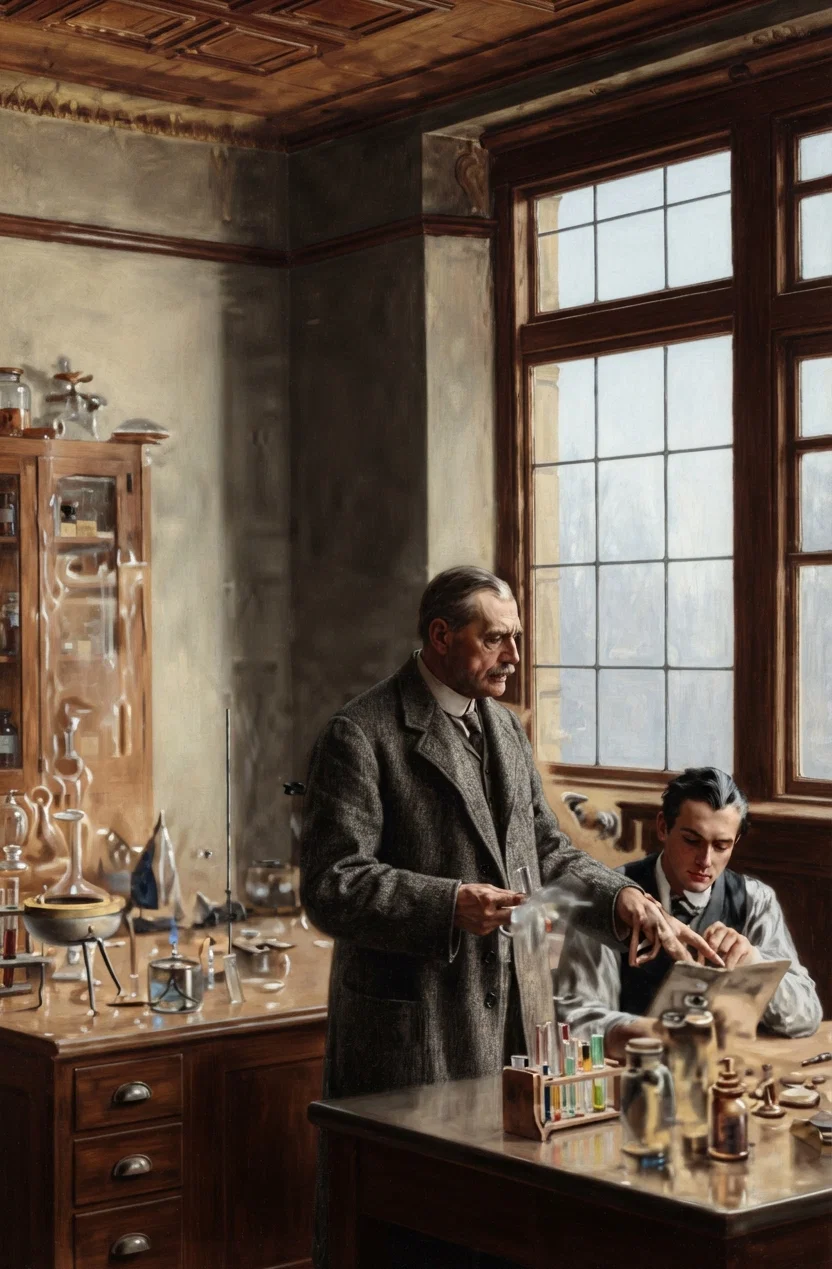
By G. F. WOLFKILL
FOR many years, it was generally accepted by the scientific world that life was spontaneously generated. The idea was held as an undeniable fact, that living matter is constantly formed in obedience to the same laws that govern the simpler chemical combinations. About the middle of the nineteenth century, numerous scientists performed many experiments to prove this theory.
Not all scientists, however, were willing to accept this theory; and in 1860, Pasteur performed his epoch-making experiments which proved conclusively that the hypothesis of spontaneous generation could not be substantiated. The experiments of Pasteur, and of other scientists, who took the precautions to insure absolute sterility in their work, have practically closed the question. So far as science can settle anything, the question is settled. The attempt to obtain the living from the dead has failed. All now recognize that life can come only from the touch of life. Huxley announced that the doctrine of life only from life was “victorious along the whole line.” Tyndall, though confessing that he wished the evidence were the other way, said, “I affirm that no shred of trustworthy experimental testimony exists to prove that life in our day has ever appeared independently of antecedent life.”

Only from Preëxisting Life

A similar controversy has been and is still waged in the religious world. One side takes the stand that the spiritual life of man can come only from preëxisting life. The other contends that it can spontaneously generate itself. The latter class affirm that man may become gradually better and better until finally he reaches the spiritual life. This life is not a life from above, but is the normal and appropriate development of the natural man. The first class hold that the spiritual man is no mere development of the natural man, but he is a new creature, born from above.
This doctrine of the spontaneous generation of the spiritual life is one of the greatest obstacles the Christian church has had to meet. In a thousand modern pulpits, it is still preached that natural man, by his own endeavors, can attain to the spiritual life.
The acceptance of this doctrine caused the fall of our first parents; for what did they do but try to gain for themselves eternal life and a likeness to God by their own endeavor? Upon this spurious doctrine, every form of false worship and religion has been founded; and it is not to be wondered at that in these last days, the enemy of all righteousness should try to deceive the human race with the same subtle temptation. The modern religionist would have it that his spiritual life can be “born of the flesh” instead of being “born of the Spirit.”
Let us turn again to the natural world, and place before our imagination the two great kingdoms of nature, the organic and the inorganic. What do we mean by saying there is no spontaneous generation of life? — We mean that the passage from the mineral (inorganic) world to the plant or animal (organic) world is hermetically sealed on the mineral side. No inorganic material has ever yet by itself become organic. No change of environment, no chemistry, no electricity, no evolution, nor any known force, can endow one single atom of the mineral world with the attributes of life. Only by some living form reaching down into the dead, cold world can dead atoms be gifted with the properties of life. Without the touch of the living from above, they remain in the dead, inorganic world forever.
Just as the dead soil must remain soil until the plant from above, by the power given it from its Creator, reaches down and brings it up and gives it life; and as the plant remains in the plant world until the animal that is above reaches down and brings it up, transforming it into animal life,—so must the natural man remain forever in the natural world unless some power from the spiritual world above reaches down and lifts him up. The soil cannot of itself become plant life. The plant of itself cannot become animal life. Neither can the natural man, left to himself, become a spiritual man. He must be “born again”—“born from above.”
What, then, is the distinction between a natural man and a spiritual man, a Christian and a non-Christian? — It is the same as that between the organic and the inorganic, the living and the dead, the crystal and the organism, the stone and the plant. There are some very beautiful objects in the inorganic world, such as the onyx and the diamond; but no matter how beautiful, unless vitalized with life from above, they will always remain in the inorganic world. Just so there may be some apparently beautiful non-Christian lives; but they will always remain in the natural world unless they permit themselves to become vitalized with that life which is from above.
“Except ye eat of the flesh of the Son of man, and drink His blood, ye have no life in you. Whoso eateth My flesh, and drinketh My blood, hath eternal life; and I will raise him up at the last day. For My flesh is meat indeed, and My blood is drink indeed. He that eateth My flesh, and drinketh My blood, dwelleth in Me, and I in him.” John 6: 53-56.