Apostolic Church and Doctrine Succumb Before a Baptized Paganism
This is the second article by Dr. Wilkinson on Revelation unfolded, dealing specifically with the seven seals, and spanning the time from the first to the second advent of Christ. The article that will appear next week portrays the "struggle against the medieval darkness," the suppression of truth, and the persecutions of the church.
EDITOR.
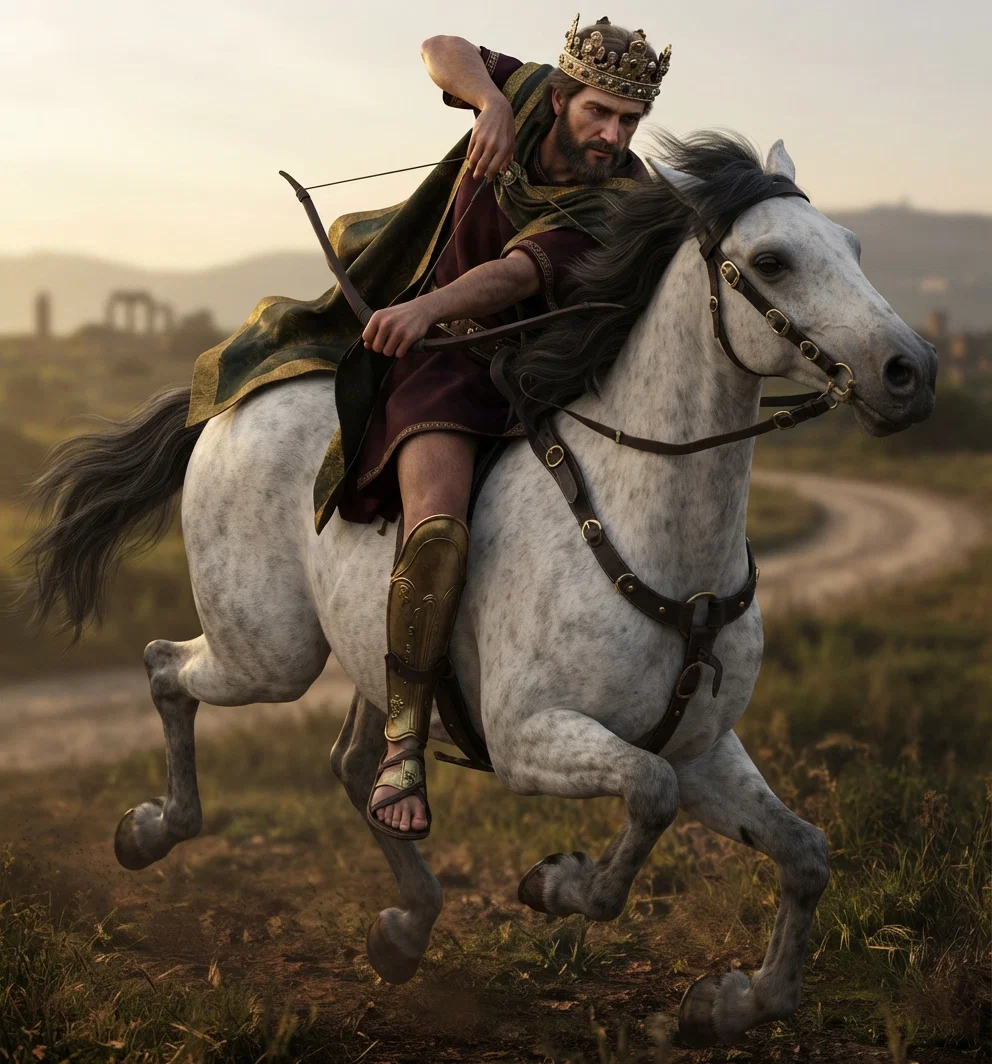
"AND I saw when the Lamb opened one of the seals, and I heard, as it were the noise of thunder, one of the four beasts saying, Come and see. And I saw, and behold a white horse: and he that sat on him had a bow; and a crown was given unto him: and he went forth conquering, and to conquer." Rev. 6: 1, 2.
By reading Prov. 21: 31, we see that in Scripture the horse is used as a symbol of warfare; and by referring to Luke 9: 29, we understand that white is the color of purity and divinity. The first seal therefore announces a warfare that is pure and conducted under divine leadership. We find that the warrior, as he starts out, has already given to him the crown of victory. Of no other conqueror could the surety of victory be predicted than of the Lord Jesus Christ. Moreover, it is said that he went forth "conquering and to conquer."
The first seal, then, denotes the combat of the early Christian church with the Roman Empire. With great solicitude, Christ endeavored to unite the twelve disciples in the bonds of perfect unity, though at times the strife for first place was manifest among them. Yet the humility and love of the Saviour bound them together with a united front before a common enemy.
Had Spread Like Wildfire
ON the other hand, there stood the Roman Empire, with a population of one hundred million. The provinces reached from Scotland on the northwest to the Euphrates on the southeast, and from the forests of Germany on the north to the sands of the Sahara on the south. One writer says that it was the mightiest fabric of human organization ever formed. The legions stood on the frontiers of the empire, guarding the imperial domain from external foes; while its splendid organization and legal system made the empire, as the historian Gibbon says, a safe and dreary prison for any one who had offended against its majesty.
Yet, "greater is He that is in you, than he that is in the world." So victorious was the spread of the gospel, that Pliny, writing in the second century to the emperor Trajan, said that this sect, or heresy, had not only entered the cities, but had spread like wildfire through the villages and the country places as well. In great purity, therefore, was the conquest of Christianity under the first seal made.
The rider had a bow in his hand; and we read from the prophet Habakkuk, "Thy bow was made quite naked, according to the oaths of the tribes, even Thy word." Hab. 3: 9. So the weapons of warfare of the Christian church were not carnal, but were the mighty arrows of truth, shot from the bow of God's divine word. In other words, we may say that the period covered by the first seal reaches from the birth of Christianity to about 100 A. D., the time of the last apostles.
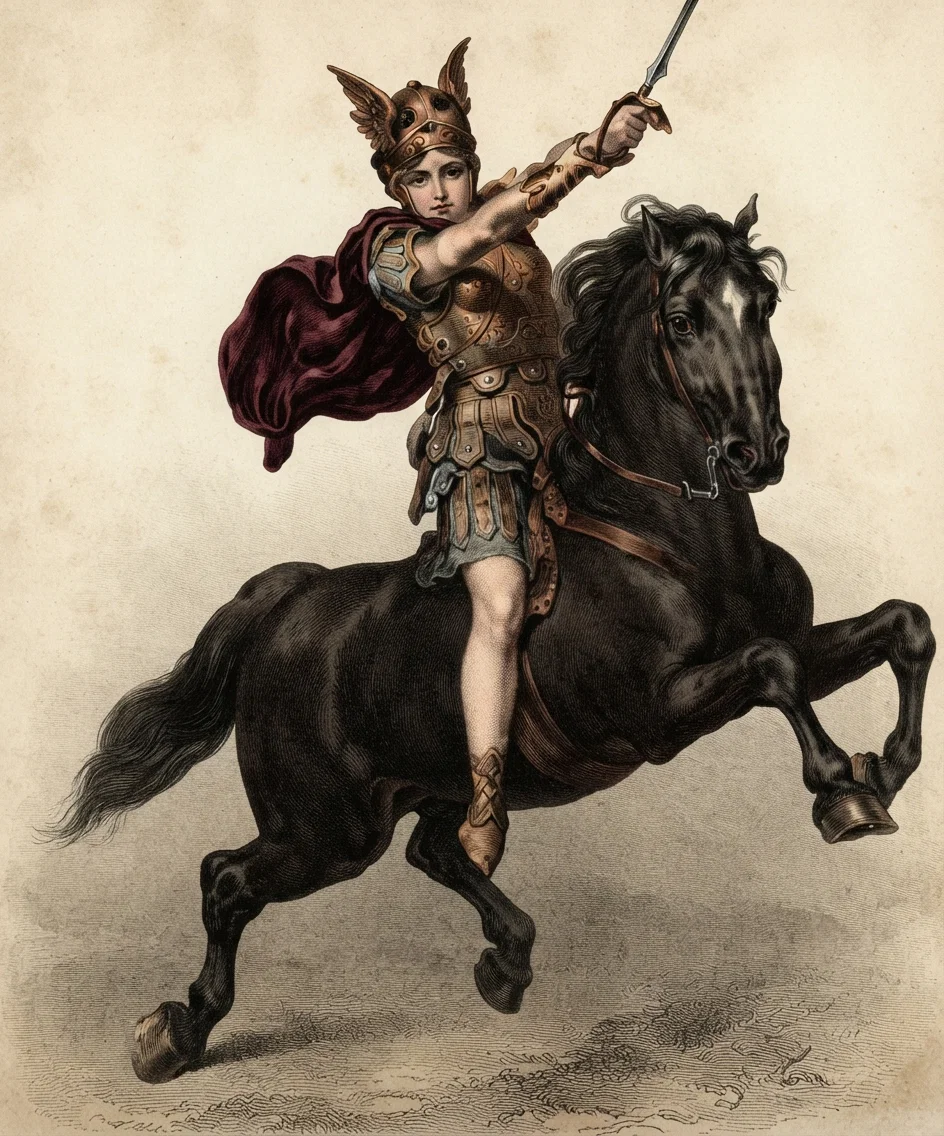
"AND when He had opened the second seal, I heard the second beast say, Come and see. And there went out another horse that was red: and power was given to him that sat thereon to take peace from the earth, and that they should kill one another: and there was given unto him a great sword." Rev. 6: 3, 4. The word "red" here is the same word used elsewhere in the Scriptures to denote blood-red. The sword that the warrior carries is not the ordinary war sword, but it is more the sacrificial knife. These specifications agree with the statement of the result of this rider's work. He was "to take peace from the earth."
The church had no longer its united front. Strife and division had entered into the body; and in the eyes of God, the progress of truth was being sacrificed to the blood-red work of ambition, worldliness, and covetousness. If the church during the apostolic period had the power of union and peace within, and went forth conquering and to conquer, she soon was to see worldliness and sloth sow discord among her members, and turn their arms one against another.
Already the apostles, during their own day, had warned their disciples against the appearing, at an early hour, of ambitious leaders. As Paul says (Acts 20: 29, 30): "For I know this, that after my departing shall grievous wolves enter in among you, not sparing the flock. Also of your own selves shall men arise, speaking perverse things, to draw away disciples after them."
Likewise we read the words of Cyprian, bishop of Carthage, speaking of the Christians in the time succeeding the apostles: "Forgetful of what believers had either done before in the time of the apostles, or always ought to do, they, with insatiable ardor of covetousness, devoted themselves to the increase of property. . . . Among the priests there was no devotedness of religion; among the ministers there was no sound faith. . . . They would swear not only rashly, but even more, would swear falsely; would despise those set over them, with haughty swellings; would speak evil of one another, with envenomed tongues; would quarrel with one another, with obstinate hatred." (The Lapsed VI.)
And this went on until Constantine, that half pagan, half Christian Roman emperor, that colossal juggler of men and religions, arose to exalt the church to imperial favor. And then to her was given the great sword of civil power.
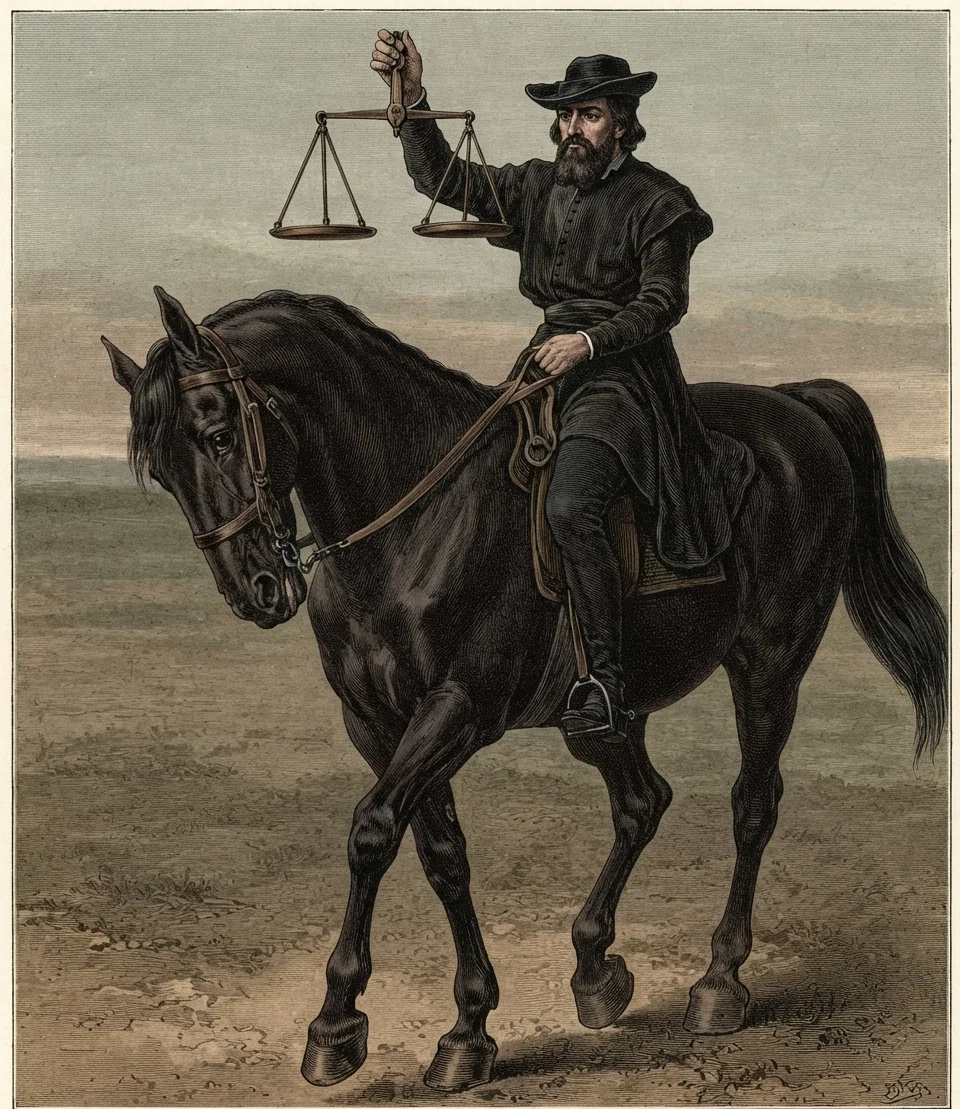
"AND when He had opened the third seal, I heard the third beast say, Come and see. And I beheld, and lo a black horse; and he that sat on him had a pair of balances in his hand. And I heard a voice in the midst of the four beasts say, A measure of wheat for a penny, and three measures of barley for a penny; and see thou hurt not the oil and the wine." Rev. 6: 5, 6.
Black, in the Bible, is a symbol of mourning or famine. The ages were growing dark. It was in 325 A. D. that Constantine presided over the great Council of Nice, and exalted the Christian church to imperial favor. Professor Emerton, of Harvard University, in his book entitled "Introduction to the Middle Ages," says that at the Council of Nice, the Christian church had ceased to be a persecuted body, and had now become the church of the Roman Empire.
In Lam. 5: 10 and Jer. 14: 2, we find that black represents famine. The time had come for a famine of the word of God, for the voice from the throne said that a measure of wheat was sold for a penny. The Saviour told of the sending of men into the vineyard as laborers for a penny a day. Therefore a penny was the wages for a day's work. But a measure of wheat, which was all that could be bought for a penny, was absolutely insufficient for a man or his family.
Wheat represents the word of God, as the Saviour once said, "Man shall not live by bread alone, but by every word that proceedeth out of the mouth of God." And the injunction to "hurt not the oil and the wine" brings us to the consideration that wine represents Christian doctrine, as Christ once spoke of His inability to put new wine into old bottles. The oil, we all know, represents the Spirit of God. So then the pair of balances in the hand of the rider represented a scarcity of Christian graces, with divine Providence to see that neither the Holy Ghost nor the Bible should be rendered entirely extinct.
Adulterated the Gospel Doctrines
THIS is precisely the situation as recorded in history. That things developed just as this scripture described them, from the days of Constantine, may be seen from the following quotation from Beugnot:
"Through Constantine, the Christians acquired the love of riches and of luxury; and it is beginning with his reign that those simple and frugal habits which had been the glory of the church in the three preceding centuries began to disappear."—"History of Paganism in the West," volume 1, page 87.
To denote the darkness that came into the church from the study of the heathen philosophy, against which Paul had warned in Col. 2: 8, and which crowded God's word out of sight, Beugnot further says:
"Christianity during the third and fourth centuries was troubled by two formidable enemies, Neoplatonism and apostasy. One prevailed in the East, the other in the two empires. The first strove to appropriate to itself, while adulterating them, the doctrines of the gospel; the second caused the most scandalous depravity to run riot among the Christians." So, from about 325 A. D., when the church came into favor, until 538, when she came into power, we may consider the period of time covered by the third seal.