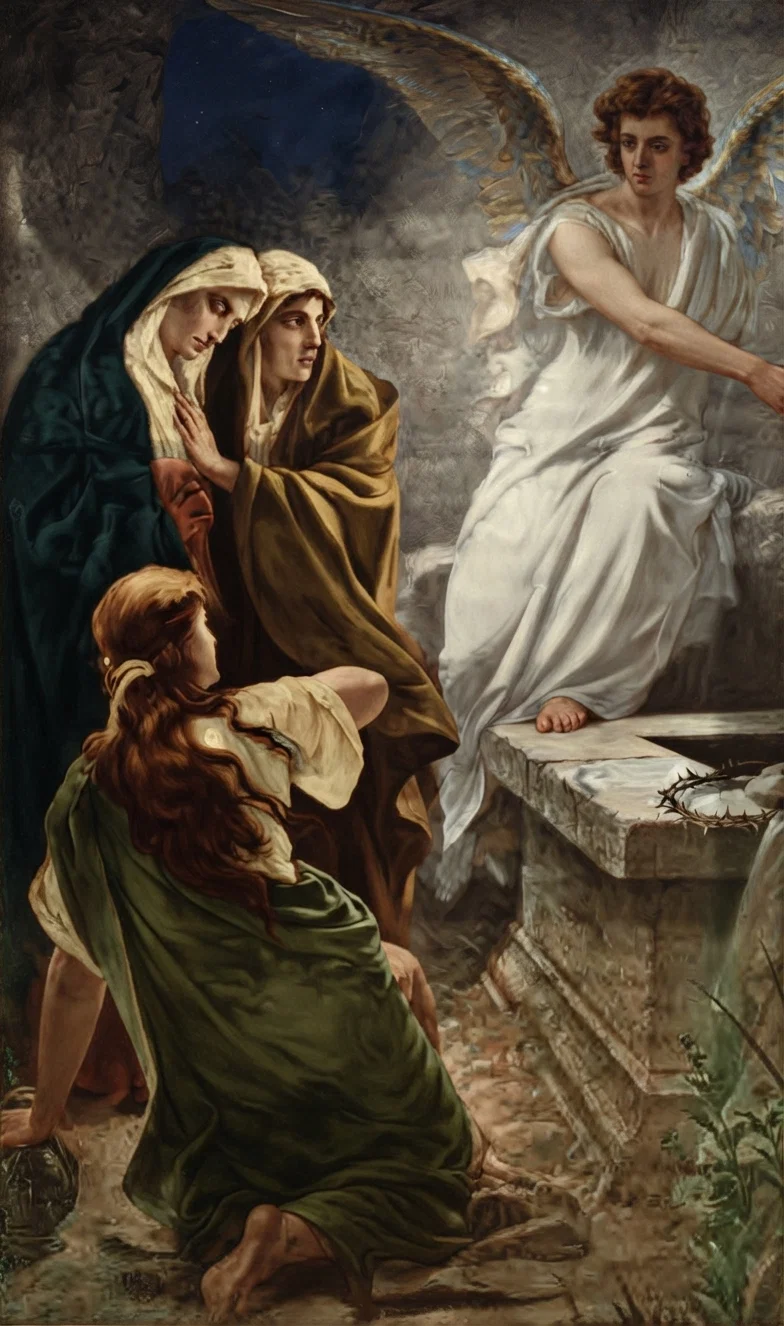
THE RISEN CHRIST

13%

Pacific Press Publishing Company · Mountain View, California · Mar 27, 1907

FromSigns of the Times, Vol. 33, No. 13.

Read the full edition

THE RISEN CHRIST.

WHEN this paper reaches its readers, many in the Christian world will be in full preparation to celebrate "Easter," others to call to remembrance Christ's resurrection, one of the great vital facts of Christianity. But why Christian people should designate a yearly day, set apart for the celebration of that event, by the heathen term "Easter," the name of a goddess of the vernal season, worshiped with rites sensuous and lascivious, we can not understand. No more can we understand why men should set apart a day only, one day in a year, for the honor of an event which pertains to the whole Christian life—the resurrection from the dead of Jesus Christ our Lord.
JESUS THE CHRIST was not born that a day might be set apart to His memory and kept half in gratitude and half in perpetuation of the old Roman Saturnalia, which it once was, when the sun-worshipers kept the day of the sun's lengthening light, and hailed the great luminary as conqueror over darkness. Jesus was the Word become flesh, that He might in demonstration of His love be God-with-us — Emmanuel — forevermore, and to demonstrate the power of God to overcome sin in sinful flesh. For as the children were "sharers in flesh and blood, He also Himself in like manner partook of the same; that thru death He might bring to naught him that had the power of death, that is, the devil; and might deliver all them who thru fear of death were all their lifetime subject to bondage. . . . Wherefore it behooved Him in all things to be made like unto His brethren, that He might become a merciful and faithful high priest in things pertaining to God, to make propitiation for the sins of the people. For in that He Himself hath suffered being tempted, He is able to succor them that are tempted." Heb 2:14-18. The birth of Jesus is for all time. In all days of temptation and trial He is a brother beloved, a joy and a rejoicing.
Plockhorst
Plockhorst
Not for one day's celebration did He die. It was not that men might keep "Good Friday," and worship God by fasting because He died one day so long ago. His death upon that day was but the climax of an offering of ages, the demonstration to humanity of infinite love—constant, changeless, eternal. But one thing can rightly celebrate that death "for our sins," and that is to yield our sins to God, to reckon ourselves "to be dead unto sin, but alive unto God in Christ Jesus;" in other words, to be "crucified with Christ," not thru Lent, nor on "Good Friday," not on days of stated fasts, but every day, at all times.
Not for the perpetuation of the heathen festival Easter did our Lord die. Not for that does His resurrection stand. Not with nature worship does it in any way coalesce. "Christ died for our sins according to the Scriptures;" for He Himself did no sin. When He rose from the dead He lived because of the power of His righteous life. He became a brother to man in sinful flesh; but in the flesh of man He triumphed over the sin, and demonstrated that He was the Son of God. For the very Gospel is God's message "concerning His Son, who was born of the seed of David according to the flesh, who was declared to be the Son of God with power, according to the Spirit of holiness, by the resurrection from the dead." Rom. 1:1-4. For the power of a righteous life the resurrection of Christ stands, not for an hour, not for a day, but for the whole life, in eternal triumph over sin.
THE manifestation to the world of entrance into the service of Christ is not the celebration of a heathen festival, but it is God's own appointed ordinance of baptism. It is the marriage ceremony by which the believer says to the world that he has cast off the old man with his sins and lusts, and has put on the new man Christ Jesus. "As many of you as were baptized into Christ did put on Christ" (Gal. 3:27), "that ye should be married to another, even to Him who is raised from the dead, that we should bring forth fruit unto God" (Rom. 7:4); "buried therefore with Him thru baptism into death; that like as Christ was raised from the dead thru the glory of the Father, so we also mightwalk in newness of life" (Romans 6:4).
For the new life in righteousness, baptism stands; for the power to live that life, the resurrection of Jesus Christ is the pledge. God desires that His children shall "know what is the hope of His calling, what the riches of the glory of His inheritance in the saints, and what the exceeding greatness of His power to usward who believe, according to the working of the strength of His might which He wrought in Christ, when He raised Him from the dead, and made Him to sit at His right hand in the heavenly places, far above all rule, and authority, and power, and dominion, and every name that is named, not only in this world, but also in that which is to come." Eph. 1:18-23. All the elaborate forms, all the ornate display of flowers and costumes, are empty mockery if the power of Christ be in the heart and life. The world is waiting to see it. If the resurrection power of God was with His professed people, the denial of that resurrection by an infidel preacher would have little effect. The "power of an endless life" would be daily witnessed upon His people.