Our London Letter

5%

Pacific Press Publishing Company · Mountain View, California · Jul 17, 1907

FromSigns of the Times, Vol. 33, No. 29.

Read the full edition

Our London Letter

From Our Own Correspondent.
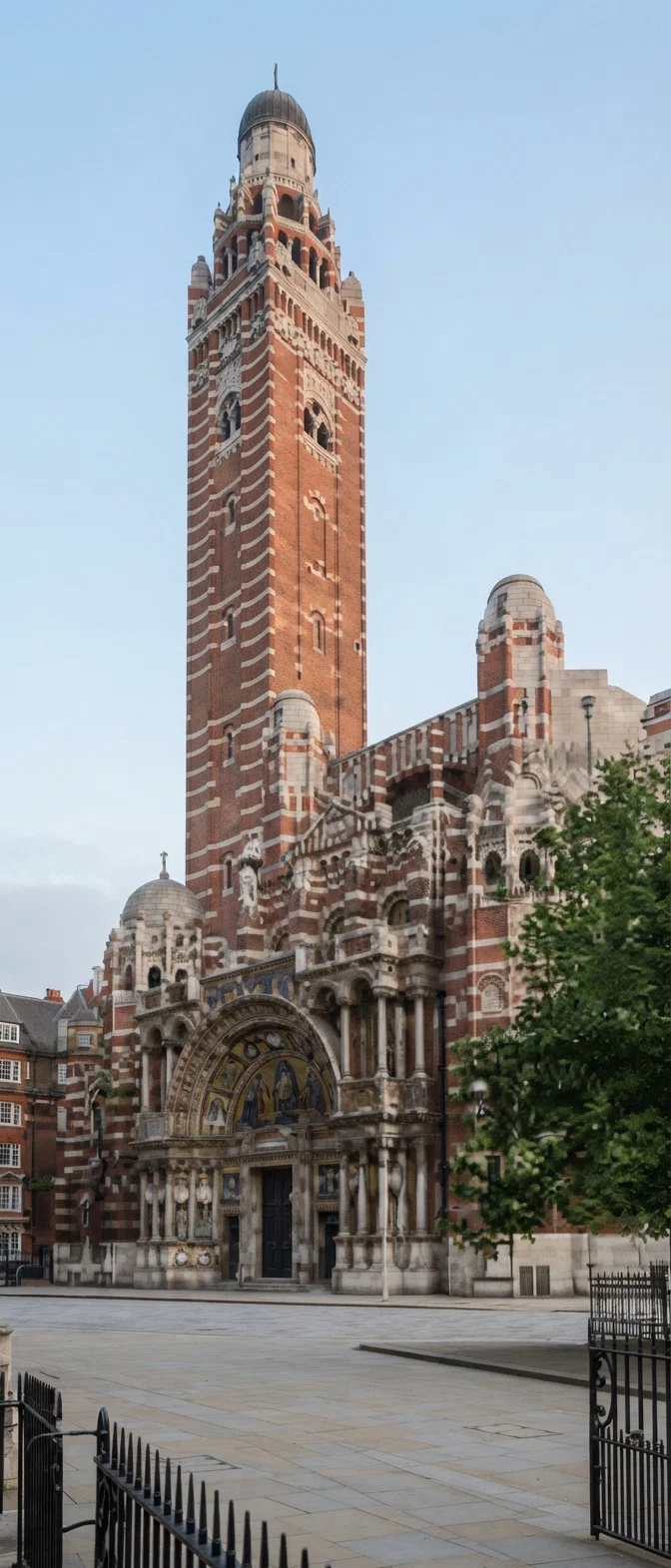
Westminster Cathedral, London.

Trouble for the Government.

THE outlook for the government is not the rosiest just at present. It received its first great set-back when the Birrell Education Bill was rejected by the House of Lords. A far more stunning blow is the rejection by popular convention in Dublin of the Irish Council Bill, a measure granting to Ireland a National Council which would have control of a number of important departments in the government of the Island. It did not grant Home Rule, but it was a good step toward it, and the government evidently expected that it would be acceptable to the Irish people. Of course there was nothing to do but to drop the bill, as there would be no advantage in forcing it thru Parliament only to find it unworkable because of the opposition of the people for whose benefit it would be passed.
Mr. Redmond has strongly asserted that the Roman Catholic priests have not exerted any influence in this issue, and he may possibly be right; but there is reason for believing that Rome is watching her stakes very closely in this matter, and is actually exerting a tremendous influence underneath when superficially she seems to be entirely unconcerned. The whole weight of the Roman Catholic Church was thrown on the side of the Conservatives in the struggle against the ill-fated Education Bill. Church interests will always outweigh political interests where Rome is concerned, and the achieving of the political independence of Ireland is important to her only as a means of increasing the power and influence of the Romish Church. The general regime of the present Liberal Government is not pleasing to Rome, and the antagonism is especially strong in educational matters.

The Educational Question.

Owing to pressure of business, the Licensing Bill, for which temperance reformers have been eagerly waiting, will be left over till next year. The brief measure introduced to give relief to Passive Resisters by exempting them from the payment of the cost of religious instruction, is to be dropped for the same reason, the government promising to bring in next year a comprehensive measure which will place the country's educational system on a broad national basis. Naturally Passive Resisters are disappointed at the long delay of redressing the grievance; but they can hardly blame the government for the action of the Lords in defeating the first bill. Now in a few days an announcement is due from the prime minister as to the course which will be pursued toward the House of Lords. Apparently the great fight will be on the education question. It is not impossible that the government will bring in a strong, uncompromising bill at the beginning of next year's session with the intention, if the Lords reject it, of making an appeal to the people by precipitating a general election.
The Conference of Colonial Premiers hardly added anything to the prestige of the government, if it did not prove actually embarrassing. The Liberal party is not much given to spread-eagle imperialism, and it was obliged to throw cold water on the colonial proposals for preferential tariffs. The Conservative papers made the most of the disagreement.

More "New Theology."

Since Mr. R. J. Campbell's book came out, two new works, both by prominent men, have appeared on the scene: "The New Theology—An Exposition," by Rev. T. Rhondda Williams, a Bradford pastor, and "The New Evangel," by Dr. Warschauer, another Congregational pastor who is a friend of Mr. R. J. Campbell. Mr. Williams defines sin as "a gratifying of the momentary self without considering others, and without considering that higher self whose enrichment always coincides with ministry to the social good." One characteristic all these new theology systems share—they have their highest center in man; God is left out of the question. The virgin birth, the resurrection, and the incarnation are either directly denied or explained away into thin nothingness in Mr. Williams' book, and the atonement is simply ignored.
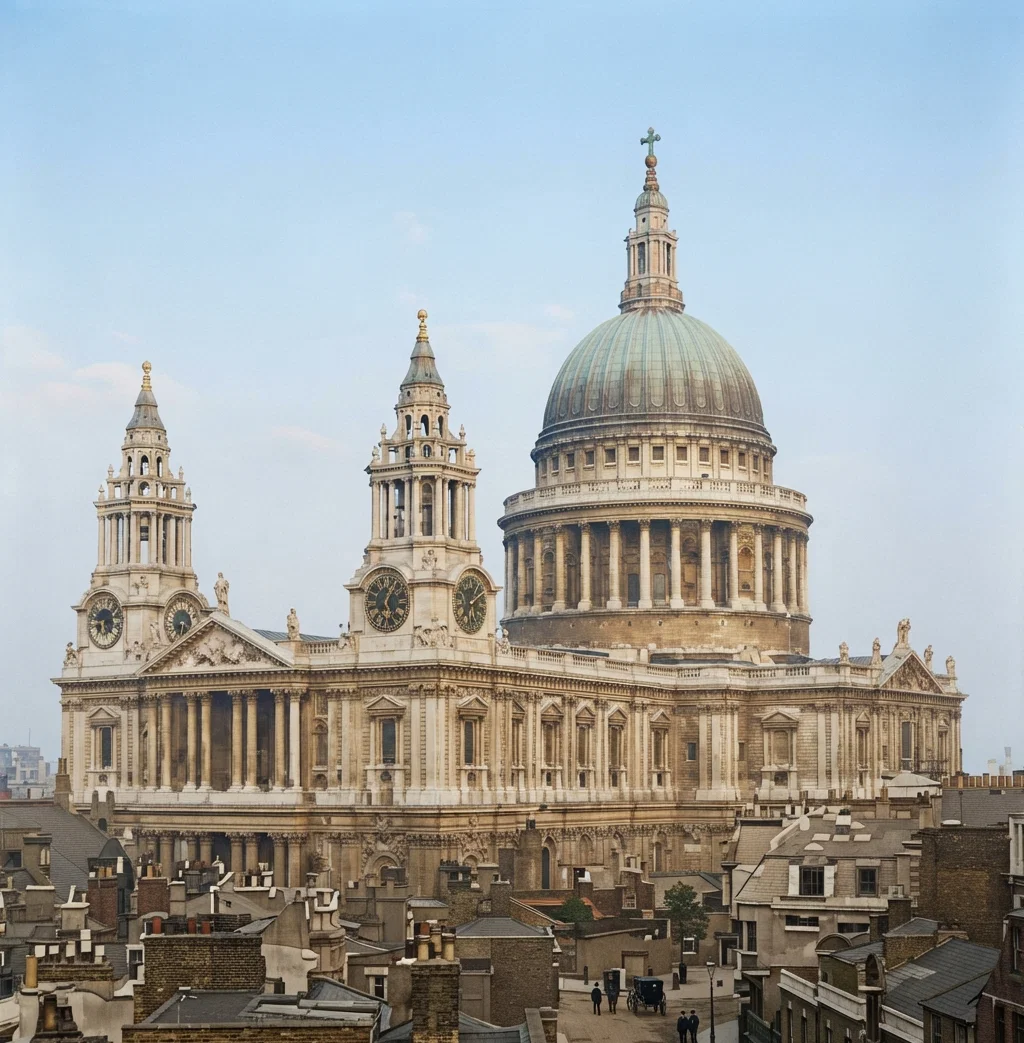
ST. PAUL'S CATHEDRAL, LONDON.
Dr. Warschauer is more moderate in statement, his arguments are also more insidious; but any one at all familiar with the Bible and who has an experimental knowledge of the working of the Holy Spirit need not be misled. "The New Theology," writes Dr. Warschauer, "not only retains the sense of sin as a reality, it not only insists on the need of deliverance from it, but it proclaims with all solemnity the atoning power of the cross of Christ." He explains the divine immanence by saying that God is in man in the same way and only in the same way as a father is in his son; the paternal factor is large, but it does not override individuality, nor prevent the son from acting in opposition to his father's will. The fall, the physical resurrection of Christ, the second advent, and the last judgment are all cast aside just as in the other two books. Is it not passing strange that three Congregational clergymen in good standing should publish such books, and preach such a gospel weekly to their congregations? Surely it is a sign of the times! Christianity is to-day being attacked in the house of its friends. Not the fiercest onslaughts of skeptics, nor the most grievous persecutions, could begin to do the harm done by these traitorous utterances of men who profess to be preachers of the Gospel.

Christian Science.

Christian Scientists had an opportunity to show their strength and numbers a few weeks ago when Mr. Bicknell Young, of Boston, lectured in the Royal Albert Hall. The vast amphitheater, accommodating some twelve thousand people, was well filled, and the speaker made a very skilful defense of the pernicious cult. "Behind all sin was evil thought, as good thought was behind all good action. So our need was right thought. The aim of Christian Science was to give a right basis of thought in a right idea about God Himself." There are at present three "Churches of Christ, Scientist," in London, with an enrolled membership of three thousand, and a much larger number in more or less regular attendance. The movement is rapidly growing.

Social Reform Movements.

Social reform continues to receive the earnest attention of some of the best people. The writer attended yesterday afternoon an "At Home" given by the Duke and Duchess of Devonshire at their London residence, in the interests of "The National League of PhysicalEducation and Improvement." The Duchess personally received the guests and made them all feel very much at home. Addresses were given by the Bishop of Ripon, Lord Balfour of Burleigh, Sir Gilbert Parker, M.P., and other prominent men, the point chiefly emphasized being the need of instructing the masses in the simple principles of hygiene, and passing legislation which would deal effectively with the housing difficulty. The addresses were given in a beautifully decorated pavilion, the Duke himself presiding. The guests, with the exception of a number of physicians and workers in social lines, were made up mainly of West End society people. Needless to say, entertainments of this kind are a great help to the public movements which they are intended to promote. The Duke of Devonshire owns about a hundred and eighty thousand acres of land in Great Britain, and has for many years wielded a very strong influence both socially and politically. The National League, it may be added, was organized in connection with a large Mansion House meeting held two years ago this summer, and aims to cooperate with, and, as far as possible, correlate all the existing agencies for the spread of a knowledge of hygiene.

Peace Conference at The Hague.

The Hague Conference looms large on the horizon. What it may do and how it may do it form interesting themes for speculation both in the newspapers and at the breakfast table. There can be no doubt that the peace movement has grown in influence and prestige during the eight years which have passed since the previous conference. England’s rather unfortunate experience in South Africa, and Russia’s fiasco in the far East, may have helped to allay the war fever in Europe. The enormous growth of the Socialists has also tended toward peace. But after all, these are mere incidents in the history of international relationships. Nations will quarrel and fight as long as men do these things, and everybody knows it. The best that can be done will be to make the wars as few as possible. As Christians, it is our duty to work and pray for peace, but we can not shut our eyes to the fact that the nations of Europe are armed to the teeth with the most terrible weapons of war, and children go unclothed and unfed in order that these war-like preparations may be continued and increased from year to year. M. ELLSWORTH OLSEN.
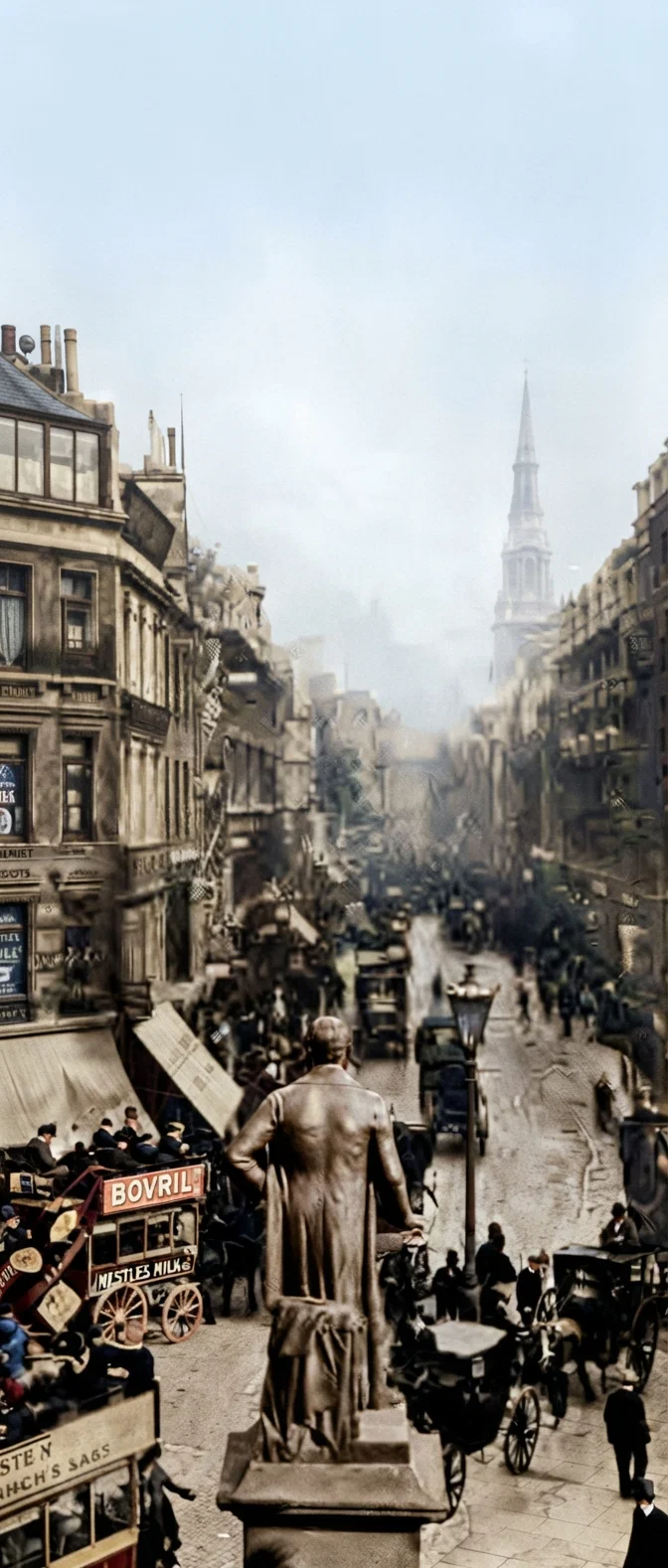
Cheapside, London, Looking East.