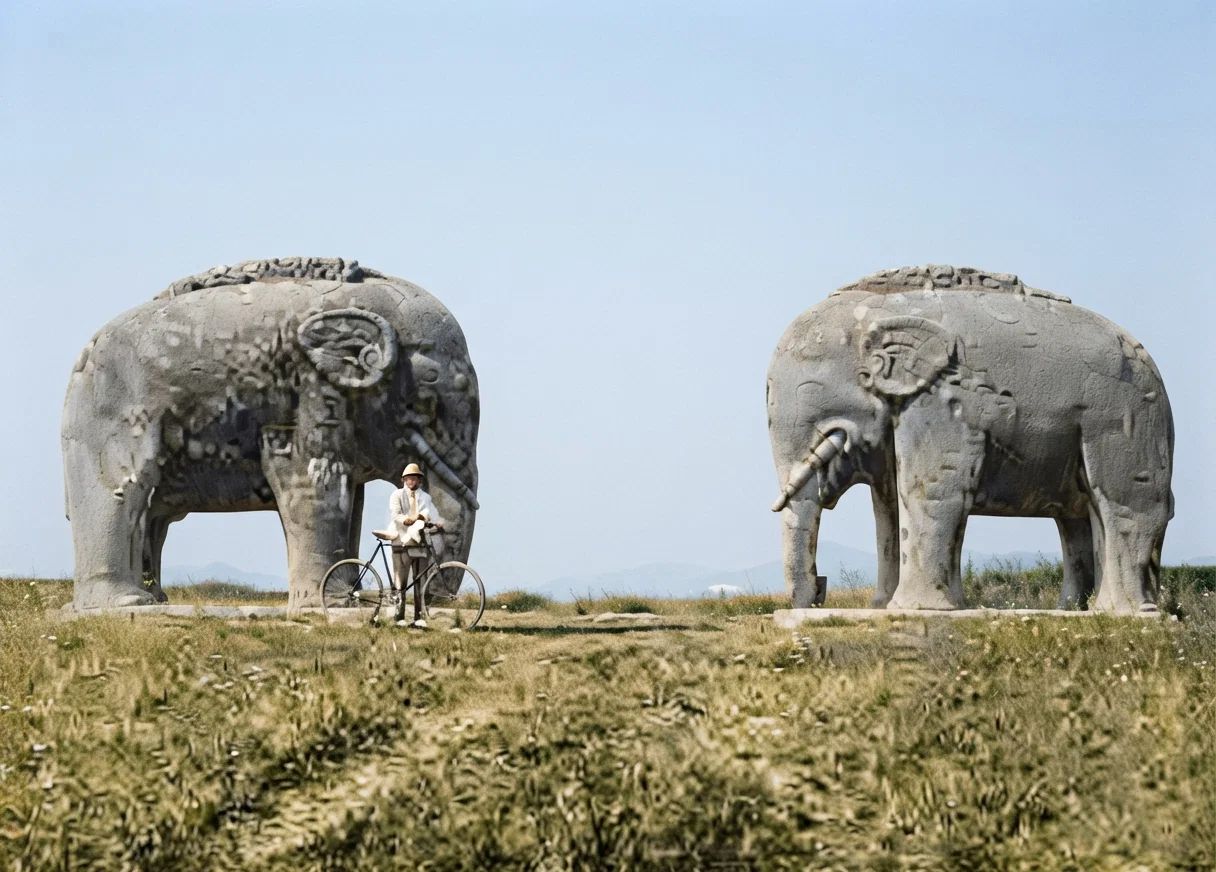
2. The elephants on the way to the Ming Tombs. This is one of a group of many kinds of animals to be found on the way to the Ming Tombs. Because of the vandalism of tourists all have been recently fenced in.
A Visit to Nanking, the Ancient Capital of China
By F. E. Stafford
(Concluded from last week)
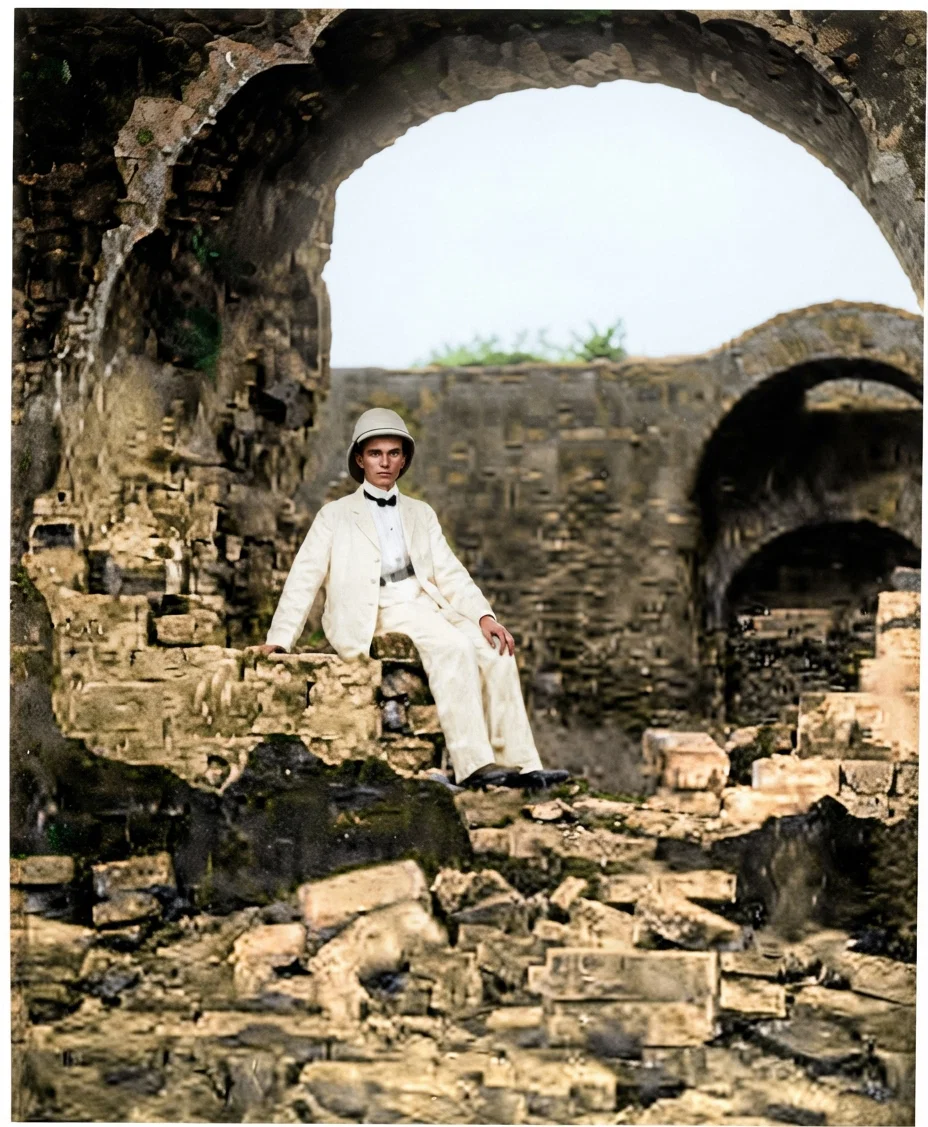
1. Top of the Ming Tomb showing the crumbling building. The picture was taken in the pouring rain in which we rode ten miles.
As the primary object of my visit was to get photos of the exposition for our special number of the paper, we went as soon as possible to the entrance gate, which is only a few blocks from our mission door.
It took no little planning to obtain photographs, but when I left the grounds a little later I had twelve exposures in my kodak, and six in the suitcase. I have grouped these photos into one large half-tone plate which we are running for an insert in our paper, and we believe that the pictures will sell a good many of the papers which would not be otherwise sold.
Of the exposition itself I will not comment much, as space will not permit, but will say on general principles it is a very good exhibit, and considering the prejudice and difficulties under which it has grown up it is to be considered a real credit to the nation, and we believe will be the means of enlightening the various provinces on the advantages of foreign methods, showing them the marked progress that has been made in industrial and educational lines, and encouraging them to press forward in the future, forgetting their petty provincial jealousies, and all uniting toward the common good of the great empire.
The next day we spent in viewing historical places; but as they are scattered so far apart, we only took in a few of them. Among some of the noted ones of which I am sending photographs, might be mentioned No. 6, the old examination halls where all the students aspiring for a degree were compelled to take a rigid examination. They are really small stone cells with just a small place to sit and write. The student entered one of these and stayed there until he finished, some staying for days, their food being passed in to them, and such sleep as they required being taken in a sitting posture.
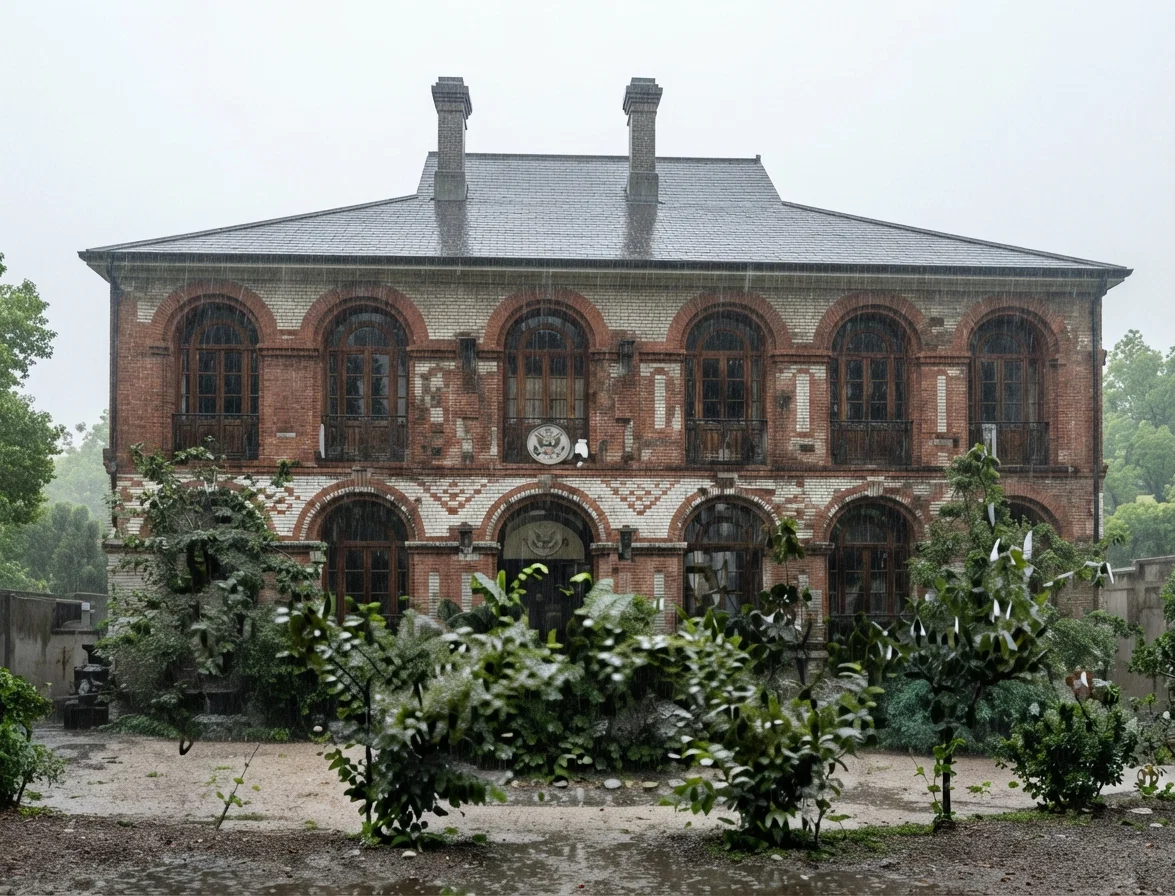
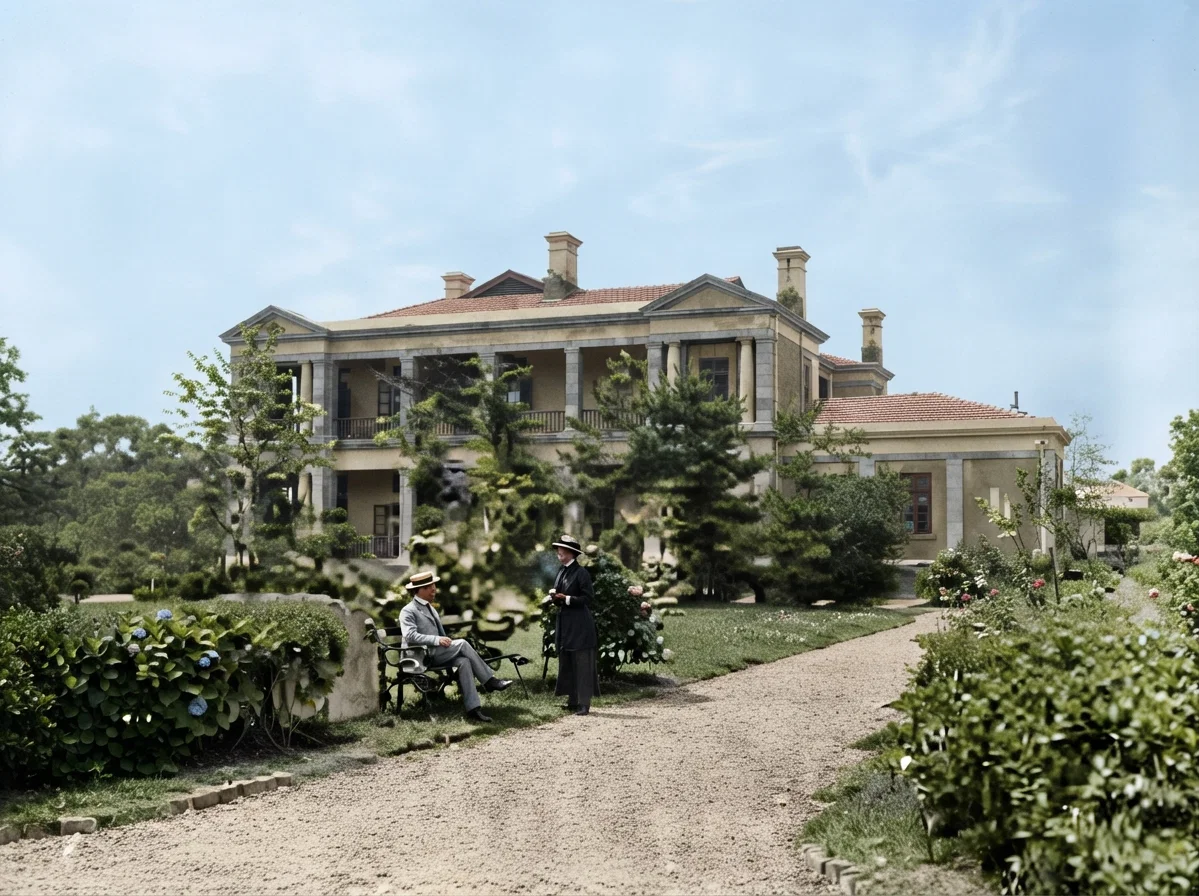
Nos. 7 and 8 are the British and American consulate buildings. These, together with the German, are all situated in the same neighborhood, and are very nice buildings with beautiful yards.
The national naval college is a large institution covering several acres of ground, including a parade-ground and an artificial mast. Besides their many school buildings, they have an excellent machine-shop, and study all about the making of arms, etc. They have a creditable display in the exposition.
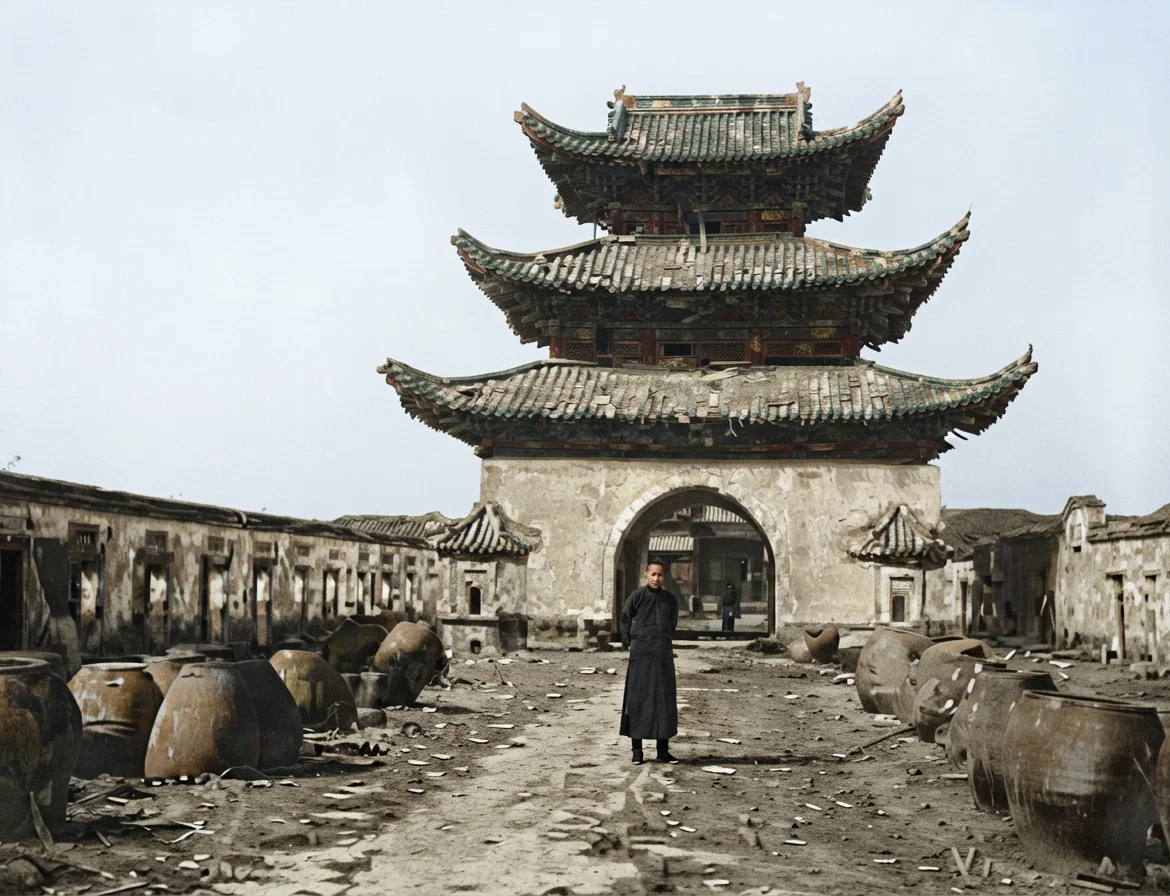
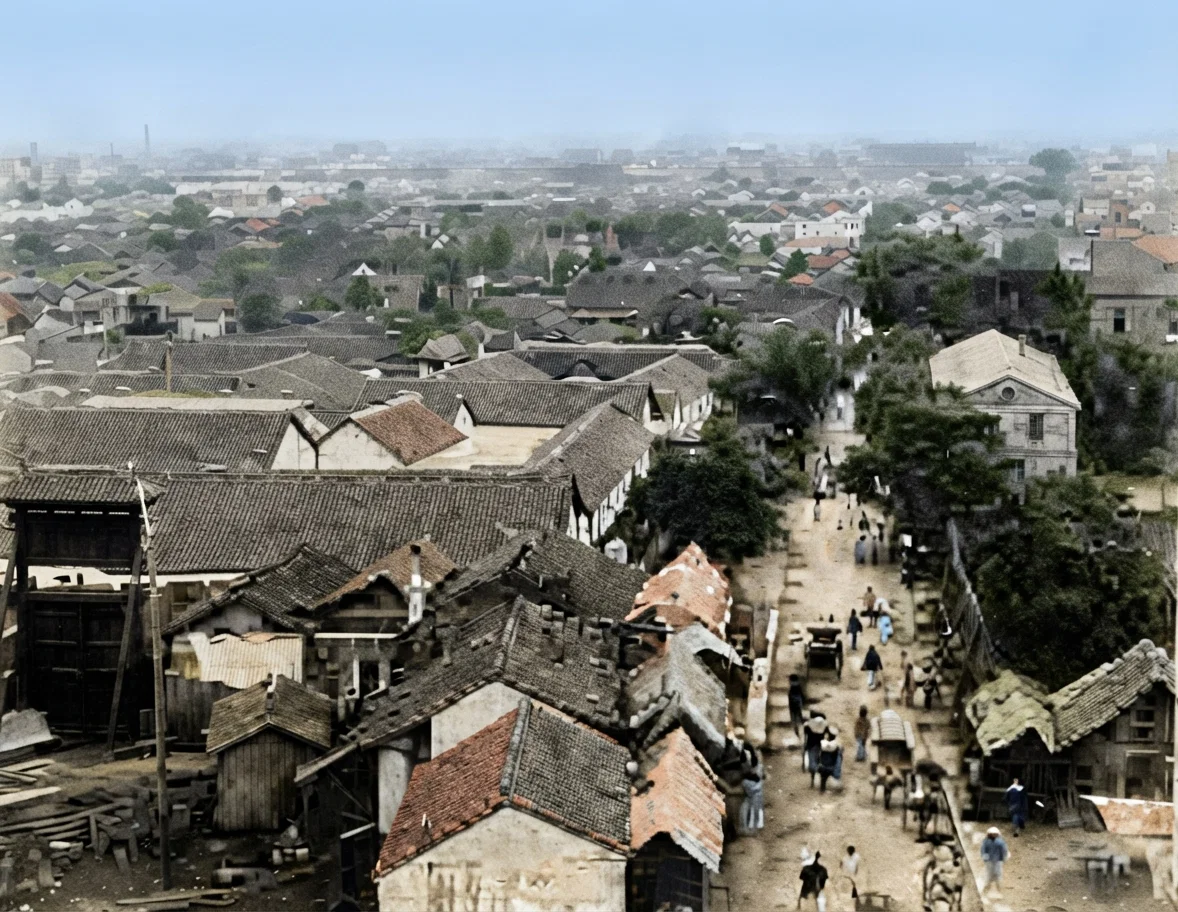
From the drum tower, upon a high elevation, I obtained a good view of the city. See No. 4.
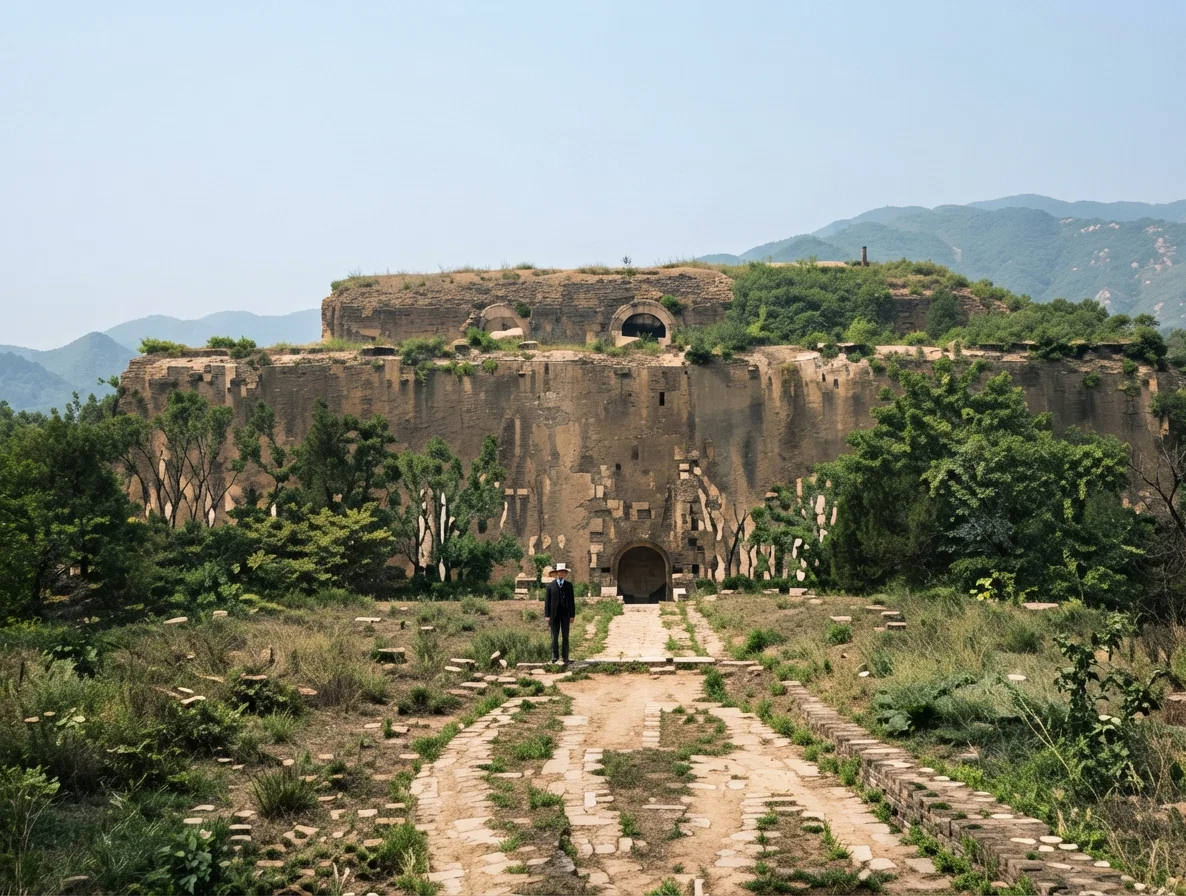
5. The Ming Tomb, a much larger structure than it looks in this picture. The coffin of the emperor is in the middle of the hill back of the building.
6. The old examination halls in which the students were locked for days at a time, food being passed in through a small door; now fast crumbling into decay.
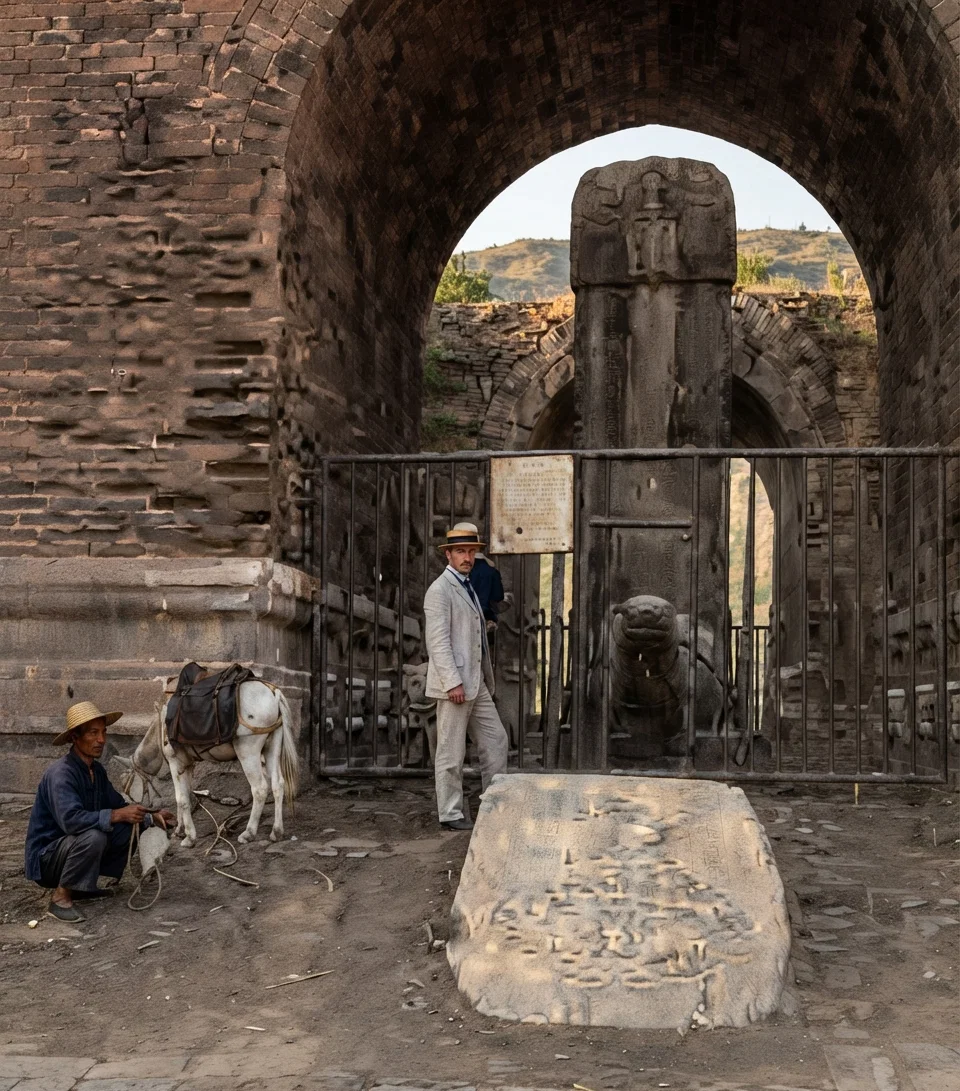
By far the most interesting sights were seen on the way to the Ming tombs. After a ride on donkey back of about four miles over the low rolling hills beyond the city wall, we came to a high hill on which were two immense arches. These stand at the entrance of the pathway to the tombs. Inside one of these was a huge stone turtle with a high monument on its back, covered with an inscription of some kind (No. 3). Going through the arches we entered the path to the tombs, and on either side for about the distance of a mile there are all kinds of stone animals, officials, and soldiers. It was a regular circus in stone, and the group comprised lions, dogs, kneeling camels and standing camels, kneeling elephants and standing elephants (No. 2), beside figures of men and soldiers.
4. View of Nanking city from the Drum Tower. The dim streak in the distance is the city wall some five miles away.
7. American consulate building at Nanking, taken during a hard rain. The structure is built of white and red brick.
8. The British consulate building. While the building is not so magnificent, the yard is very beautiful.
Arriving at the great tomb, we found it to be a massive structure (No. 5), and at the time of its erection it was evidently a beautiful building; but the storms of five centuries have reduced it now to a crumbling pile of stone and brick (No. 1).
Thus did the ancient kings in their blindness seek to protect their spirits after death.
How thankful we are that we can point this people to the “better way.” Jesus says, “I am the resurrection, and the life: he that believeth in Me, tho he were dead, yet shall he live.” This word is now liberating many souls from the dark bondage of superstition and ignorance, “into the glorious liberty of the children of God.”
Thus the work is ever onward, and we are thankful to have a small part in it. Brethren, with your prayers and with your means, remember the work in China.
F. E. STAFFORD.
3. A great stone turtle with memorial tablet on the way to the Ming Tombs.