Man's Sin and Saviour

4%

Pacific Press Publishing Association · Mountain View, California · Sep 13, 1910

FromSigns of the Times, Vol. 37, No. 36.

Read the full edition

Man's Sin and Saviour

By E. J. Hibbard

X. Christ's Sacrifice and Priesthood

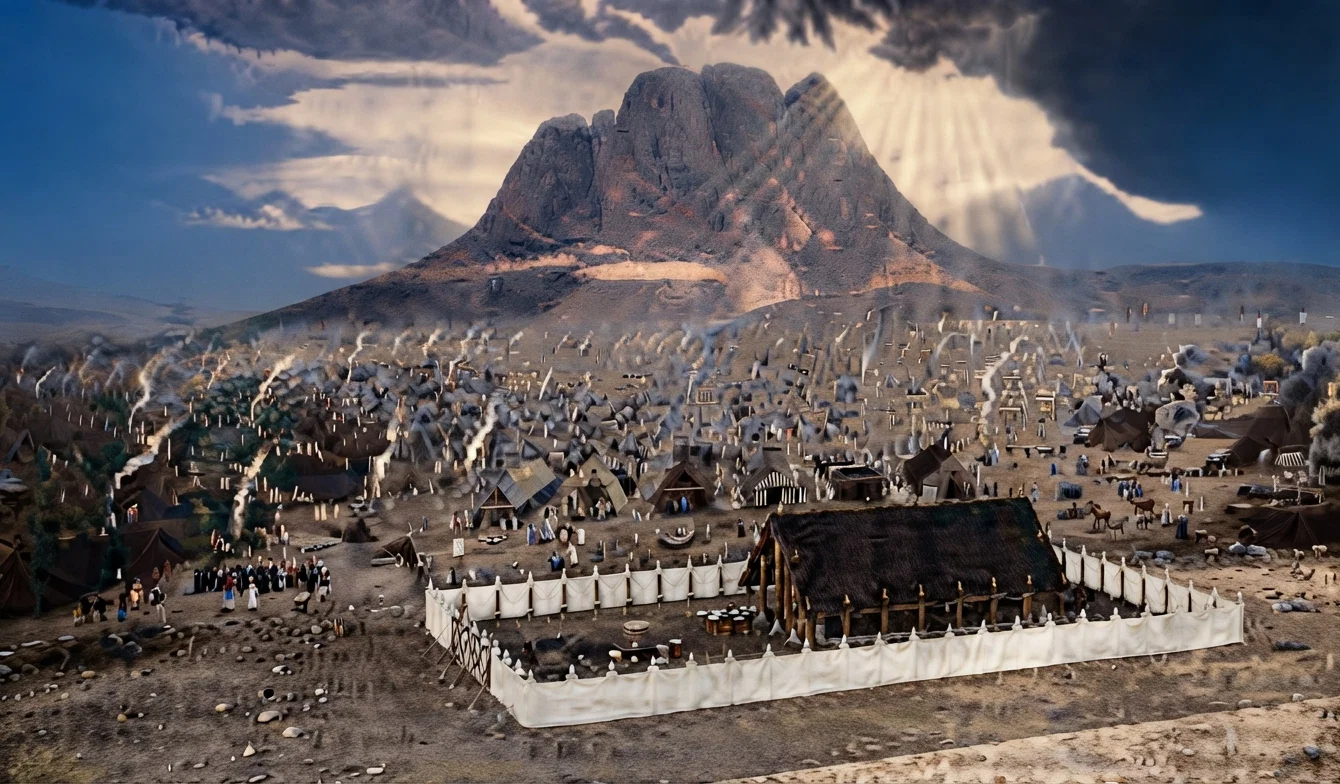
It has been found, by a careful study of the sanctuary service, that the temple itself, and the articles of furniture contained in the holy and most holy places, together with the sacrifices and priesthood, each and all typified something concerning the life and sacrifice of Christ. The temple, as a whole, represented the temple of His body; the sacrifice, His death on the cross; the show-bread represented Him as the bread of life, and the candlestick the light of life. The altar of incense, with its odors perpetually rising heavenward, stood for His intercession; while the law enshrined within the ark in the most holy place was and is a transcript of His character. The Levitical priesthood was a type of His heavenly priesthood, tho these services could but dimly represent that phase of the mediation of Christ for sinners. And therefore at the commencement of Christ's priesthood in the heavenly sanctuary, the Levitical priesthood, with all that shadowed forth Christ's sacrifice and work, ceased by divine order. And hence we plainly read in Heb. 7:12, "For the priesthood being changed, there is made of necessity a change also of the law."
In a previous number we noted that in the plan of God there were two laws, the one pointing out sin, and the other prescribing a remedy therefor. This remedial law provided a priesthood, sacrifice, and the temple service—all shadows of good things to come. But the shadow did not bring perfection; it only pointed out the coming One, through whom alone perfection may be obtained.

Reason for the Changed Law of the Priesthood

The law of the priesthood made it impossible that any should act as priest unless he were of the tribe of Levi and the family of Aaron. But Christ came of the tribe of Judah, and hence could not be a priest according to the law. Again the law prescribed the offering of animals—bulls, goats, lambs, turtledoves, and the like—for sin; yet Christ offered none of these, but His body instead. Hence His sacrifice was not according to the law of sacrifices; for in no case was the priest ordered to offer his own body a sacrifice for sin. Further, the law of the Levitical priesthood pertained entirely to men on this earth; but Christ began His priesthood in heaven. We therefore read that "if He were on earth, He should not be a priest, seeing that there are priests that offer gifts according to the law; who serve unto the example and shadow of heavenly things, as Moses was admonished of God when he was about to make the tabernacle: for, See, saith He, that thou make all things according to the pattern showed to thee in the mount." Heb. 8:4, 5.

The Cross a Necessity

For several reasons it was necessary that Christ should die on the cross. First, because the wages of sin is death, and because sin is the transgression of God's perfect law, and because that law could not be changed to meet the necessity of man in his fallen condition. And that the statutes of heaven might be maintained before the universe, the penalty of sin must be met either by the transgressors or else by One whose life was equal to all of theirs. This was abundantly met in the sacrifice of Christ. It also was only by the death of Christ thatmen could perceive God's love. In their fallen condition all men have conceived the thought that God is their enemy, that He hates them, and that He is always on the watch to get some reasonable excuse for punishing them. But this is the reverse of the truth. It is John the beloved who exclaims, "Hereby perceive we the love of God, because He laid down His life for us; and we ought to lay down our lives for the brethren." 1 John 3:16. And the apostle Paul adds his testimony by saying that "scarcely for a righteous man will one die: yet peradventure for a good man some would even dare to die. But God commendeth His love toward us, in that, while we were yet sinners, Christ died for us. Much more then, being now justified by His blood, we shall be saved from wrath through Him. For if, when we were enemies, we were reconciled to God by the death of His Son, much more, being reconciled, we shall be saved by His life." Rom. 5:7-10.
This reverses the heathen idea of an offended God demanding the death of somebody to satisfy His own wrath; and because He could not justly wreak His vengeance on man, He vented His spite upon His own Son. Now it was not to satisfy God's wrath and to reconcile God to man, but rather to reveal God's love, that man's alienation and aversion to God might be reversed, and man return to his agreement and obedience to God, that Jesus suffered death.

Abolished the Enmity

In the words of Paul to the Ephesians, a third reason might be given why it was necessary that Jesus should die on the cross: "For He is our peace, who hath made both one, and hath broken down the middle wall of partition between us; having abolished in His flesh the enmity, even the law of commandments contained in ordinances; for to make in Himself of twain one new man, so making peace; and that He might reconcile both unto God in one body by the cross, having slain the enmity thereby." Eph. 2:14-16.
It is here seen that in order to make peace between man and God, the enmity which Paul, in Rom. 8:7, declares to be the carnal mind, had to be abolished. This Paul says was done by the cross, "having slain the enmity thereby."
But the enmity, or carnal nature, was not simply to be abolished from our flesh; but in the words of the scripture just quoted, "having abolished in His flesh the enmity," Christ died as herein stated.
This brings us to the fact that in redeeming man from sin, Christ came to this world and was born of human flesh as it was found in the world after four thousand years of degeneracy. "For verily He took not on Him the nature of angels; but He took on Him the seed of Abraham. Wherefore in all things it behooved Him to be made like unto His brethren, that He might be a merciful and faithful High Priest in things pertaining to God, to make reconciliation for the sins of the people. For in that He Himself hath suffered being tempted, He is able to succor them that are tempted." Heb. 2:16-18.
"For we have not an High Priest which can not be touched with the feeling of our infirmities; but was in all points tempted like as we are, yet without sin." Heb. 4:15.

Tempted as Man

Now if Christ had come into this world possessed only of a divine nature without the human, He could not have been tempted at all by sin, much less tempted as we are; and again, had He taken on Him the nature of angels, He could have been tempted only as angels are tempted, and not as man is tempted; and still again, had He taken the unfallen nature of man, as he was in the Garden of Eden before sin entered, He could then not have been tempted in all points like as we are tempted, and therefore could not have felt, under temptation, as we feel when tempted. Upon this point James speaks specifically: "Let no man say when he is tempted, I am tempted of God: for God can not be tempted with evil, neither tempteth He any man: but every man is tempted, when he is drawn away of his own lust, and enticed. Then when lust hath conceived, it bringeth forth sin: and sin, when it is finished, bringeth forth death." James 1:13-15.
With this in view, the most careless reader can easily perceive that what we have just claimed is true,—that as God, or with the nature of angels, or unfallen man, He could not have been tempted as we are tempted. But He was tempted in all points like as we are; and therefore He was obliged to take upon Him a nature such as ours, in order to be tempted like as we are tempted.
But the final temptation, when all others have failed, which Satan brings upon men, is to weigh their lives in the balance between duty to God and obedience to himself. Speaking of Job, Satan said, "Skin for skin, yea, all that a man hath will he give for his life." And this time the original liar told the truth. It was therefore necessary, since all men are called upon to die, that Jesus Christ, in meeting all that man has to meet, should Himself pass through the portals of death. This He did on the cross. Thus from every point of view that the rational mind may conceive, it was necessary, in order that Christ should meet the justice of the divine law, to reveal God's love to man and thereby reconcile him to God, that He should be tempted in all points like as we are tempted. And finally, that He might be a merciful and faithful High Priest, that He should enter this world, be born of the flesh, tempted like as we are, and die as men die, in order that He might be a perfect Saviour. "Now of the things which we have spoken this is the sum: We have such an High Priest, who is set on the right hand of the throne of the Majesty in the heavens; a minister of the sanctuary, and of the true tabernacle, which the Lord pitched, and not man." Heb. 8:1, 2.

After the Order of Melchizedek

It was therefore necessary, after the ascension of Christ to the right hand of God and the heavenly sanctuary and priesthood, that the attention of man should be called from earth to heaven, and from the earthly priesthood to the heavenly priesthood. The book of Hebrews deals almost exclusively with this subject; for in the second chapter, Paul begins by revealing Christ as our High Priest. This is repeated in the third, fourth, fifth, sixth, seventh, eighth, ninth, and tenth chapters. But He is here referred to as a Priest after the order of Melchizedek and not after the order of Aaron; because Melchizedek, in his priesthood, had no predecessor or successor, while in the Aaronic priesthood there were successors, as they were mortal men subject to death. "But this Man, because He continueth ever, hath an unchangeable priesthood. Wherefore He is able also to save them to the uttermost that come unto God by Him, seeing He ever liveth to make intercession for them."
It is therefore evident that, since the ascension of Christ, there has been no divinely ordained priesthood on earth, excepting it be the whole church of Christ, every member of which Peter declares to belong to a royal priesthood, "an holy nation and peculiar people."
"Having therefore, brethren, boldness to enter into the holiest by the blood of Jesus, by a new and living way, which He hath consecrated for us, through the veil, that is to say, His flesh; and having an High Priest over the house of God; let us draw near with a true heart in full assurance of faith, having our hearts sprinkled from an evil conscience, and our bodies washed with pure water. Let us hold fast the profession of our faith without wavering: (for He is faithful that promised.)" Heb. 10:19-23.
MOUNT SINAI, THE CAMP OF ISRAEL, AND THE SANCTUARY AND COURT COMPLETE