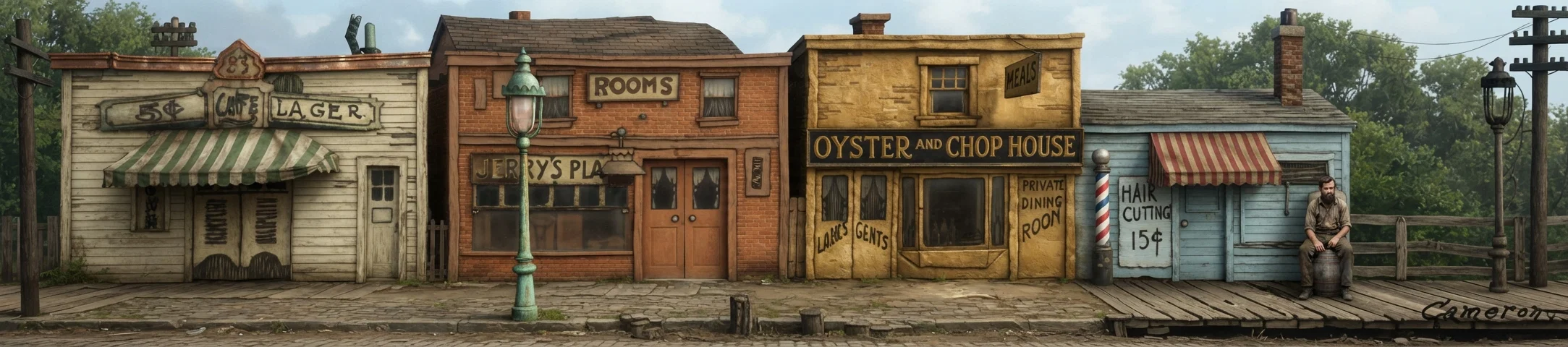
Those Who License the Saloon Are Responsible for Its Work — Remove the Death-Traps — Relieve the Sorrows of the Drunkards' Wives and Children — Let an Army of Workers Arise to the Task
By MRS. E. G. WHITE
LICENSES for the sale of intoxicants are granted on the plea that they bring a revenue to the public treasury. But what is this revenue when compared with the enormous expense incurred for the criminals, the insane, the paupers, that are the fruit of the liquor traffic! A man under the influence of liquor commits a crime; he is brought into court; and those who legalized the traffic are forced to deal with the result of their own work. They authorized the sale of a draft that would make a sane man mad; and now it is necessary for them to send the man to prison or to the gallows, while often his wife and children are left destitute, to become the charge of the community in which they live.
A FINANCIAL FOLLY
Considering only the financial aspect of the question, what folly it is to tolerate such a business! But what revenue can compensate for the loss of human reason, for the defacing and deforming of the image of God in man, for the ruin of children, reduced to pauperism and degradation, to perpetuate in their children the evil tendencies of their drunken fathers?
The man who has formed the habit of using intoxicants is in a desperate situation. His brain is diseased, his will-power is weakened. So far as any power in himself is concerned, his appetite is uncontrollable. He can not be reasoned with or persuaded to deny himself. Drawn into the dens of vice, one who has resolved to quit drink is led to seize the glass again; and with the first taste of the intoxicant, every good resolution is overpowered, every vestige of will destroyed. One taste of the maddening draft, and all thought of its results has vanished. The heart-broken wife is forgotten. The debauched father no longer cares that his children are hungry and naked. By legalizing the traffic, the law gives its sanction to this downfall of the soul, and refuses to stop the trade that fills the world with evil.
MUST THE CURSE CONTINUE?
Must this always continue? Will souls always have to struggle for victory, with the door of temptation wide open before them? Must the curse of intemperance forever rest like a blight upon the civilized world? Must it continue to sweep, every year, like a devouring fire over thousands of happy homes? When a ship is wrecked in sight of shore, people do not idly look on. They risk their lives in the effort to rescue men and women from a watery grave. How much greater the demand for effort in rescuing them from the drunkard's fate!
THE TRAFFIC DID HIT HIM
It is not the drunkard and his family alone who are imperiled by the work of the liquor-seller, nor is the burden of taxation the chief evil which his traffic brings on the community. We are all woven together in the web of humanity. The evil that befalls any part of the great human brotherhood brings peril to all.
Many a man who through love of gain or ease would have nothing to do with restricting the liquor traffic, has found, too late, that the traffic had to do with him. He has seen his own children besotted and ruined. Lawlessness runs riot. Property is in danger. Life is unsafe. Accidents by sea and by land multiply. Diseases that breed in the haunts of filth and wretchedness make their way to lordly and luxurious homes. Vices fostered by the children of debauchery and crime infect the sons and daughters of refined and cultured households.
There is no man whose interests the liquor traffic does not imperil. There is no man who for his own safeguard should not set himself to destroy it.
LEGISLATORS, JURISTS, AND STRONG DRINK
Above all other places having to do with secular interests only, legislative halls and courts of justice should be free from the curse of intemperance. Governors, senators, representatives, judges, men who enact and administer a nation's laws, men who hold in their hands the lives, the fair fame, the possessions of their fellows, should be men of strict temperance. Only thus can their minds be clear to discriminate between right and wrong. Only thus can they possess firmness of principle, and wisdom to administer justice and to show mercy. But how does the record stand?658How many of these men have their minds beclouded, their sense of right and wrong confused, by strong drink! How many are the oppressive laws enacted, how many the innocent persons condemned to death, through the injustice of drinking lawmakers, witnesses, jurors, lawyers, and even judges! Many there are, "mighty to drink wine, and men of strength to mingle strong drink," "that call evil good, and good evil," that "justify the wicked for reward, and take away the righteousness of the righteous from him." Of such God says: "Wo unto them. . . . As the fire devoureth the stubble, and the flame consumeth the chaff, so their root shall be as rottenness, and their blossom shall go up as dust: because they have cast away the law of the Lord of hosts, and despised the word of the Holy One of Israel." Isa. 5: 20-24.
FORM AN ARMY OF WORKERS
The honor of God, the stability of the nation, the well-being of the community, of the home, and of the individual, demand that every possible effort be made in arousing the people to the evil of intemperance. Soon we shall see the result of this terrible evil as we do not see it now. Who will put forth a determined effort to stay the work of destruction? As yet the contest has hardly begun. Let an army of workers be formed to stop the sale of the drugged liquors that are making men mad. Let the danger from the liquor traffic be made plain, and a public sentiment be created that shall demand its prohibition. Let the drink-maddened men be given an opportunity to escape from their thraldom. Let the voice of the nation demand of its lawmakers that a stop be put to this infamous traffic.
"If thou forbear to deliver them that are drawn unto death, and those that are ready to be slain; if thou sayest, Behold, we knew it not; doth not He that pondereth the heart consider it? and He that keepeth thy soul, doth not He know it?" Prov. 24: 11, 12. And "what wilt thou say when He shall punish thee?" Jer. 13: 21.