Progress in China

6%

Pacific Press Publishing Association · Mountain View, California · Aug 9, 1910

FromSigns of the Times, Vol. 37, No. 31.

Read the full edition

Progress in China

II. The Reform Movement
W have received unmistakable evidence that the Lord is blessing our work, and it has grown in a remarkable way, at times the demand for literature getting ahead of our ability to supply, with our meager facilities.
From the beginning of a few small papers printed under great difficulties on a diminutive hand-press, the demand has steadily grown, until at the present time we have a strong subscription list, and are publishing the monthly paper Signs of the Times in two dialects, the Wen li and Mandarin; and this month (June) will print at least 17,000 copies, possibly more, as it will be a special number, with subject-matter written especially to reach the large number of educated Chinese people who will gather at Nanking to see the First National Educational and Industrial Exhibition, which opens the fifth of this month.
We are also printing a number of tracts on the Sabbath, and now have translations of "Steps to Christ" and "Christ our Saviour" ready for the press.
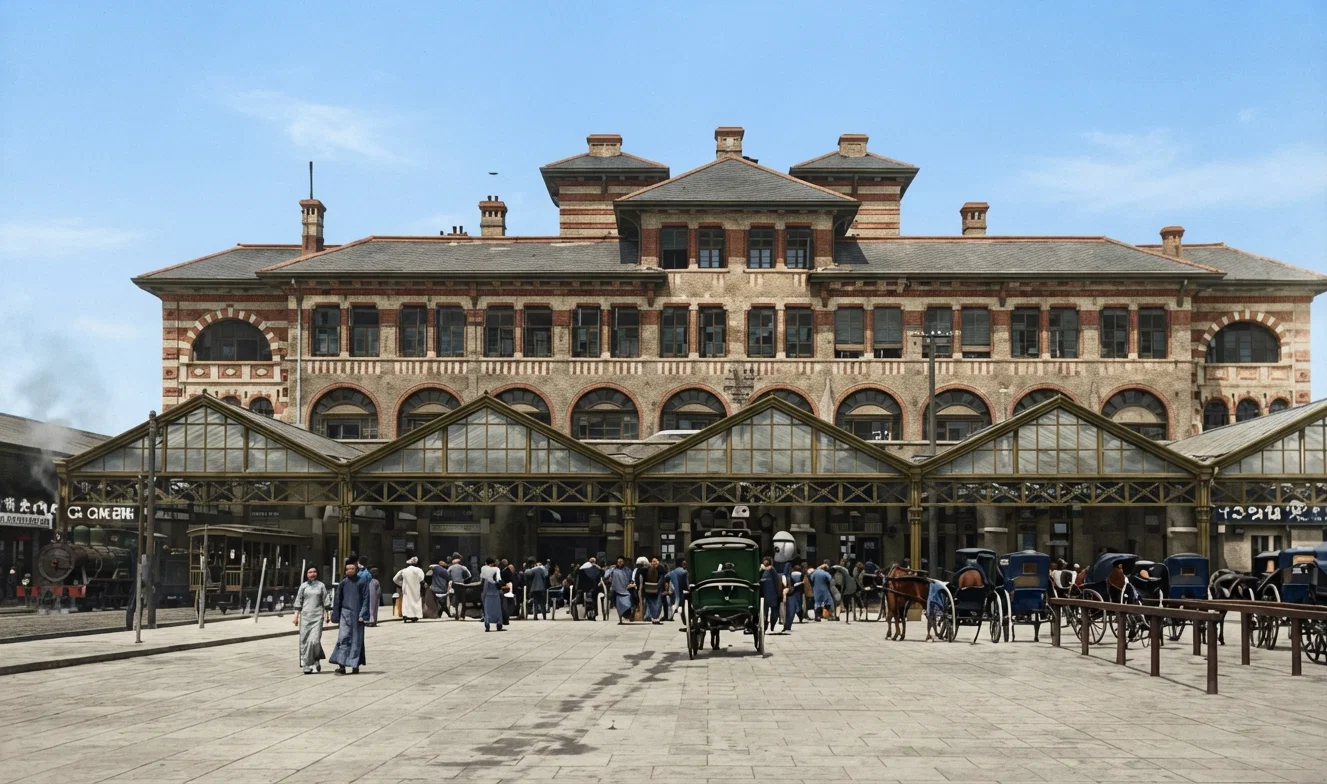
Shanghai-Nanking Railway Station, the finest station in China. Trains run in the station at the left of the picture. The street entrance is at the right.
We believe the printed page will be one of the mightiest instruments in proclaiming the Gospel to this people in this generation, as it will reach hundreds of people who can be reached in no other way. We have now a number of faithful native Christians who have embraced the truth through reading our literature; and many other interested ones are anxiously seeking for more light.
We hold our meetings in a Chinese house which we have fixed up for a chapel, and have very good attendance of the Chinese at Sabbath-school and church services.
We are planning now for more systematic Bible work with the Chinese here; and we believe that out of this large city of half a million people, the Lord will raise up a large number of faithful workers to help proclaim to this nation the message of Christ's soon coming.
China is now in the midst of a great reform movement, such as was never dreamed of for ages. She is throwing off the great pall of ignorance, fear, and superstition that has held her bound for thousands of years. She is awakening to the possibilities of foreign inventions, such as the railroad, telegraph, telephone, etc.; and while these things are only just beginning, we can clearly see that the way is being prepared to give the Gospel message to these 400,000,000 people in a short time.
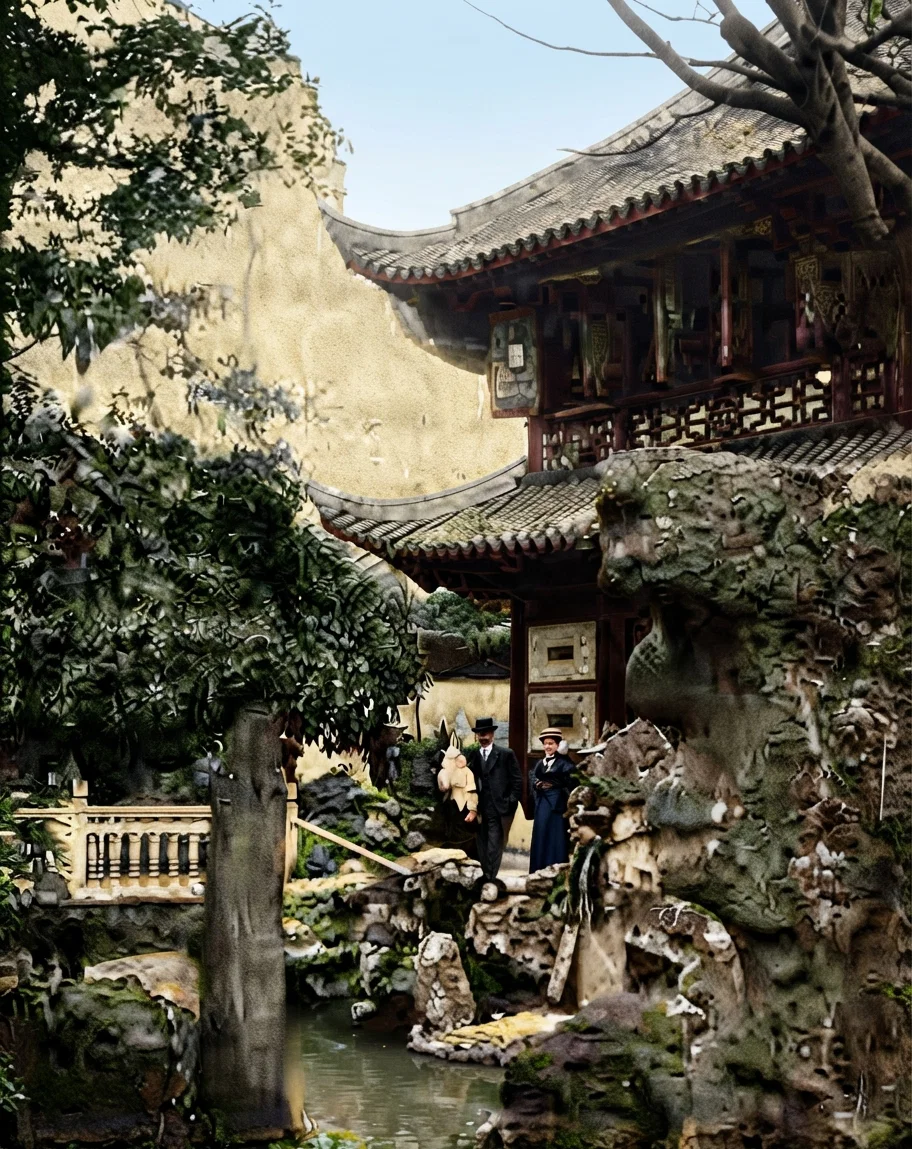
Yuen Luen Gardens, near the Bubbling Well, Shanghai. Rocks are artificial, concrete and cement, characteristic of all China. The group is of our missionaries.
Another great advance step comes in an imperial decree signed the twenty-fourth of May, calling for a national reform of the currency. If there is one thing that has hindered all reform, blocked the wheels of every new enterprise, and kept the nation in a state of disintegration, it is the disorganized condition of her money system. In fact she has never before had any money system; and each province has been allowed to coin any kind of money that was convenient, that becoming legal tender for that province, and very likely would be refused or discounted in another province. Worse than that, the coinage consisted principally of the brass cash pieces with a square hole in the center for stringing; and as one string of 1,000 cash is only worth about fifty cents United States money, it can be readily seen that these coins were entirely too cumbersome for transacting the increasing amount of foreign business. So Mexican money was imported; and here in Shanghai to-day, be it said to China's shame, we are using the coinage of Mexico, which is brought in here and sold as a commodity like rice. Its value changes every day. When money is scarce, it of course costs more; and vice versa. This has made a demand for money exchanges; and now there are hundreds of men that make their living by exchanging money, and the amount of "squeeze" they make on each dollar is only limited by their own avariciousness. This has opened the way for floods of corruption, which exists everywhere, from the government officials down to the lowest coolie; and it has become so notoriously bad, that it is impossible for China to secure a foreign loan only at a high rate of interest.
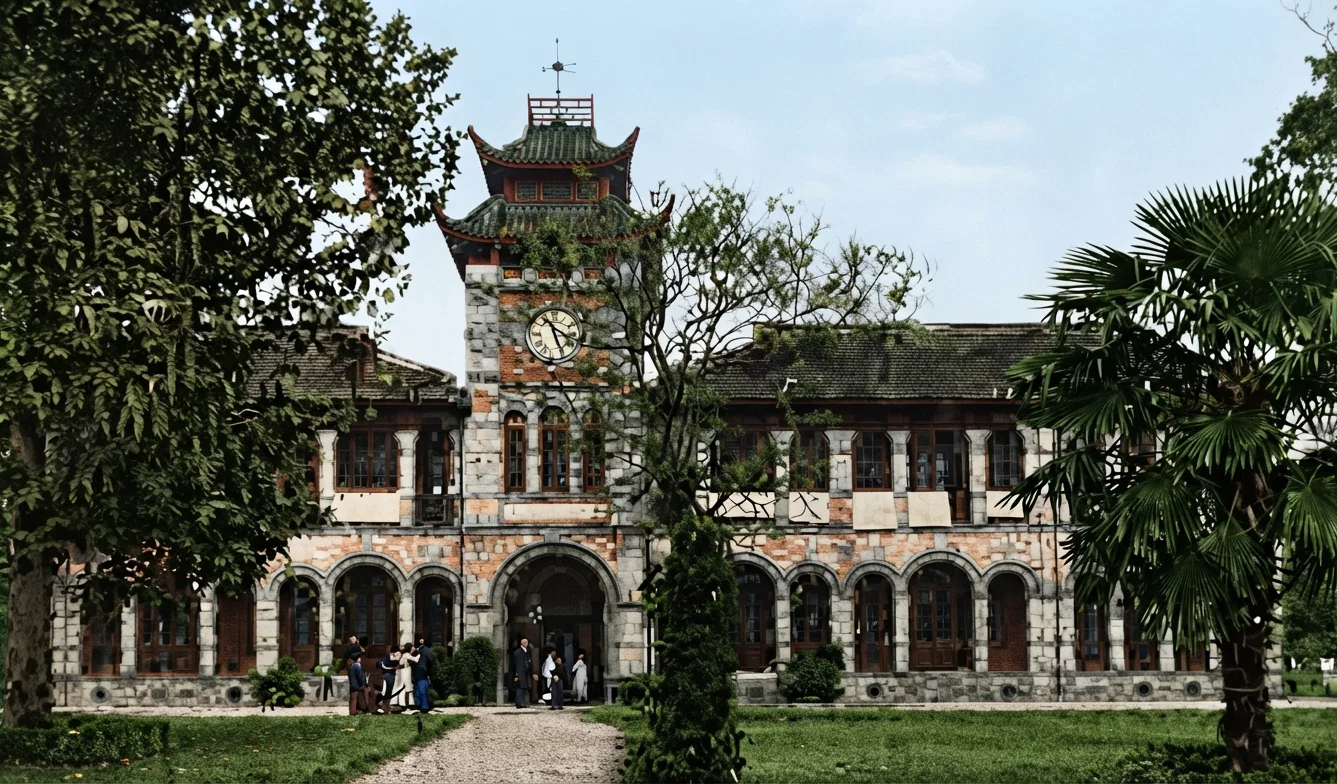
St. John's College for Chinese, near Shanghai, one of the oldest foreign-taught schools in China, patronized by wealthy Chinese. Full course, 10 years; 700 students.
This will all be changed by the imperial decree, which goes into effect immediately, and calls for a government coinage of a standard money, the value of which shall not be subject to change, and which consists of a silver dollar, fifty cent, twenty-five cent, and ten cent pieces of silver, five cent pieces of nickel, two cent, one cent, one half cent (five cash), one tenth cent (one cash) pieces of copper, and these shall all bear decimal relations to each other. In the present money there is no proper relation. For a dollar we get from $1.08 to $1.15 in small money (twenty cent, ten cent, and one cent pieces); and for a twenty cent piece we get from twenty-one to twenty-five one cent pieces; and for one cent, we get from eight to ten cash pieces, according to the rate of exchange and the temper of the money exchanger.
The decree also calls for the closing of all provincial mints, and the withdrawal of all old currency as fast as the new can be put into circulation.
As we behold these evidences of progress, we see in them the providences of God, callingfor renewed consecration and clear discernment to grasp every new opportunity and enter every open door. We need both men and means. Who will say,
"Take my all, and let it be Consecrated, Lord, to Thee"?
F. E. STAFFORD.