Facilities for Distribution of Literature in China
By H. W. Miller, M.D.
By H. W. Miller, M.D.
To install large printing-plants at different centers in China ten years ago would have seemed inconsistent, notwithstanding the immense population, owing to the lack of facilities for distributing the literature. There must first be the demand before the supply is necessary. Several events have, during the last decade, created a demand for more knowledge among the natives of China. This renaissance for Western learning began after the war between China and Japan, but it can not be said to have made much headway until after the Boxer uprising in 1899 and 1900. This resulted in several ingressions by the foreign powers, showing to the natives the weakness of the Chinese Empire and the superiority of Western methods, even in the interior provinces. In settlement of the claims of the different foreign powers for the destruction of life and property, many demands were made in the treaties which provided for the opening of many commercial enterprises, among which were the construction of railways, the opening of interior ports for foreign residents and foreign trade, the right to navigate the large rivers of China and carry on trade, a new system of tariffs on imports and exports such as would promote the commercial relations between the several countries, and the assurance of protection to the foreign residents in interior points all over the empire. China's good faith in keeping these articles of agreement has been made sure by the presence of gunboats of the different powers at nearly all the treaty ports.
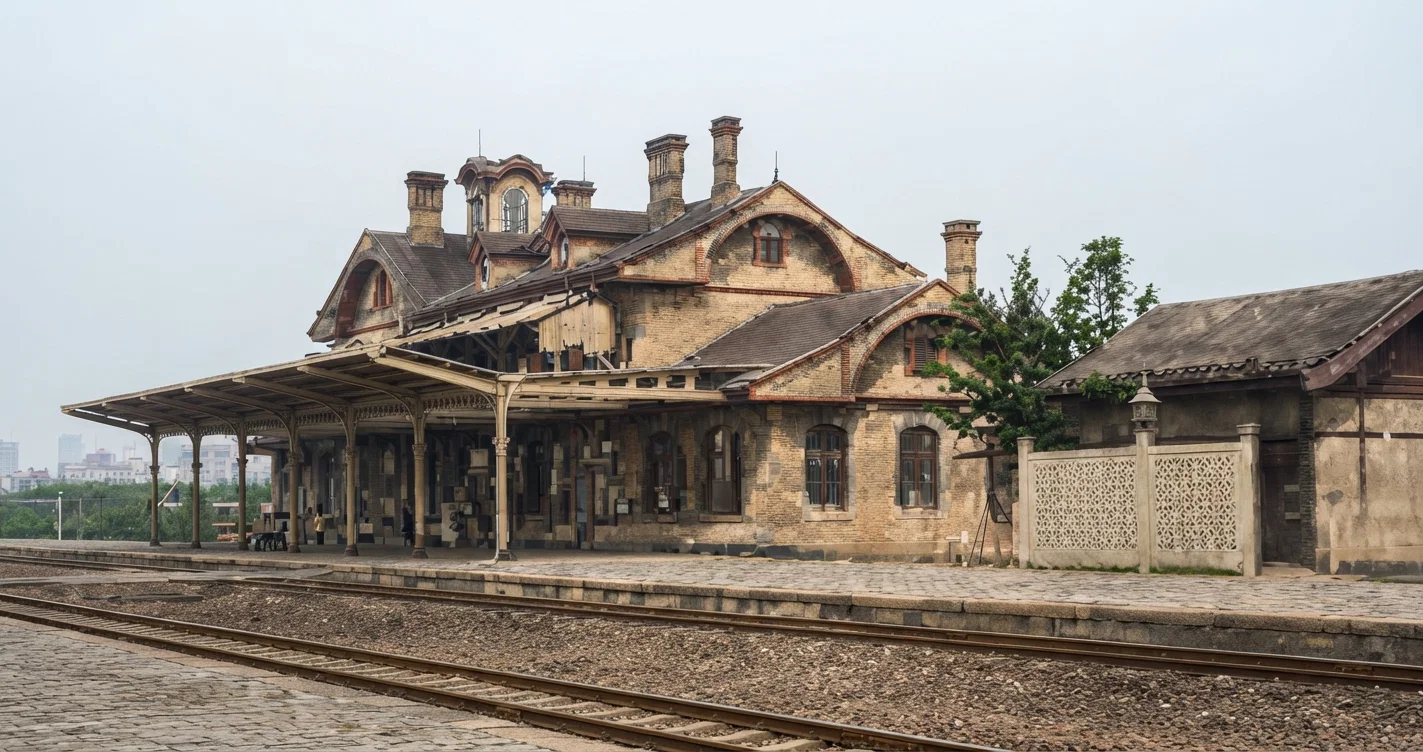
Railway Station, Shanghai, China.
Directly following the ratification of these treaties, men of wealth began the construction of railways in order to get at China's mineral wealth, and also to reap the fruit of the rich soil of the "Flowery Kingdom." At once there was a railway projected from Peking to Canton. The capital for the construction of the first half—from Peking to Hankow—was furnished by the king of Belgium; and that for the second half—Hankow to Canton—was advanced by an American syndicate headed by J. Pierpont Morgan.
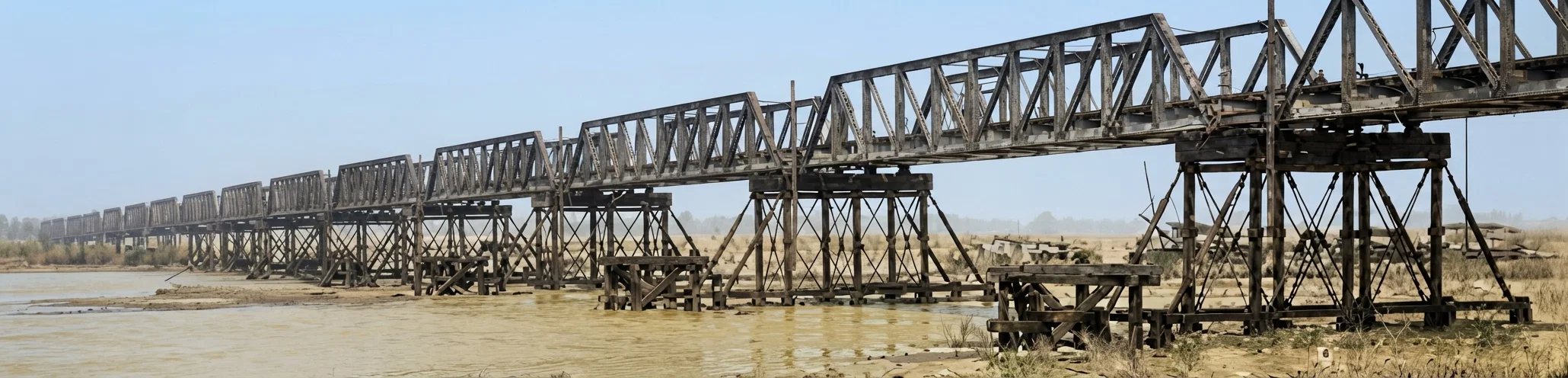
The line from Peking to Hankow was completed by the construction of the bridge across the Yellow River, which was reported to be the longest bridge in the world, being nearly two and a half miles in length. This structure was finished in 1905. To-day trains cover this distance in thirty-six hours. Lines are now projected throughout all parts of the empire. Many of them are completed, and building on the others is being carried on with remarkable rapidity. One of the latest lines completed is that from Shanghai to Nanking, a distance of two hundred miles. The ties are of iron, and the first passenger train made the trip on March 27 of this year. There are few coaches that will surpass the first- and second-class coaches running on this line. The rates of passage are half a cent a mile for third class, and two cents a mile for first class.
These facilities for transportation, thus promoting commerce, resulted in a demand for a post-office department. Previously mail and official messages were carried by private couriers in the interior points, and by the customs department on the navigable waterways. China was laid off in districts and an inspector set over each district to provide for native couriers in the territory under his jurisdiction; and this organization of the post-office department has gone on with remarkable rapidity, until to-day it is possible to send mail to all parts of the Chinese Empire at a rate about one-half the postal rates in the United States. At first the post-office department was encumbered by difficulty in covering long distances by native couriers, but now these distances have been greatly shortened by steam conveyances. It is practically in the short period of four years that the post-office department has inaugurated its complete system and perfected it to the state in which we find it to-day. In the larger cities will be found well-constructed post-office buildings and postal couriers who deliver mail at the residences and take up the mail from four to five times a day. The inauguration of the telegraph system has made it possible to start daily newspapers in the larger cities of the interior, and thus has created a demand for literature. To illustrate how extensive this system has already become, just last week in a storm the telegraph wires were destroyed between Shanghai and Hankow; messages were therefore sent from Hankow to Che Foo and transmitted from that city to Shanghai, with an option of several other lines over which messages could have been transmitted.
Railroad Bridge Spanning Yellow River, China. There are 103 piers, each span being about ninety feet, one hundred tons test.
The old system of education was based upon the Chinese classics. A recent edict requiring only the writings of the sages to constitute a complete education, resulted in a marked demand for a new literature. This was effected by China's most progressive statesman, Yuan Shi K'ai. The system of education has been completely reorganized, and modern school buildings have been erected in the large cities of each province, which have been supplied with the best teachers accessible. This, with the reorganization of the army and the complete reorganization of the whole system of government, has all tended to create a stir throughout the realm of his majesty, the Emperor Kuang Hsi. It is within the scope of this article to point out only in a general way, in but few lines, the marked development that has taken place within the last five years; but it has created a spirit of investigation among all, similar to what was foretold by Daniel, that many should run to and fro and knowledge should be increased. The running to and fro is for knowledge. Knowledge to-day is largely transmitted through literature; and there is a crying demand in all parts of the empire for knowledge as to what these things mean.
There is an interpretation, we believe, to the meaning of this stir in the old empire of China; and it is the privilege of those who have the interpretation to step in now and give the message that is in such demand. There is no time of such great opportunity to interpret the meaning of the present striking changes in the departures from the past; and to make known their bearing as the ushering in of more important events, than just now. The question is, What use shall we make of the facilities which commercial men are placing at our disposal, at great expense to themselves, as aids in carrying the Gospel of salvation to the millions in heathen darkness here? What shall we do with reference to these present opportunities? Shall we not supply the demand?