Significant Actions of the Presbyterian General Assembly in Its Recent Session in Kansas City.
HE question of securing and enforcing Sunday laws was a leading topic of the one hundred twentieth session of the General Assembly of Presbyterians in Kansas City, Mo. It passed resolutions against Sunday funerals, Sunday excursions, and employment of labor on Sunday; tabooing the Sunday paper, urging a half holiday on Saturday, the omission of Monday morning classes in schools, pledging alliance in work with Sunday leagues, recommending Sunday-observance committees in each synod, indorsing the work of the American Sabbath Union, and the Woman's National Sabbath Alliance, recommending a sermon on the subject of Sunday observance to be preached in each church next April, and memorializing Congress to pass a Sunday-closing law.
The foregoing list of resolutions would indicate that the enforcing of Sunday by law occupied quite an amount of the attention of the Assembly. It is well for people to keep Sunday who are of the opinion that it is right for them to do so. But people who do not believe in it, or who are indifferent to it, should be allowed the same freedom NOT to keep it that others enjoy to observe it. This is the statement of one of the commonest principles of freedom. It is a principle that the fathers of this Republic suffered much to establish as a corner-stone in the temple of freedom that was erected on this soil.
The Presbyterians believe that Sunday is the Sabbath, and they insist on calling it the Sabbath; they do not as a general thing speak of the day merely as Sunday.
Everybody knows that Sunday is a religious institution. People are asked to refrain from working on that day because some think that the day has a degree of sacredness attached to it. The claim is made that since Christ rose from the dead on the first day of the week therefore the Sunday should be observed sacredly and religiously. Now since this is the very nature and the character of the day it is absolutely impossible to make something secular out of that which is essentially religious—out of that which has its whole history woven full of religious sentiment. And for this very reason Sunday legislation must always be religious legislation.
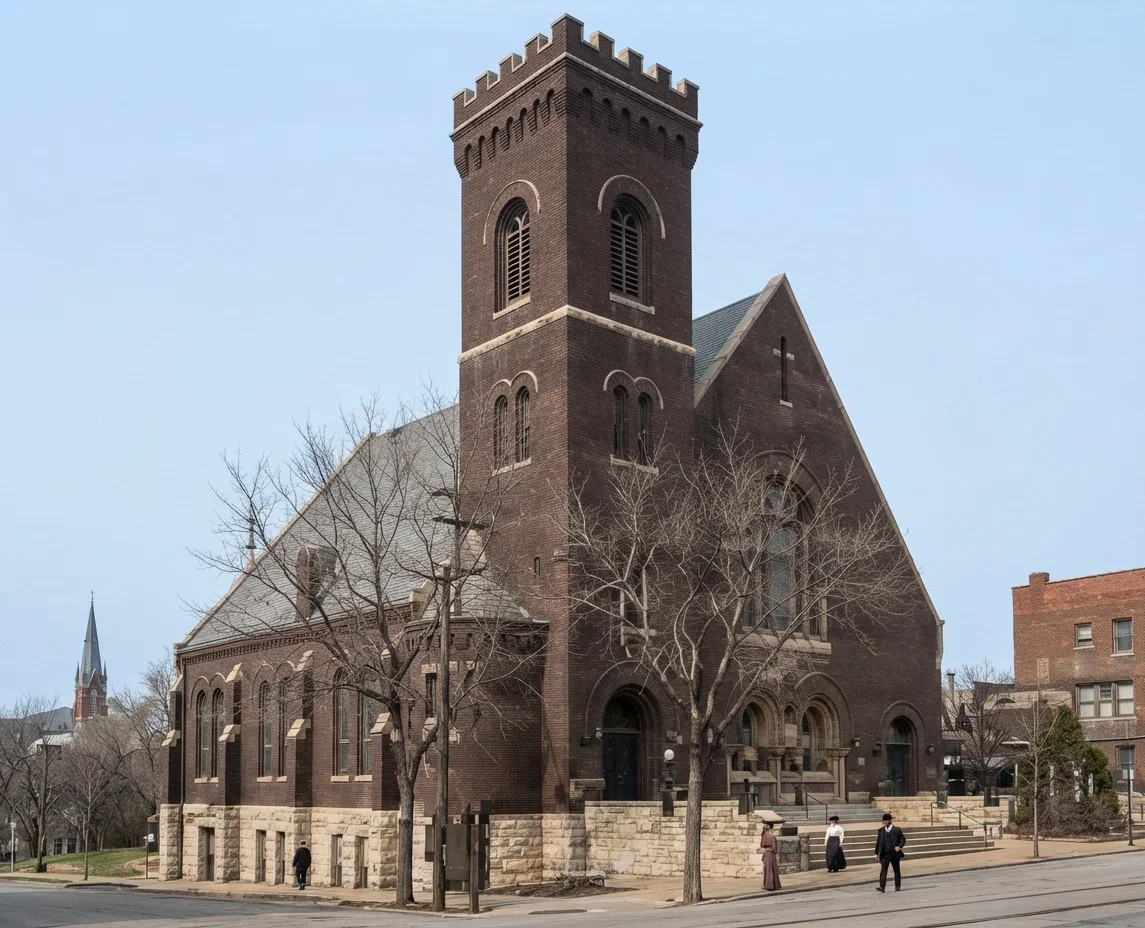
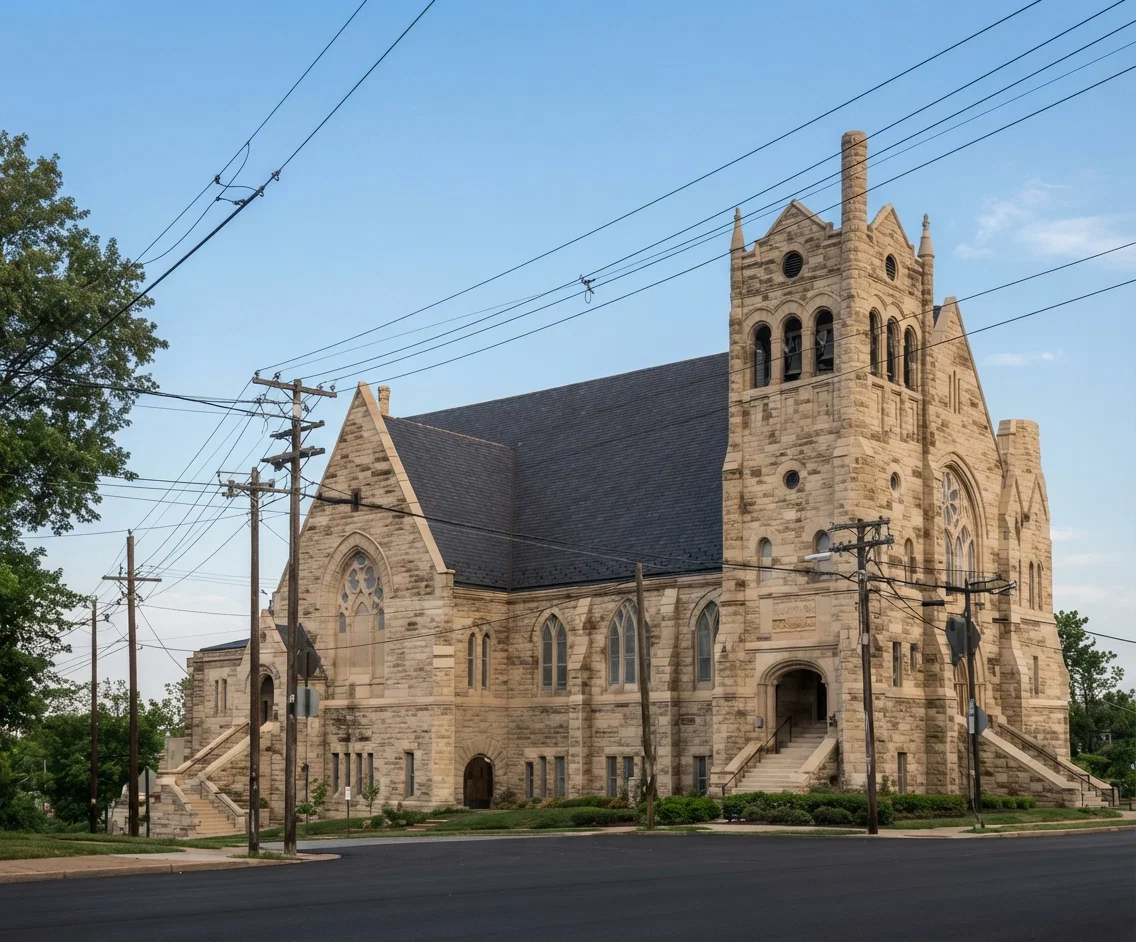
First Presbyterian Church, Kansas City.
Sunday legislation is always asked for by the churches. If any society that is not essentially a church organization joins in asking for Sunday laws it can in almost every instance be found that the church is back of the asking. The church is responsible for the interest that any particular society outside of the church may take in securing and enforcing Sunday laws.
When this government was formed, the object was kept prominent of having religion entirely separated from the state. The experiences thru which many of the fathers had passed impressed upon their minds strongly
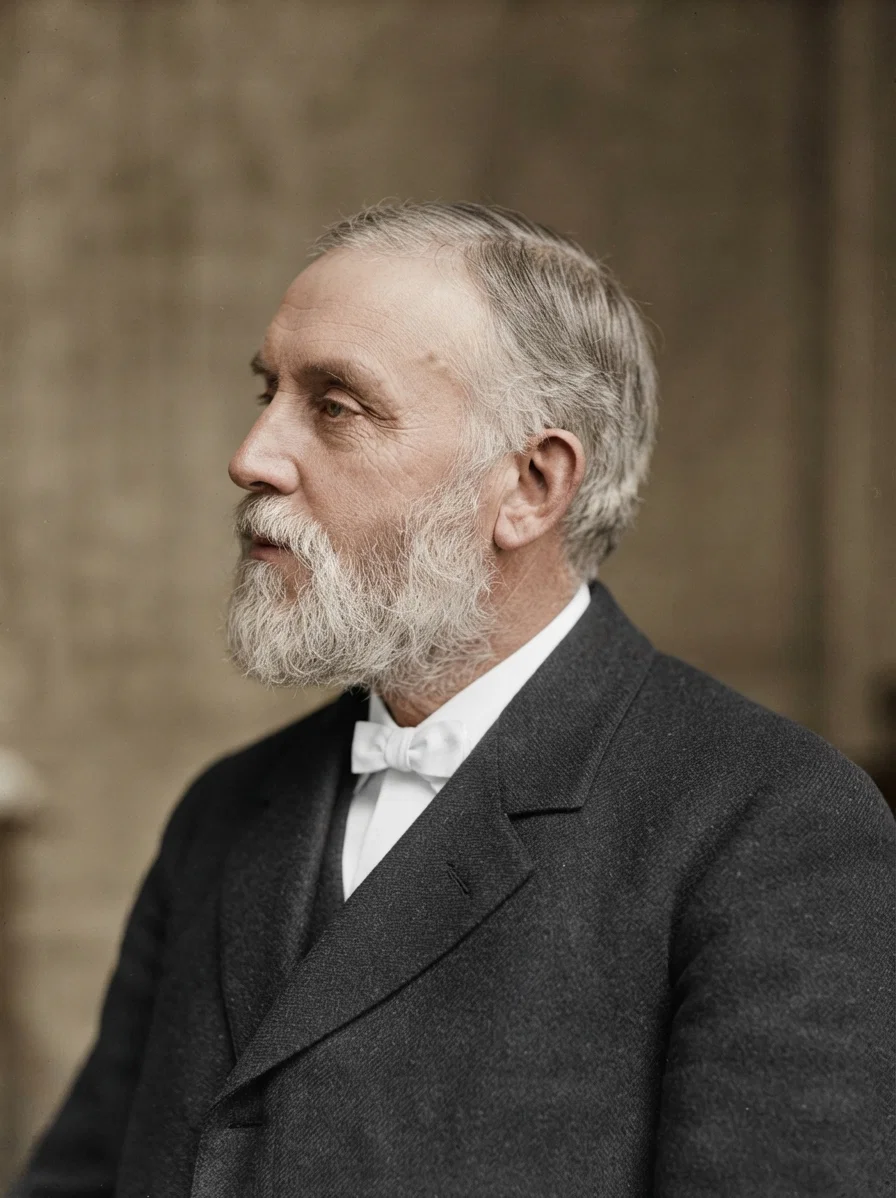
Rev. William Henry Roberts, D.D., LL.D.
Moderator of the Presbyterian General Assembly, Kansas City.
that where the state undertook to control or influence the religion of men, it brought on the cruelest kind of persecutions.
The Declaration of Independence set forth these principles, and no sooner was it promulgated than the Presbytery of Hanover, Va., proceeded to indorse it by sending a memorial to the Legislature of their state. This memorial was indorsed by the Baptists and Quakers, showing that the religious sentiment of that time was in favor of allowing freedom in religious matters, and in order to have this freedom the state must not legislate upon religious subjects. The memorial that they sent is the following:
"Now, when the many and grievous oppressions of our mother country have laid this continent under the necessity of casting off the yoke of tyranny, and of forming independent governments upon equitable and liberal foundations, we flatter ourselves that we shall be freed from all the encumbrances which a spirit of domination, prejudice, or bigotry has interwoven with most other political systems.
"This we are the more strongly encouraged to expect by the Declaration of Rights, so universally applauded for that dignity, firmness, and precision with which it delineates and asserts the privileges of society, and the prerogatives of human nature, and which we embrace as the Magna Charta of our commonwealth, that can never be violated without endangering the grand superstructure it was designated to sustain. Therefore we rely upon this Declaration, as well as the justice of our honorable Legislature, to secure us the free exercise of religion according to the dictates of our consciences.
"In this enlightened age, and in a land where all of every denomination are united in the most strenuous efforts to be free, we hope and expect that our representatives will cheerfully concur in removing every species of religious as well as civil bondage. Certain it is that every argument for civil liberty gains additional strength when applied to liberty in the concerns of religion; and there is no argument in favor of establishing the Christian religion but may be pleaded, with equal propriety, for establishing the tenets of Mohammed by those who believe the Alcoran; or, if this be not true, it is at least impossible for the magistrate to adjudge the right of preference among the various sects which profess the Christian faith, without erecting a claim to infallibility, which would lead us back to the church of Rome.
"We beg leave farther to represent, that religious establishments are highly injurious to the temporal interests of any community.
"We would also humbly represent that the only proper objects of civil government are the happiness and protection of MEN in the present state of existence; the security of the life, liberty, and property of the citizens, and to restrain the vicious, and encourage the virtuous by wholesome laws, equally extending to every individual; but that the duty which we owe to our Creator, and the manner of discharging it, can only be directed by reason and conviction, and is nowhere cognizable but at the tribunal of the universal Judge.
"Therefore, we ask no ecclesiastical establishments for ourselves; neither can we approve of them when granted to others. This, indeed, would be giving exclusive or separate emoluments or privileges to one set of men, without any special public services, to the common reproach and injury of every other denomination. And for the reasons recited, we are induced earnestly to entreat that all laws now in force in this commonwealth which countenance religious domination, may be speedily repealed; that all of every religious sect may be protected in the full exercise of their several modes of worship; exempted from all taxes for the support of any church whatsoever, farther than what may be agreeable to their own private choice or voluntary obligation. This being done, all partial and invidious distinctions will be abolished, to the great honor and interest of the state, and every one be left to stand or fall according to his merit, which can never be the case so long as any one denomination is established in preference to others."
The Episcopalian Church was the established church of Virginia at that time. Thomas Jefferson supported the memorial that was sent by the Presbyterians, and after what he pronounced "the severest contest in which he was ever engaged," a law was passed Dec. 6, 1776 totally disestablishing the church in Virginia.
The action of the Presbyterians of to-day in seeking to have such rigid Sunday laws passed and enforced is very much in contrast with the action of their brethren a little more than a hundred years ago. The people of this11world seem to keep revolving around a circle. The principles that have been shown to be oppressive and that are therefore cast off in one age are brought out in another, thinking that they can be made to work all right now. And thus history is constantly repeating itself. The people of this time are moving strongly toward another religious despotism. We should keep in mind what it all means.
Many of the good people in each of the various churches are coming to feel that the church must deal with the many social problems that are confronting us. This would be all right if the church felt that she must deal with them by preaching the Gospel in the demonstration of the Spirit and of power. But that is not the plan on which they propose to work. They propose to combine and bring the state to their aid, and there is where the danger before the world lies. The church deplores its weakness, and so is seeking to the state for help. There is an abundance of history to show what the result will be. There is also clear prophecy to foretell the outcome of it. T.