Our Letter from Athens

2%

Pacific Press Publishing Company · Mountain View, Cal. · Dec 16, 1908

FromSigns of the Times, Vol. 35, No. 20.

Read the full edition

Our Letter from Athens

By Prof. Warren E. Howell

II.—The Reform Movement in Turkey.

THE Greek press and administration are watching with keen interest the rapid developments in the new experience of their nearest neighbor and former master—Turkey.
It has been only one generation since Greece herself passed through the throes of a revolution that set her free from the domination of the Turk. While a spectator to the struggles and triumphs of her sister state, her appetite is whetted anew for the sweet morsel of genuine liberty and justice. One of the Athenian weeklies, The Truth, says:
"We Greeks hail with sincere joy and unsuppressed enthusiasm the regeneration of Turkey. And we pray from the heart a double prayer; first, that the new constitutional government may be firmly established by its sincere and faithful application to the nation's needs—more sincerely and faithfully than we are applying it here in Greece. And secondly, we pray that, as there have arisen for Turkey the New Turks, so for Greece there may arise New Greeks, who will give new life to free Greece, withered as it is by shameless bartering and base administration before it blossomed and sent forth its fragrance. For here we do not have the constitutional blessings of equality and liberty and justice. We have a shameful unconstitutional traffic in lawlessness, inequality, tyranny, and corruption. That our administrative body may be cleansed and may cease contaminating the soul of the people and the nation, it must be subjected to cauterization, to critical surgery. Where are the new Greeks who will undertake this major operation?"
This is not a very pleasing picture that Greece draws of herself. But while she is felicitating her neighbor on her brighter prospects, and turning the searchlight upon her own failings, would that she might discover the real cause of her shortcomings. While she is eulogizing the freedom of the press enjoyed for the first time in Turkey, would that she might discern that the very stricture she has imposed and maintains upon her own press is strangling the very life out of her own moral being; namely, the prohibition of the printing and circulation of the Bible in a language that the masses can read—the modern Greek.
Righteousness alone exalteth the individual and the nation. When the great teacher and standard of righteousness, the word of God, is concealed in a language unintelligible to the majority of the people, when the saving truth of that word is covered up with the traditions and ceremonies of the established church, and when no one is allowed to work openly for the liberation of the sincere from this spiritual thralldom by teaching the simplicity of the Gospel as it came fresh from its Author, how long shall a people, a nation, remain bound by injustice, unrighteousness, and the tyranny of sin? When will deliverance come from a bondage to a greater enemy than the Turk? Shall we not hope that as Turkey removes the censorship of the press, she may not make the fatal mistake of Greece in retaining it upon the Book of books, and of confining religious freedom to the established church, if such indeed can be called freedom? May we not hope also that if the full liberty implied in a constitution is actually granted in Turkey, Greece will catch the inspiration, and open wide her doors to the free and full entrance of the word that giveth light[?]. "For if Christ shall make you free, ye shall be free indeed."
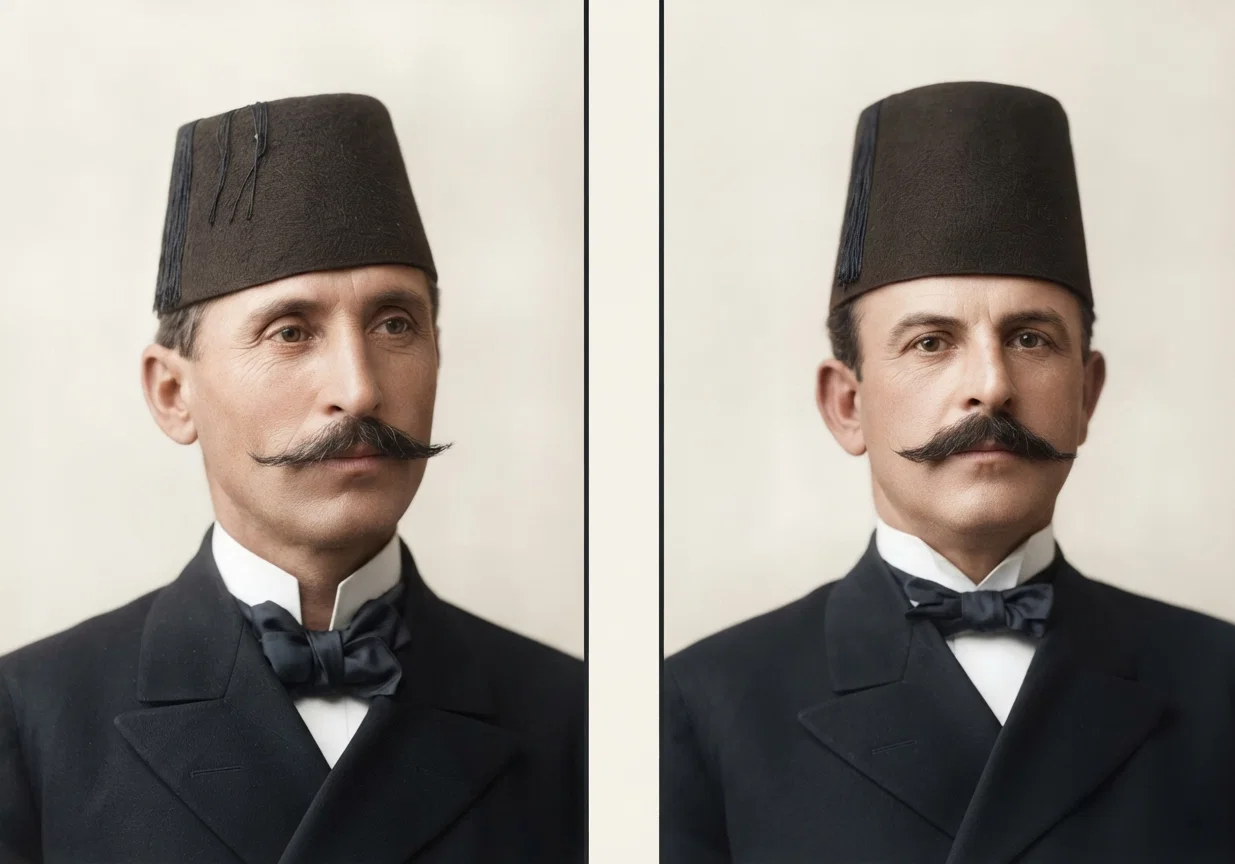
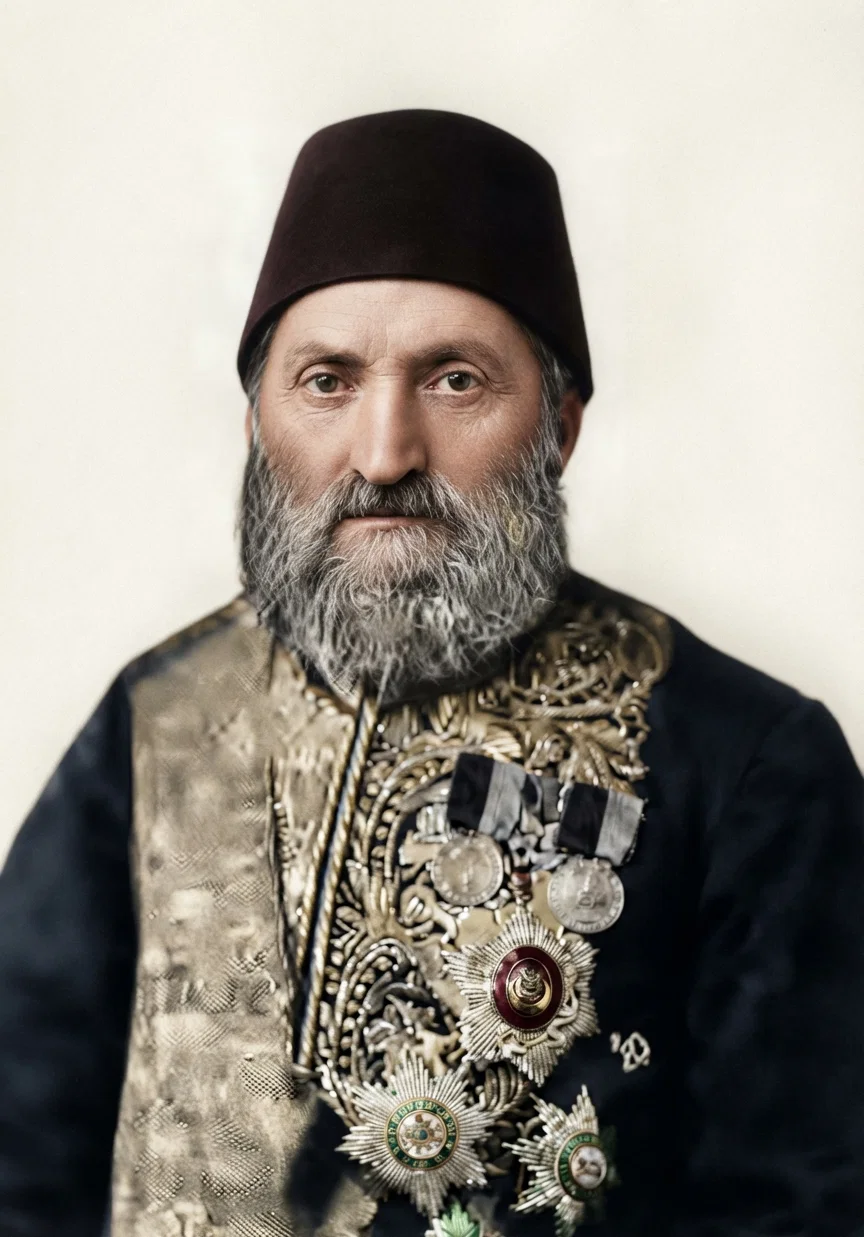
Representative leaders in the movement for a New Turkey.
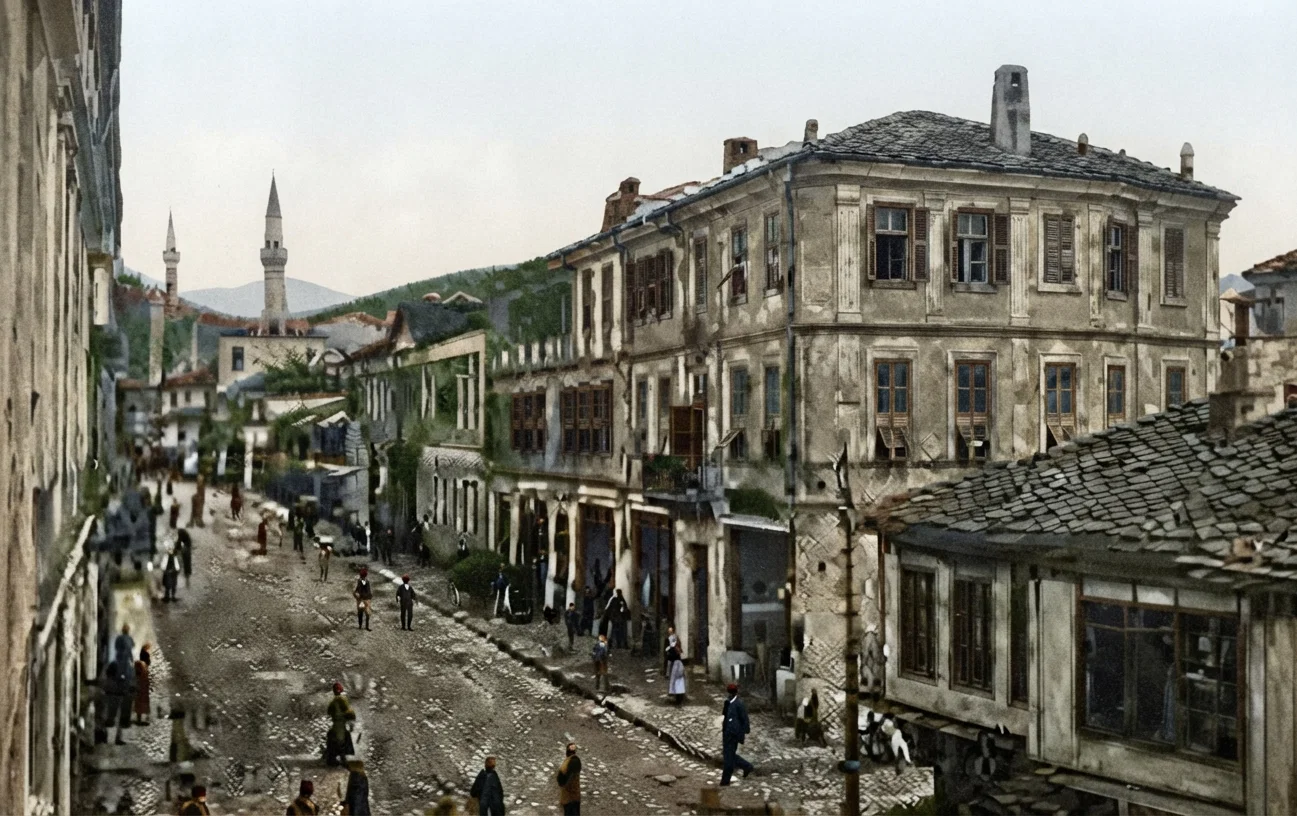
A street scene in Monastir, Turkey, where the reform movement broke out.

The New-Turkey Movement.

It will aid in understanding the meaning of this reform movement to the subjects of the Ottoman Empire and to the world, if we summarize briefly the leading features of the general status of affairs prior to the granting of the constitution.
1. The sultan an absolute despot.
2. The maintenance of a vast secret police service for political purposes, at a cost of two million pounds per year.
3. Every citizen of education, wealth, or influence, subject to a harrowing espionage. One illustration cited by a Greek correspondent in Constantinople will suffice:
"Constantinople was witness last Friday to the following unexpected sight: Two members of the Cabinet returning home from their offices in the same carriage! When would Cabinet members formerly have dared to meet and converse in private? They would immediately excite the suspicions of the clique at the Yildiz. They would be denounced to the sultan as forming a collusion against the government. Spies would be put upon their track. On coming out of their offices, they would be obliged to return directly to their homes. A spy near the door would note the hour and minute of their exit. As they passed along a fixed route home, a second spy a little farther on would note the exact time of their passing his station. Then a third, a fourth, a fifth, all along the way would do likewise until the last one would note the time the carriage arrived at the house. In the evening these notes would be sent up to the Yildiz, where the exact time required for a carriage to pass from the member's office to his house is known. The notes would be carefully examined and compared. If there were a few minutes' discrepancy in time, the member is set down as a suspect. He saw somebody along the way, he talked with some one, he visited somebody, and the fate of the unfortunate one would be fixed."
4. A strict censorship on speech and the press. Up to a month ago no one dared even to utter the words "freedom," "fatherland," "nation," without fear of arrest and exile or death. Not a Turkish dictionary has contained the words "liberty" or "equality." Only the other day a publisher announced a new edition of his dictionary to contain for the first time in thirty-two years these two and many other words forbidden by the censors.
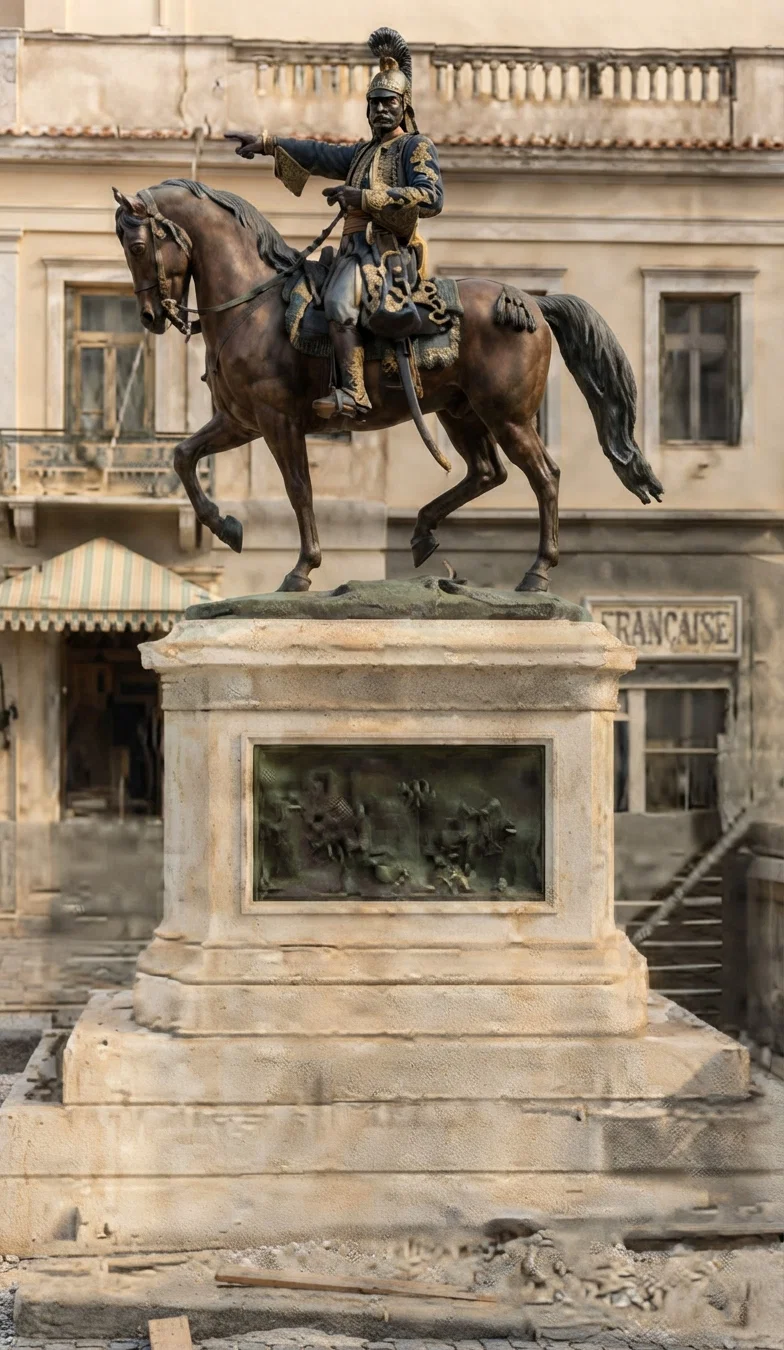
Bronze statue of Gen. Kolokotrones, commander of the Greek army in the War of Independence (1821-1829.) The right hand is pointing toward Macedonia as rightfully belonging to Greece, but yet to be acquired.
5. The condemnation and banishment or execution of political suspects without process of law. The number of political exiles in Europe and Egypt is said to be 5,000; in the United States 200,000.
6. The farming out of taxes, thus making the practical rate of taxation for the taxpayer subject to the greed and ingenuity of the collector.
7. The harpies of the court and the vultures of the provinces preying upon public funds and private fortunes, the latter by intimidation.
8. The harems of the sultan and the rich, filled with women kept in close retirement, with women in general under great restraint.
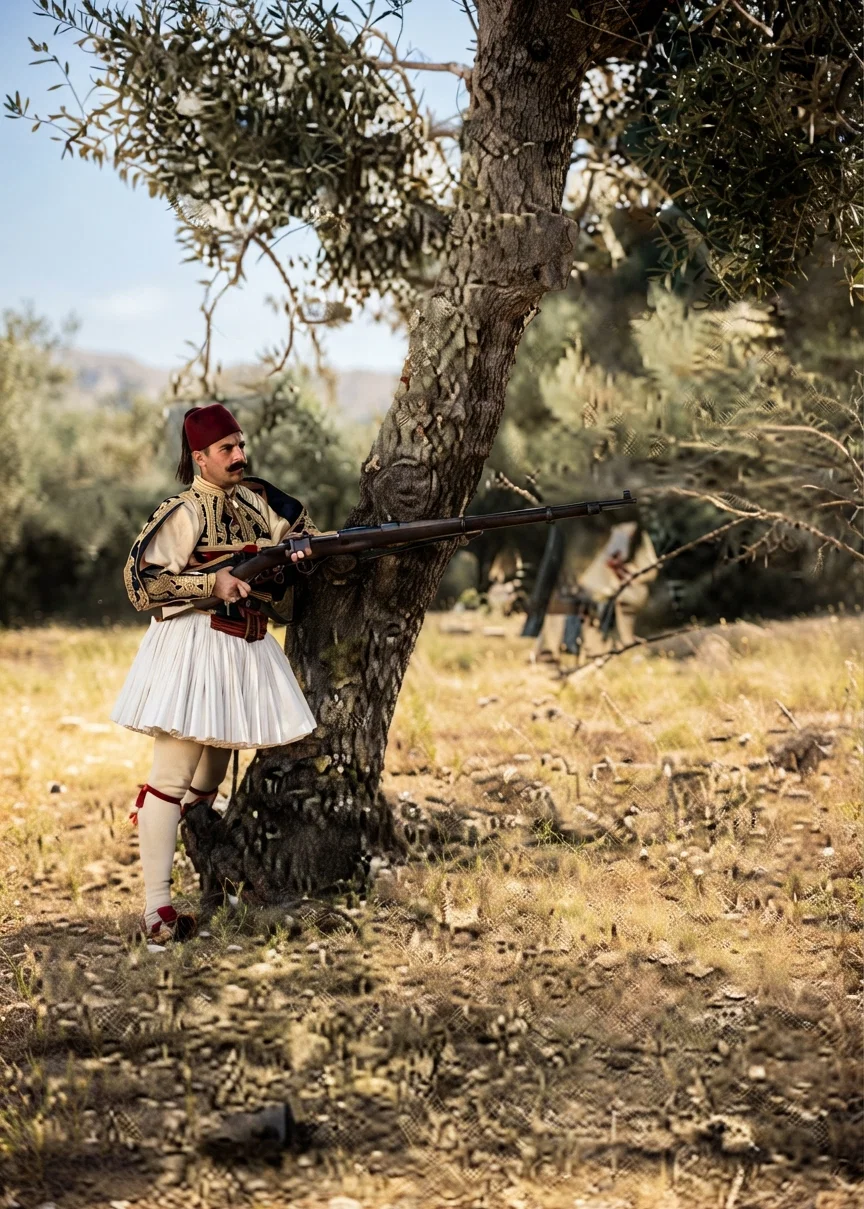
A method of warfare in Macedonia.
9. Irreconcilable racial and religious prejudices, generating dissensions, bloodshed, and anarchy.
10. Lack of strong central government, the ineffective administration and resulting weakness of which constitute a standing temptation to the powers to interfere in Turkish affairs to their own aggrandizement.
In the face of these conditions, there has been for years a partly suppressed but growing longing for freedom from this terrible oppression. New-Turkism, as the Greek press styles this reform movement, is not altogether of recent origin. More than forty years ago it asserted itself, and all but succeeded in making radical changes in the corrupt administration.
Abdul Aziz, second predecessor to the present sultan, himself a weak character, was persuaded by his prime minister and others of the necessity of seeking to better the desperate situation into which his misrule had brought the empire, by means of constitutional reforms, and was induced to visit the courts of Europe in 1867 to acquaint himself with better methods of administration. But his return was hastened by the death of his prime minister, and Abdul Aziz, instead of profiting by his journey, sank back, under the influence of his harem and a former unprincipled prime minister, into greater extravagance and more arbitrary rule than before. His excesses led his ministry finally to determine upon and execute the drastic measure of deposing the sultan to save the empire from disintegration.
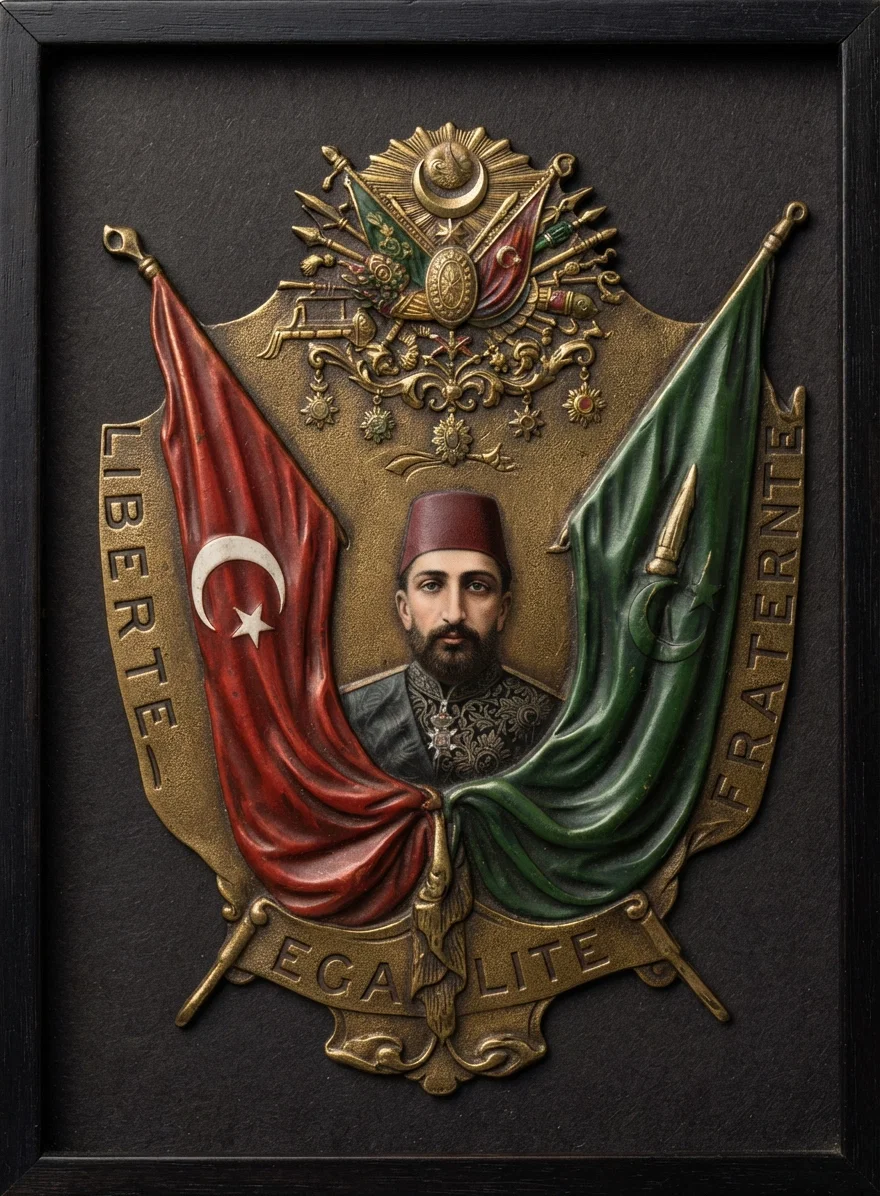
Constantinople post-card representing a medal suggested by the sultan to commemorate the proclaiming of the constitution. In the center is the sultan, on the right the green flag of Mohammed, on the left the red flag of the Empire. Does the sultan feel at home amid Liberty, Equality, and Fraternity?
His successor, Mourat V, committed himself to the constitutional movement, but by intrigues of the deepest dye, on the part of the opposition, he was, after only a few months, declared mentally incompetent to rule, and the present sultan, Abdul Hamid Han, was placed on the throne, Aug. 31, 1876.
Shortly after his accession, he chose as grand vizier, Medat Pasha, the author of the constitution that has just been proclaimed for the second time. In his first address to his cabinet, the sultan attributed the deplorable state of governmental affairs, first, to a disregard of the laws of the Koran; and second, to officials' following their own inclinations and wills instead of fixed principles. To aid in recovering the state from bankruptcy, he lowered the annual allowance for the princes and for the expenses of the court, and reduced his own salary $150,000. He abolished slave-holding, and urged vigorous action in putting down insurrection in the provinces.
Present Grand Vizier, Kiamel Pasha.
He next ordered his ministry to set things in order for the adoption of Medat's constitution for the empire. It was proclaimed Dec. 23, 1876. In his address on that occasion, the sultan said:
"Divine Providence has reserved for my rule the responsibility of carrying out this happy transformation [in form of government], which gives the highest assurance of the happiness of my people. I thank God that I have been made His instrument to this end."
Concerning the fate of the constitution at that time, the sultan said recently, on the occasion of his taking oath to maintain the renewed constitution,
"I granted a constitution in the beginning of my reign, and withdrew it later because the country was not prepared for it. I now proclaim it in good faith and desire it applied at all odds. I am now in the presence of the Sheik-ul-Islam [the highest Mohammedan ecclesiastic next the sultan] and take oath that the preservation of the constitution will be my sole care."
He then took oath twice, and directed theSheik-ul-Islam also to take oath in the presence of the people.
Thus local and international politics in the apparently insoluble Eastern Question take on a new phase. Its outcome will be watched with the keenest interest, especially by the student of prophecy, who, knowing the ultimate solution, has only to watch the unfolding of events to that end, and mark the ways of God in the kingdoms of men. It is a bold move from an unlimited monarchy to representative rule; for an autocrat who has done according to his will for thirty-two years, to submit to the limitation of his power by the will of the people. But the progress of the Gospel among the benighted people of that vast empire has been slow and difficult, impeded and hedged about as it is by every sort of arbitrary and absurd restriction. Have we not a right to expect that before the final crisis is precipitated, involving as it will the peace of the entire world, a respite from the oppressions of men may be granted for the teaching of the Gospel to every creature in that great domain?
That the respite will be a brief one, there is little doubt. But that the constitution has been introduced under more favorable conditions than before, is evident from the considerations—
  1. That the impetus of the movement proceeded from the people.
  2. That it is strongly supported by the army.
  3. That its leaders have been largely educated abroad.
  4. That it has been received with unbounded enthusiasm by the prevailing racial elements, the Turks, the Greeks, and the Armenians.
  5. That the changes are being effected with so much speed and vigor that the opposition can scarcely make a stand.
As for the last fifty years, the attitude of the great powers will have much to do with the success of the movement. Yet there is no power but of God, and we may confidently expect the outcome to be in accord with the divine purpose for these momentous times.
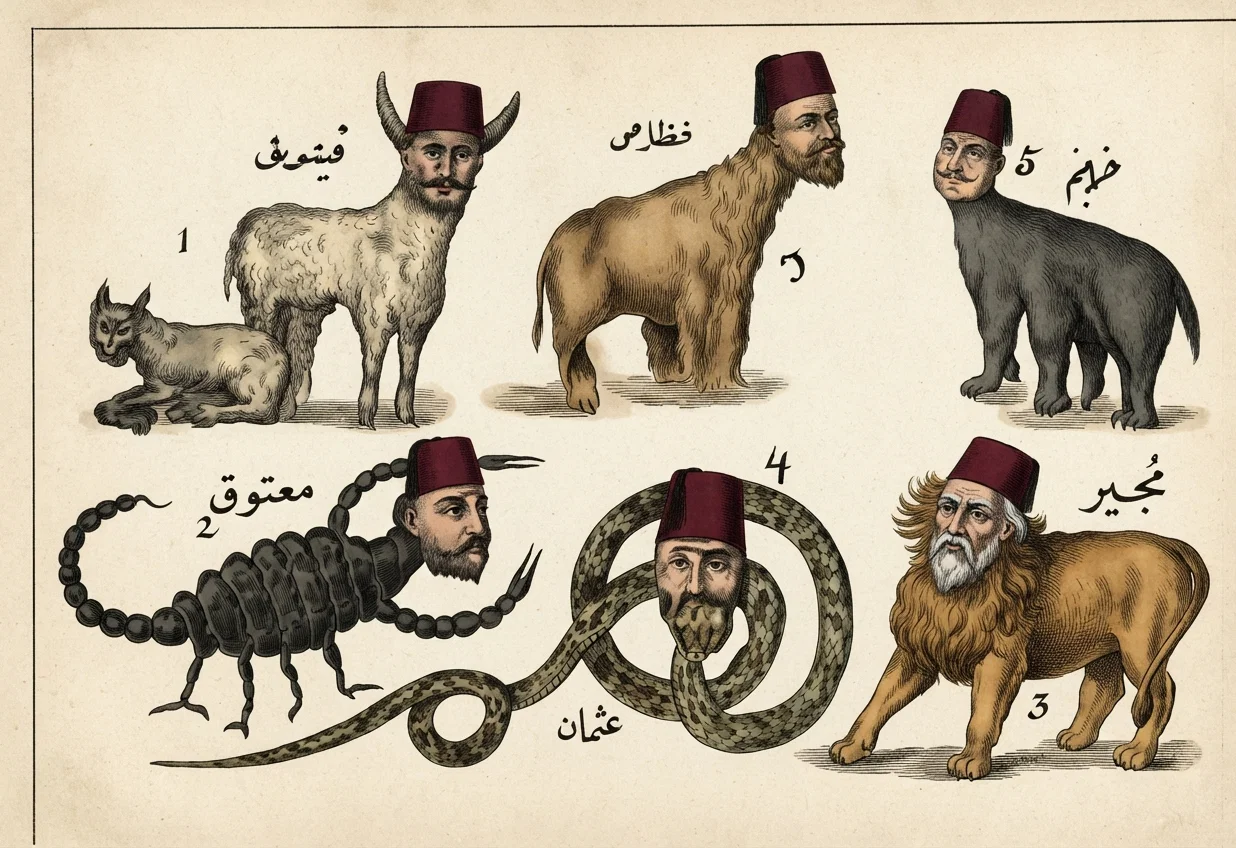
The Powers that Were. Among the first-fruits of the free press in Constantinople. (1) Chief of Police. (2) The Court "Crab." (3) Member of the Imperial Council. (4) The notorious Izzet Pasha who escaped so narrowly on an English boat. (5) Chief of Detective service, cut to pieces by a mob. (6) Aid-de-Camp and Private Detective of the sultan.