Monarchy, Revolution, and Republic in Thirty-Six Hours
By C. E. Rentfro
WHEN the tempest at the time of King Carlos's death passed away few thought that in little more than two years the kingdom of Portugal would pass away, and the Portuguese republic take its place. But recent facts have demonstrated it.
Concerning the continuance of nations, God has thus spoken:
"At what instant I shall speak concerning a nation, and concerning a kingdom, to pluck up and to break down and to destroy it; if that nation, concerning which I have spoken, turn from their evil, I will repent of the evil that I thought to do unto them. And at what instant I shall speak concerning a nation, and concerning a kingdom, to build and to plant it; if they do that which is evil in My sight, that they obey not My voice, then I will repent of the good, wherewith I said I would benefit them." Jer. 18:7-10.
It seemed for some time that the monarchy or kingdom of Portugal was tottering under the weight of national and personal sins. Noble men tried to bring about a reform, but they saw nothing could be done under that regimen. The union of church and state was a great cause of oppression and robbery of the people. The last great public holiday was the anniversary of the peninsular war, in 1810. The bishop had to be present to give his blessing. The special banner must be blessed. The "host" was elevated in the mass, and king, officers, and soldiers were obliged to give obeisance by saluting or kneeling.
This thing had to be changed. The change was effected in a short time. On Monday morning, October 3, 1910, the decision was reached that immediately the revolution must begin, or never. Plans had been made to capture the king and his officials when on their way to visit in the North. But the assassination of one of the chiefs by a traitor to the cause, brought about the beginning sooner than desired.
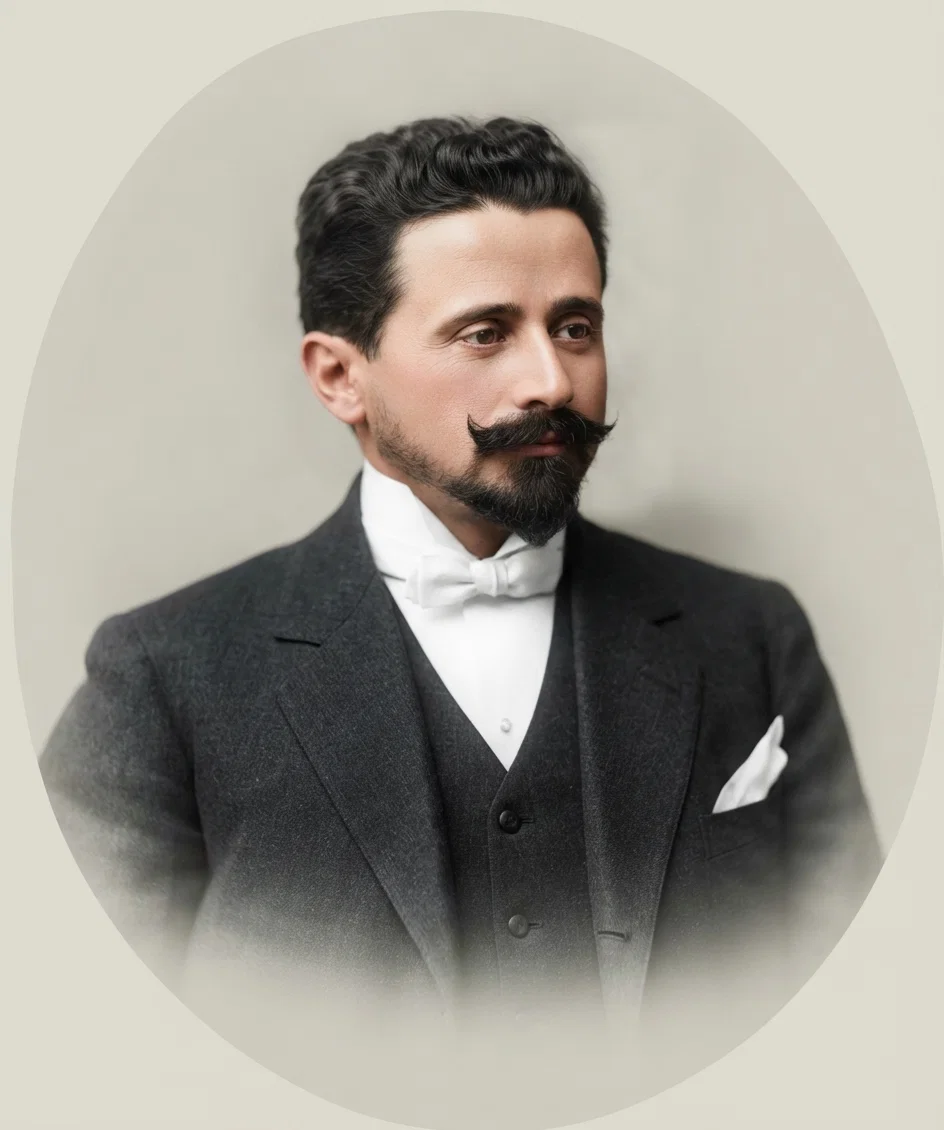
Dr. Affonso Costa, L.L.D., minister of justice of the provisionary government
A notable day in Portuguese history will be October 4, 1910. At 7 A. M. Infantry 16 and Artillery 1, and the mariners in their barracks and in three ships, all revolted. Civilians were armed by them, or armed themselves, and side by side they fought to redeem their country, against three or four regiments of infantry and one or two of cavalry faithful to their king, or monarchy. I imagine they were reluctant in fighting for something in which they had little faith.
The fighting was fierce nevertheless. We, about seven or eight miles out of Lisbon, could hear the boom of cannon. The republican forces took up prominent positions, and held them until the end. The war-ships bombarded the king's palace, from which he fled. The royal family, uniting from different points, embarked in a yacht belonging to the state, and sailed for parts as yet unknown; some say to England. [Our correspondent did not then know that the royal family found refuge at Gibraltar.—Editor.]
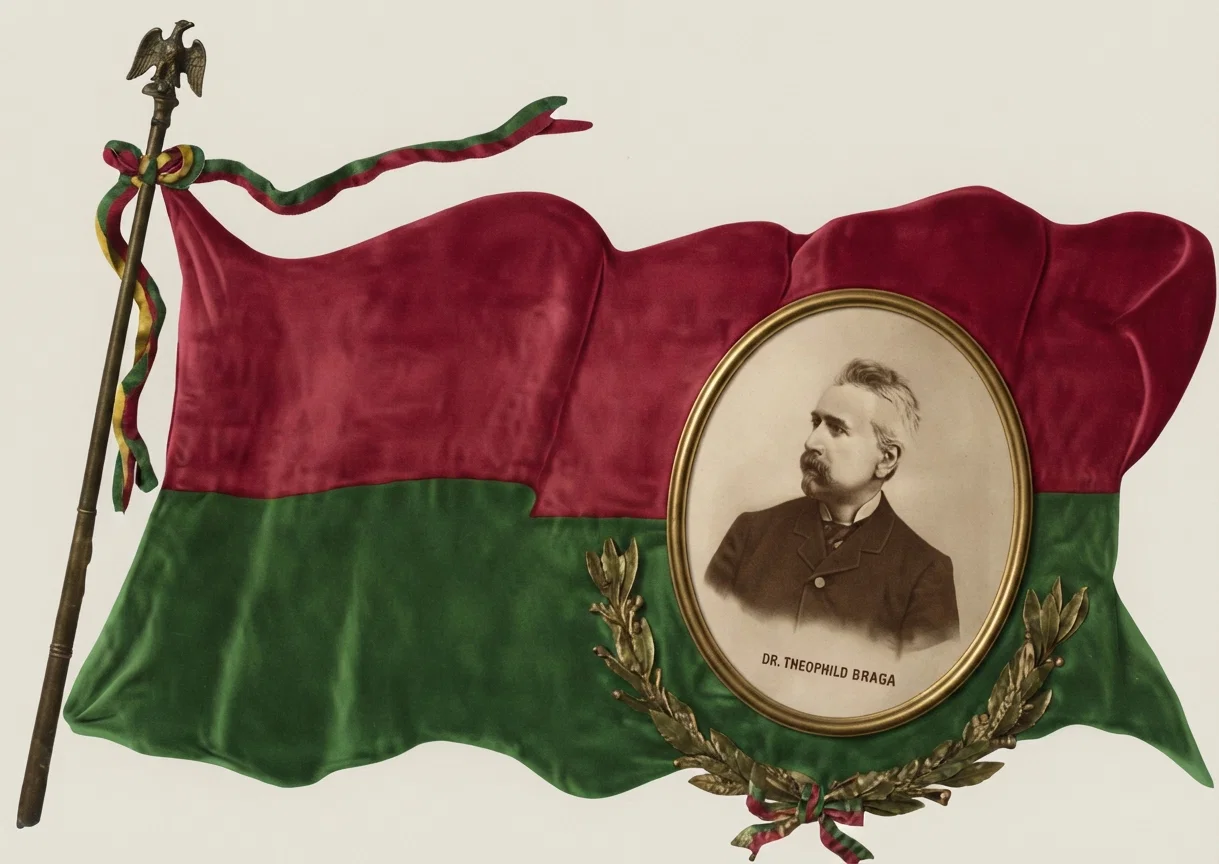
Dr. Theophild Braga, the provisional president of Portugal, and the republican flag of the new state. The upper portion is red, and lower green.
All troops were warned by ultimatum to surrender so as to avoid loss of life. By 8 A. M. on the second day, October 5, another notable date, the people went to the city courthouse, and hoisted the red and green banner of the new republic that they proclaimed. The gunboats saluted the flag with twenty-one guns, and the people almost went wild with joy.
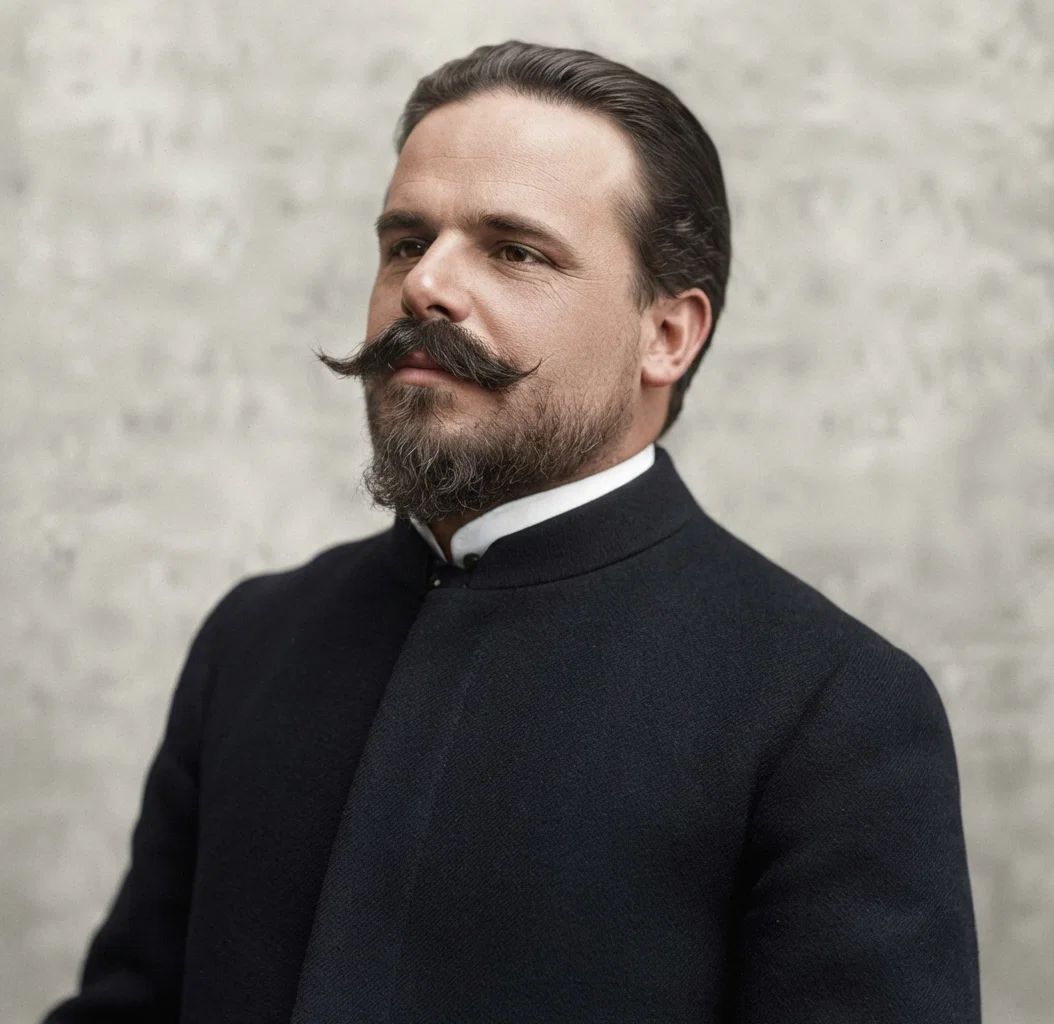
Dr. Antonio Jose d'Almeida, minister of the interior
A provisionary government began a hard work in organizing and arranging their plans for the new regimen. The surrender of all fighting troops, the adhesion of all soldiers still in their barracks, and forts, cities, towns, officials, and civilians of all classes, was accomplished in an incredibly short space of time.
I entered the city on the first train, and could not but note the good organization of military and national affairs. The people acted as police, and protected others from thieves and personal assaults. Revenge seemed to be forgotten or laid aside. The banner floated from buildings public and private, carriages and carts, and in the hands of the people.
In the general program of the government I note the following: "Banishment of monks and nuns, autonomy of essential liberty, separation of church and state," etc. These will develop into liberty of conscience and worship. These, with public instruction, are the foundation principles of progress in the nation. From a conversation I once had with the minister of justice, I know he will as much as possible be the means of guaranteeing liberty to all who are willing to abide by the liberal laws of the nation.
God had His hand in this change; and we pray that He will help and bless these chiefs of the new republic, so that they will be willing for the forwarding of His cause in this country. C. E. RENTFRO.