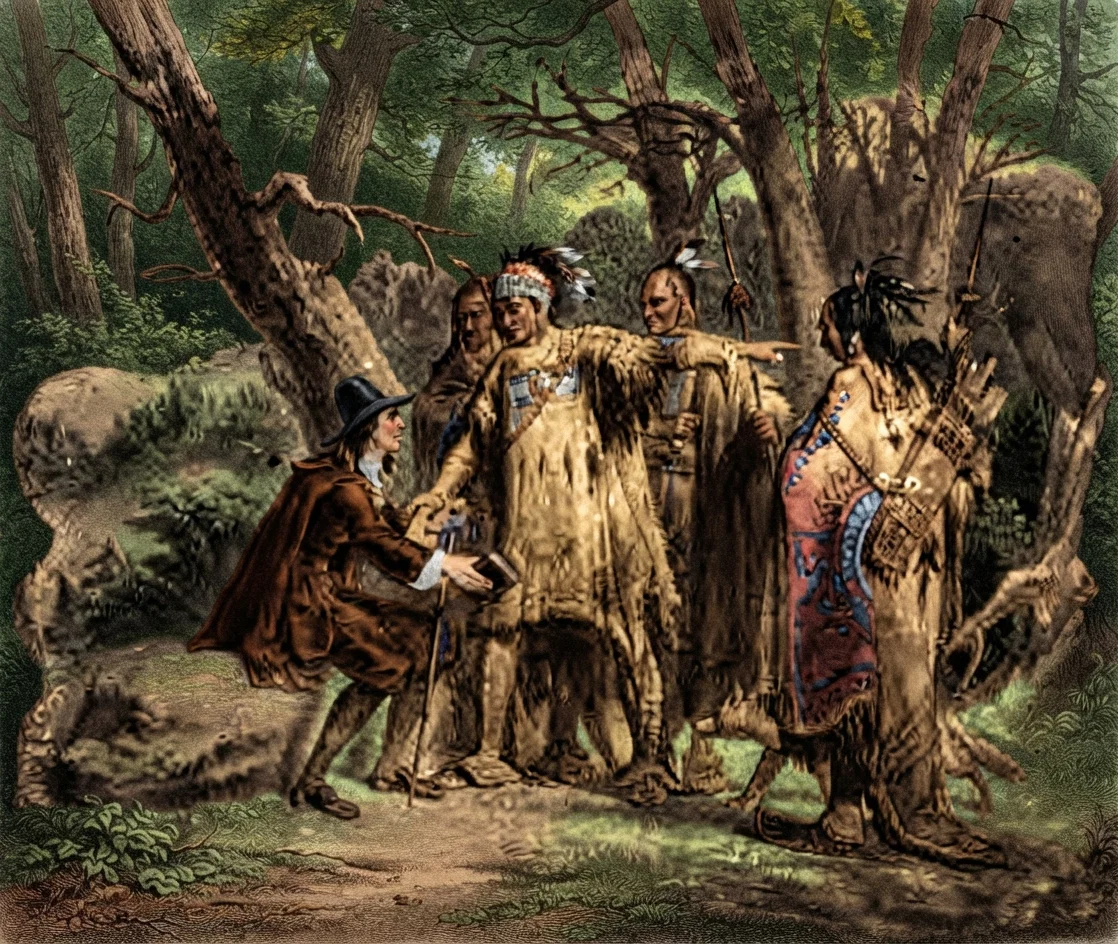
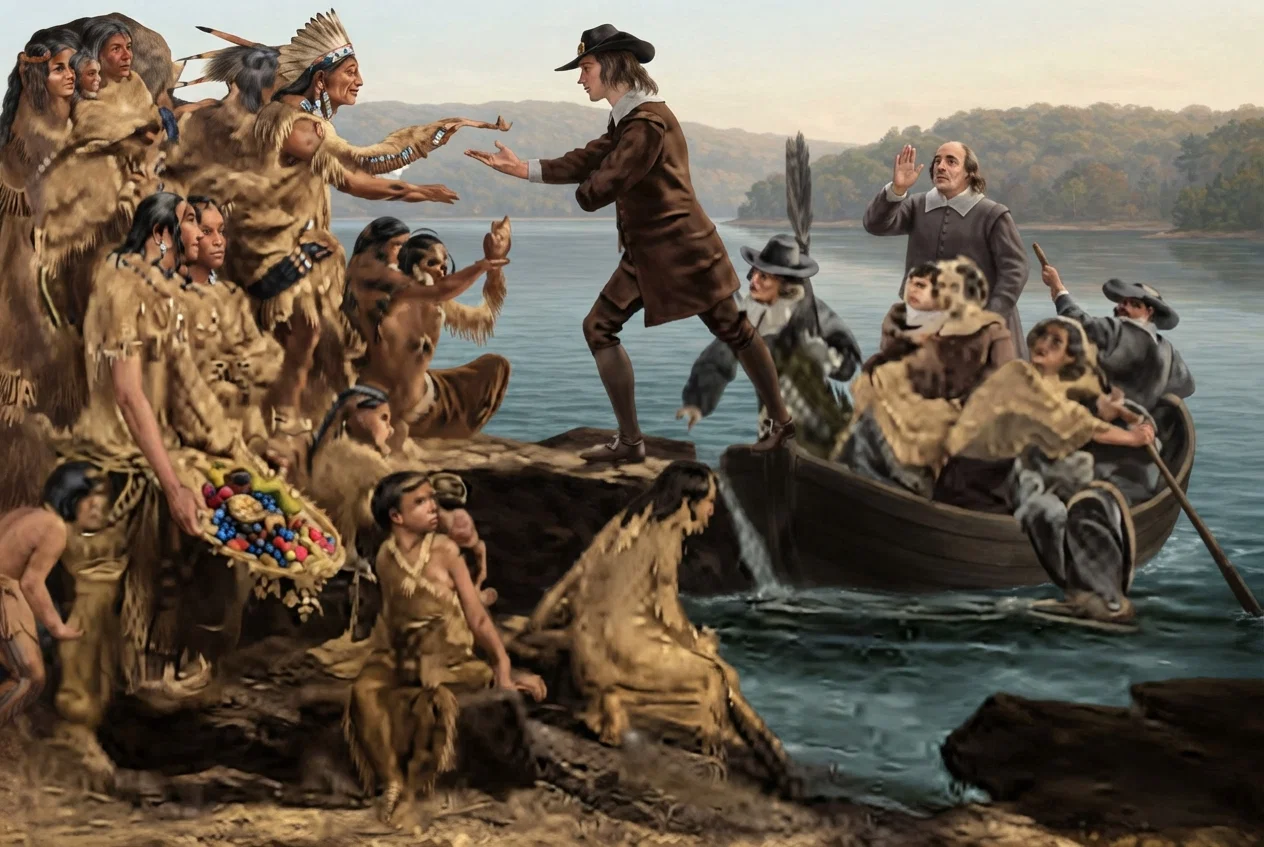
"While his conduct might seem strange to them, nevertheless it seemed more comfortable to his body and healthful to his soul to dwell among 'the Christian savages of Narragansett than among the savage Christians of Massachusetts.'"
OUR Puritan ancestors were a religious sect of English Protestants. They first arose during the reign of the great Queen Elizabeth. They came into being after the days of the mighty Reformation of the sixteenth century. The name "Puritan" is derived from the Latin word purus, meaning pure. The Puritans never designed to purify the world, neither had they any desire to purify the Church of Rome; but the task they assigned themselves was that of purifying the Reformation. As Archdeacon Hessey expressed it in his Bampton lectures, delivered before the University of Oxford, "They were determined to carry the Reformation further," that is, to reform the Reformation.
"Continental Sunday" and "Book of Sports"
RELIGIOUS liberty — the doctrine of the sacred right of conscience — was one of the cardinal tenets of Martin Luther, Melanchthon, and their colaborers. The monk of Wittenberg, especially, cared nothing for the observance, as a sacred rite, of the first day of the week. He considered dancing and the playing of games upon that day as legitimate as upon any other. It was his influence in the matter that gave birth to the institution known as the "continental Sunday."
This laxity of Sunday observance soon spread to England. King James issued his famous decree, or statute, "The Book of Sports," which permitted his subjects to indulge in amusements, pastimes, and sports, to their hearts' content, upon the first day of the week. This greatly angered the Puritans. They immediately began to demand that he at once repeal the provisions of "The Book of Sports," and enact all the laws of Moses into the civil code. This his majesty refused to do. Then the Puritans threatened his crown and kingdom, and began an attempt to overthrow his dynasty.
The monarch retaliated by persecuting the Puritans. He told them they must cease their conspiracies and seditions against his government. They did not do this, and so were driven from the realm of England.
Theocracy or Sunday Law Not Needed
THEY went to Holland, and there proposed to the Staats Generale — the legislative body of that little land — that they entirely change their form of government, and convert it into a religious theocracy. They proposed that the Ten Commandments be translated into the civil statutes, along with all the laws of Moses. And they further demanded that Sunday observance be enforced by civil law.
The Staats Generale referred their memorial to "the learned universities," who, after giving it careful and diligent consideration, returned answer to the legislature that they found no authority in the word of God for the setting up of a theocracy, or for the keeping of Sunday, the first day of the week.
This setback discouraged the Puritans. They had failed to get either England or Holland to adopt their ideas of government and of Sunday keeping. Then it was that they decided to go to a new land across the ocean, where they would be free to set up a theocratic form of government, and enforce the observance of the first day of the week. One of their most noted members has left on record a truly remarkable exposition of this scheme — published in a book bearing the unique title, "The New Canaan."
This instructive treatise set forth the fundamental theory of their governmental views. According to it, England was the land of Egypt; the Atlantic Ocean represented the Red Sea; the Puritans were the people of Israel; New England was New Canaan; and the Indian tribes — Pequots, Narragansetts, et al — took the place of the Canaanites, the Hittites, the Perizzites, etc. As God in the ancient days had appointed the heathen tribes of the land to destruction, the Puritans considered it perfectly proper for them to devote to death the Indians who surrounded them. They held that this was only carrying out the principle of the Scriptures. Hence they have been dubbed "those pious men who first fell upon their knees, and then fell upon the aborigines." It followed, too, that they had a right to seize the lands of the Indians without compensating them, for God had not given compensation to the Canaanites.
To the shores of this "New Canaan" there came a doughty little Welshman — Roger Williams by name. His ideas on religious liberty soon brought him into conflict with the prevailing notions of the theocracy. Roger was not slow to teach that to inflict penalties upon a man simply because of his religious views was persecution. This raised a storm. The Puritan divines rejoined that to inflict pains and penalties upon a man for not yielding to the claims of a false religion was surely a wicked act of persecution; but that to enforce a right religion by the power of the civil arm was not persecution, but the lawful province of God's church.
Williams, Cotton, and the Bloody Tenet
ALL of this led to a most heated discussion between Roger Williams and a noted Puritan divine named John Cotton. In the course of the controversy, John Cotton wrote a book defending the Puritan position, and gave it the following title: "The Bloody (bloody) Tenent (tenet) of Persecution Washed White in the Bloud (blood) of the Lamb." This at once drew the fire of the pugnacious little Welshman, who published a work in reply, to which he gave title as follows: "The Bloody (bloody) Tenent (tenet) of Persecution, Made More Bloody (bloody) by the Attempt of John Cotton to Wash It White in the Bloud (blood) of the Lamb." The Puritan preachers determined to make Williams smart for his heresy. But he, hearing that they were coming to seize him, fled in the deep snows of a bitter night, and took refuge with the Indians of Narragansett.
Baffled in their attempt to lay hold upon Roger's body, his Puritan brethren wrote him a letter in which they set forth that it seemed very strange to them that he should prefer to dwell among the savages of Narragansett rather than the Christians of Massachusetts. Roger wrote a letter answering this, in which he set forth that while his conduct might seem strange to them, nevertheless it seemed more comfortable to his body and healthful to his soul to dwell among "the Christian savages of Narragansett than among the savage Christians of Massachusetts."
SHELTERED BY THE NARRAGANSETTS
And there he remained, and founded Providence, and the colony of Rhode Island, the cradle of the true principles of religious liberty on the North American continent. P. T. M.